Talent Acquisition and Staffing
 Call Kai
 Learn
 Practice Test
 Spaced Repetition
 Match
 Flashcards
 Knowt Play
1/70

Earn XP
Description and Tags
Vocabulary practice flashcards covering core talent acquisition, job analysis, recruiting sources, HR metrics, selection processes, and onboarding concepts based on the SHRM lecture material.
71 Terms
Strategic Staffing
The process of attempting to provide an adequate supply of qualified individuals to complete the body of work necessary for an organization's financial success, acting on human capital needs identified through workforce planning.
Employment Branding
The practice of creating a positive, compelling image of the organization and providing a clear, consistent message about what it is like to work there to position the organization as an "employer of choice" in the labor market.
ATTRACTS TALENT
Employee Value Proposition (EVP)
The foundation of employment branding (the people) and a magnet to the organization's brand that aligns with strategic plans, vision, mission, and values, answering why top talent would want to start and stay working for the organization.
Employment Branding Tools
Websites, Media Ads, Social Media, Marketing campaigns, recruiting events, community events, word of mouth.
Linkedin, Ineed, Glassdoor
Building an Employment Brand
Determine existing perceptions of organization
Identify main competitors
Assess organizational strengths and weaknesses
Develop employment brand
Ensure brand is consistent
Using Social Media to Support Employer Branding
One coherent message, Adapt message, Ensure EVP reflects the value of the org, consider ROI, assess (Is there a better easy quicker way of doing this?)
Job Description
A written description of a job, its essential functions, and its requirements, including tasks, knowledge, skills, abilities, responsibilities, and reporting structure.
Essential Functions
Primary job duties that an individual must be able to perform with or without reasonable accommodation.
Success Factors
Personal characteristics (behaviors or proficiencies) that contribute to an individual’s ability to perform well in the job; often referred to as job competencies
Job Competencies
Clusters of highly interrelated attributes, including knowledge, skills, and abilities, that give rise to the behaviors needed to perform a given job effectively.
Competency Model
A set of competencies defining the requirements for effective performance in a specific job, profession, or organization, such as the SHRM BASK®.
Job Specifications
A logical outgrowth of job descriptions that describes the minimum qualifications necessary for satisfactory performance and legal compliance, including experience, education, training, and licenses.
Help recruiters screen applicants. JD usually is drafted first followed by the specifications.
Variations in Job Descriptions
JD components may vary by org and job market. some variations include:
Essential functions - job duties that a qualified individual must be able to perform
Nonessential functions - are desirable, but not necessary, aspects of the job.
Sign-off (a signature and a date)
Disclaimers - statements such as “Responsibilities and tasks outlined in this document are not exhaustive and may change”
Reasonable Accommodation
necessary, appropriate modifications or adjustments that do not impose a disproportionate or undue burden on the employer. Reasonable accommodation aims to ensure that persons with disabilities can participate in the workplace equally with others.
Global Job Descriptions
Standardized job descriptions help multinational organizations maintain consistency in hiring, employee transfers, career planning, compensation, and business operations across countries while accounting for differences in labor laws, cultures, job expectations, and work authorization requirements.
SHRM Exam Tip: Remember global consistency with local flexibility—job descriptions should be standardized across countries while complying with local laws and cultural differences.
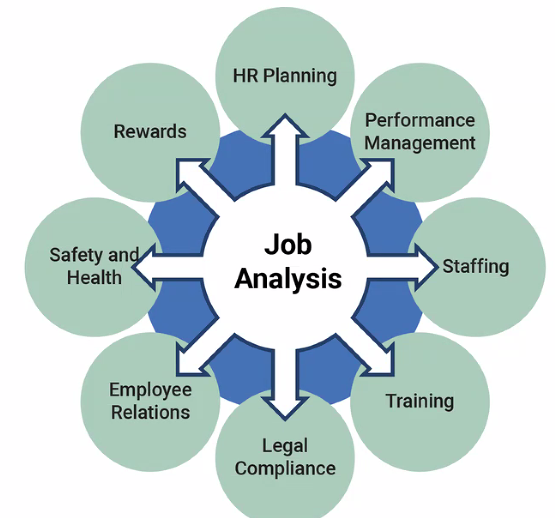
Job Analysis
The systematic process of gathering information across HR functions concerning job context, job content, job specifications/qualifications, and performance criteria.
Job Context (Job Analysis Considerations)
gathers information regarding the purpose of a job, its work environment, and its place in the organizational structure.
Job Content (Job Analysis Considerations)
the specific duties and responsibilities carried out by people who hold the job.
Job Specifications/qualifications (Job Analysis Considerations)
What are the knowledge, skills, and abilities required? Those change over time.
Performance Criteria (Job Analysis Considerations)
are there desired behaviors or results that we're looking for from a person in that job?
Job Analysis Methods
Observation, Interview, work day log, task inventory, position analysis questionnaire
Employment Categories
Full time
Part time
Contract
Temporary
Intern
Performance Criteria
The desired behaviors and results identified during job analysis that constitute successful performance in a job.
Sourcing
The precursor to actual recruitment that involves generating talent interest through internal and external advertising using a variety of techniques.
Recruitment
The process of encouraging potential candidates to apply for job openings, prioritizing both quantity and quality (want good candidate pool)
Internal Recruitment Sources
Advantages include rewards for good work of current employees, improves morale
Disadvantages include organizational inbreeding, create a negative work environment as people compete for promotions
Organizational Inbreeding
A potential disadvantage of relying exclusively on internal recruitment, in which an organization lacks new perspectives, ideas, and external competencies.
External Recruitment Sources
Advantages includes bringing new ideas and talent, gain new competencies, new insights, reduce training costs, promotes diversity
Disadvantages include a bad hire, increased recruiting costs, possible morale problems for internal candidates, longer onboarding and orientation
Recruiting Sources
Referrals (internal)
Job Postings (internal)
Talent Pipeline (internal)
Succession Planning (internal)
Career Fairs and Social Media (external)
Educational Institutions (external)
E-Recruitment
Advantages include wider recruitment sourcing, provides immediate responses, increases applicant pool, facilitates better candidate matching, reduces cost
Disadvantages include high volume of responses…
Social Media in Recruiting
Advantages include low cost organizational publicity, branding, posting vacancies, employment screening, reduced recruiting costs
Disadvantages include potential inaccuracy of info learned about candidates, legal risks associated with what employer learns about candidate
Recruiting Effectiveness
Be proactive, promote, interact, be vigilant, be judicious, automate, use realistic profiles
Head Count (HR Metrics)
An HR workforce reporting metric that indicates the number of individuals on an organization's payroll at a specific time.
Cost of Hire (HR Metrics)
A traditional HR recruitment metric calculated as: Cost of hire=Number of new hiresTotal costs which includes expenses like advertising, recruiters' salaries, and onboarding costs.
Cost per Hire (CPH) (HR Metrics)
A standardized SHRM metric that addresses variability. Measure of effort exerted. Defined as: Cost per hire (CPH)=Total number of hires in a time period∑(External costs)+∑(Internal costs)
Recruitment Cost Ratio (RCR)
An HR metric assessing cost efficiency, calculated as: Recruitment cost ratio (RCR)=Total first-year compensation of hires in a time periodExternal costs+Internal costs×100
Yield Ratio
A metric that reflects the percentage of candidates advancing from one stage of the recruitment and selection process to the next (e.g., qualified applicants to total applicants, or accepted offers to interview offers).
They can determine which recruitment source or method or type of recruiter produces the greatest yield and identify areas that may need improvement.
Time to Fill
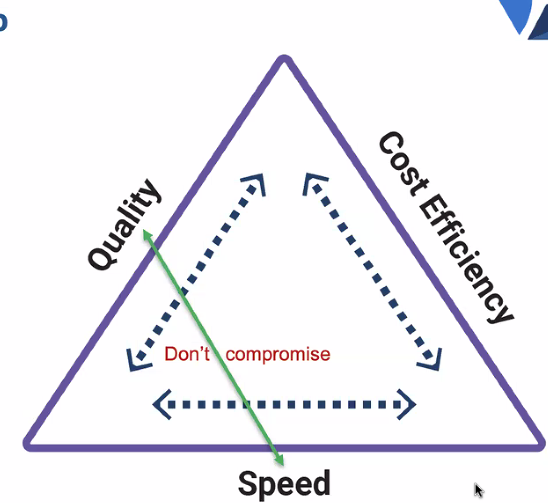
An HR metric measuring the total number of days elapsed from the opening of a job requisition to the formal acceptance of an offer.
Don’t compromise speed for the quality of the candidate
Attrition
The loss of personnel due to reasons other than firing or other employer-initiated actions, over which the employer has no direct control. It is important to understand WHY employees leave.
There are a wide variety of attrition measures, such as:
Overall attrition (voluntary and involuntary).
Attrition of key (critical) talent.
New-hire attrition.
Workforce Analytics
Helps organization draw conclusions from HR data quickly and efficiently. Improves vital decisions about talent and helps address workforce challenges
Future focused, the reasons behind the “why” people are leaving
Selection Process (Four Steps)
The sequential talent acquisition model consisting of Step 1: Screen, Step 2: Interview, Step 3: Assess and evaluate, and Step 4: Select and offer.

Selection Screening (Step 1)
The initial phase of selection where application forms, CVs, and résumés are analyzed to identify the most qualified applicants who meet minimum criteria.
Applicant Tracking Software (ATS)
An automated system used to manage the recruitment workflow from application intake to hire, tracking candidate sources and building talent databases.
Curriculum Vitae (CV)
A fairly detailed overview of a candidate's accomplishments, credentials, and publications, commonly used in academia and research environments.
Résumé
A concise and general document outlining an applicant's relevant work experience and skills, typically tailored to each specific role applied for.
Selection Interviews (Step 2)
designed to probe areas of interest to the interviewer in order to determine how well the candidate meets the needs of the organization.
Types of interviews: Structured, unstructured, behavioral, competency based, group, stress interviews
Prescreening Interview
Usually 20 minutes or less conducted by HR, phone screens
Useful when an organization has a high volume of applicants for a job and face-to-face interviews are needed to judge pre-qualification factors
In-Depth Interviews
Usually one hour or more
Usually conducted by line management
May be divided into several in-depth interviews by both line managers and potential colleagues
Structured Interview
A repetitive interview format where every applicant is evaluated by being asked the identical set of pre-determined questions.
Unstructured Interview
A non-directive interview process that is conversational and allows questions to emerge spontaneously based on the candidate's answers.
Behavioral Interview
An interview technique that evaluates past actions to predict future performance by asking pointed questions regarding how past situations were handled (e.g., "Describe a situation…").
asking the candidate, to relate something that they did in a prior role that will yield a fuller answer of how they acted or behaved
Competency-Based Interview
An interview style where candidates are asked to demonstrate how they applied specific knowledge, skills, and abilities (KSAs) during past scenarios.
Similar to behavioral because you're asking a question to describe how they acted, or their behavior. But it's focused on a competency like communication. It's focused on a competency like analytical aptitude. It's when you're asking them to describe a situation, or tell you how they acted or behaved, or handled a situation, the focal point is on the competency, specifically.
Group Interview
Multiple candidates are interviewed at the same time or each candidate is interviewed by multiple people (panel)
Fishbowl interviews, team interviews, panel interviews
Stress Interview
mildly provocative to aggressive interview tactics that put a candidate on the defensive to see how the candidate reacts under pressure.

Interview Questions
Turn each desired skill set or characteristic of the job into a series of open-ended questions.
Ask questions that lead a candidate to describe, in detail, his or her technical expertise and demonstrate problem-solving behavior
Assess & Evaluate (Step 3)
Goal is to determine if candidate has potential to be successful in job
Aim for transparent decisions based on fact
Assessment Methods
help to identify applicant knowledge and skills that cannot be determined through interviews
Substantive
Discretionary
Contingent
Substantive Assessments
Pre-employment assessment methods—such as cognitive ability, personality, aptitude, or psychomotor tests—used to measure knowledge and skills not readily observed in interviews.
Discretionary Assessments
Assessment methods utilized by an organization to separate finalists from other candidates in order to decide who receives a job offer.
Contingent Assessments
Tests administered conditionally after a tentative job offer has been extended, typically including drug tests and medical exams.
Cross-Cultural Assessment Tools
Cross-Cultural Adaptability Inventory (CCAI) - identifies strengths and weaknesses in four cross-cultural skills: adaptability, interacting with diverse people, tolerating ambiguity, and maintaining self-identity in unfamiliar environments.
Cultural Orientations Indicator (COI) - tool that allows individuals to assess their work style and cultural preferences.
Intercultural Development Inventory (IDI) - Statistically reliable, valid measure of intercultural competence; 50 items
SAGE (Self-Assessment for Global Endeavors) - used to assist in decision making for employees contemplating a global assignment.
Background Investigations
A verification procedure that authenticates information supplied by a job applicant (such as education and work history), which should be applied consistently across all applicants for a position.
Reference Checks
The process of contacting a candidate's previous employers, educational institutions, or personal references to verify past employment and obtain feedback on aptitude and character.
Decision Process
Organize and summarize information in terms of selection criteria.
Identify and rank acceptable candidates.
Collect additional information as necessary.
Make an offer to the top candidate.
Contingent Job Offer
A formal job offer that is subject to the applicant satisfying specific remaining criteria, such as passing a drug test, medical examination, or background check.
Employment Offer
An oral or written communication formally proposing employment terms to a selected candidate, which is generally not legally binding.
Employment Contract
A written legal agreement executed between an organization and an employee that outlines the terms of employment and establishes legally binding rights and duties.
Methods to Provide a Positive Candidate Experience
Streamlined application process
Limited rounds of interviews
Fair consideration of time
Frequent communication
Onboarding and Assimilation Process
Make the job hunt simple, seamless, and informative.
Create accurate first impressions.
Make the first day count.
Give employees a structured onboarding experience.
Provide a “buddy”
Show employees a path to success
Orientation
An introductory event generally lasting one to two days designed to help new or rehired employees become familiar with the organization, department, coworkers, and immediate role.
Onboarding
A comprehensive process spanning orientation through the first several months of employment that assists new hires in building strong working relationships with supervisors, peers, and the wider organization.