ch. 1 - the sciences of anatomy & physiology
 Call Kai
 Learn
 Practice Test
 Spaced Repetition
 Match
 Flashcards
 Knowt Play
1/83

There's no tags or description
Looks like no tags are added yet.
84 Terms
anatomy
the study of structures in the human body
anatomist
a scientist who studies the form and structure of organisms
physiology
the study of how body parts function together
physiologist
a scientist who examines how organs and body systems typically function
microscopic anatomy
the study of structure that cannot be seen by the unaided eye
cytology
the study of body cells and their internal structure
histology
the study of body tissues
macroscopic anatomy
the study of structures and relationships of body parts visible to the unaided eye
systemic anatomy
the study of the anatomy of each functional body system
regional anatomy
the study of all of the structures in a particular region of the body as a complete unit
surface anatomy
the study of superficial anatomic markings and the internal body structures that relate to the skin covering them
comparative anatomy
the study of similarities and differences in the anatomy of different species
embryology
the study of the developmental changes occurring from conception to birth
pathologic anatomy
the study of anatomic changes resulting from disease
radiographic anatomy
the study of relationships among internal structures that may be visualized by specific scanning procedures (i.e., radiography, ultrasound, magnetic resonance imaging)
cardiovascular physiology
the study of the functioning of the heart, blood vessels, and blood
neurophysiology
the study of how nerve impulses are propagated throughout the nervous system
respiratory physiology
the study of how respiratory gases are transferred by gas exchange between the lungs and the blood vessels
reproductive physiology
the study of how the regulation of sex hormones can drive the reproductive cycle and influence sex cell production and maturation
pathophysiology
the study of the relationship between the functioning of an organ system and the disease or injury to that organ system
metabolism
all chemical reactions taking place in the body, including both anabolic and catabolic reactions
anabolism
the formation of complex molecules from simple molecules (i.e., atoms, ions, and molecules)
catabolism
the breakdown of large molecules into smaller chemical structures
organization
the complex structure and order that all organisms exhibit
growth
the ability of an organism to assimilate materials from their environment that contribute to increased size
development
increased specialization as related to form and function
responsiveness
the ability to detect and react to stimuli (changes in the external or internal environment)
regulation
the ability to adjust internal bodily function in response to environmental changes
reproduction
the production of new cells for growth, maintenance, and repair
levels of organization
chemical level, cellular level, tissue level, organ level, organ system level, and organismal level
chemical level
the simplest level, involving atoms and molecules
atoms
the smallest units of matter that exhibit the characteristics of an element
molecule
a chemical structure composed of two or more covalently bonded atoms
macromolecules
large organic molecules; e.g., carbohydrates, nucleic acids, and proteins
biological macromolecules
large molecules that form living things
classes of biological macromolecules
proteins, carbohydrates, nucleic acids (i.e., DNA and RNA), and lipids
organelles
complex, organized structures in the cytoplasm of a cell with unique characteristic shapes
cellular level
consists of cells, the smallest living structures that serve as basic units of function and structure in organisms
tissue level
consists of tissues, which are groups of similar cells that perform common functions
organ level
composed of organs, which contain two or more tissue types that work together to perform specific, complex functions
organ system level
contains multiple related organs that work together to coordinate activities and achieve a common function
organismal level
the highest level of structural organization in the body where all body systems function interdependently in an organism
organ system
a group of organs working together to coordinate and perform specific functions

integumentary system
provides protection, prevents water loss and gain, synthesizes vitamin d, releases secretions, regulates body temperature, and houses sensory receptors

skeletal system
provides support and protection, site of hematopoiesis (blood cell production), stores calcium and phosphorus, provides sites for ligament and muscle attachments

muscular system
produces body movement, generates heat when muscles contract

nervous system
a regulatory system that responds to sensory stimuli, and controls muscles and some glands
also responsible for consciousness, intelligence, and memory
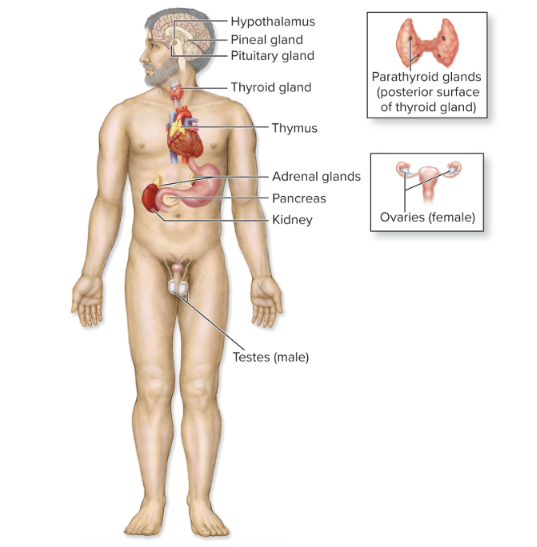
endocrine system
consists of glands and cell clusters that secrete hormones, (some of which regulate development, growth, and metabolism); maintain blood composition and volume, control digestive processes, and regulate reproductive functions

cardiovascular system
consists of the heart (a pump) and blood vessels; the heart moves blood through blood vessels in order to distribute hormones, nutrients, gases, and pick up waste products

lymphatic system
transports and filters lymph (interstitial fluid that is collected in and transported through lymph vessels) and may participate in an immune response

respiratory system
responsible for exchange of gases (oxygen and carbon dioxide) between blood and the air in the lungs
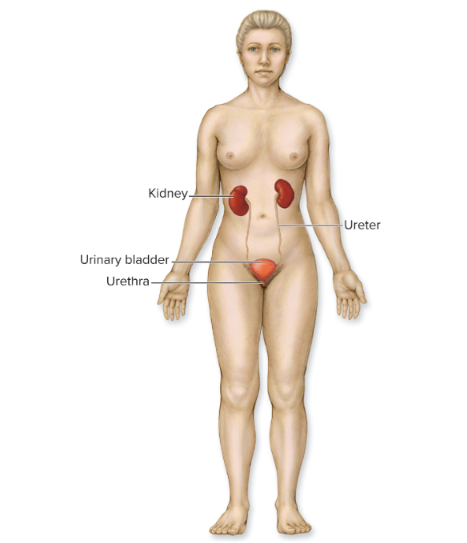
urinary system
filters the blood to remove waste products and biologically active molecules, concentrates waste products in the form of urine, and expels urine from the body

digestive system
mechanically and chemically digests food, absorbs nutrients, and expels waste products

reproductive system
gonads (testes or ovaries) produce sex cells (sperm or oocytes) and sex hormones (e.g., androgens, estrogen, progesterone)
human microbiome
the total collection of microorganisms (i.e., bacteria, archaea, viruses, fungi, and protists) residing on and within the body