PSYC 379 EXAM 1
 Call Kai
 Learn
Learn Practice Test
 Spaced Repetition
 Match
Match Flashcards
 Knowt Play
1/58

There's no tags or description
Looks like no tags are added yet.
Name | Mastery | Learn | Test | Matching | Spaced | Call with Kai | Chat |
|---|
No analytics yet
Send a link to your students to track their progress
59 Terms
Empirical
Based on pure observation and logic
ethnocentrism
Generalizing experiences based on your own culture
Who wrote this paper, and who is it meant to apply for?
WEIRD students (White, Educated, institutionalized, rich, democratic)
Multimethod approach
No single method can answer all your questions, which is why it’s important to be interdisciplinary
Every method has strengths/weaknesses
illusory correlation
Tendency to perceive a relationship between events when none exists
Correlation does not mean causation!
Independent variable
Manipulated variable that we use to predict behavior
dependent variable
Measured variable that is used to assess the outcome of the manipulated.
description
What can objectively be seen and observed by multiple people
inference
How an observation (description) can be interpreted.
operationalization
Defining a construct solely in terms of observable procedures used to produce/measure it
DSM-V criteria for depression
accuracy
Difference between what an instrument says and what is known to be true
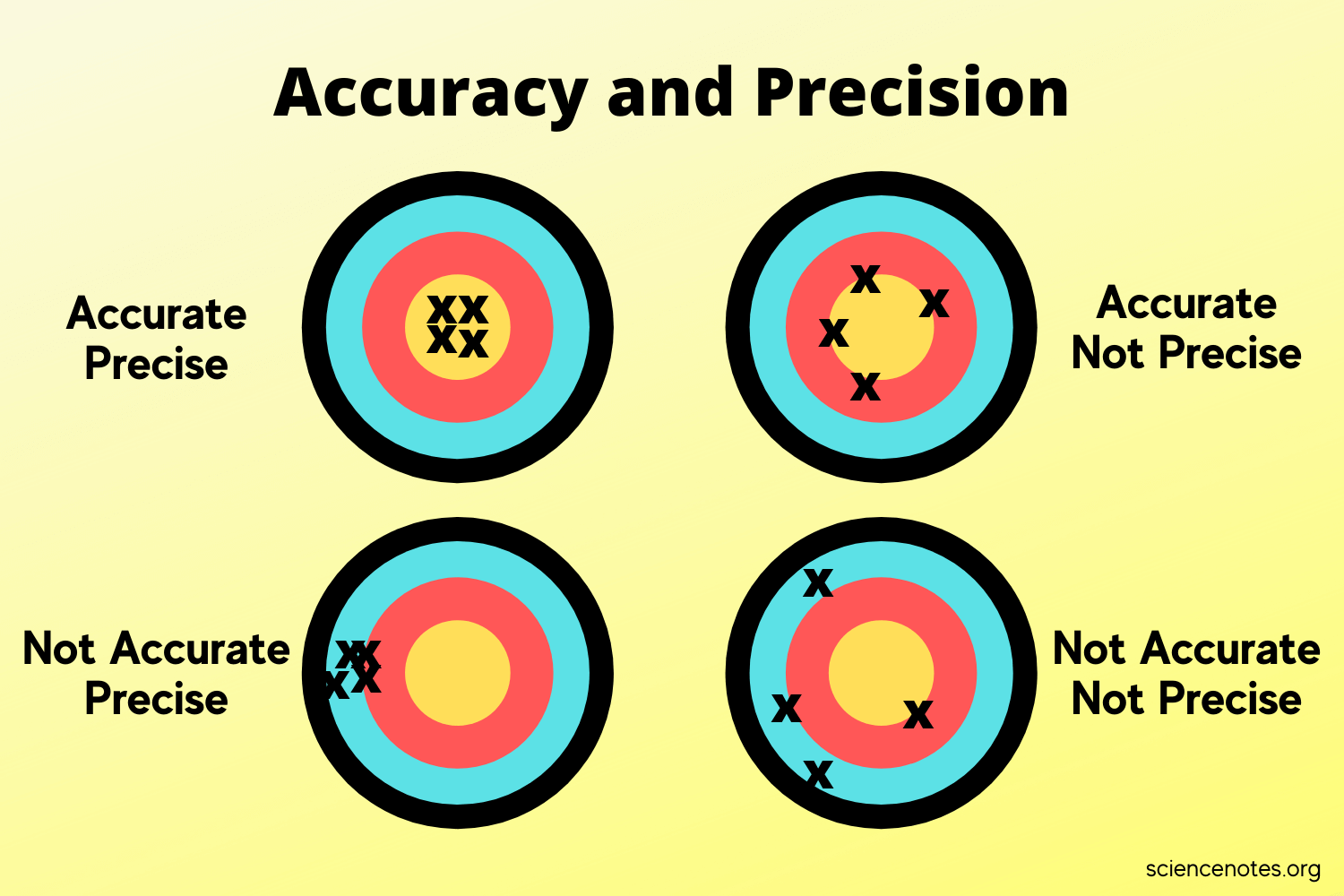
precission
How detailed or fine grained can measurements get?

validity
“Truthfulness” of a measure. Does in measure what we’re trying to?
construct validity
Does it measure the construct of interest?
face validity
On the surface, does the measure appear to assess what it’s supposed to?
content validity
Do experts agree the measure is valid?
predictive validity
Does it correlate with other measures of the construct?
prediction
When researchers identify correlations among variables to predict behavior (does x lead to y?)
explanation
Understanding a phenomena by identifying causes
causal inference
covariation
time order
eliminate other causes
internal validity
Confidence in the “truth” of the causal relationship. How confident are we that independent variable causes dependent variable?
external/ecological validity
How can we generalize to other situations/populations?
Lab vs. real world
Is our sample size too WEIRD?
Applied research
How can this work to improve people’s lives in the real world?
Efficacy trials: How well does it work in controlled settings?
Effectiveness trials: How well it works in real world
Basic research
Laboratory based with the goal of understanding a specific phenoma
ontology
What is real in this world?
axiology
Role of values in research
paradigm
A set of assumptions we operate under as a “framework”
post-positvism
Incorporates elements of qualitative research (interviews being semi-structured) but not meant to be substitute.
Goal is to map one true reality, and theory falsification
Objective
Values kept in check
critical ideological
• Primary Goal: Challenge and disrupt the status quo
• Ontology: Apprehendable socially constructed realities shaped by political, social, economic factors, and power relationships.
• Epistemology: Interactive & proactive research role seeking transformation and emancipation
• Axiology: Research values are central to the inquiry as participant empowerment is research goal
• Method: naturalistic, highly interactive; create transformation through discourse.
APA 5 Ethical Principles
Beneficence: Doing good, not harm
Fidelity and Responsibility: Upholding research standards/professionality.
Integrity: Honesty, accuracy, truthfulness
Justice: Everyone has access to benefits
Respect for Persons’ Rights and Dignity: Protecting peoples welfare, removing bias
Minimal risk
When hurt/discomfort experienced in research is not greater than daily hassles
Rational behind weighing risks and benefits
assent
Minor actually agreeing to be part of the research
Not legally binding
Done because minors can’t consent
testing ethics
Harm
Reversibility
Common Practice
Legality
Colleague
Wise relative
Mirror
Publicity
zeitgeist
The spirit of the times. Shapes how and what questions are asked and what resources are dedicated, and how society feels about these findings
Psychology shapes zeitgeist, zeitgeist shapes psychology
hypothesis
Tentative explanation for a phenomenon
debriefing
Participants should feel good about the research experience and leave the study in the same state as they arrived
Inform participants of the reason for any deception
• Discuss any misconceptions
• Remove any harmful effects
Confirmation bias
Selectively choosing information that proves what you already believe
deception
When info. is purposely witheld from participants, or participants are intentionally misinformed about aspects of study. Only done if there’s no other method
Pros:
Get to see natural behavior
Opportunity to investigate behavior that wouldn’t be seen otherwise
Cons
Contradicts informed consent
Creates dishonest relationship
Gives research a bad reputation
construct
Complex idea that is formed from combining much more simple ideas
How concepts are defined in psychology
insturment
Tools used to measure a construct, based on an operational definition
Should be both accurate and precise
Measurement
Assigning numbers to objects
Must be both valid and reliable
reliability
Consistency. Are we getting the same results every time?
Test retest: Do we get similar results at 2 points in time?
Inter-Observer: Do 2 or more independent observers agree?
Instrument/internal: Are all the items observed the same way?
nomothetic
General patterns/universal statements
Large sample size
Most of psych research
idiographic
Applying to the individual
Case studies
correlation
The degree of a relationship between two variables
confounding variables
When a third variable is responsible for a cause and effect relationship
Random assignment helps remove this
generalization
How well does our operationalization match real world circumstances?
• Studies from college students to people of other age groups and circumstances (populations)
• Highly controlled laboratory settings to real world settings (conditions)
• From a family setting to a workplace setting (settings)
theory
Proposed explanation for phenomena/association
The 5 w’s
Locally organized set of statements that are meant to define, describe, and explain
Organize knowledge
Suggest testable hypothesis
Survive rigorous testing without falsification
Everything can be proven otherwise, nothing is universal
epistimology
How we study/collect knowledge
methodology
Procedure done within research
positivism
The only way to truly know something is through 1) experience 2) pure logic/math
Goal: Explanations to predict/control phenomena
Ontology: There is 1 true reality
Epistemology: Objective, detached research
Axiology: Carefully controlled research
Method: Experimental conditions, manipulations.
constructivism-interpretivism
Alternative to positivism. There can be multiple answers
• Primary Goal: Understanding lived experience
• Ontology: Multiple, equally valid, and socially constructed realities
• Epistemology: Knowledge co-constructed through interaction, with an
interactive researcher
• Axiology: Research value biases are inevitable and should be discussed at length, set aside or otherwise acknowledged
• Method: Naturalistic, highly interactive; uncovering embedded meaning through words and text.
belmont principles
Justice
Beneficence
Respect for persons
Risk/benefit ratio
Is it worth it? Balancing costs to benefits
Informed consent
EXPLICIT willingness to participate in research based on CLEAR UNDERSTANDING of the nature of research
NOT a legal arrangement, but moreso social contract
Make clear to participants what they will be doing
Written informed consent when risk > minimal
scientific method
Empirical approach, skeptical attitude
scientific evidence
In order of strength
Replication
Statement about causes
Prediction
Description
Steps of research process
Develop question
Generate hypothesis
Form definitions
Determine ethical issues
Collect/analyze data
Share results
causal inference
Must have covariation, time order, elimination of alternative causes
rosenthal
Ethical research is higher quality. Bad research is a waste of resources
Steps of ethical research
Find out the facts
Identify ethical issues
Decide what is at stake
Identify alternative methods
Decide what actions to take