reduction of 9-fluorenone/aldol
 Call Kai
 Learn
 Practice Test
 Spaced Repetition
 Match
 Flashcards
 Knowt Play
1/20

There's no tags or description
Looks like no tags are added yet.
21 Terms
Catalytic hydrogenation
the addition of a molecule of dihydrogen across a carbon-carbon or carbon-heteroatom double or triple bond in the presence of a metal catalyst such as platinum, palladium, nickel, or rhodium that is often adsorbed on an inert solid support like carbon
reduce the p-bonds in a variety of functional groups
Hydride reducing agent
(LiAlH4 / NaBH4)
metal hydrides may be thus used to reduce a carbon-oxygen or a carbon-nitrogen double bond in the presence of a carbon-carbon double bond, a reaction that is not easily accomplished by catalytic hydrogenation.
produce H:-
broad range of selectivities toward various unsaturated functional groups
Racemic mixture
if the product carbon is a stereocenter, attack from both faces gives a 50:50 mix of enantiomers.
Asymmetric synthesis
Reactions resulting in preferential formation of one enantiomer
Hydride reducing agent strength
metal electronegativity difference
Valence shell electron configuration
Solvent issues
Disadvantage and advantage of using NaBH4
electronegativity difference
why can use methanol (B vs Al difference)
valence shell electron configuration
same group = same reactivity
solvent issues
must use aprotic, dry solvent
NaBH4
less reactive and thus more selective. It reduces aldehydes and ketones but not esters
safer and easier to handle
Sodium borohydride may be used in alcoholic and even aqueous solutions, because it reacts much more rapidly with the carbonyl group than with the solvent
General reaction for flourenone

IR analysis (will show picture of product) for fluorenone reduction
OH stretch 3200-3500
1450-1600 C=C stretches

Melting Point Analysis
9-fluorenone (starting) MP is 80-83
9-Fluorenol (product) MP is 152-158
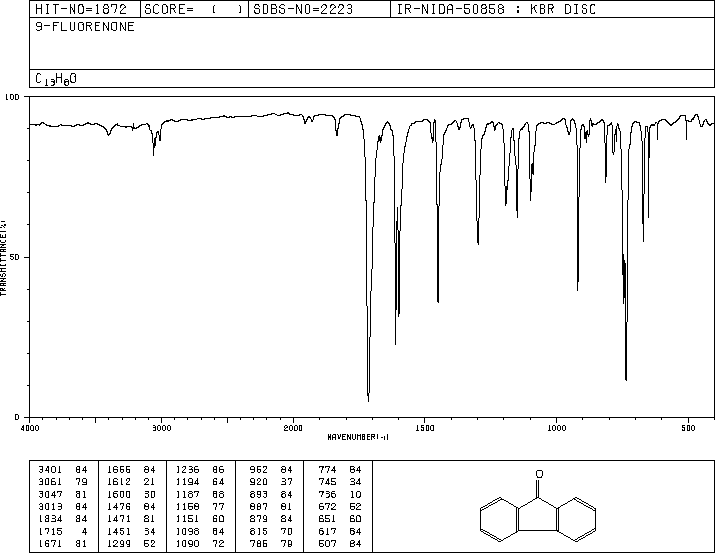
IR analysis (picture of starting) for fluorenone reduction
ketone stretch around 1650-1750
aromatic c-h stretch 2850-3000
aromatic c=c 1450-1600 ish
mechanism of reduction for fluorenone

α-Hydrogen/Proton
Hydrogens on the carbon next to the carbonyl (the α-carbon) unacidic. removing one turns the a carbon into a nucleophile
α-Carbon
carbon next to the carbonyl
pka 18-20
the one that gets deprotonated by a base (like OH) to form an enolate
Enolate
deprotonated form of enol (c=c-o-)

Mixed aldol condensation
when two diff carbonyl compounds are the reactants
Why are α-protons more acidic than an alkane proton
Resonance Stabilization: Deprotonation forms an enolate, delocalizing the negative charge onto oxygen (vs. localized on carbon in alkanes).
Inductive Effect: The electronegative carbonyl carbon pulls electron density away, weakening the alpha C-H bond
they can form enolates which makes the conjugate base more stable
Mixed aldol condensations
What are the problems
How do we solve them
Why don't we need to worry about the problems with our reaction
problems
multiple enolates
multiple electrophiles
equilibrium must be on products side
solve
form enolate and electrophile separate
use powerful base (LDA) to form enolate (equilibrium problem)
why don’t worry?
we can mix together and use weak base because only acetophenone has alpha proton (solves multiple enolates) and acetophenone will react with p-anisaldehyde has less steric hindrance
General reaction and mechanism

IR analysis aldol (starting) acetophenone

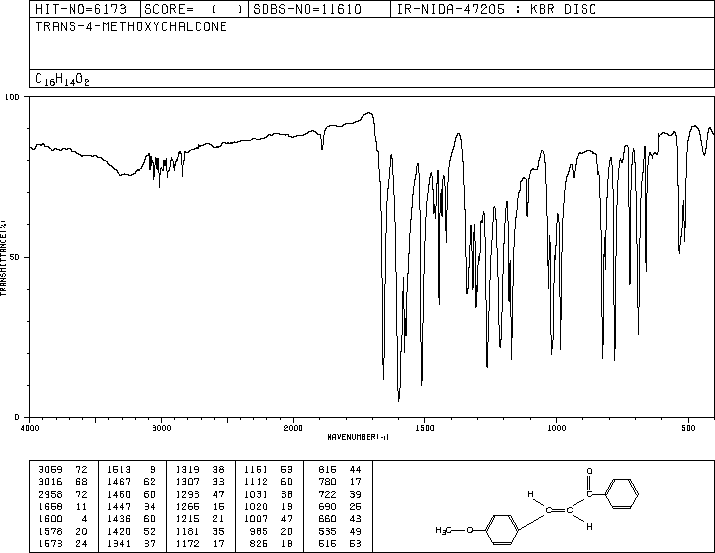
IR analysis aldol (product)
carbonyl peak (ketone) - 1650-1750
carbon-hydrogen stretches - weak (around 3000)
MP analysis (aldol)
product mp: 73-76
IR analysis aldol (starting) p-anisaldehyde
