ANTH 102A Quiz 2
 Call Kai
 Learn
 Practice Test
 Spaced Repetition
 Match
 Flashcards
 Knowt Play
1/66

There's no tags or description
Looks like no tags are added yet.
67 Terms
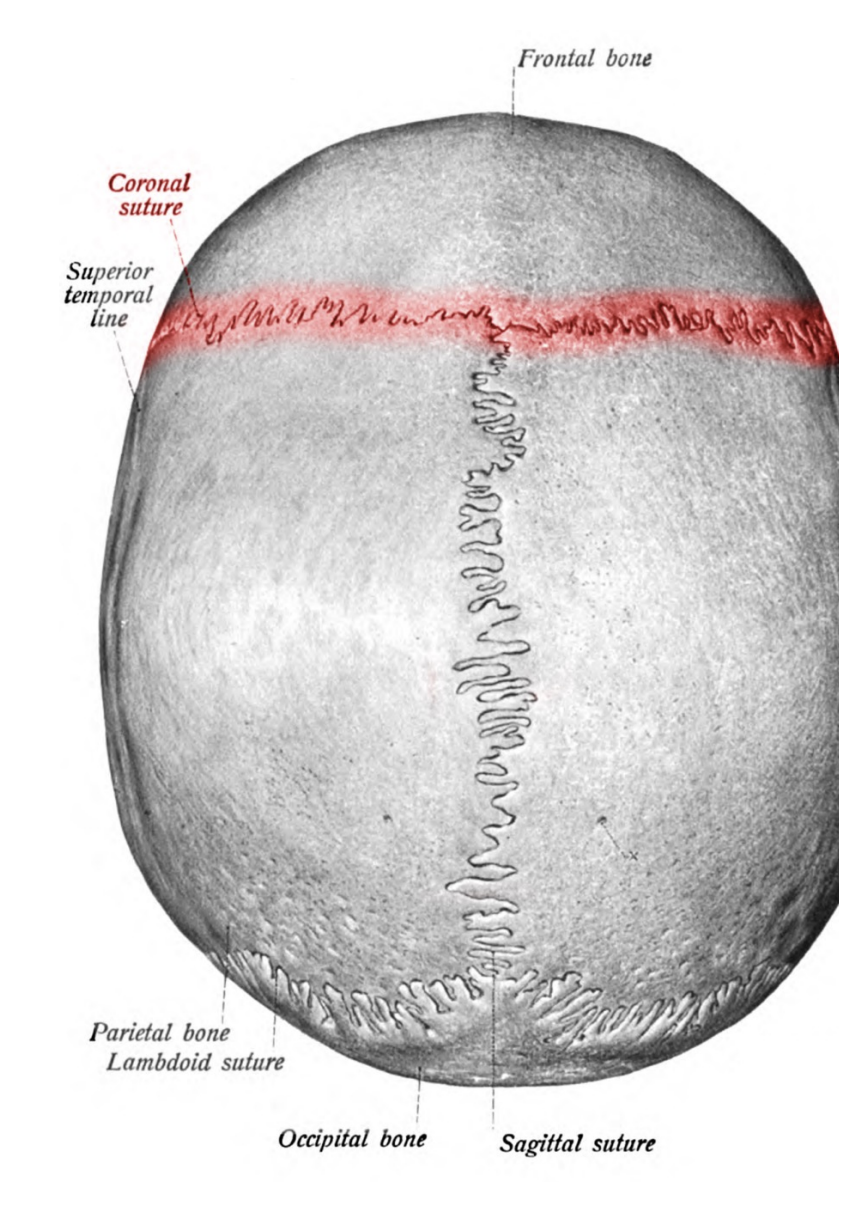
Coronal Suture
Between the frontal and the parietal bones
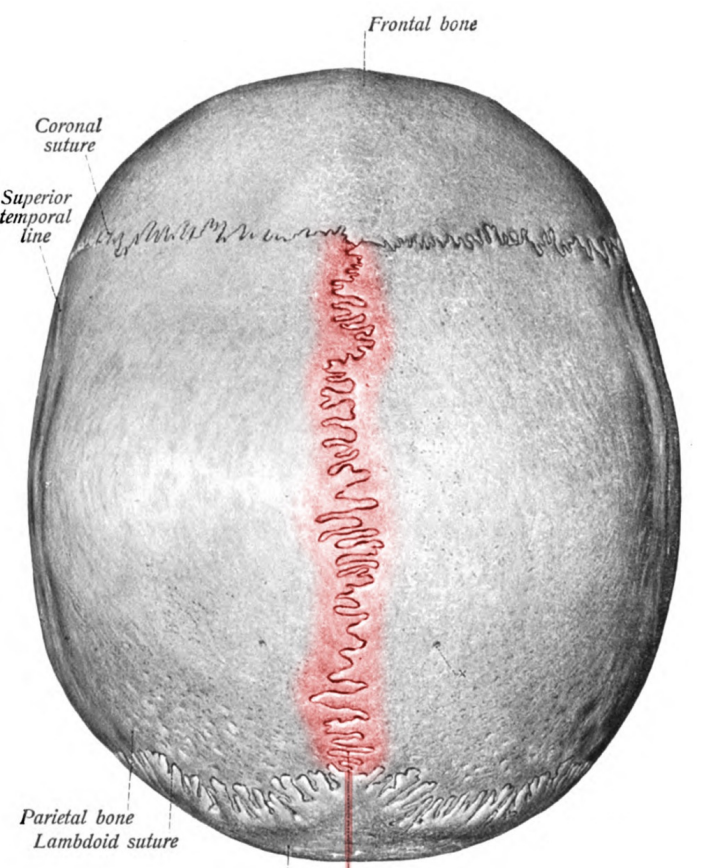
Sagittal Suture
Between the two parietal bones
Zygomaticomaxillary Suture
Between the zygomatic and maxilla

Frontonasal Suture
Between the nasal bones and the frontal bone

Metopic Suture
Unites the two halves of the frontal bone. Usually completely fuses by approx. 8 years old Retained in ~3% of adults

Lambdoidal Suture
Between the parietal and occipital bones. Sometimes there are extra bones along this suture: Wormian bones and Accessory ossicles.
Squamosal Suture
Located between the parietal and temporal bones

Spheno-occipital Synchondrosis
Between the occipital and sphenoid. Usually completely fused by 18 years.
Incisors
Humans have 2 in each quadrant. Most anterior teeth. Tooth has: Single Root, Flat and broad crown

Canine
Humans have 1 in each quadrant. Tooth has: Single root, Pointed crown

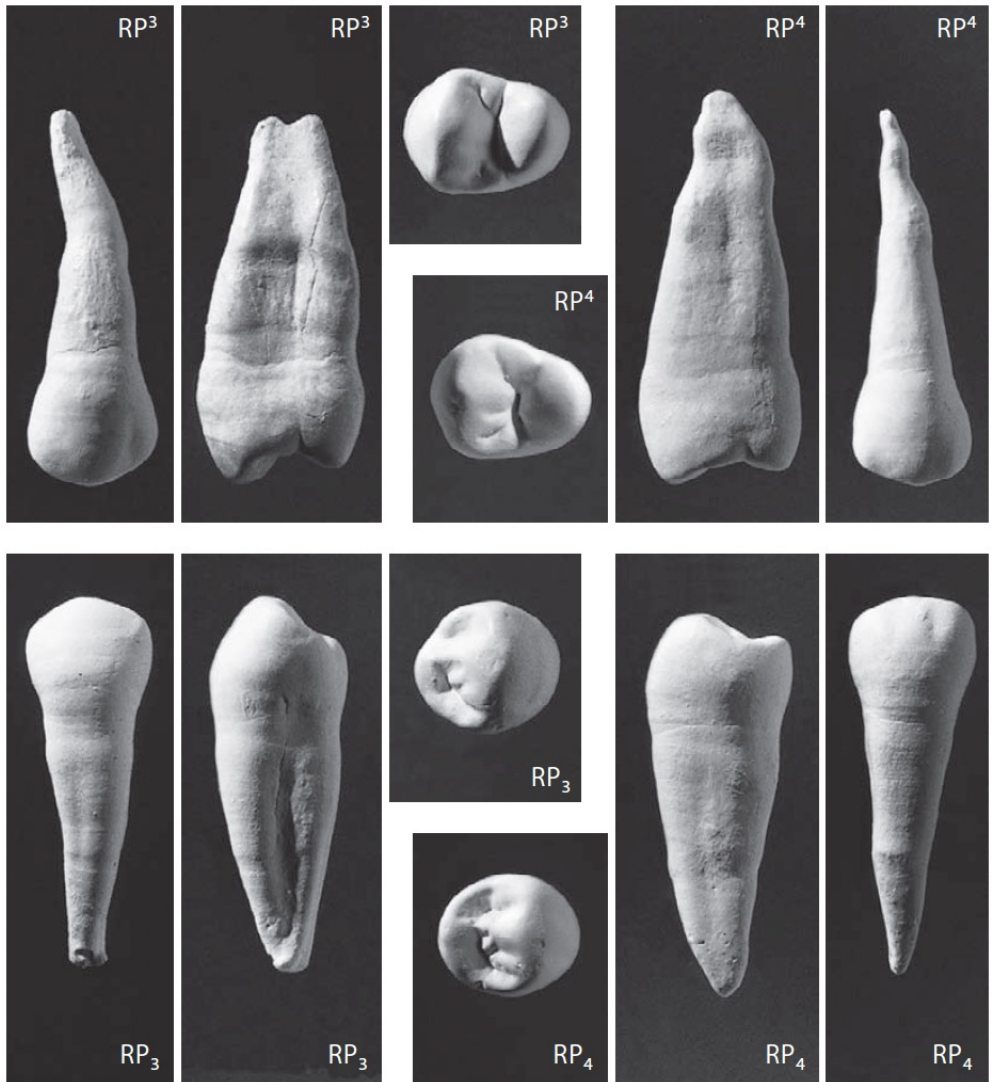
Premolars
Humans have 2 in each quadrant. Bicuspids. A tooth has: 1 (mandibular) or 2 (maxillary) roots, Two cusps on crown.
Molars
Humans have 3 in each quadrant. Tooth has: 2 (mandibular) or 3 (maxillary) roots, Crown has many cusps for grinding.

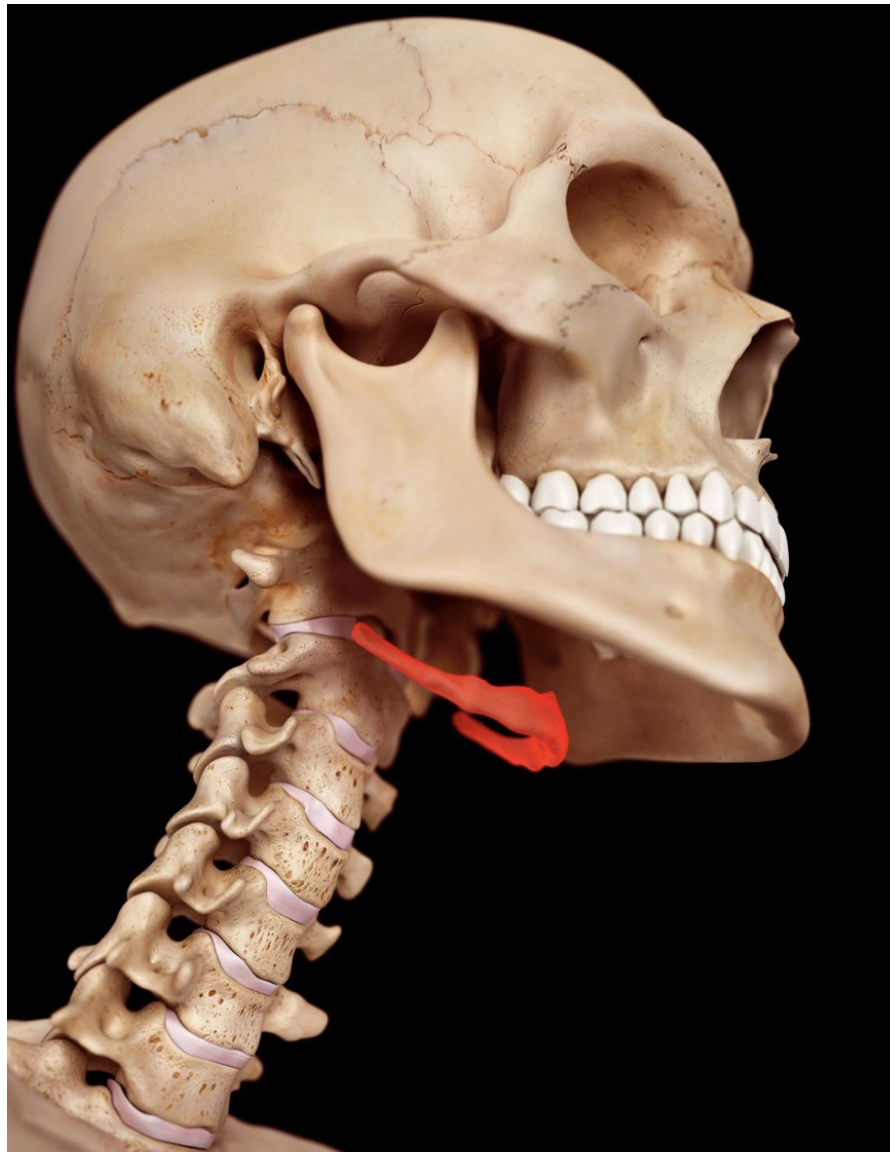
Hyoid
In the neck.
Greater Horn
Feature of the Hyoid

Lesser Horn
Feature of the Hyoid

Vertebrae
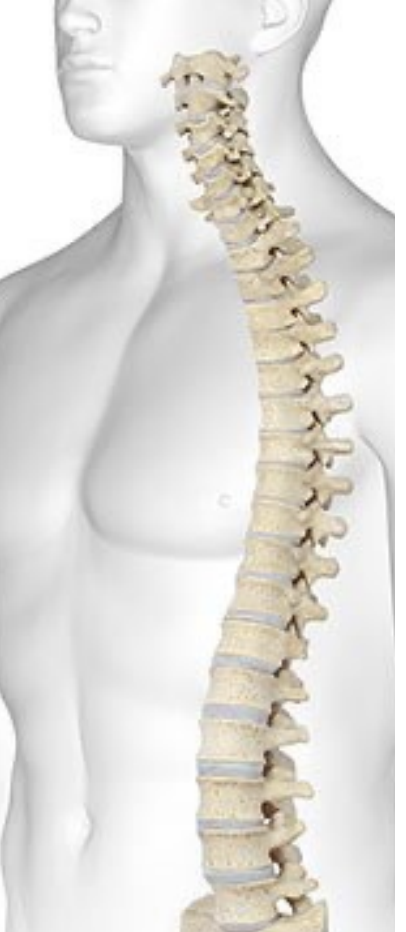
Cervical Vertebrae
Pictured in yellow, C1-C7.

Thoracic Vertebrae
Pictured in green, T1-T12. Chest vertebrae, Articulate with the ribs.
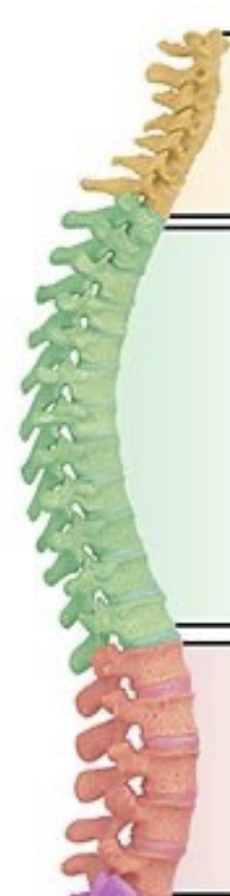
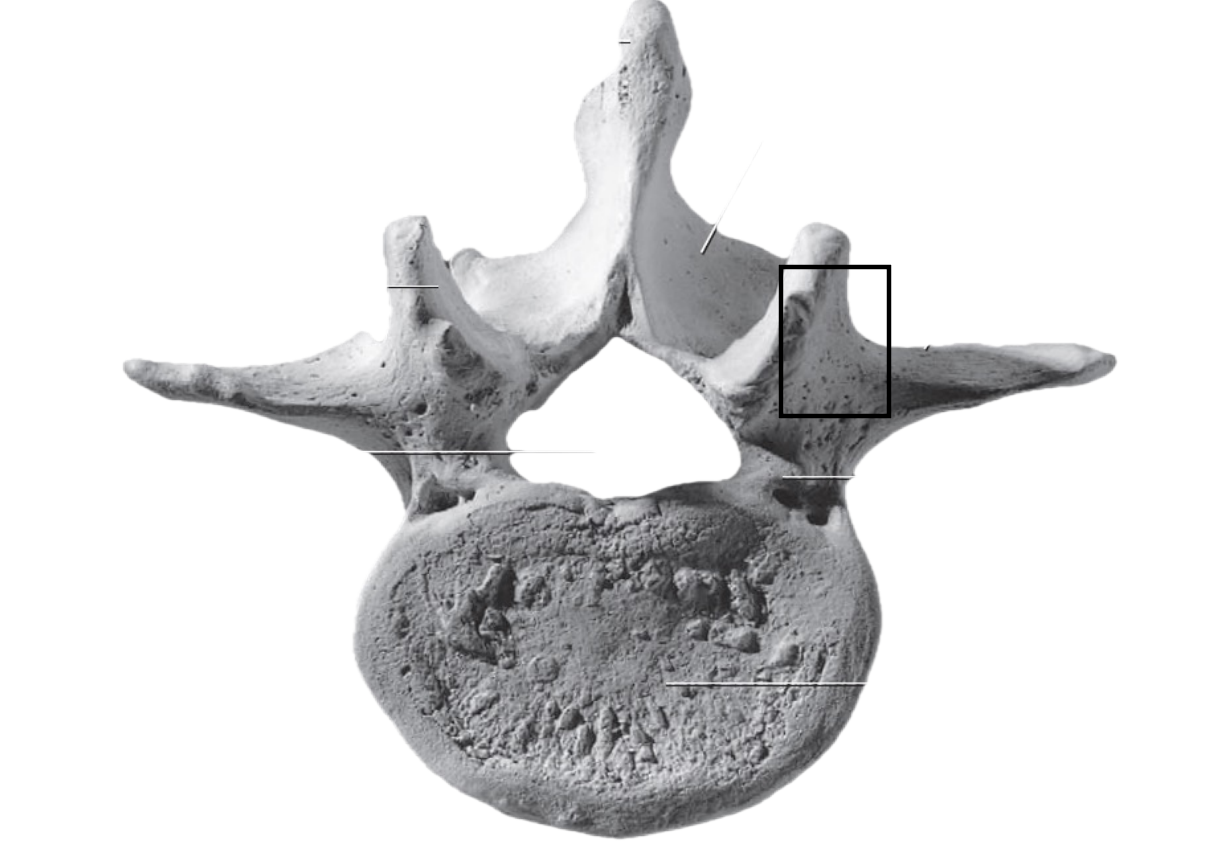
Lumbar Vertebrae
Pictured in red, L1-L5. Lack costal pit (thoracic) and transverse foramen (cervical). 5 total.

Vertebral Foramen
General feature of all three types of Vertebrae

Vertebral body
General feature of all three types of Vertebrae

Vertebral arch
General feature of all three types of Vertebrae
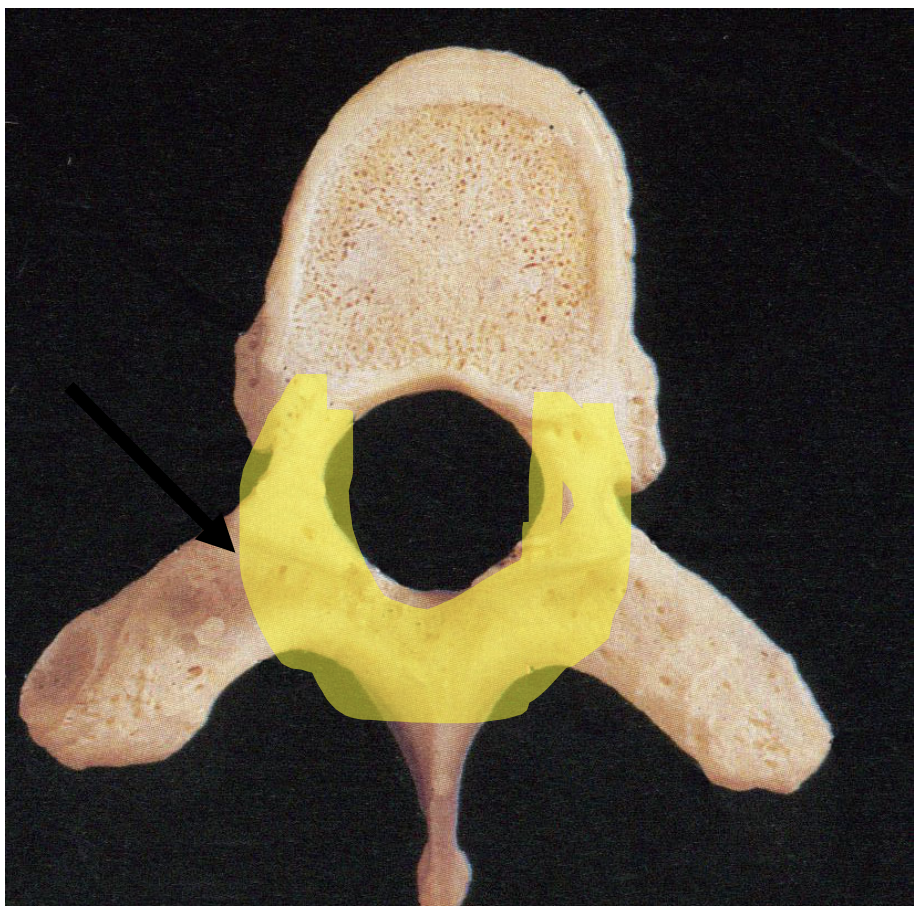
Pedicle
General feature of all three types of Vertebrae

Lamina
General feature of all three types of Vertebrae

Spinous process
General feature of all three types of Vertebrae

Transverse process
General feature of all three types of Vertebrae

Superior articular facets
General feature of all three types of Vertebrae
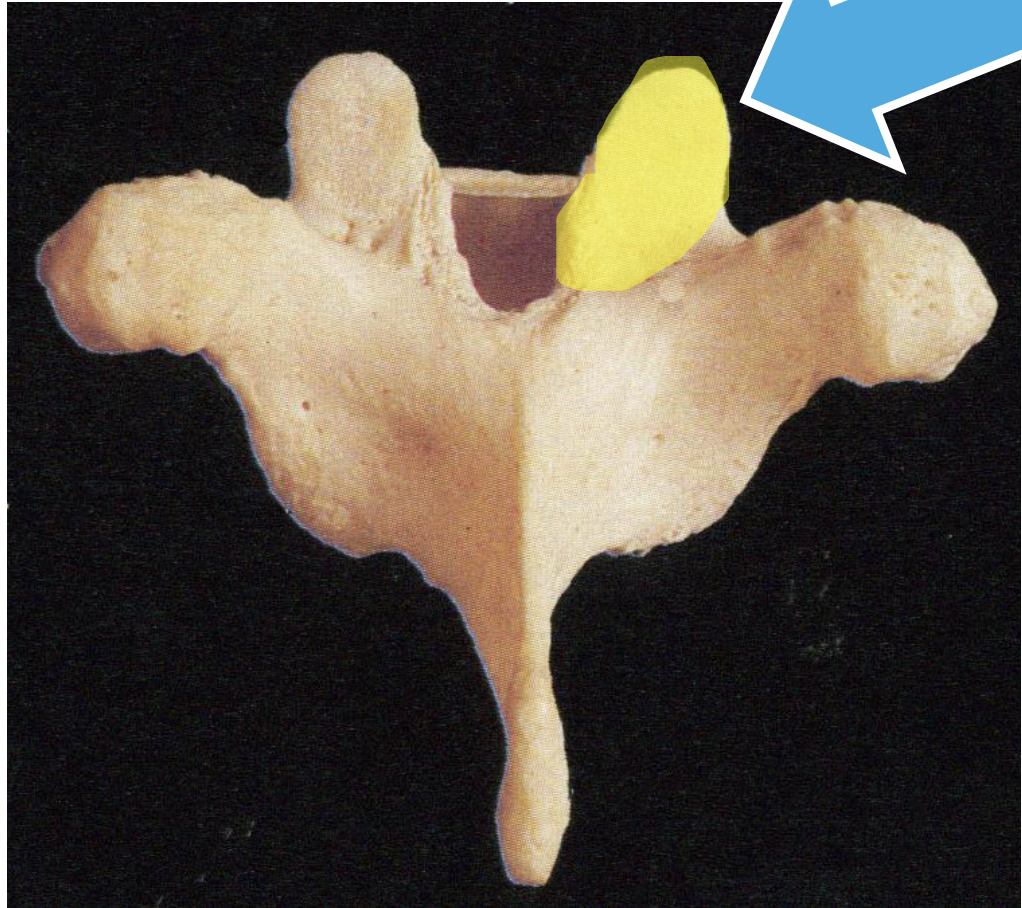
Inferior articular facets
General feature of all three types of Vertebrae
Atlas
Only vertebra with no vertebral body, C1.

Superior Articular Facets
Feature of the Altas (C1). Oval.

Inferior Articular Facets
Feature of the Altas (C1). Round.

Transverse Foramen
Feature of the Altas (C1).

Anterior Arch
Feature of the Altas (C1).

Axis
Has a projecting process that forms a pivot for the atlas for side-to-side movement. C2.

Dens
Feature of the axis

Superior Articular Facets
Feature of the axis

Transverse Foramen
Feature of the axis

Centrum
Feature of the axis

Inferior Articular Facet
Feature of the axis

Tuberculi
Feature of C3-C6 vertebrae

Transverse foramen
Feature of C3-C6 vertebrae

Centrum
Feature of C3-C6 vertebrae

Spinous Process
Feature of C3-C6 vertebrae


Costal foveae
Feature of Thoracic vertebrae. The result of articulation with the ribs
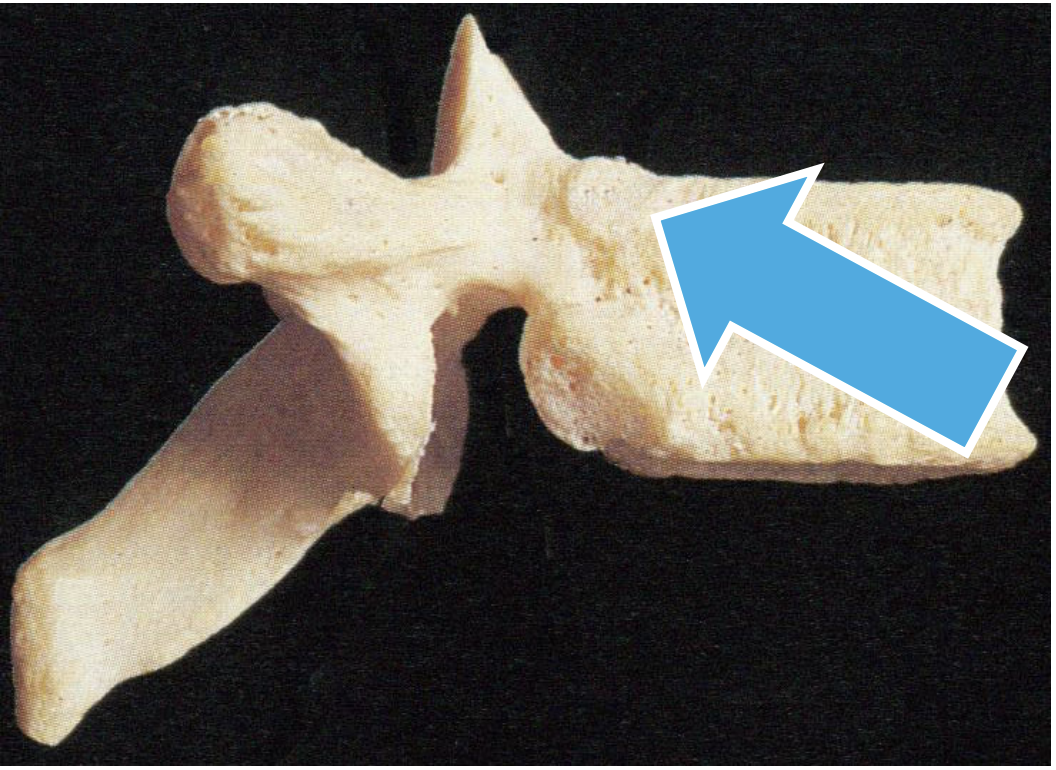
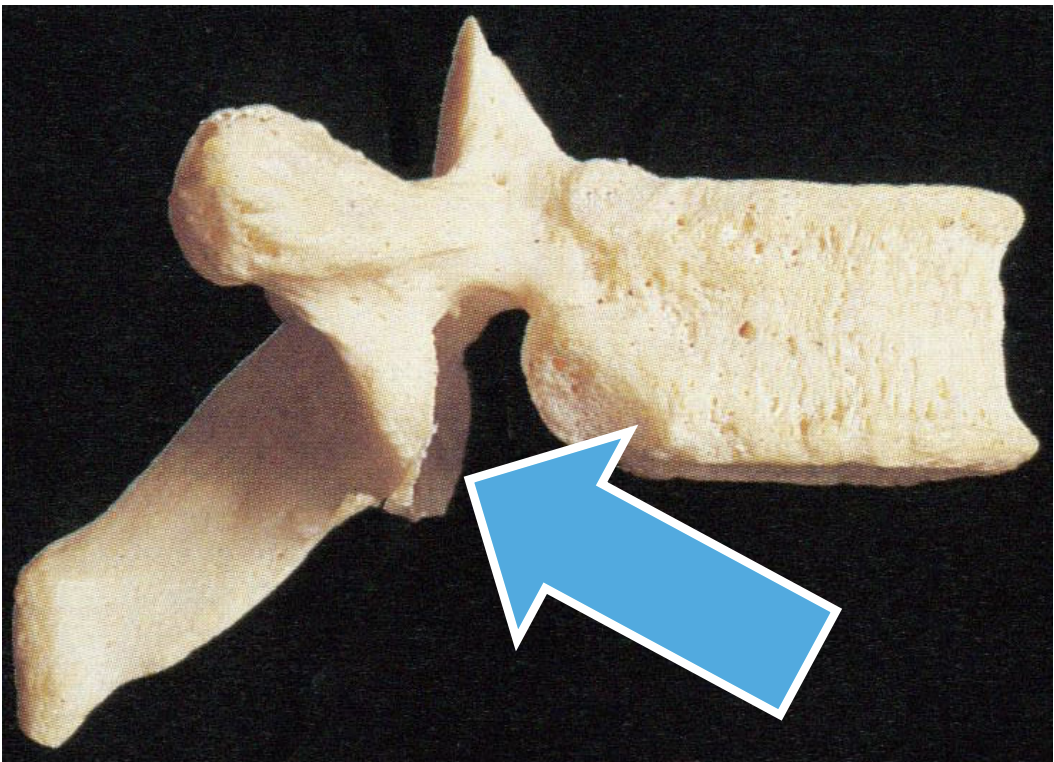
Thoracic Vertebra 12
Distinguish because Inferior Articular Facets face laterally, Like the lumbar vertebrae. T12

Spinous Process
Feature of the lumbar vertebrae

Superior Articular Facets
Feature of the lumbar vertebrae
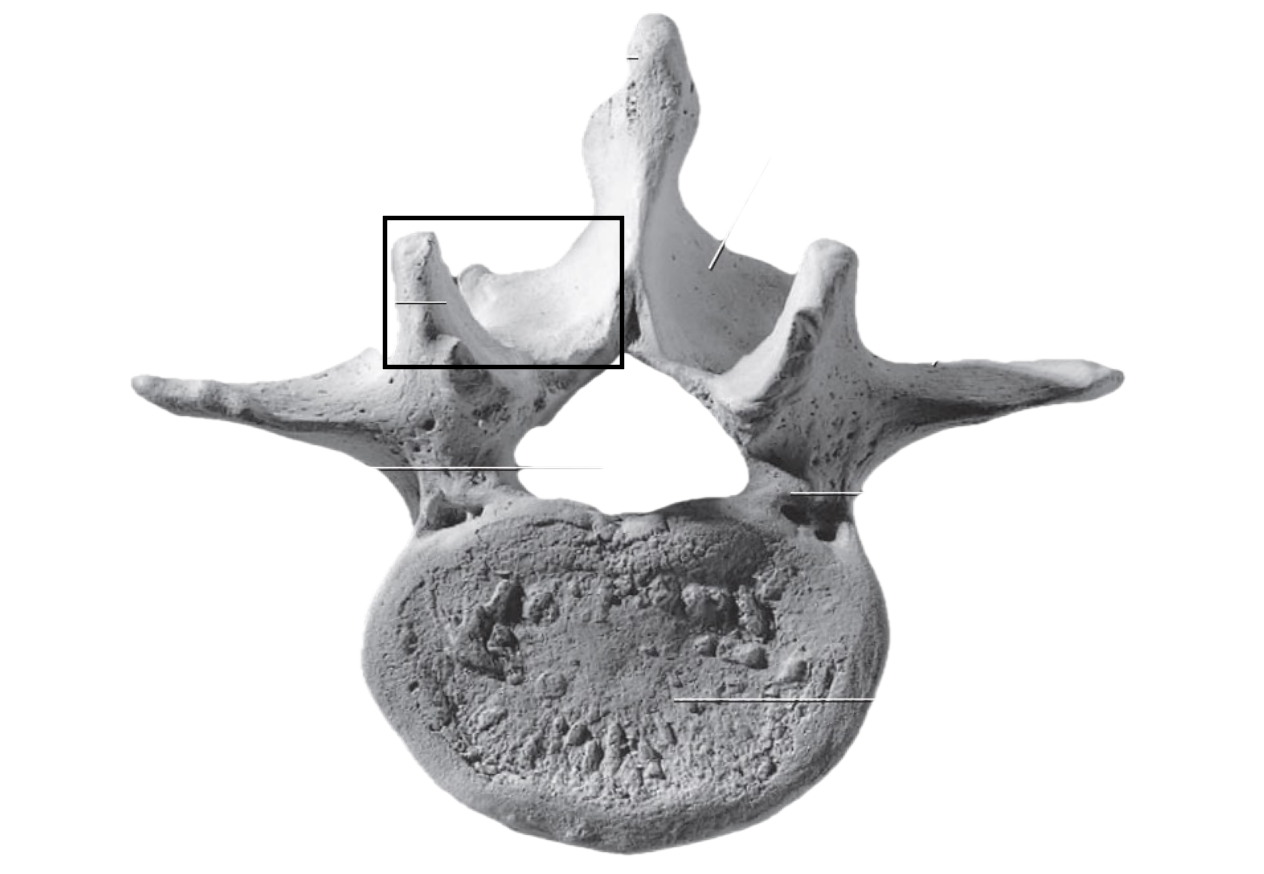
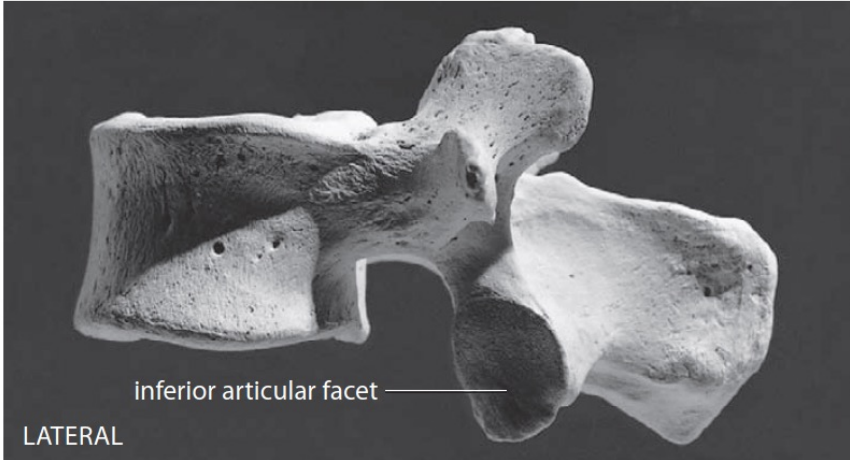
Inferior Articular Facets
Feature of the lumbar vertebrae
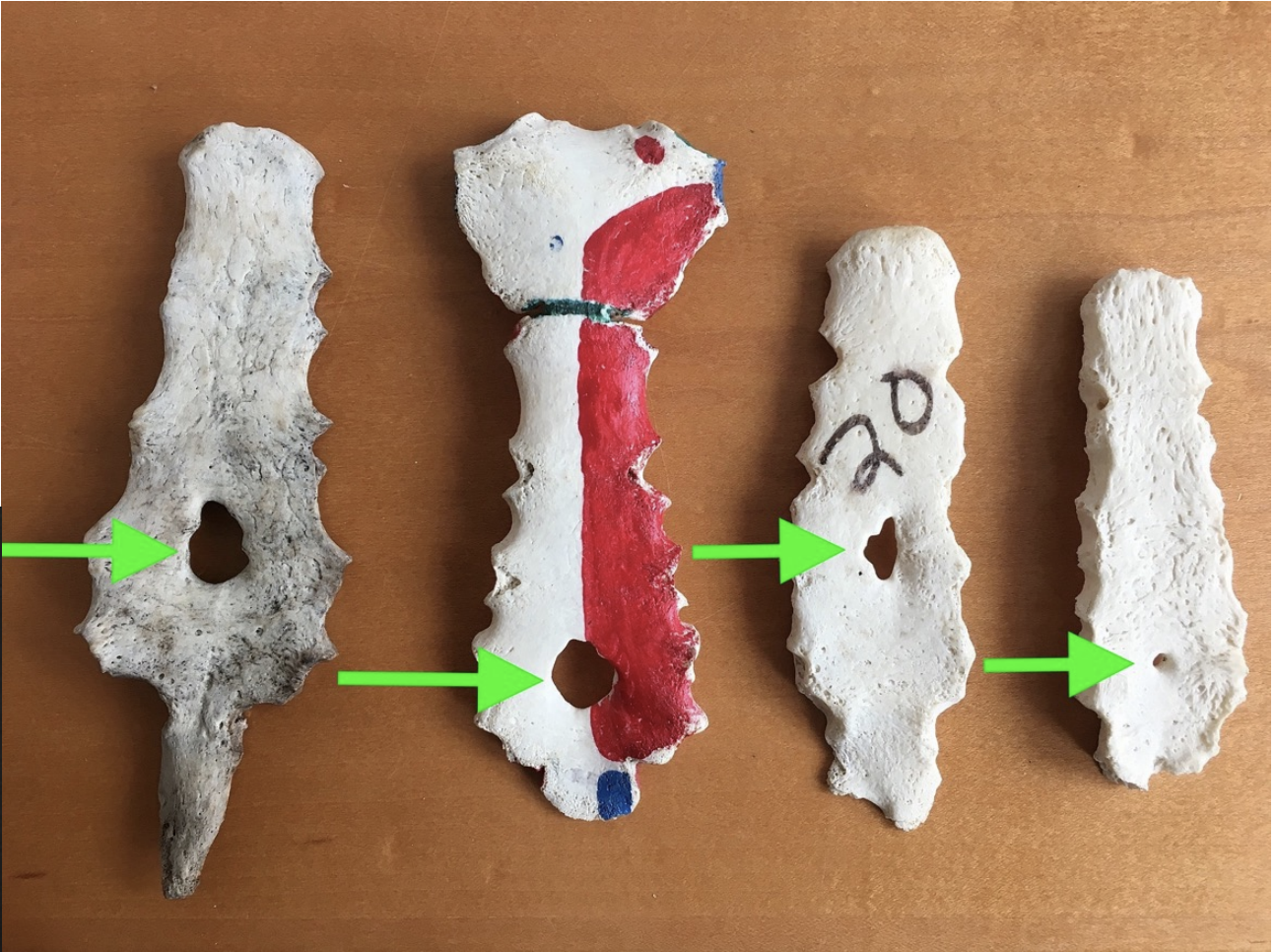
Sternum

Manubrium
Feature of the Sternum

Corpus sterni
Feature of the Sternum, the body

Jugular Notch
Feature of the Sternum

Clavicular Notches
Feature of the Sternum

Sternal Angle
Feature of the Sternum, also called the Manubrio-sternal joint

Xiphoid process
Feature of the Sternum. Not ossified in younger individuals, Can vary in size and shape

Sternal aperture
Feature of the Sternum. High variation, and only present on some Sternums
Ribs

Head
General feature of the ribs

Neck
General feature of the ribs

Tubercle
General feature of the ribs

Costal Groove
General feature of the ribs, helps with siding. Grooves along the bottom

Shaft
General feature of the ribs, the body

Angle
General feature of the ribs

Sternal End
General feature of the ribs
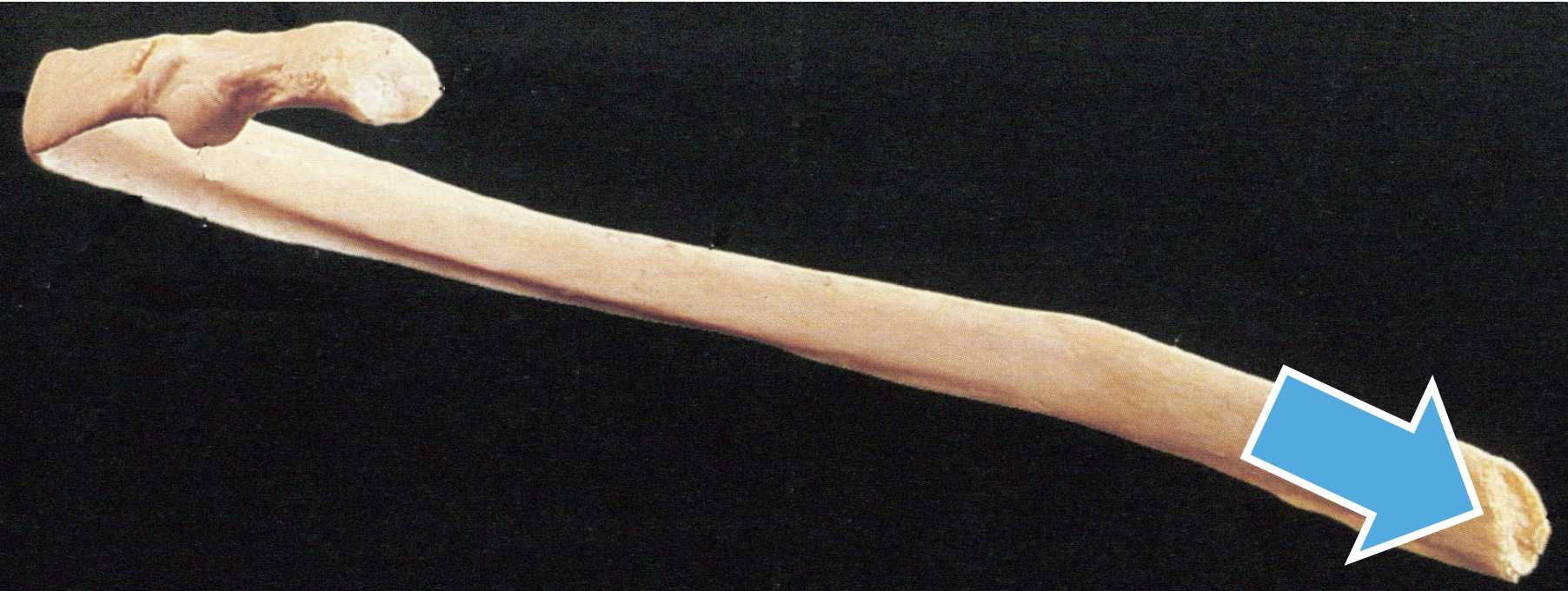
First Rib

Scalene Tubercle
Feature of the first rib
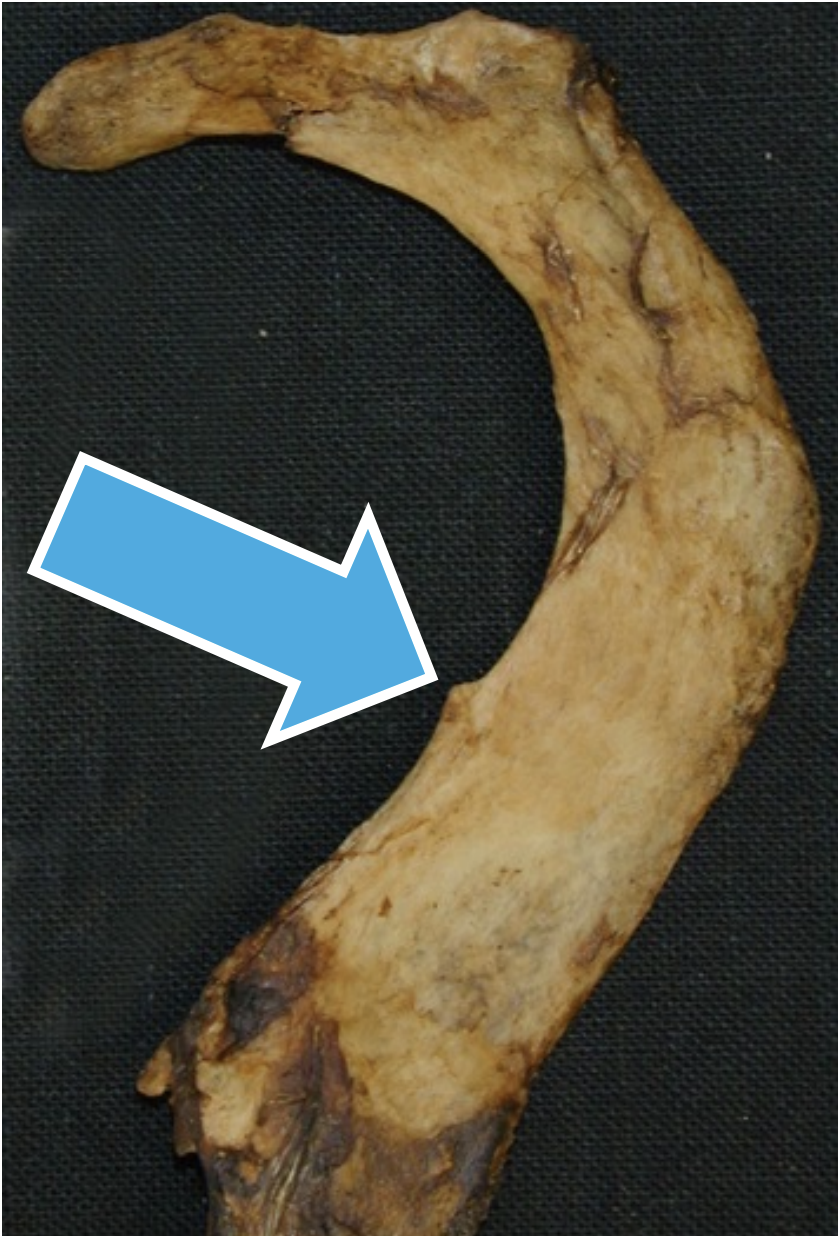
Ribs 11 and 12
The floating ribs
