homeostasis
 Call Kai
 Learn
 Practice Test
 Spaced Repetition
 Match
 Flashcards
 Knowt Play
1/39

There's no tags or description
Looks like no tags are added yet.
40 Terms
the maintenance of a constant, internal environment
• dynamic process
• constant conditions present fewer variables for the body to have
to deal with
• necessary for consistent enzyme function
Homeostasis
Give 7 examples of homeostasis


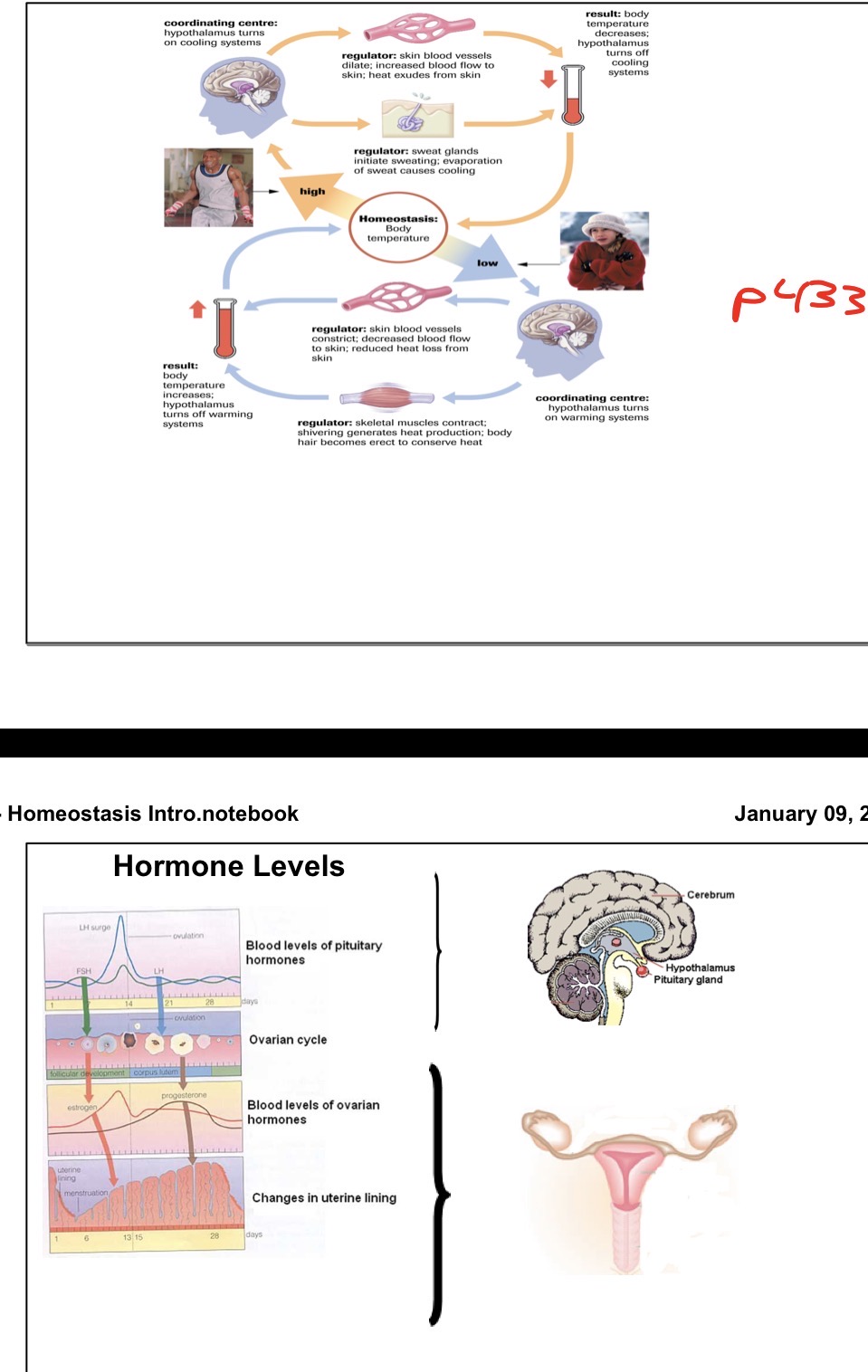
Homeostatic control systems
Positive feedback (give example too)
Enhances response to stimulus
• Less common
• Birth process and breast feeding
Negative Feedback

Define Stimulus : Receptor : Response : Effector : integrator


Thermoregulation
The maintenance of body temperature within a
range that enables the cells to function efficiently.
Ecotherms vs endotherms

The most critical communication systems that maintain internal constancy:
Endocrine system
Nervous system
Role of Excretion (2)
1. The elimination of metabolic waste products from our body
(Not to be confused with secretion or egestion!)
2. The homeostatic regulation of chemical concentrations
Examples of substances to be controlled:
CO2
salts (eg. Ca2+, Na+, H+)
drugs, pesticides, food additives
nitrogenous wastes
Organs of Excretion
Kidneys
Lungs
Skin
Liver
Explain how nitrogenous waste is removed and why it must be removed. Explain what urea is too

What’s in kidneys? Where are they located?

Explain ureters, urinary bladder, and urethra
Ureters
• muscular ducts through which urine flows out of each kidney, and into the ...
Urinary Bladder
• muscular sac in which urine is temporarily stored
• openings are guarded by sphincters
Urethra
• duct through which urine is eliminated from the bladder (urination)

Label nephron and give descriptions of parts. Btw top half is cortex and bottom is medulla

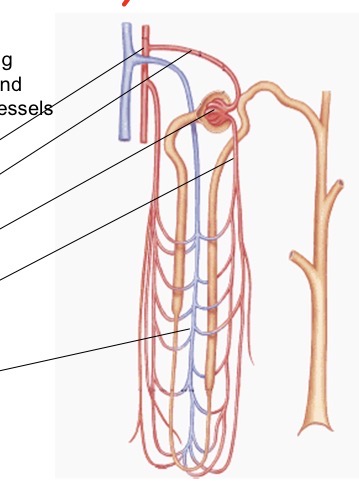
Label the blood pathway

What's in Blood (list 6 things)
water
• cells
• protein
• ions (Na+, K+, ...)
• soluble nutrients (glucose, a.a., ...)
• urea
What happens in Glomerulus/Bowmans Capsule:

What happens in Proximal tubule:

What happens in the loop of henle?

What happens in the distal tubule?

What happens in the collecting tubule


Explain how urination works and voluntary urination

Other excretory organs

Explain 3 hormones of endocrine control

Explain endocrine glands vs exocrine glands
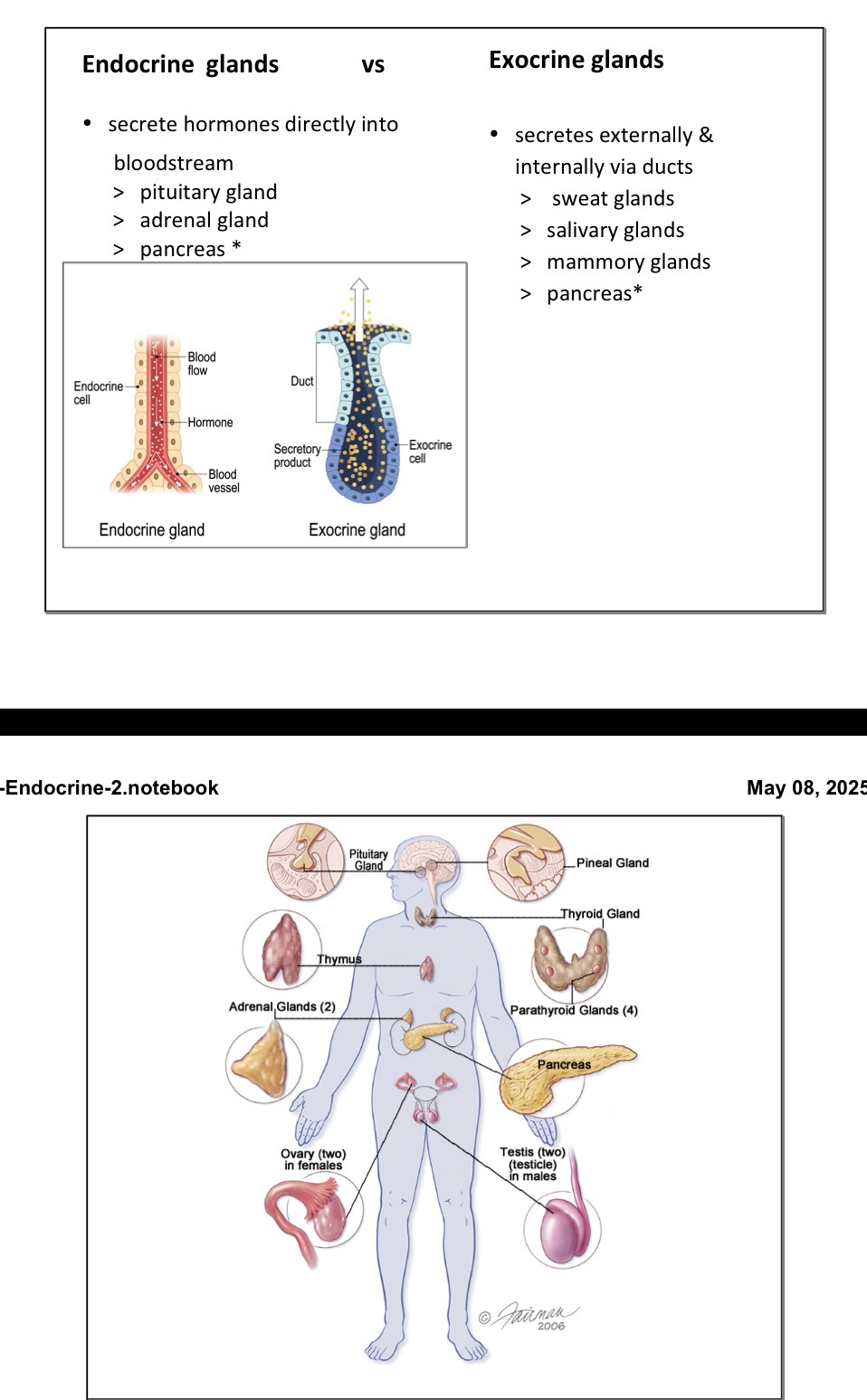
Hormones
•compounds produced by the body that have a specific effect on cells
> Target hormones affect specific cells & tissues
« gastrin stimulates stomach cells produce enzymes
> Nontarget hormones affect many cells throughout the body
« insulin increases permeability many cells for glucose
4 steps of hormone action

Hormone secretion is stimulated in one of three ways:

How do protein hormones stimulate the target?
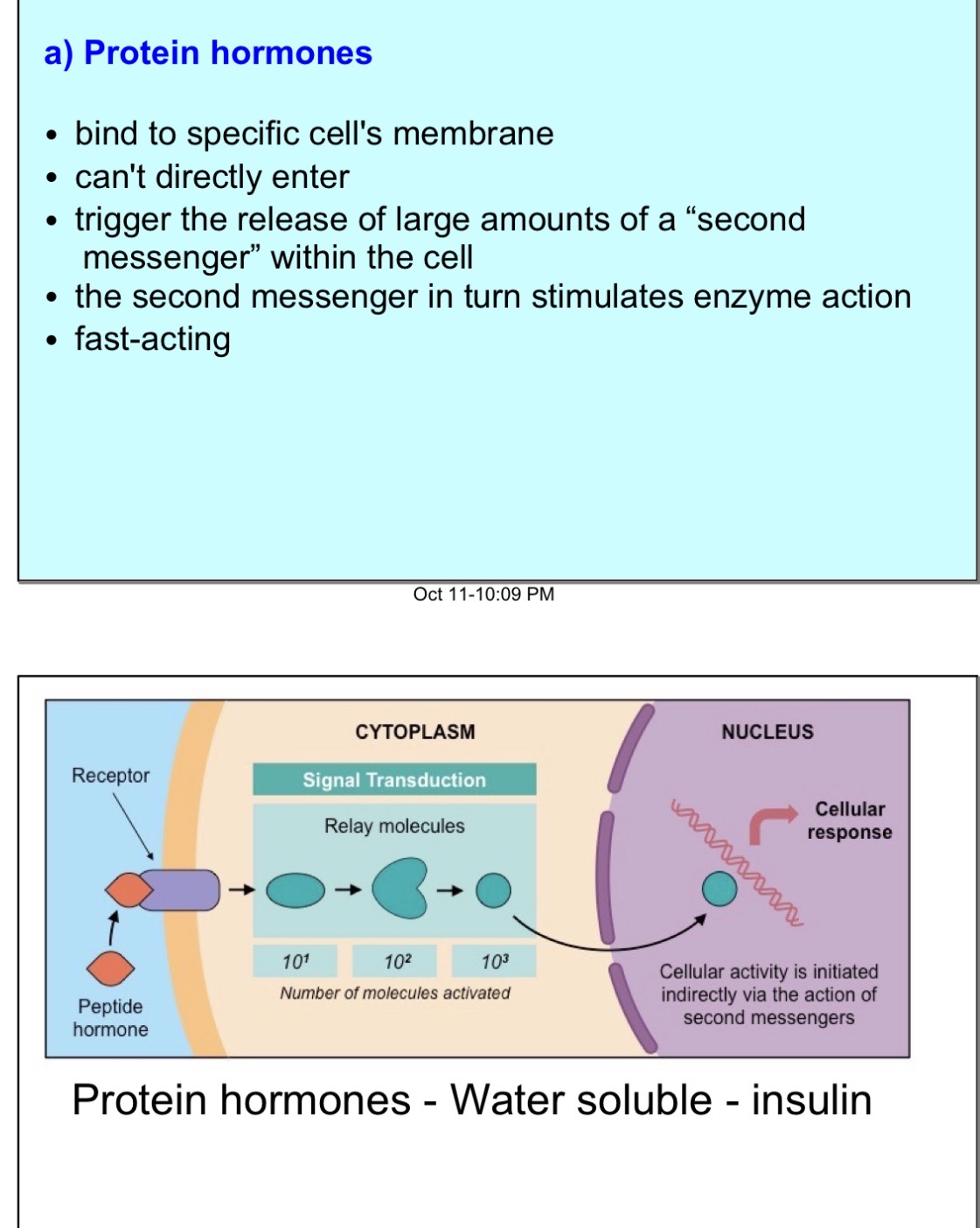
How do steroid hormones stimulate the target?

Negative Feedback
the actions on the target cells restore normal levels
• these ‘normal’ levels then send a signal back to the endocrine
gland to stop secreting their hormone
Hypothalamus

Explain posterior lobe

Explain anterior lobe

Explain tropic vs non-tropic hormones
