Atomic structure and atomic models - Science Revision
 Call Kai
 Learn
 Practice Test
 Spaced Repetition
 Match
 Flashcards
 Knowt Play
1/21

There's no tags or description
Looks like no tags are added yet.
22 Terms
What is an atom?
The smallest unit of an element that retains its properties.
What is an element?
A pure substance made of only one type of atom.
What is a compound?
A substance made of two or more different elements chemically bonded together.
What are the three subatomic particles?
Protons, neutrons and electorns.
Where as protons, neutrons and electrons found?
Protons: nucleus
Neutrons: nucleus
Electrons: shells around the nucleus
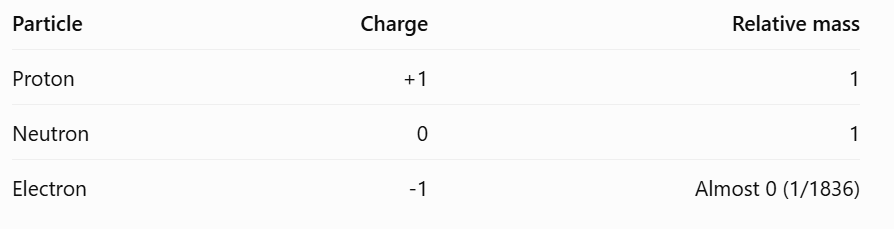
What are their relative charges and masses.
What is the atomic number?
The number of protons in an atom.
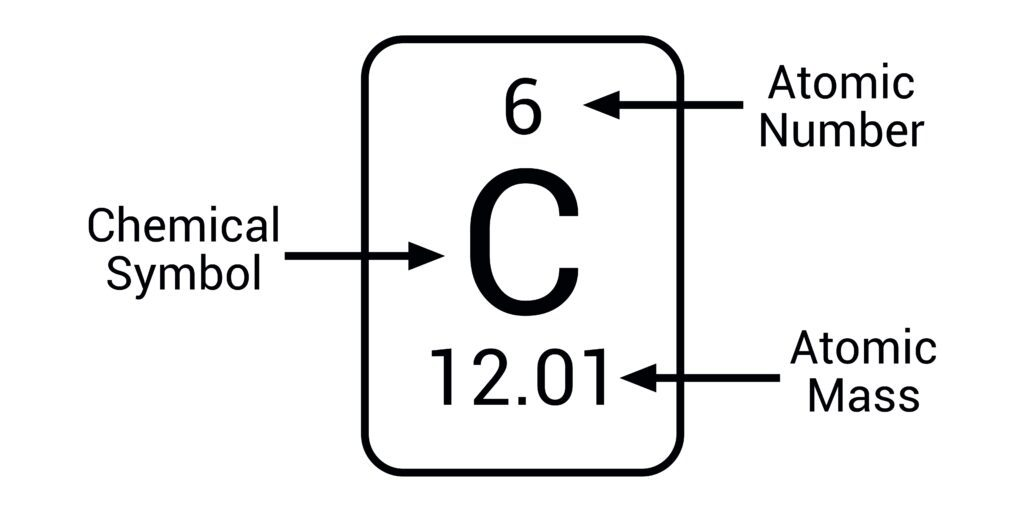
What is the mass number?
The total number of protons and neutrons.
How do you calculate the number of neutrons?
Mass number - atomic number
How many electrons does a neutral atom have?
The same number as protons.
How do you calculate the number of protons?
Atomic number = number of protons.
What is an ion?
An atom that has gained or lost electrons, giving it an electrical charge.
What happens when an atom forms a positive ion?
It loses electrons
What happens when an atom forms a negative ion?
It gains electrons
How do you calculate electrons in simple ions?
Na⁺: loses 1 electron.
Mg²⁺: loses 2 electrons.
Cl⁻: gains 1 electron.
The small raised number tells you how many electrons were gained or lost.
How have atomic models changed over time?
Scientists used new experimental evidence to improve their models of the atom.
What was Dalton's atomic model?
Atoms were tiny, solid, indivisible spheres.
What was Thomson’s atomic model?
The plum pudding model: electrons embedded in a positively charged sphere.
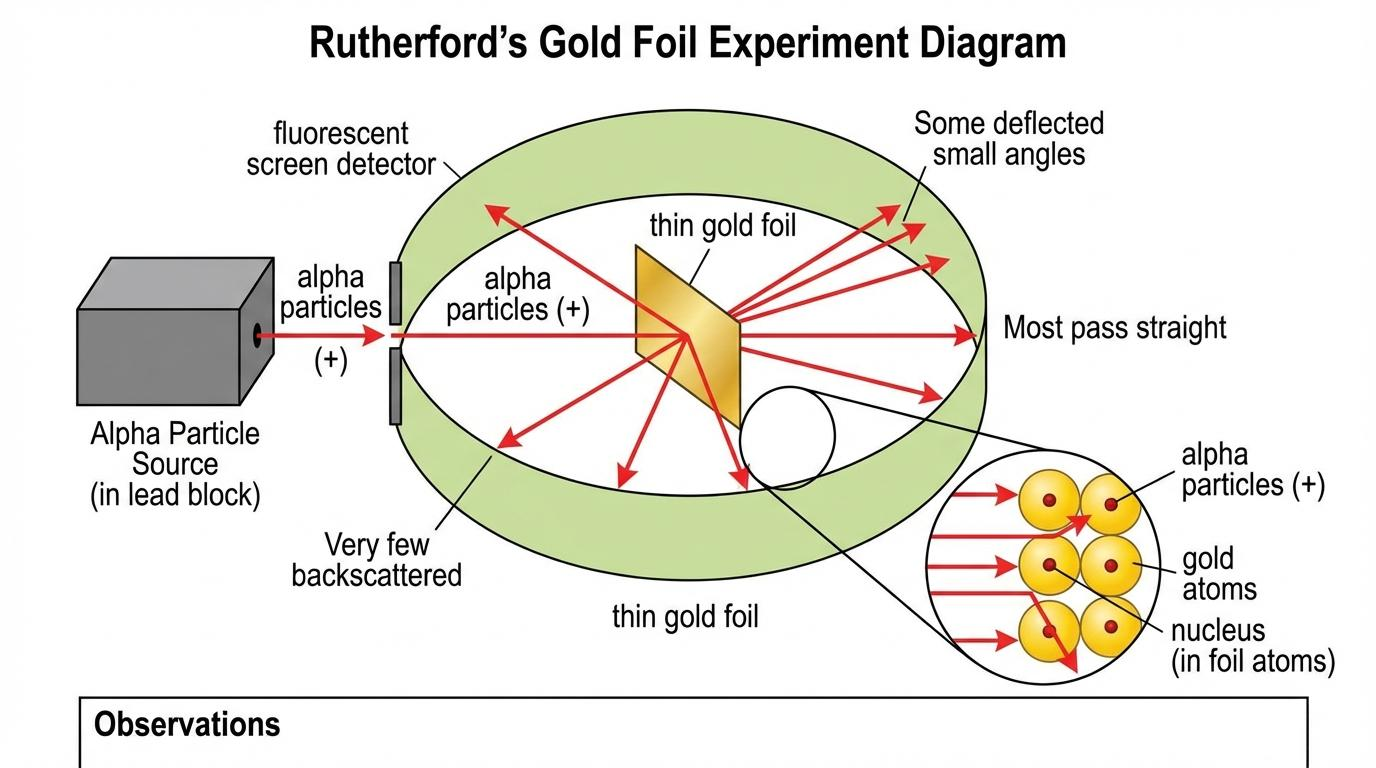
What did Rutherford’s experiment involve?
Firing positively charged alpha particles at a thin sheet of gold foil.
What did Rutherford observe?
Most alpha particles passed straight through.
Some were deflected.
Very few bounced back.
What did Rutherford conclude?
Atoms are mostly empty space, with a tiny, dense, positively charged nucleus.
How did Rutherford's evidence change the atomic model?
It disproved the plum pudding model and showed that positive charge and most of the atom's mass are concentrated in a small nucleus.