Blood Pressure and Antihypertensive Drugs
 Call Kai
 Learn
 Practice Test
 Spaced Repetition
 Match
 Flashcards
 Knowt Play
1/109

There's no tags or description
Looks like no tags are added yet.
110 Terms
Sympathetic nervous system
Produces the fight-or-flight response.
Parasympathetic nervous system
Produces the rest-and-digest response.
Mean arterial pressure
Cardiac output x total peripheral resistance
Cardiac output
Stroke volume multiplied by heart rate.
Stroke volume determinants
Cardiac contractility, preload, and afterload.
Baroreceptor response to decreased blood pressure
Increases sympathetic activity and inhibits vagal activity.

Reflex tachycardia
Increased heart rate following a fall in blood pressure.
Reflex bradycardia
Decreased heart rate following a rise in blood pressure.
Vascular α₁ receptor activation
Produces vasoconstriction.

Cardiac β₁ receptor activation
Increases heart rate → reflex tachycardia

Diuretics in hypertension
Lower circulating volume.
β-Blockers in hypertension
Reduce heart rate, contractility, and renin secretion.
Central α₂ agonists in hypertension
Reduce sympathetic tone.
Peripheral α₁ antagonists in hypertension
Relax vascular smooth muscle.
Calcium channel blockers in hypertension
Decrease peripheral vascular resistance.

RAAS antagonists in hypertension
Decrease peripheral resistance and sodium retention.
Prazosin
A selective α₁ antagonist with a three-hour half-life.
Terazosin
A selective α₁ antagonist with a 12-hour half-life.
Doxazosin
A selective α₁ antagonist with a 20-hour half-life.
Selective α₁ antagonists
Produce vasodilation with less reflex tachycardia than nonselective α antagonists.
α₁ antagonist uses
Benign prostatic hyperplasia, hypertension, and Raynaud's disease.
First-dose phenomenon
Orthostatic hypotension and syncope, particularly after the first α₁ antagonist dose.
Presynaptic α₂ autoreceptors
Inhibit sympathetic neurotransmitter release.
α₂ receptor signaling
Uses Gi to inhibit adenylyl cyclase and reduce cAMP-dependent protein kinase activity.
Central α₂ agonist cardiovascular effects
Decrease heart rate, contractility, renin release, and vasoconstriction.
Clonidine
A central α₂ agonist used for hypertension, neuropathic pain, opioid withdrawal, and ADHD.
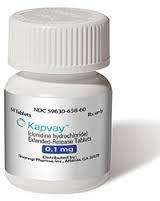
Clonidine withdrawal
Can cause hypertension, tachycardia, angina, or myocardial infarction.
Clonidine adverse effects
Hypotension, sedation, and dry mouth.
Guanabenz
A direct α₂ agonist with an approximately 6-hour half-life.
Guanfacine
A direct α₂ agonist used for hypertension and ADHD.
Methyldopa
A prodrug converted to the central α₂ agonist α-methylnorepinephrine.
Methyldopate
A water-soluble ester used for parenteral administration.
Methyldopa in pregnancy
Used to treat hypertension, especially during pregnancy.
β-Blockers in angina
Decrease myocardial oxygen demand by reducing heart rate and contractility.
β-Blockers in arrhythmias
Slow atrioventricular nodal conduction.
β-Blockers in heart failure
Decrease chronic catecholamine overstimulation.
Propranolol
A nonselective β₁ and β₂ antagonist with extensive first-pass metabolism.
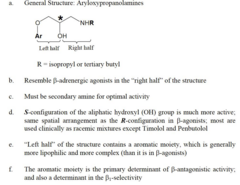
Propranolol and hypoglycemia
Inhibits compensatory glycogenolysis and glucose release.
Nonselective β-blockers and asthma
β₂ blockade can increase airway resistance and cause bronchoconstriction.
Nadolol
A nonselective β-blocker largely excreted unchanged in urine.
Nadolol half-life
Approximately 20 hours.
Ophthalmic timolol
Treats open-angle glaucoma by decreasing aqueous humor production.
Pindolol
A nonselective β-blocker with intrinsic sympathomimetic activity.
Intrinsic sympathomimetic activity
Partial agonist activity associated with less bradycardia and fewer lipid abnormalities.
Metoprolol
A cardioselective β₁ blocker with significant first-pass metabolism.

Atenolol
A water-soluble, cardioselective β₁ blocker with a six- to nine-hour half-life.
Esmolol
A short-acting β₁ blocker hydrolyzed rapidly by red blood cell esterases.
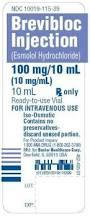
Esmolol half-life
Approximately nine minutes.
Esmolol uses
Supraventricular tachycardia, atrial fibrillation or flutter, and perioperative hypertension.
Nebivolol
A selective β₁ blocker that produces vasodilation through nitric oxide.
β-Blocker withdrawal
Abrupt discontinuation can worsen hypertension or angina and cause myocardial infarction.
β-Blocker discontinuation
Taper the dose to reduce withdrawal risk.
β-Blockers and diabetes
Can mask symptoms of hypoglycemia.
β-Blocker adverse effects
Bradycardia, atrioventricular block, sedation, and cold extremities.
Labetalol
A combined α₁ and nonselective β antagonist used in hypertensive emergencies.

Labetalol β-to-α blocking ratio
3:1.
Carvedilol
A combined α₁ and nonselective β antagonist used in heart failure and hypertension.
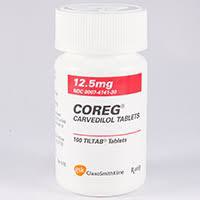
Carvedilol β-to-α blocking ratio
10:1.
Combined α₁ and β blockade
β blockade prevents reflex tachycardia associated with α₁ blockade.
Fenoldopam
A dopamine-1 receptor agonist used for severe hypertension.
Fenoldopam and renal perfusion
Maintains or increases renal perfusion while lowering blood pressure.
Fenoldopam and glaucoma
Avoid use because it increases intraocular pressure.
RAAS activation
A fall in blood pressure activates mechanisms that raise blood volume and constrict vessels.
Renin
An aspartic protease that converts angiotensinogen to angiotensin I.
Angiotensin I
An inactive decapeptide precursor of angiotensin II.
Angiotensin-converting enzyme
A zinc-containing dipeptidase that converts angiotensin I to angiotensin II.
Angiotensin II
An active octapeptide that promotes vasoconstriction and sodium and fluid retention.
ACE and bradykinin
ACE inactivates bradykinin, which promotes vasodilation partly through prostaglandins.
Aliskiren
A direct renin inhibitor that decreases angiotensin I formation.
Aliskiren in pregnancy
Avoid in pregnant and nursing patients.
β₁ blockers and renin
Inhibit renin release through β₁ receptors on renal juxtaglomerular cells.
ACE inhibitor naming
Most drug names end in -pril.
ACE inhibitor prodrugs
Many ester prodrugs require esterase hydrolysis to form active acids.
Captopril
A sulfhydryl-containing ACE inhibitor that is not a prodrug.
Captopril adverse effects
Rash and rare neutropenia or agranulocytosis.
Fosinopril
A phosphorus-containing ACE inhibitor prodrug.
Enalapril
A prodrug hydrolyzed to the active diacid enalaprilat.
Enalaprilat administration
Intravenous.
Lisinopril
A dicarboxyl-containing ACE inhibitor that is not a prodrug.
Lisinopril half-life
Approximately 12 hours.
Quinapril
A dicarboxyl-containing ACE inhibitor prodrug.
ACE inhibitor cardiovascular effects
Reduce angiotensin II-mediated vasoconstriction and myocardial remodeling.
ACE inhibitors in chronic kidney disease
Diminish proteinuria and help stabilize renal function.
ACE inhibitor adverse effects
Cough, angioedema, and hyperkalemia.
ACE inhibitor angioedema
Bradykinin accumulation can cause swelling of the lips and tongue.
ACE inhibitor hyperkalemia
Results from reduced aldosterone production.
NSAIDs and ACE inhibitors
NSAIDs can reduce ACE inhibitor hypotensive effects by limiting prostaglandin-mediated vasodilation.
ACE inhibitors and pregnancy
Avoid because of fetal hypotension, renal failure, and mortality.
ACE inhibitors or ARBs in renal artery stenosis
Avoid continued use if glomerular filtration rate falls by more than 30%.
Angiotensin II receptor blockers
Preferentially antagonize AT₁ receptors and reduce angiotensin II-mediated vasoconstriction.
Losartan
A prototypical angiotensin II receptor blocker.
Losartan active metabolite
EXP 3174 is an active carboxylic acid metabolite.
ARB naming
Drug names commonly end in -sartan.
ARBs and bradykinin
Do not inhibit bradykinin breakdown and lack the persistent ACE inhibitor cough.
ARB adverse effects
Hypotension, hyperkalemia, reduced GFR, fetal pathology, and occasional angioedema.
Valsartan combination
Can be combined with sacubitril.
Thiazide diuretic site and target
Block the sodium-chloride symporter in the distal convoluted tubule.
Initial thiazide antihypertensive effect
Diuresis reduces blood volume and cardiac output.
Long-term thiazide antihypertensive effect
Lowers peripheral vascular resistance.
Thiazide and thiazide-like examples
Hydrochlorothiazide, chlorothiazide, chlorthalidone, indapamide, and metolazone.