chapter 8: fluid, electrolyte, and acid-base imbalances
 Call Kai
 Learn
Learn Practice Test
 Spaced Repetition
 Match
Match Flashcards
 Knowt Play
1/61

There's no tags or description
Looks like no tags are added yet.
Name | Mastery | Learn | Test | Matching | Spaced | Call with Kai | Chat |
|---|
No analytics yet
Send a link to your students to track their progress
62 Terms
intracellular fluid compartment (ECF)
fluids inside the cells
extracellular fluid compartment (ECF)
consist of:
intravascular fluid (IVF): blood
interstitial fluid (ISF): fluid surrounding cells
transcellular fluids: cerebrospinal fluid (CSF), various secretions
distribution of water within the body
newborn infant: 75-80%
adult male: 55-60%
adult female: 50-55%
% w/ more water = higher chance for dehydration
distribution of major electrolytes within extra- & intracellular fluids
2/3 ICF (60-67%) - K & PO (phosphate)
1/3 ECF (33-40%) - Na & Cl-
interstitial fluid: 80%
blood plasma: 20%
fluid circulates throughout body via:
filtration and osmosis
filtration:
pushes fluid out of blood vessel
osmosis:
pulls water back toward blood vessel
water moves between vascular and interstitial compartments, with two pressures:
hydrostatic pressure and osmostic pressure
hydrostatic pressure
promotes filtration
osmotic pressure
promotes osmosis (reabsorption)
sodium is primary cation in:
ECF
sodium regulates:
osmotic forces, and diffuses between vascular and interstitial fluids
sodium transports into and out of:
cells by sodium-potassium pump, while actively secreting into mucus and other secretions
sodium exists in form of:
sodium chloride + sodium bicarbonate
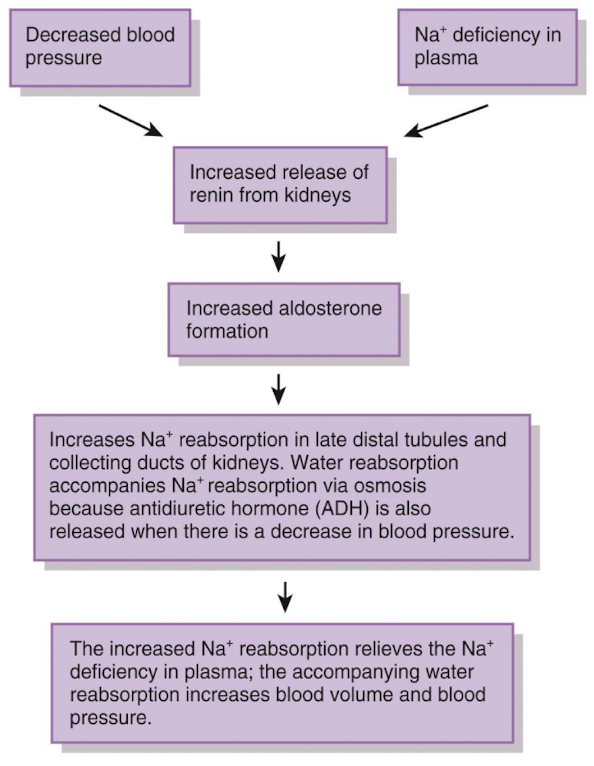
aldosterone
increases sodium reabsorption from urine back into blood, and increases potassium excretion in urine
atrial natriuretic peptide (ANP)
increases excretion of sodium into urine, and increases water excretion due to osmosis
blood pressure decreases due to loss of blood volume!!

sodium imbalance hyponatremia
plasma sodium concentration below 135 mEq/L
common causes: losses from excessive sweating, vomiting, use of diuretic drugs + low-salt diet, excessive water intake
hormonal imbalances: insufficient aldosterone - decreases Na+ reabsorption, excessive ADH secretion: increases water reabsorption
manifestations: result of decreased osmotic pressure in ECF compartment
water out of blood: ISF becomes hypotonic, fluid shifts into cell, and cerebral edema results in confusion, headache, seizures
low sodium levels cause fluid imbalance between compartments, causing:
hypotonic alteration, which is when ECF is less concentrated (hypotonic)
sodium imbalance hypernatremia
plasma sodium above 145 mEq/L
common causes: insufficient ADH, water diarrhea, ingestion of large amounts of sodium without enough water
manifestations: dry, rough mucous membranes, weakness, increased thirst
hypertonic alteration
ECF more concentrated, hypertonic
edema
excessive amount of fluid in the interstitial compartment, which causes swelling or enlargment of tissue + may impair tissue perfussion
causes of edema:
increased capillary hydrostatic pressure (due to high BP or incr. BV)
loss of plasma proteins, particularly albumin (decreased plasma osmo. pressure)
obstruction of lymphatic circulation (excess fluid not returned to general circulation)
increased capillary permeability (result from inflammatory response or infection)
manifestations of edema
pitting edema: presence of excess interstitial fluid: transudate; fluid moves aside when pressure is applied by finger - causing a pit
non-pitting edema: presence of excess fluid rich in protein (exudate: infllamatory fluid)
swelling, pain, impaired circulation: ischemia leading to tissue breakdown
fluid deficit - dehydration results from:
insufficient body fluid
inadequate intake or excessive loss
ex: vomiting, diarrhea, excessive sweating
diabetic ketoacidosis: loss of fluid, electrolytes, and glucose in urine
use of concentrated formula in infants
third spacing of fluid in dehydration:
fluid shifts out of blood into body cavity + can no longer reenter vascular compartment
common sites: ascites (accumulation of fluid in peritoneal cavity) + pleural effusion (amount of fluid in pleural cavity)
result of: high osmotic pressure of ISF, as in burns
increased capillary permeability, as in some gram-negative infections
manifestations: dry mucous membranes in mouth, decreased skin turgor, low BP, increased hematocrit, decreased mental function
diabetes insipidus
deficiency of ADH or decreased response to it = patients unable to concentrate urine during periods of water restriction + excrete large volumes of urine
central or neurogenic diabetes insipidus & nephrogenic diabetes insipidus

central or neurogenic diabetes insipidus
occurs because of a defect in synthesis or release of ADH
nephrogenic diabetes insipidus
occurs because kidneys do not response to ADH
SIADH (syndrome of inappropaite ADH) is:
failure of negative feedback system that regulates release + inhibition of ADH = results in excess ADH
causes: nervous system disorders (head trauma, meningitis), excess ADH (increased reabsorption of water), causing urine to be concentrated + decreased Na+ and dilutes blood
potassium is a major cation in:
intracellular (ICF)
for potassium, serum levels are:
low, between 3.5-5.0 mEq/L
insulin promotes movement of:
potassium into cells
potassium level influenced by:
acid-base balance, with excess potassium ions in interstitial fluid potentially leading to hyperkalemia (life threatening)
potassium imbalance hypokalemia
plasma potassium concentration below 3.5 mEq/L
causes: excessive loss due to diarrhea, diurses associated w/ some diuretic drugs, excessive aldosterone, and decreased dietary intake (EDs)
manifestations: interfere with neuromuscular function - muscles less responsive to stimuli = may progress to paralysis
potassium imbalance hyperkalemia
plasma potassium concentration above 5 mEq/L
causes: renal failure, “potassium-sparing” diuretics, leakage of intracellular potassium into extracellular fluids, and displacement of potassium
manifestations: cardiac dysrhythmias are common since hkalemia may progress to cardiac arrest
severe hyperkalemia = prolonged depolarization + impair repolarization, which decreased excitability cause cardiac arrest
severe hyperkalemia on EKG: wide QRS, longer PR, and tall narrow T wave

role of calcium in body:
important extracellular cation that is stored in bone and maintains stability of nerve membranes + is required for muscle concentrations and blood clotting
balance of calcium is controlled by:
parathyroid hormone (PTH) and calcitonin
vitamin D promotes:
calcium absorption from intestine, which is activated in kidneys into calcitriol
ECF calcium exists in 3 forms:
protein bound: 40% of ECF calcium bound to albumin
complexed: 10% is chelated with citrate, phosphate, and sulfate
ionized (free): 50% of ECF calcium present in ionized form
calcium imbalance hypocalcemia
plasma calcium concentration below 4.3 mEq/L
causes: hypoparathyroidism (PTH + vitamin D stimulate Ca reabsorp. in nephron)
deficient serum albumin (40% of ECF calcium bound to albumin)
renal failure: abnorm. loss of calcium from kidney
manifestations: increase in excitability of nerve membranes + tetany (spontaneous stimulation of skeletal muscle
calcium imbalance hypercalcemia
plasma calcium concentration above 5.3 mEq/L
causes: uncontrolled release of calcium from bones caused by neoplasms
hyperparathyroidism: excess PTH released more Ca from bones into blood
excessive calcium + vitamin D intake
manifestations: decreased neural excitability (lethargy, stupor) + depressed neuromuscular activity (muscle weakness + loss of muscle tone)
magnesium
intracellular ion with lower range of plasma concentration 1.8-3.0 mg/dl
hypomagnesemia
occurs with alcoholism
neuromuscular manifestations: increased reflexes, convulsion
cardiovascular manifestations: hypertension, cardiac dysrhythmias
hypermagnesemia
occurs with renal failure
depressed neuromuscular function: decreased reflexes + muscle weakness
acid-base balance mainly concerned with two ions:
hydrogen (H+) and bicarbonate (HCO3-)
alterations of ____ and ____ concentrantions in body fluids are:
H+ and HCO3-, common in disease process
buffers in blood respond to:
pH changes immediately
respiratory system alters:
carbonic acid levels to change pH
kidneys modify excretion rate of acids and:
absorption of bicarbonate ions to regulate pH
kidneys slowly mechanism to initiate control, but most significant + long term
acidosis
blood pH below 7.5
respiratory acidosis
blood pH drops due to excessive retention of CO2 leading to excess H2CO3; breathing depressed CO2 elevates
respiratory acidosis may be result of + compensation:
acute respiratory problems: pneumonia, airway obstructions, chest injuries or drugs that depress respiratory control center
chronic respiratory disorders: common with chronic obstructive pulmonary disease
manifestations: shortness of breath, confusion, and headaches
compensation: kidneys conserve bicarbonate + eliminate H+
breathing depressed, CO2 elevates, pH = <7.35
metabolic acidosis
arterial blood levels of H+ increases, HCO3- falls
metabolic acidosis is result of + compensation:
increased non-carbonic acids or excessive loss of bicarbonate ions to buffer hydrogen
diarrhea: loss of bicarbonate from intestines
chronic kidney disease: decreased excretion of acids
diabetic ketoacidosis: increased formation of ketones (acidic)
compensation: hyperventilation, and renal (kidneys conserve bicarbonate and eliminate H+)
hydrogen increased, bicarbonate decreased = pH exceeds 7.45
manifestations of metabolic acidosis
headache, decreased BP, hyperkalemia, changes in LOC (confusion, drowsiness), muscle twitching, nausea, vomitting, etc
alkalosis
blood pH above 7.45
respiratory alkalosis
blood pH rises due to excessive loss of CO2 as in hyperventilation
respiratory alkalosis is result of + compensation:
hyperventilation
caused by: anxiety, high fever, head injuries, brainstem tumor
manifestations: dizziness, lightheadedness, and tingling in the hands and feet.
compensation: kidneys conserve H+
hyperventilation decreases CO2, pH exceeds 7.45
metabolic alkalosis
arterial blood levels of H+ falls, HCO3- rises
metabolic alkalosis is result of:
increase in serum bicarbonate ion:
caused by loss of hydrochloric acid from stomach, excessive ingestion of antacids
compensation: respiratory (breathing is depressed to retain CO2) + renal (kidneys conserve H+ and eliminate bicarbonate)
manifestations of metabolic alkalosis
restlessness followed by lethargy, dysrhythmias (tachycardia), compensatory (hypoventilation), confusion (LOC down, dizzy), nausea, vomitting, diarrhea
acidosis and alkalosis
