FPP - All Muscles

5.0(1)
Studied by 14 people
call kaiCall Kai
learnLearn
examPractice Test
spaced repetitionSpaced Repetition
heart puzzleMatch
flashcardsFlashcards
GameKnowt Play
Card Sorting

1/41

encourage image

There's no tags or description

Looks like no tags are added yet.

42 Terms

1
New cards

Pectoralis Major

Origin:

Anterior border of medial 1/3 of clavicle

Anterior aspect of sternum

Costal cartilages of ribs 1-6 anterior recuts sheath


Insertion:

Lateral lip of intertubercular sulcus


Movement:

Humeral flexion

Humeral adduction

Internal rotation of humerus

Horizontal adduction of the humerus
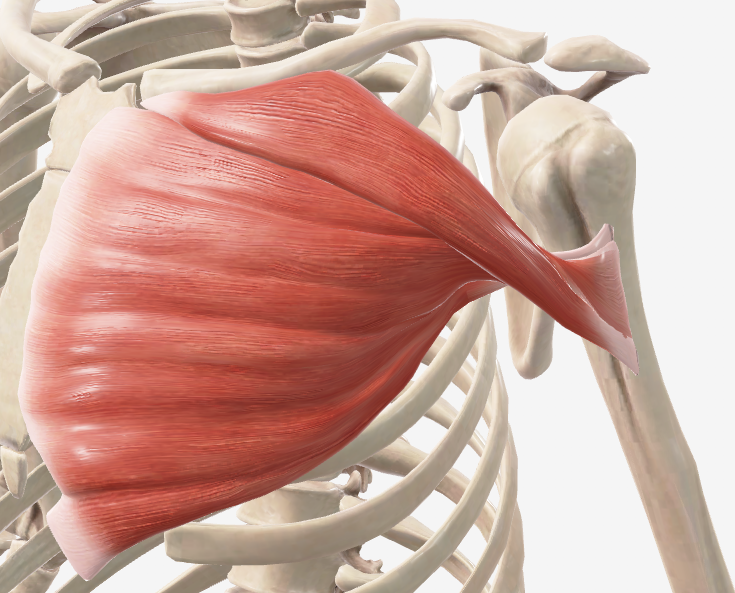
<p><strong><u>Origin:</u></strong></p><p>Anterior border of medial 1/3 of clavicle</p><p>Anterior aspect of sternum</p><p>Costal cartilages of ribs 1-6 anterior recuts sheath</p><p></p><p><strong><u>Insertion:</u></strong></p><p>Lateral lip of intertubercular sulcus</p><p></p><p><strong><u>Movement:</u></strong></p><p>Humeral flexion</p><p>Humeral adduction</p><p>Internal rotation of humerus</p><p>Horizontal adduction of the humerus</p>
2
New cards

Latissimus Dorsi

Origin:

Spinous process of T7 - L5

Posterior 1/2 of iliac crest

Ribs 9-12

Inferior angle of scapula


Insertion:

Intertubercular sulcus


Movement:

Humeral extension

Humeral adduction

Internal rotation of humerus

<p><strong><u>Origin:</u></strong></p><p>Spinous process of T7 - L5</p><p>Posterior 1/2 of iliac crest</p><p>Ribs 9-12</p><p>Inferior angle of scapula</p><p></p><p><strong><u>Insertion:</u></strong></p><p>Intertubercular sulcus</p><p></p><p><strong><u>Movement:</u></strong></p><p>Humeral extension</p><p>Humeral adduction</p><p>Internal rotation of humerus</p>
3
New cards

Trapezius

Origin:

External occipital protuberance and superior nuchal line of occipital bone

Nuchal ligament

Spinous processes of C7 - T12


Insertion:

Posterior aspect of lateral 1/3 of clavicle

Acromion

Spine of scapula


Movement:

Upper fibers:

Scapular elevation

Scapular upward rotation (with lower fibers)

Neck extension and lateral flexion (if scapula is fixed)

Middle fibers:

Scapular retraction

Lower Fibers:

Scapular depression

Scapular upward rotation (with upper fibers)
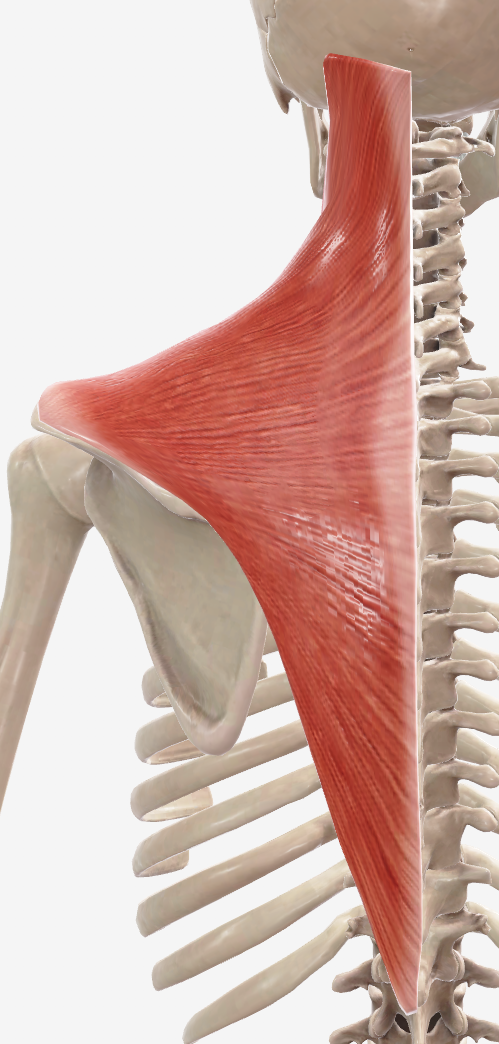
<p><strong><u>Origin:</u></strong></p><p>External occipital protuberance and superior nuchal line of occipital bone</p><p>Nuchal ligament</p><p>Spinous processes of C7 - T12</p><p></p><p><strong><u>Insertion:</u></strong></p><p>Posterior aspect of lateral 1/3 of clavicle</p><p>Acromion</p><p>Spine of scapula</p><p></p><p><strong><u>Movement:</u></strong></p><p><em><u>Upper fibers:</u></em></p><p>Scapular elevation</p><p>Scapular upward rotation (with lower fibers)</p><p>Neck extension and lateral flexion (if scapula is fixed)</p><p><em><u>Middle fibers:</u></em></p><p>Scapular retraction</p><p><em><u>Lower Fibers:</u></em></p><p>Scapular depression</p><p>Scapular upward rotation (with upper fibers)</p>
4
New cards

Deltoid

Origin:

Lateral 1/3 of clavicle

Acromion

Spine of scapula


Insertion:

Deltoid tuberosity of humerus


Movement:

Anterior:

Humeral flexion

Humeral internal rotation

Middle:

Humeral abduction

Posterior:

Humeral extension

Humeral external rotation

Humeral horizontal abduction
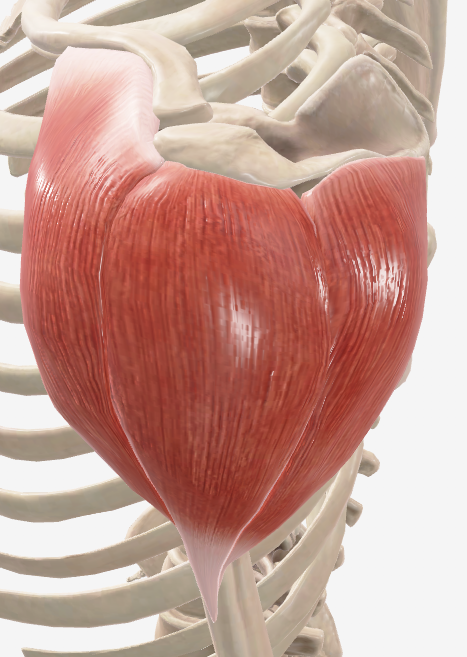
<p><strong><u>Origin:</u></strong></p><p>Lateral 1/3 of clavicle</p><p>Acromion</p><p>Spine of scapula</p><p></p><p><strong><u>Insertion:</u></strong></p><p>Deltoid tuberosity of humerus</p><p></p><p><strong><u>Movement:</u></strong></p><p><em><u>Anterior:</u></em></p><p>Humeral flexion</p><p>Humeral internal rotation</p><p><em><u>Middle:</u></em></p><p>Humeral abduction</p><p><em><u>Posterior:</u></em></p><p>Humeral extension</p><p>Humeral external rotation</p><p>Humeral horizontal abduction</p>
5
New cards

Teres Major

Origin:

Posterior aspect of inferior angle of scapula


Insertion:

Crest of lesser tubercle of humerus


Movement:

Humeral extension

Humeral adduction

Humeral internal rotation

<p><strong><u>Origin:</u></strong></p><p>Posterior aspect of inferior angle of scapula</p><p></p><p><strong><u>Insertion:</u></strong></p><p>Crest of lesser tubercle of humerus</p><p></p><p><strong><u>Movement:</u></strong></p><p>Humeral extension</p><p>Humeral adduction</p><p>Humeral internal rotation</p>
6
New cards

Biceps Brachii

Origin:

Supraglenoid tubercle of scapula

Apex of coracoid process


Insertion:

Radial tuberosity


Movement:

Elbow flexion

Forearm supination

Humeral flexion (long head)
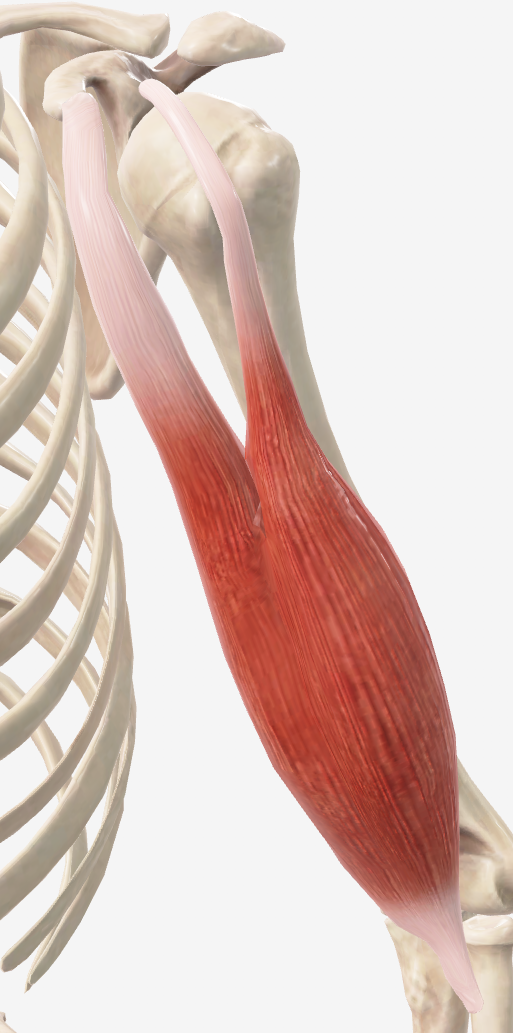
<p><strong><u>Origin:</u></strong></p><p>Supraglenoid tubercle of scapula</p><p>Apex of coracoid process</p><p></p><p><strong><u>Insertion:</u></strong></p><p>Radial tuberosity</p><p></p><p><strong><u>Movement:</u></strong></p><p>Elbow flexion</p><p>Forearm supination</p><p>Humeral flexion (long head)</p>
7
New cards

Brachialis

Origin:

Lower half of the anterior aspect of humerus


Insertion:

Ulnar tuberosity

Coronoid process


Movement:

Elbow flexion

<p><strong><u>Origin:</u></strong></p><p>Lower half of the anterior aspect of humerus</p><p></p><p><strong><u>Insertion:</u></strong></p><p>Ulnar tuberosity</p><p>Coronoid process</p><p></p><p><strong><u>Movement:</u></strong></p><p>Elbow flexion</p>
8
New cards

Brachioradialis

Origin:

Upper 2/3 of lateral supracondylar ridge


Insertion:

Lateral surface of the distal end of the radius, proximal to styloid process


Movement:

Elbow flexion

Supination

<p><strong><u>Origin:</u></strong></p><p>Upper 2/3 of lateral supracondylar ridge</p><p></p><p><strong><u>Insertion:</u></strong></p><p>Lateral surface of the distal end of the radius, proximal to styloid process</p><p></p><p><strong><u>Movement:</u></strong></p><p>Elbow flexion</p><p>Supination</p>
9
New cards

Triceps Brachii

Origin:

Posterior surface of humerus

Infraglenoid tubercle of scapula


Insertion:

Olecranon process of ulna


Movement:

Elbow extension

Shoulder extension (long head)

Humeral adduction

<p><strong><u>Origin:</u></strong></p><p>Posterior surface of humerus</p><p>Infraglenoid tubercle of scapula</p><p></p><p><strong><u>Insertion:</u></strong></p><p>Olecranon process of ulna</p><p></p><p><strong><u>Movement:</u></strong></p><p>Elbow extension</p><p>Shoulder extension (long head)</p><p>Humeral adduction</p>
10
New cards

Extension Carpi Radialis Longus

Origin:

Lateral supracondylar ridge of humerus


Insertion:

Base of 2nd metacarpal


Movement:

Extends and radially deviates the wrist

<p><strong><u>Origin:</u></strong></p><p>Lateral supracondylar ridge of humerus</p><p></p><p><strong><u>Insertion:</u></strong></p><p>Base of 2nd metacarpal</p><p></p><p><strong><u>Movement:</u></strong></p><p>Extends and radially deviates the wrist</p>
11
New cards

Extension Carpi Radialis Brevis

Origin:

Lateral epicondyle of humerus


Insertion:

Base of 3rd metacarpal


Movement:

Extends Wrist

Radial deviation

<p><strong><u>Origin:</u></strong></p><p>Lateral epicondyle of humerus</p><p></p><p><strong><u>Insertion:</u></strong></p><p>Base of 3rd metacarpal</p><p></p><p><strong><u>Movement:</u></strong></p><p>Extends Wrist</p><p>Radial deviation</p>
12
New cards

Extensor digitorum

Origin:

Lateral epicondyle of humerus


Insertion:

Extensor expansions of digits 2-5


Movement:

Extends digits 2-5 at MCP and IP joints

Assists with wrist extension
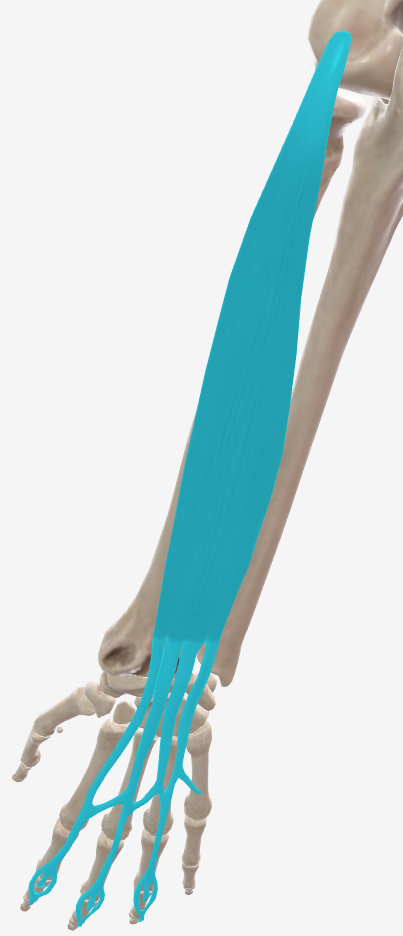
<p><strong><u>Origin:</u></strong></p><p>Lateral epicondyle of humerus</p><p></p><p><strong><u>Insertion:</u></strong></p><p>Extensor expansions of digits 2-5</p><p></p><p><strong><u>Movement:</u></strong></p><p>Extends digits 2-5 at MCP and IP joints</p><p>Assists with wrist extension</p>
13
New cards

Extensor Digiti Minimi

Origin:

Lateral epicondyle of humerus


Insertion:

Extensor expansion of 5th digit


Movement:

Extends little finger

Assists with wrist extension

<p><strong><u>Origin:</u></strong></p><p>Lateral epicondyle of humerus</p><p></p><p><strong><u>Insertion:</u></strong></p><p>Extensor expansion of 5th digit</p><p></p><p><strong><u>Movement:</u></strong></p><p>Extends little finger</p><p>Assists with wrist extension</p>
14
New cards

Extensor Carpi Ulnaris

Origin:

Lateral epicondyle of humerus

Posterior border of ulna


Insertion:

Base of 5th metacarpal


Movement:

Extends wrist

Ulnar deviation
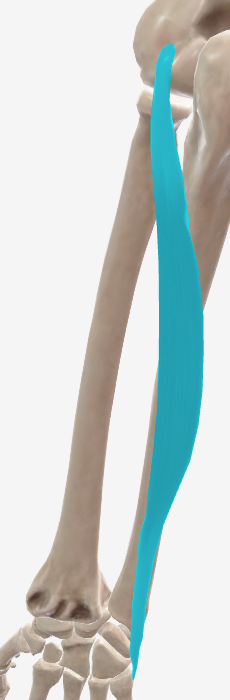
<p><strong><u>Origin:</u></strong></p><p>Lateral epicondyle of humerus</p><p>Posterior border of ulna</p><p></p><p><strong><u>Insertion:</u></strong></p><p>Base of 5th metacarpal</p><p></p><p><strong><u>Movement:</u></strong></p><p>Extends wrist</p><p>Ulnar deviation</p>
15
New cards

Anconeus

Origin:

Lateral epicondyle of humerus


Insertion:

Lateral olecranon

Proximal posterior ulna


Movement:

Assists elbow extension

<p><strong><u>Origin:</u></strong></p><p>Lateral epicondyle of humerus</p><p></p><p><strong><u>Insertion:</u></strong></p><p>Lateral olecranon</p><p>Proximal posterior ulna</p><p></p><p><strong><u>Movement:</u></strong></p><p>Assists elbow extension</p>
16
New cards

Supinator

Origin:

Lateral epicondyle of humerus

Radial collateral ligament

Annular ligament

Supinator crest of ulna


Insertion:

Proximal third of radius


Movement:

Supinates forearm

<p><strong><u>Origin:</u></strong></p><p>Lateral epicondyle of humerus</p><p>Radial collateral ligament</p><p>Annular ligament</p><p>Supinator crest of ulna</p><p></p><p><strong><u>Insertion:</u></strong></p><p>Proximal third of radius</p><p></p><p><strong><u>Movement:</u></strong></p><p>Supinates forearm</p>
17
New cards

Pronator Teres

Origin:

Medial epicondyle of humerus

Coronoid process of ulna


Insertion:

Middle lateral surface of radius


Movement:

Pronates forearm

Assists elbow flection
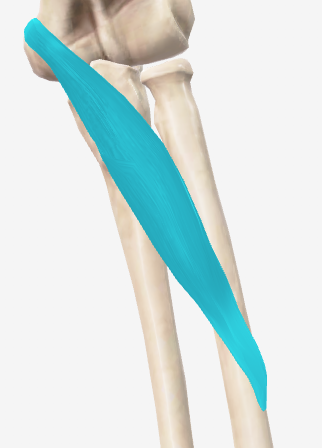
<p><strong><u>Origin:</u></strong></p><p>Medial epicondyle of humerus</p><p>Coronoid process of ulna</p><p></p><p><strong><u>Insertion:</u></strong></p><p>Middle lateral surface of radius</p><p></p><p><strong><u>Movement:</u></strong></p><p>Pronates forearm</p><p>Assists elbow flection</p>
18
New cards

Flexor Carpi Radialis

Origin:

Medial epicondyle of humerus


Insertion:

Bases of 2nd and 3rd metacarpals


Movement:

Flexes wrist

Abducts wrist

<p><strong><u>Origin:</u></strong></p><p>Medial epicondyle of humerus</p><p></p><p><strong><u>Insertion:</u></strong></p><p>Bases of 2nd and 3rd metacarpals</p><p></p><p><strong><u>Movement:</u></strong></p><p>Flexes wrist</p><p>Abducts wrist</p>
19
New cards

Palmaris Longus

Origin:

Medial epicondyle of humerus


Insertion:

Flexor retinaculum

Palmar aponeurosis


Movement:

Flexes wrist

<p><strong><u>Origin:</u></strong></p><p>Medial epicondyle of humerus</p><p></p><p><strong><u>Insertion:</u></strong></p><p>Flexor retinaculum</p><p>Palmar aponeurosis</p><p></p><p><strong><u>Movement:</u></strong></p><p>Flexes wrist</p>
20
New cards

Flexor Carpi Ulnaris

Origin:

Medial epicondyle of humerus

Olecranon

Posterior border of ulna


Insertion:

Pisiform

Hook of hamate

Base of 5thmetacarpal


Movement:

Flexes wrist

Adducts wrist

<p><strong><u>Origin:</u></strong></p><p>Medial epicondyle of humerus</p><p>Olecranon</p><p>Posterior border of ulna</p><p></p><p><strong><u>Insertion:</u></strong></p><p>Pisiform</p><p>Hook of hamate</p><p>Base of 5thmetacarpal</p><p></p><p><strong><u>Movement:</u></strong></p><p>Flexes wrist</p><p>Adducts wrist</p>
21
New cards

Flexor Digitorum Superficialis

Origin:

Medial epicondyle of humerus

Coronoid process of ulna

Anterior radius


Insertion:

Shafts of middle phalanges of digits 2-5


Movement:

Flexes proximal interphalangeal joints

Flexes metacarpophalangeal joints and wrist
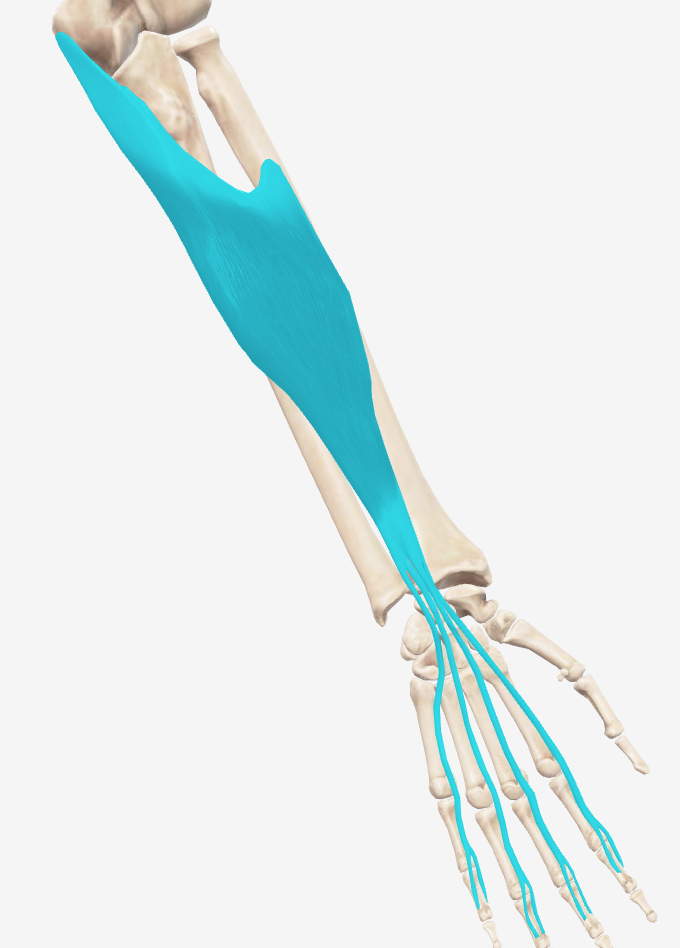
<p><strong><u>Origin:</u></strong></p><p>Medial epicondyle of humerus</p><p>Coronoid process of ulna</p><p>Anterior radius</p><p></p><p><strong><u>Insertion:</u></strong></p><p>Shafts of middle phalanges of digits 2-5</p><p></p><p><strong><u>Movement:</u></strong></p><p>Flexes proximal interphalangeal joints</p><p>Flexes metacarpophalangeal joints and wrist</p>
22
New cards

Flexor Pollicis Longus

Origin:

Anterior surface of radius

Interosseous membrane


Insertion:

Base of distal phalanx of thumb


Movement:

Flexes interphalangeal joint of thumb

<p><strong><u>Origin:</u></strong></p><p>Anterior surface of radius</p><p>Interosseous membrane</p><p></p><p><strong><u>Insertion:</u></strong></p><p>Base of distal phalanx of thumb</p><p></p><p><strong><u>Movement:</u></strong></p><p>Flexes interphalangeal joint of thumb</p>
23
New cards

Flexor Digitorum Profundus

Origin:

Proximal 2/3 of anterior and medial ulna

Interosseous membrane


Insertion:

Bases of distal phalanges of digits 2-5


Movement:

Flexes distal interphalangeal joints

<p><strong><u>Origin:</u></strong></p><p>Proximal 2/3 of anterior and medial ulna</p><p>Interosseous membrane</p><p></p><p><strong><u>Insertion:</u></strong></p><p>Bases of distal phalanges of digits 2-5</p><p></p><p><strong><u>Movement:</u></strong></p><p>Flexes distal interphalangeal joints</p>
24
New cards

Psoas Major

Origin:

Vertebral body of T1 - L4

Transverse process of L1 - L5

Lateral surfaces of intervertebral discs


Insertion:

Lesser trochanter


Movement:

Hip flexion

External rotation of thigh

Trunk flexion

Lateral flexion of trunk

Postural stability

<p><strong><u>Origin:</u></strong></p><p>Vertebral body of T1 - L4</p><p>Transverse process of L1 - L5</p><p>Lateral surfaces of intervertebral discs</p><p></p><p><strong><u>Insertion:</u></strong></p><p>Lesser trochanter</p><p></p><p><strong><u>Movement:</u></strong></p><p>Hip flexion</p><p>External rotation of thigh</p><p>Trunk flexion</p><p>Lateral flexion of trunk</p><p>Postural stability</p>
25
New cards

Iliacus

Origin:

Iliac fossa


Insertion:

Lesser trochanter


Movement:

Hip flexion

External rotation of thigh

Trunk flexion /anterior pelvic tilt
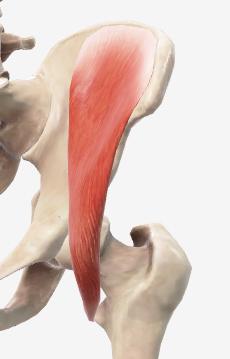
<p><strong><u>Origin:</u></strong></p><p>Iliac fossa</p><p></p><p><strong><u>Insertion:</u></strong></p><p>Lesser trochanter</p><p></p><p><strong><u>Movement:</u></strong></p><p>Hip flexion</p><p>External rotation of thigh</p><p>Trunk flexion /anterior pelvic tilt</p>
26
New cards

Gluteus Medius

Origin:

Posterior surface of Ilium


Insertion:

Greater trochanter


Movement:

Anterior fibers -

Hip flexion

Internal rotation

Middle fibers:

Hip abduction

Assisting pelvic tilt

Posterior fibers:

Assists with extension

Assists with external rotation

<p><strong><u>Origin:</u></strong></p><p>Posterior surface of Ilium</p><p></p><p><strong><u>Insertion:</u></strong></p><p>Greater trochanter</p><p></p><p><strong><u>Movement:</u></strong></p><p><em><u>Anterior fibers -</u></em></p><p>Hip flexion</p><p>Internal rotation</p><p><em><u>Middle fibers:</u></em></p><p>Hip abduction</p><p>Assisting pelvic tilt</p><p><em><u>Posterior fibers:</u></em></p><p>Assists with extension</p><p>Assists with external rotation</p>
27
New cards

Gluteus Maximus

Origin:

Gluteal surface of ilium

Posterior superior iliac crest

Sacrum

Coccyx


Insertion:

Iliotibial tract (IT Band)

Gluteal tuberosity


Movement:

Hip extension

<p><strong><u>Origin:</u></strong></p><p>Gluteal surface of ilium</p><p>Posterior superior iliac crest</p><p>Sacrum</p><p>Coccyx</p><p></p><p><strong><u>Insertion:</u></strong></p><p>Iliotibial tract (IT Band)</p><p>Gluteal tuberosity</p><p></p><p><strong><u>Movement:</u></strong></p><p>Hip extension</p>
28
New cards

Adductor Longus

Origin:

Anterior surface of pubis


Insertion:

Middle third of the linea aspera of the femur


Movement:

Hip adduction

<p><strong><u>Origin:</u></strong></p><p>Anterior surface of pubis</p><p></p><p><strong><u>Insertion:</u></strong></p><p>Middle third of the linea aspera of the femur</p><p></p><p><strong><u>Movement:</u></strong></p><p>Hip adduction</p>
29
New cards

Sartorius

Origin:

Anterior superior iliac spine


Insertion:

Medial aspect of proximal tibia


Movement:

Hip flexion

Hip abduction

External rotation

<p><strong><u>Origin:</u></strong></p><p>Anterior superior iliac spine</p><p></p><p><strong><u>Insertion:</u></strong></p><p>Medial aspect of proximal tibia</p><p></p><p><strong><u>Movement:</u></strong></p><p>Hip flexion</p><p>Hip abduction</p><p>External rotation</p>
30
New cards

Vastus Medialis (Quads)

Origin:

Lower, medial, half of the intertrochanteric line

Medial lip of linea aspera of femur


Insertion:

Patella tendon into the tibial tuberosity


Movement:

Knee extension

<p><strong><u>Origin:</u></strong></p><p>Lower, medial, half of the intertrochanteric line</p><p>Medial lip of linea aspera of femur</p><p></p><p><strong><u>Insertion:</u></strong></p><p>Patella tendon into the tibial tuberosity</p><p></p><p><strong><u>Movement:</u></strong></p><p>Knee extension</p>
31
New cards

Vastus Intermedius (Quads)

Origin:

Anterior and lateral surfaces of body of femur


Insertion:

Patella tendon into the tibial tuberosity


Movement:

Knee extension

<p><strong><u>Origin:</u></strong></p><p>Anterior and lateral surfaces of body of femur</p><p></p><p><strong><u>Insertion:</u></strong></p><p>Patella tendon into the tibial tuberosity</p><p></p><p><strong><u>Movement:</u></strong></p><p>Knee extension</p>
32
New cards

Vastus Lateralis (Quads)

Origin:

Intertrochanteric line

Greater trochanter

Gluteal tuberosity

Lateral lip of linea aspera of the femur


Insertion:

Patella tendon into the tibial tuberosity


Movement:

Knee extension
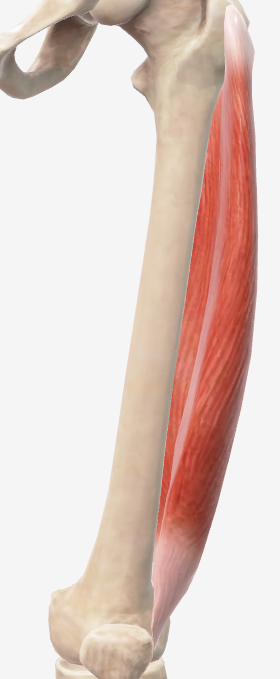
<p><strong><u>Origin:</u></strong></p><p>Intertrochanteric line</p><p>Greater trochanter</p><p>Gluteal tuberosity</p><p>Lateral lip of linea aspera of the femur</p><p></p><p><strong><u>Insertion:</u></strong></p><p>Patella tendon into the tibial tuberosity</p><p></p><p><strong><u>Movement:</u></strong></p><p>Knee extension</p>
33
New cards

Rectus Femoris (Quads)

Origin:

Anterior inferior iliac spine


Insertion:

Patella tendon into the tibial tuberosity


Movement:

Knee extension

<p><strong><u>Origin:</u></strong></p><p>Anterior inferior iliac spine</p><p></p><p><strong><u>Insertion:</u></strong></p><p>Patella tendon into the tibial tuberosity</p><p></p><p><strong><u>Movement:</u></strong></p><p>Knee extension</p>
34
New cards

Biceps Femoris (Hamstrings)

Origin:

Lower medial ischial tuberosity (Long head)

Lateral linea aspera (Short head)


Insertion:

Head of fibula

Lateral tibial condyle


Movement:

Knee flexion
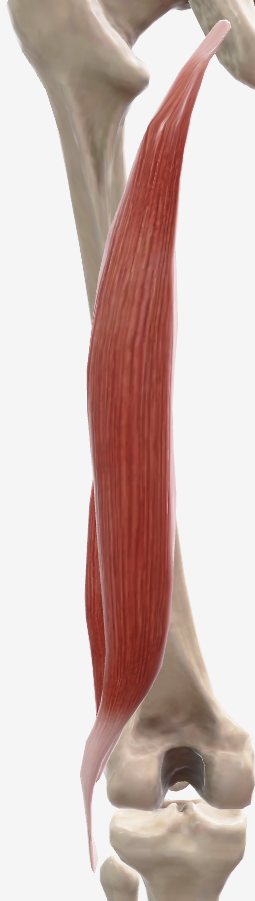
<p><strong><u>Origin:</u></strong></p><p>Lower medial ischial tuberosity (Long head)</p><p>Lateral linea aspera (Short head)</p><p></p><p><strong><u>Insertion:</u></strong></p><p>Head of fibula</p><p>Lateral tibial condyle</p><p></p><p><strong><u>Movement:</u></strong></p><p>Knee flexion</p>
35
New cards

Semitendinosus (Hamstrings)

Origin:

Ischial tuberosity


Insertion:

Medial aspect of proximal tibia


Movement:

Knee flexion

<p><strong><u>Origin:</u></strong></p><p>Ischial tuberosity</p><p></p><p><strong><u>Insertion:</u></strong></p><p>Medial aspect of proximal tibia</p><p></p><p><strong><u>Movement:</u></strong></p><p>Knee flexion</p>
36
New cards

Semimembranosus (Hamstrings)

Origin:

Ischial tuberosity


Insertion:

Medial tibial condyle


Movement:

Knee flexion

<p><strong><u>Origin:</u></strong></p><p>Ischial tuberosity</p><p></p><p><strong><u>Insertion:</u></strong></p><p>Medial tibial condyle</p><p></p><p><strong><u>Movement:</u></strong></p><p>Knee flexion</p>
37
New cards

Peroneus (Fibularis) Longus

Origin:

Head and lateral surface of fibula


Insertion:

Plantar surface of medial cuneiform bone

Base of first metatarsal bone


Movement:

Eversion of the foot

Plantar flexion
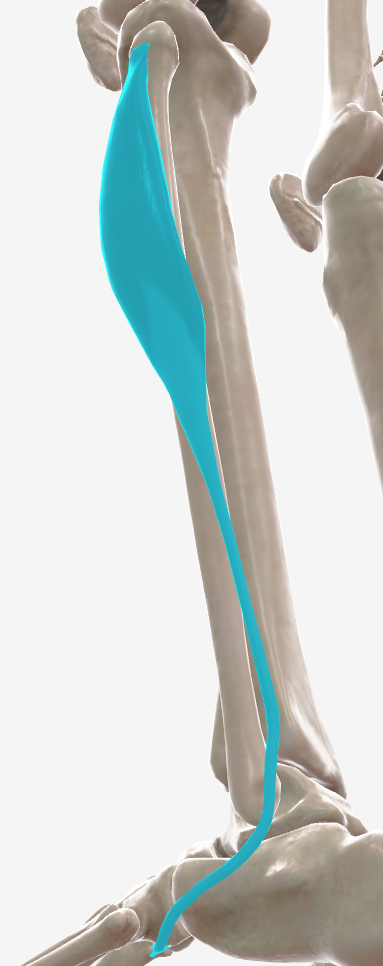
<p><strong><u>Origin:</u></strong></p><p>Head and lateral surface of fibula</p><p></p><p><strong><u>Insertion:</u></strong></p><p>Plantar surface of medial cuneiform bone</p><p>Base of first metatarsal bone</p><p></p><p><strong><u>Movement:</u></strong></p><p>Eversion of the foot</p><p>Plantar flexion</p>
38
New cards

Peroneus (Fibularis) Brevis

Origin:

Lateral surface of fibula


Insertion:

Tuberosity of fifth metatarsal bone


Movement:

Eversion of the foot

<p><strong><u>Origin:</u></strong></p><p>Lateral surface of fibula</p><p></p><p><strong><u>Insertion:</u></strong></p><p>Tuberosity of fifth metatarsal bone</p><p></p><p><strong><u>Movement:</u></strong></p><p>Eversion of the foot</p>
39
New cards

Gastrocnemius

Origin:

Lateral and medial condyles of femur


Insertion:

Posterior surface of calcaneus, via Achilles tendon


Movement:

Plantar flexion

<p><strong><u>Origin:</u></strong></p><p>Lateral and medial condyles of femur</p><p></p><p><strong><u>Insertion:</u></strong></p><p>Posterior surface of calcaneus, via Achilles tendon</p><p></p><p><strong><u>Movement:</u></strong></p><p>Plantar flexion</p>
40
New cards

Soleus

Origin:

Head and upper third of the posterior surface of the fibula

Medial border of the tibia

Soleal line

Tendinous arch spanning between the tibia and fibula


Insertion:

Posterior surface of the calcaneus, via Achilles tendon


Movement:

Plantar flexion
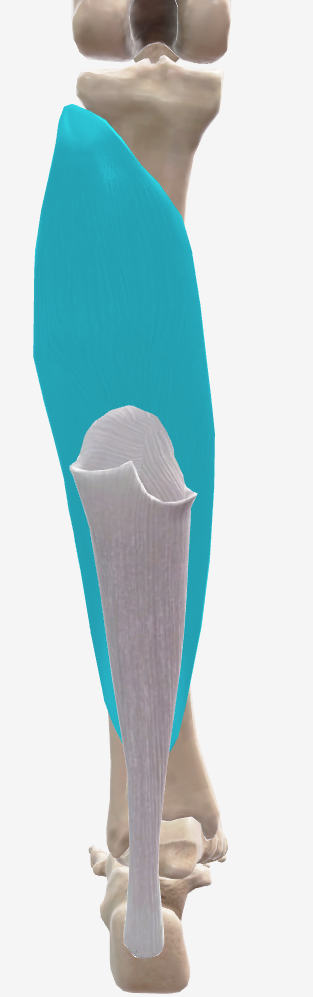
<p><strong><u>Origin:</u></strong></p><p>Head and upper third of the posterior surface of the fibula</p><p>Medial border of the tibia</p><p>Soleal line</p><p>Tendinous arch spanning between the tibia and fibula</p><p></p><p><strong><u>Insertion:</u></strong></p><p>Posterior surface of the calcaneus, via Achilles tendon</p><p></p><p><strong><u>Movement:</u></strong></p><p>Plantar flexion</p>
41
New cards

Tibialis Posterior

Origin:

Upper 2/3 of the posterior surface of tibia

Superior 2/3 of the medial posterior surface of the fibula


Insertion:

Tuberosity of the navicular bone and the medial cuneiform

Intermediate cuneiform, lateral cuneiform, cuboid, and bases of 2nd, 3rd, and 4th metatarsals


Movement:

Foot inversion

Plantar flexion

<p><strong><u>Origin:</u></strong></p><p>Upper 2/3 of the posterior surface of tibia</p><p>Superior 2/3 of the medial posterior surface of the fibula</p><p></p><p><strong><u>Insertion:</u></strong></p><p>Tuberosity of the navicular bone and the medial cuneiform</p><p>Intermediate cuneiform, lateral cuneiform, cuboid, and bases of 2nd, 3rd, and 4th metatarsals</p><p></p><p><strong><u>Movement:</u></strong></p><p>Foot inversion</p><p>Plantar flexion</p>
42
New cards

Tibialis Anterior

Origin:

Upper 2/3 of the lateral surface of the tibia and adjacent interosseous membrane


Insertion:

Medial cuneiform and base of the first metatarsal bone of foot


Movement:

Dorsiflexion

Foot inversion

<p><strong><u>Origin:</u></strong></p><p>Upper 2/3 of the lateral surface of the tibia and adjacent interosseous membrane</p><p></p><p><strong><u>Insertion:</u></strong></p><p>Medial cuneiform and base of the first metatarsal bone of foot</p><p></p><p><strong><u>Movement:</u></strong></p><p>Dorsiflexion</p><p>Foot inversion</p>



