Lecture 5, Chapter 54 - Ecosystems and Global Change
 Call Kai
 Learn
Learn Practice Test
 Spaced Repetition
 Match
Match Flashcards
 Knowt Play
1/25

There's no tags or description
Looks like no tags are added yet.
Name | Mastery | Learn | Test | Matching | Spaced | Call with Kai | Chat |
|---|
No analytics yet
Send a link to your students to track their progress
26 Terms
Ecosystem Ecology
the study of the sum of all the organisms living in a given area and the abiotic factors with which they interact
most energy comes from the sun via photosynthesis
What do major ecosystem processes include?
primary production
energy transfer
decomposition
Primary Productivity
the rate at which solar/chemical energy is captured and converted into chemical bonds by photosynthesis/chemosynthesis (converting energy using oxidation of inorganic molecules instead of sunlight)
Community Ecology vs Ecosystem Ecology
community ecology = who is interacting with who
ecosystem ecology = where is this energy/matter going to?
What do producers use energy for?
respiration
growth
reproduction
Gross Primary productivity (GPP)
the amount of solar energy that is captured via photosynthesis (gained)
Net Primary Productivity (NPP)
the amount of energy for growth and reproduction after respiration (accounts for matter lost)
NPP = GPP - R
Photosynthesis Equation
6CO2 + 6H2O → C6H12O6 + 6O2 + E (sunlight)
Cellular Respiration Equation
C6H12O6 + 6O2 + ATP (energy) → 6CO2 + 6H2O
Describe the difference in energy transfer of Terrestrial v. Aquatic Systems
Terrestrial Systems → standing stock (total of biomass (amount of weight/energy stored in organisms like trees) at a specific moment
high standing stock (land plants build up massive amounts of living biomass/woody structure that lasts for years)
bigger and long-lived producers
Aquatic Systems → NPP is quickly converted to biomass at higher trophic levels
(image for aquatic systems)

T/F: High productivity does NOT equal to high standing stock
True: areas of high primary production (the speed/amount of energy converted from sunlight) may have high or low standing stock (total weight or mass of living producers/land)
think of it like this: consumers could remove the new biomass just as fast as it is created

Terrestrial Systems ~ Standing Stock
biomass of producers present in a given area/specific time (a snapshot amount)
Biomass Resident Time (+ formula)
length of time biomass spends in a specific trophic level

Describe the difference in Top Down vs Bottom Up control
Top down → higher trophic levels (apex predators) control the lower trophic level populations
changes in predator numbers can cause alternate increases/decreases in the food chain (trophic cascade).
Example: tigers/wolves keep deer populations in check. without them, too many deer eat all the plants
Bottom Up → nutrient availability + primary producer limit drive predator populations of higher trophic levels (the base controls the top)
if the base lacks nutrients, the whole food chain stays small because there is less energy to go around.
Example: adding a fertilizer (nutrients) to a lake to increase algae growth, which feeds zooplankton, which feeds more fish
Name 3 reasons why having more nutrients isn’t better
Greenhouse gases cause global warming
Ocean Acidification
Eutrophication
Trophic Cascade
indirect effects caused by (apex) predators
Ocean Acidification
increase CO2 = decrease of pH in oceans (more acidic) = more absorption of CO2 in the form of ion bicarbonate, which many organisms need for growth/shells (example of when the gastropods have softer shell because lack of carbonate)
Eutrophication
too many nutrients in the waters (nutrients being nitrogen & phosphorus) leading to rapid plant growth & suffering aquatic life
occurred naturally but drastically changed as humans dump industrial waste into the water
affects terrestrial/aquatic ecosystems → ocean acidification, harmful algal blooms
Carbon Cycle
CO2 is captured by photosynthesis and turned into sugars and bioavailable forms of carbon
plant biomass turn into soil carbon and be stored or decompose by soil microbes/detritivores (getting food from dead organisms)
plants and microbe respiration release CO2
in the oceans, CO2 the air diffuses into the water, becoming bicarbonate ions (which the photosynthetic algae take
Humans change this cycle now by taking deep stores of carbon and extracting them for their use, releasing more CO2
List the Limiting Nutrient in terrestrial ecosystems, freshwater ecosystems, open ocean, and major ocean regions
terrestrial = nitrogen (N)
freshwater = phosphorus (P)
open ocean = nitrogen (N)
some major ocean regions = iron (Fe)

General Compartment model
nutrients are present either in organic material (living/dead tissues of organisms) or in inorganic material (rocks, soil)
Why can’t we have 10 trophic levels?
There simply isn’t enough energy in the system to support more than 4 or 5 trophic levels
Biomagnification
the concentration of toxic chemicals increases in living tissues as organisms move up the food chain
→ toxins enter the base, absorbed by producers, passed up the chain, concentration increases
* this is why pregnant women cannot have fish/sushi because it contains mercury
Another Example: DDT and how birds kept dying (Rachel Carson: Silent Spring)
What happens if we have too much of carbon, nitrogen + phosphorus?
Carbon
+ essential for photosynthesis
- excess → global warming + ocean acidification
Nitrogen + Phosphorus
+ essential for growth
- excess → eutrophication
Secondary Production
the total amount of energy consumed by herbivores in a given area that is used for respiration, growth, and reproduction
Carbon Cycle
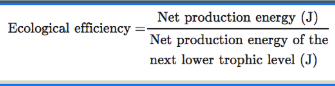
ecological food chain efficiency → % of net production from one trophic level compared to the next lower trophic level
ecological efficiencies typically range from 5-20%
this means that eating meat requires much more carbon to be processed by the environment to give you the same amount of energy as eating plants (because eating plants take CO2 out of the air directly and convert it to energy efficiently)
eating meat uses a lot of the carbon for cellular respiration and only some is left for the environment (inefficient)