Exam 2 PSY 438
 Call Kai
 Learn
 Practice Test
 Spaced Repetition
 Match
 Flashcards
 Knowt Play
1/51

There's no tags or description
Looks like no tags are added yet.
52 Terms
Important Forebrain Structures
Thalamus: Sensory processing, movement. Relay station for incoming information (sends and receives info from cerebral cortex)
Hypothalamus (~almond shape and size)
◦ Learning, memory, motivation, regulation of body temperature, hunger, thirst, sexual drives, circadian rhythms, etc.,
◦ Helps regulate two key stress communication systems: autonomic nervous system and endocrine system
Pituitary (~pea size)
◦ “master gland”
◦ Plays key role in regulating metabolism, growth, reproduction
◦ Regulates other endocrine glands in body and body organs through release of hormones from brain into bloodstream
Limbic system:
• Motivation, emotion, memory
Amygdala – involved in assessment of emotional valence/significance of incoming sensory & other info
Hippocampus – involved in memory formation, storage, and retrieval
What was the finding of the study discussed in class that examined amygdala activity and carotid intra-medial thickness (atherosclerosis in the carotid artery)? ***not sure if I’ll include this
measured:
Amygdala activity: How strongly the amygdala responded to angry and fearful facial expressions.
Carotid intima-media thickness (IMT): The thickness of the inner layers of the carotid artery wall, which is an early marker of atherosclerosis.
Greater amygdala activity was associated with greater carotid artery wall thickness.
Higher amygdala reactivity to threats → Associated with thicker carotid artery walls →
Greater indication of early atherosclerosis
Explain the significance of the findings of the study of individuals about to undergo medical board examination. ***not sure if I’ll include this
Compared activity of PFC during an attentional task (rodent studies)
• During exam prep period, participants had significantly higher Perceived Stress Scoure scores (M=17.7) compared to non-test controls (M=11.1), no difference between test-takers and controls during non-stress period following the exam
• Poorer task performance + observed reductions in functional connectivity in PFC in test takers compared to controls
Differences in performance and functional connectivity not observed in low stress period (thus reversible)
Fast + Slow Communication Tracks to Amygdala (recognize)
Fast (Unconscious) - to thalamus, then directly to amygdala
Fast and automatic: Reacts before you consciously understand the threat.
Less accurate: The brain makes a quick judgment with limited information.
Purpose: Helps you respond to potential danger immediately.
Slow- to thalamus, then visual cortex, then amygdala
Slower and more detailed: The brain analyzes what you're seeing.
More accurate: Helps determine whether the threat is real.
Purpose: Allows you to evaluate the situation and adjust your emotional response.
Immune System Primary Functions
1. Identify “self” from “non-self” (or non-normal self)
2. Destroy and/or remove non-self (or non-normal self)
“Non-Self” or “Non-Normal Self” Targets
Invading pathogens: disease-causing micro-organism, such as a virus or bacteria
• Virus: nucleic acids enclosed in a protein coat; cannot reproduce without a host cell
• Bacteria: single-celled micro-organisms self-equipped with machinery for their own survival/reproduction
➢Antigen: unique, complex molecule that triggers an (acquired/specific) immune response
Cancerous cells: identifying and destroying abnormal cancerous cells in the body
Damaged or worn-out cells: injury or disease
Non-Immunologic Defenses
• Skin forms protective barrier
• Destroyed by bodily secretions or other mechanisms (e.g., mucous, mechanical reactions like coughing)
• If not destroyed: immune system…
Carried to spleen via bloodstream,
Lodging in tissues → lymphatic vessels/nodes,
Gastrointestinal (GI) or respiratory tract, lodging in lymphoid organs

Two Major Classes of Immune Defense
1. Innate, non-specific (phagocytes, NK cells)
• first line of defense, relatively fast (hours)
• non-specific ‘killers’
2. Acquired, specific (T and B lymphocytes)
• second line of defense, slower (days)
• Immune processes are carried out by white blood cells (WBCs)
• Polymorphonuclear granulocytes – eosinophils, neutrophils, basophils (50-75%)
• T and B lymphocytes (20-40%)
• Monocytes/Macrophages (2-8%)
Phagocytic cells (specialized WBCs)
• Include macrophages, neutrophils, and eosinophils
• Non-specific “killers” of non-self/foreign material; degraded by digestive enzymes of lysosomes in cell
• Macrophages also operate as antigen-presenting cells to support adaptive immune functions (T & B-call activity)
Natural killer (NK) cells. (won’t need to write these out but be able to recall them)
• destroy virus-infected and tumor cells
• release chemical that breaks down cell membrane of infected/damaged cell
Complement system
• system of plasma proteins which can destroy bacteria, viruses
• binding of proteins punches a hole in membrane of invader
Innate (nonspecific) immunity quick sheet
Defense | Main Function | Memory Trick |
|---|---|---|
NK Cells | Kill infected or abnormal body cells | Kill |
Phagocytes | Engulf and digest invaders | Eat |
Complement | Mark invaders, promote inflammation, or create holes | Assist & Attack |
Adaptive (or Acquired) Immunity. (won’t need to write these out but be able to recall them)
T cells (lymphocytes)
• helper T-cell (CD4+)
• help B-cells/macrophages
• cytotoxic, killer T cells (CD8+ kill virus-infected and mutated cells)
• cell-mediated immunity
B cells (lymphocytes)
• release antibodies (Ab)
• specific antibody-antigen match
• encounter antigen → proliferate
• humoral immunity
Cytokines: Immune Messengers
Cytokines: signaling proteins produced by activated cells (immune and non-immune cells)
• Play key role in inflammatory and other immune responses (Activate immune cells, Promote inflammation, Signal the brain, Regulate immune responses)
• Multiple sources, targets, and functions
• Specificity of actions affected by cell receptors, other cytokines, hormones, etc.
• Hundreds have been identified thus far
Cytokines are released by many different cells, especially immune cells, including:
Macrophages: Release cytokines when they detect an infection.
T cells: Release cytokines to coordinate immune responses.
Natural Killer (NK) cells: Release cytokines that help activate other immune cells.
Cytokine Signal route
1. Macrophage detects bacteria → 2. Macrophage releases cytokines → 3. Cytokines signal other cells → 4. Immune response increases, and the brain may trigger sickness symptoms
Inflammation
• Goal: bring immune cells to site of injury/infection, destroy/inactivate foreign invaders, prep for tissue repair
• Vasodilation
• Increased vascular permeability (So Tissue repair can begin)
• Influx of immune cells (e.g., phagocytes)
• Destruction of non-self (e.g., bacteria)
What happens during a local inflammatory response
For example, when you get a small cut on your finger.
1. Injury or infection occurs
Damaged cells and immune cells release inflammatory chemicals, including cytokines and histamine.
2. Blood vessels widen (vasodilation)
More blood flows to the injured area, causing redness and warmth.
3. Blood vessels become more permeable
Fluid and proteins move into surrounding tissue, causing swelling.
4. White blood cells arrive
Neutrophils and macrophages help destroy pathogens and clear damaged cells.
5. Healing begins
Inflammation decreases as the threat is controlled and tissue repair progresses.
Characteristic | Why it happens |
|---|---|
Redness | Increased blood flow |
Heat | Increased blood flow |
Swelling | Fluid leaks into tissues |
Pain | Inflammatory chemicals and swelling stimulate nerves |
Acute phase response route
1. Virus enters the body → 2. Immune cells release cytokines → 3. Cytokines signal the brain and liver → 4. Fever, fatigue, loss of appetite, and immune changes occur
Advantages and disadvantages of inflammation with respect to our health and well-being.
Good: Acute inflammation is a fast- acting, adaptive response designed to remove offending agent and initiate healing
Bad: Chronic inflammation can promote the development and progression of disease
Inflammation implicated in the etiology and progression of major killers:
1. Heart Disease 2. Cancer 3. Stroke 4. Respiratory disease
Inflammation and Other Diseases: Autoimmune Diseases, Allergy, Asthma, Inflammatory Bowel Disease, Osteoarthritis
Atherosclerosis
Atherosclerosis:
• hardening of the arteries
• lipid/cholesterol deposits – plaques
• leads to reduced blood flow
• Cause and consequence of hypertension
• plaques can rupture – clot (thrombis)
• coronary artery/heart disease (CAD/CHD): can lead to heart attack
• cerebrovascular disease (CVD): can lead to stroke
The Progress of Atherosclerosis
Damage or dysfunction of the artery's inner lining (endothelium): This allows cholesterol-containing particles, especially LDL, to accumulate in the artery wall.
Inflammation begins: Immune cells enter the artery wall and respond to the accumulated cholesterol.
Plaque forms: Macrophages take up cholesterol and become foam cells. Fatty deposits and scar-like tissue gradually build up.
Artery narrows: Growing plaque can restrict blood flow.
Plaque may rupture: A blood clot can form over the damaged plaque, potentially blocking blood flow suddenly.
How does Atherosclerosis cause blood clots, heart attacks, and strokes?
Health Event | What Happens |
|---|---|
Blood clot (thrombus) | Plaque ruptures or erodes, exposing material that activates platelets and clotting. |
Heart attack | A clot blocks blood flow through a coronary artery, depriving heart muscle of oxygen. |
Ischemic stroke | A clot blocks an artery supplying the brain, depriving brain tissue of oxygen. |
What is the role of inflammation in Atherosclerosis
Early stages: Inflammation attracts immune cells to the artery wall, contributing to plaque formation.
Progression: Chronic inflammation helps plaques grow and can damage the artery wall.
Plaque rupture: Inflammatory cells release substances that weaken the protective fibrous cap covering the plaque.
Heart attacks and strokes: If a vulnerable plaque ruptures, blood clots can form and suddenly block blood flow.
Role of inflammation: Chronic inflammation promotes plaque buildup, growth, and instability, increasing the risk of clot formation.
Key Inflammatory Components of Atherosclerosis
Damaged endothelial cells attract macrophages into inner layer of vessel
• Macrophages and smooth muscle cells eat lipid/oxidized LDL – develop into foam cells – upregulate inflammatory activity
• Arterial damage also activates local inflammatory response
• Local inflammatory response contributes to weakening of plaque – rupture leads to clot, stroke, heart attack
Therapeutics target LDL (e.g., statins) and anti- inflammatory pathways (e.g., statins, proinflammatory cytokine blockers)
Cardiovascular System
Transport system: deliver oxygen and food to cells; remove wastes and carbon dioxide
• Main components: heart, lungs, blood, blood vessels
• Pulmonary (lung), cardiac (heart) and systemic (body) circulation
GOALS:
*pump blood into arteries to provide cells with needed nutrients worldwide pump blood into lungs to be oxygenated and remove waste (CO2)
*pump blood to filter organs - liver and kidneys – to remove wastes)
Cardiovascular system terms
• Arteries - blood vessels responsible for carrying oxygen-rich blood away from the heart to the body
• Veins - blood vessels that carry oxygen-poor blood from the body back to the heart for reoxygenation
• Venous return – strength of blood flow back to the heart via veins
• Arterioles - small blood vessels that connect arteries and capillaries
• Capillaries – smallest blood vessels in our body!
Cardiovascular system: symp vs. parasymp
Cardiovascular Effect | Sympathetic | Parasympathetic |
|---|---|---|
Heart rate | ↑ Increases | ↓ Decreases |
Heart contraction strength | ↑ Increases | Little direct effect on ventricular contraction |
Blood pressure | Generally ↑ | May ↓ |
Blood vessels | Constricts many vessels; some dilate | Minimal direct effect on most vessels |
Main purpose | Prepare for action | Conserve energy |
ANS Regulation of Cardiovascular Activity

Hybrid Nervous-Endocrine Sympathetic-Adrenal-Medullary (SAM) Axis

Disease Spotlight: Hypertension
BP = systolic (pressure in arteries when heart beats and fills them with blood) /
diastolic (pressure in the arteries when the heart relaxes between contractions)
~95% “essential hypertension” (no specific identifiable cause)
~5% “secondary hypertension” (due to other diseases)
Hypertension is a risk factor for: atherosclerosis, heart attack, stroke (leading cause of stroke), kidney failure, vision problems, “Silent killer”, Over half of adults age 65 and over have hypertension

Reactivity hypothesis
Exaggerated or prolonged cardiovascular reactivity to psychological stressors can promote the development of cardiovascular disease
• i.e., those with greater stress responses or who experience cardiovascular responses over prolonged periods (the chronically stress) will be more likely to develop cardiovascular health conditions
Meta-analyses of many prospective studies indicate that greater cardiovascular stress reactivity OR slower recovery to a lab stressor predicted greater risk of future:
• high blood pressure
• atherosclerosis
• cardiac events
• cardiac and all-cause mortality
Autonomic Imbalance
Under resting conditions, the parasympathetic branch of the nervous system (PNS) maintains inhibitory control on the heart (i.e., keeps heart rate down)
• Communication via vagus nerve (main parasympathetic nerve)
• The PNS via the vagus also regulates variability in heart rate (i.e., its up and down activity) – this is referred to as heart rate variability (HRV)
• Greater HRV = healthier function
• Thayer and Lane (2007) provide a comprehensive overview of the routes through which the PNS, particularly through regulation of HRV, might influence cardiovascular health outcomes
PNS – downregulates HR, enhances HRV
SNS – elevates HR
Autonomic imbalance occurs when one branch, typically SNS, dominates.
Indicators of autonomic imbalance:
• greater resting HR (suggests greater SNS control of heart)
• less HR recovery following stress (suggests PNS unable to inhibit HR when stress is over)
• lower HRV (suggests PNS is less able to up or down regulate activity)
Thayer and Lane review evidence that the prefrontal cortex plays an important inhibitory role on the SNS and upregulation of PNS
• But conditions of threat/stress can lead to hypoactive frontal cortex – less inhibition
• Key objective is to identify the mental states/processes that enhance this inhibitory control
Understand the model by Boehm and colleagues describing potential relationships between positive psychological well-being, stress, health behaviors, and disease risk (including cardiovascular disease).
This figure explains how positive psychological well-being, stress, and health behaviors influence your risk of developing cardiovascular disease (heart and blood vessel disease) throughout your life.
The main idea is that positive psychological well-being can protect your heart, while chronic stress can increase your risk of heart disease.
1. Positive Psychological Well-Being
Decrease stress (−).
Increase restorative processes (+), which support health and recovery.
Decrease deteriorative processes (−), which can harm health over time.
2. Stress
Increased blood pressure.
Greater inflammation.
Prolonged activation of stress hormones.
Unhealthy changes in sleep and behavior.
3. Restorative vs. Deteriorative Processes (Blue Arrow)
The blue arrow represents the balance between health behaviors and physiological functioning that support health versus those that contribute to disease.
4. Cardiovascular Disease
More restorative processes → Lower cardiovascular disease risk (−).
More deteriorative processes → Higher cardiovascular disease risk (+).
5. Social Environment and Age
Experiences and behaviors can accumulate over time and affect cardiovascular health later in life.

Functional View of Emotions
The functional view of emotions suggests that emotions serve a purpose: they help us adapt to our environment, respond to situations (short-lived), and survive.
psychological functions: alter attention, direct behavior, activate relative associative memory networks
physiological functions: organize responses of biological regulatory systems to support adaptive response.
Fear
Fear is considered a basic emotion because it is universal, biologically based, and important for survival.
What adaptive challenge triggers fear?:
The adaptive challenge is perceived danger or a threat to survival.
What is fear designed to do?
Fear is designed to protect us by preparing the mind and body to respond to danger.
It helps us: Detect threats, React quickly, Increase physiological arousal, Learn from danger.
amygdala: fear detection. organizes sensory info and info from other areas of the brain (frontal cortex)
sends info to other areas of the brain that organize behavioral and physiological responses, such as the hypothalamus which organizes endocrine and NS responses
The 3 key features/characteristics of a basic emotion.
distinct - you can distinguish the behavior/physiology of one basic emotion from another. v dif in the brain.
hard wired - circuity for emotion hard wired in the nervous system. somewhere in the brain that causes the emotion
functional - provides adaptive solution to a survival relevant problem. must be useful; survival advantage.
What system in the brain plays a key role in emotional experience and its downstream consequences? This system in the brain includes the brain area which organizes our fear response.
The limbic system is a group of interconnected brain structures involved in emotions, motivation, memory, and physiological responses.
It helps us experience emotions and influences how our bodies and behaviors respond to them.
organizes nervous and endocrine system activity to direct downstream physiological activity in the peripheral body (ex. cardiovascular, immune)
Important Structures of the Limbic System
Brain Structure | Main Function |
|---|---|
Amygdala | Detects threats and helps organize fear responses. |
Hypothalamus | Controls physiological responses, including heart rate, stress hormones, and autonomic activity. |
Hippocampus | Helps form memories and connects emotions to experiences. |
Example: Seeing Something Scary
Imagine you're walking outside and see a snake.
Amygdala: Helps detect the threat and organize your fear response.
Hypothalamus: Helps activate the sympathetic nervous system, increasing heart rate and preparing your body for action.
Hippocampus: Helps you remember the experience and its context.
Is there strong support for distinct profiles of physiological activity for specific emotions (e.g., for fear vs. anger)?
is there evidence for emotion-specific physiology?
mixed for autonomic NS activity
decent support for specific patterns of activity for positive vs. negative emotions
less clear for specific emotions, but some support (ex. distinct patterns for anger vs. fear)
less data regarding specific patterns of endocrine activity
some hints of specificity in studies of specific threats ( ex. social threats)
don’t know which comes first
Are emotions always adaptive? Describe four characteristics that affect the adaptive value of an emotion.
Emotions are not always adaptive. Although emotions evolved to help us survive and respond to situations, they can sometimes be maladaptive, aka it is inappropriate for the situation or causes more problems than it solves.
different forms of affect (emotion, mood, affective temperament) typically differentiated by:
time/duration
cognitive characteristics
antecedents
universality. emotional can look different on everyone
developmental considerations
Major Depressive Disorder
depressed mood (sad or empty)
loss of interest or pleasure in activities
significant weight change or change in appetite
insomnia or hypersomnia nearly every day
fatigue or loss of energy
feelings of worthlessness
diminished ability to think/concentrate
recurrent thoughts of death/suicidal ideation
occurring together during a 2 week period most of the day, enarly every day
change from previous functioning
detrimental to functioning
Risk factors for depression
genetic
biochemical (5-HT, NE)
personality (low self esteem, pessimistic, poor coping strategies)
stress (abuse, neglect, exposure to violence, poverty, etc.)
diease/illness
80-90% of affected respond well to treatment (pharmaceutical, psychotherapy, or combo)
depression in young adults and older adults
young adults:
highest prevalence of MDD
also high rates of subclinical depression (almost meet diag. criteria)
45% of students report feeling so depressed at some time in the last year that they have trouble functioning
20% diagnosed/being treated
¼ experience a depressive episode by age 24
older adults:
prevalence estimates range from 8-20% of community residing older adults
impairs physical, mental, and social functioning
increased risk of and or exacerbates course of many diseases (heart dis, cancer)
highest in the oldest-old (80+) and often undertreated.
depression breaks the heart
high prevalence of comorbid (at the same time) depression and heart disease
depression associated with:
increased risk of heart disease development
increased risk of cardiac events and mortality in those with existing CHD

Inflammation-induced depression
proinflammatory cytokines induce sickness behavior
fatigue
sleepiness
irritability
loss of appetite
cognitive impairment
reduced activity/social
proinflammatory cytokines can reach the brain to active a sickness behavior response and fever through these pathways:
travel through blood (cross the blood brain barrier)
via stimulation of the vagus nerve. stimulates internal organs.
evidence from experimental manipulations
injection of IL-1, IL-6, TNF-a cause people to have sick behavior, even if they are not sick.
blockage of cytokine activity reduces/eliminates sick behaviors.
cytokine induced negative mood in typhoid vaccine recipients
the vaccinated group felt worse and worse emotionally
vaccine caused an immune response and released proinflammatory cytokine IL-6
IL-6 increase associated with negative mood increase
when people are susceptible to low mood and they get sick, they could end up doing worse than others

anger in/out/control
anger: irritation, rage, annoyance, fury
anger out: tendency to express anger towards individuals or objects through physical or verbal aggression
anger in: tendency to suppress angry feelings. rumination, frustration
anger control: ability to control outward expression of anger. more in, less out.
anger and wound healing
Simply expressing anger or suppressing it was not significantly associated with healing speed. The important factor was anger regulation.
difficulty regulating anger is associated with slower wound healing, supporting a connection between emotions, stress, and immune-related processes; endocrine system, specifically the HPA axis (hypothalamic-pituitary-adrenal axis).
The researchers measured cortisol, a stress hormone released through HPA-axis activity.

anger control strategies
cognitive reappraisal: manage your emotional reactions, think about what your partner is saying objectively and analytically, maintain a neutral mood
emotional suppression: control your facial expressions, muscles, etc, so no one can recognize what you might be feeling
control: no specific directions
the suppression group experienced the most anger
the most HRV was from the reappraisal group = more effective peripheral NS regulation of heart activity
anger and physiology
anger is the only emotion that has physiological constancy.
HR, BP, Stress reaction and others all go up
emotion/affect and immunity
short-term experience of emotions:
if positive may be immunoenhancing
if negative may be immunosuppressing
however, better to express negative emotions that suppress them
suppression of negative emotions typically associated with poorer immune functioning
can create stress
long term mood (ex. depression and anxiety) - generally associated with poorer immune function and a pro-inflammatory state
Happiness, Stress, and Physical Health Study
People in the lower three happiness quintiles were significantly happier on their leisure day (weekend) than on a workday.
People in the top two happiness quintiles reported similarly high happiness levels on both workdays and weekends.
Biological measure
Relationship with happiness
Cortisol
More happiness → Lower cortisol
Heart rate
More happiness → Lower heart rate in men
Blood pressure
No significant relationship in the original 2005 study
Blood pressure at follow-up
More happiness → Lower systolic blood pressure
esearchers exposed participants to stressful mental tasks and measured changes in fibrinogen.
They found:
Less happy participants: Larger increases in fibrinogen after stress.
Happier participants: Smaller increases in fibrinogen after stress.
This suggests happier individuals experienced a reduced inflammatory/clotting-related response to acute stress.
Importantly, baseline fibrinogen levels were not significantly related to happiness. The difference was in how fibrinogen responded to stress.
the “undoing effect” and “stress buffering” hypotheses
the “undoing effect”: positive emotions speed physiological (cardiovascular) recovery from stress. recover faster after experiencing stress or negative emotions
positive affect can provide a “stress buffering” function. reduce the intensity of our negative emotional and physiological responses when stress occurs
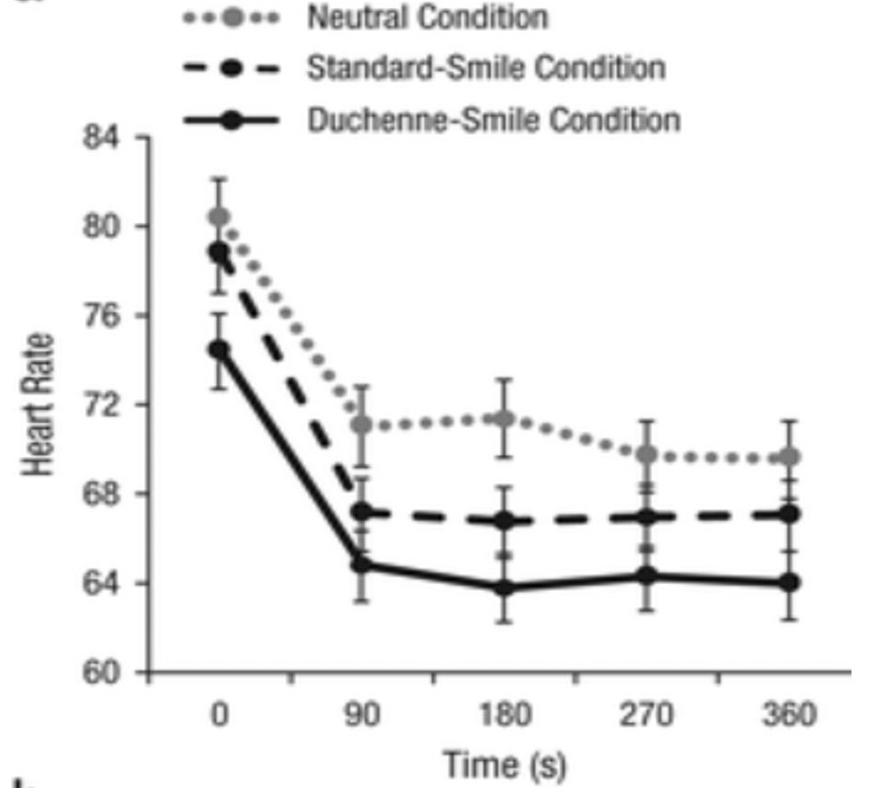
Chopsticks experiment
neutral face, standard smile, or Duchenne smile
Greater HR recovery in the smiling groups, especially the Duchenne group
support for hypothesis that positive affect can help “undo” or “buffer'“ physiological effects of stress
however null findings have also been observed