Science Olympiad Water Quality 2027 — Macroinvertebrates: Photos + Facts (72 Cards)
 Call Kai
 Learn
 Practice Test
 Spaced Repetition
 Match
 Flashcards
 Knowt Play
1/71

Earn XP
Description and Tags
2026–27 season. All 72 cards include photos and cover the 12 invertebrate groups on the coral reef indicator list. The 12 identification cards show the organism on the front. The 60 fact cards cover taxonomy, feeding, life cycles, ecological roles, and human pressures, with reference photos on the answer side. Organism list: https://www.soinc.org/sites/default/files/uploaded_files/5-WQ_HANDOUT-P2-CORAL-REEF.pdf | Reef Check indicators: https://www.soinc.org/sites/default/files/uploaded_files/13-REEF_INDICATOR_ORGANISMS.pdf
72 Terms
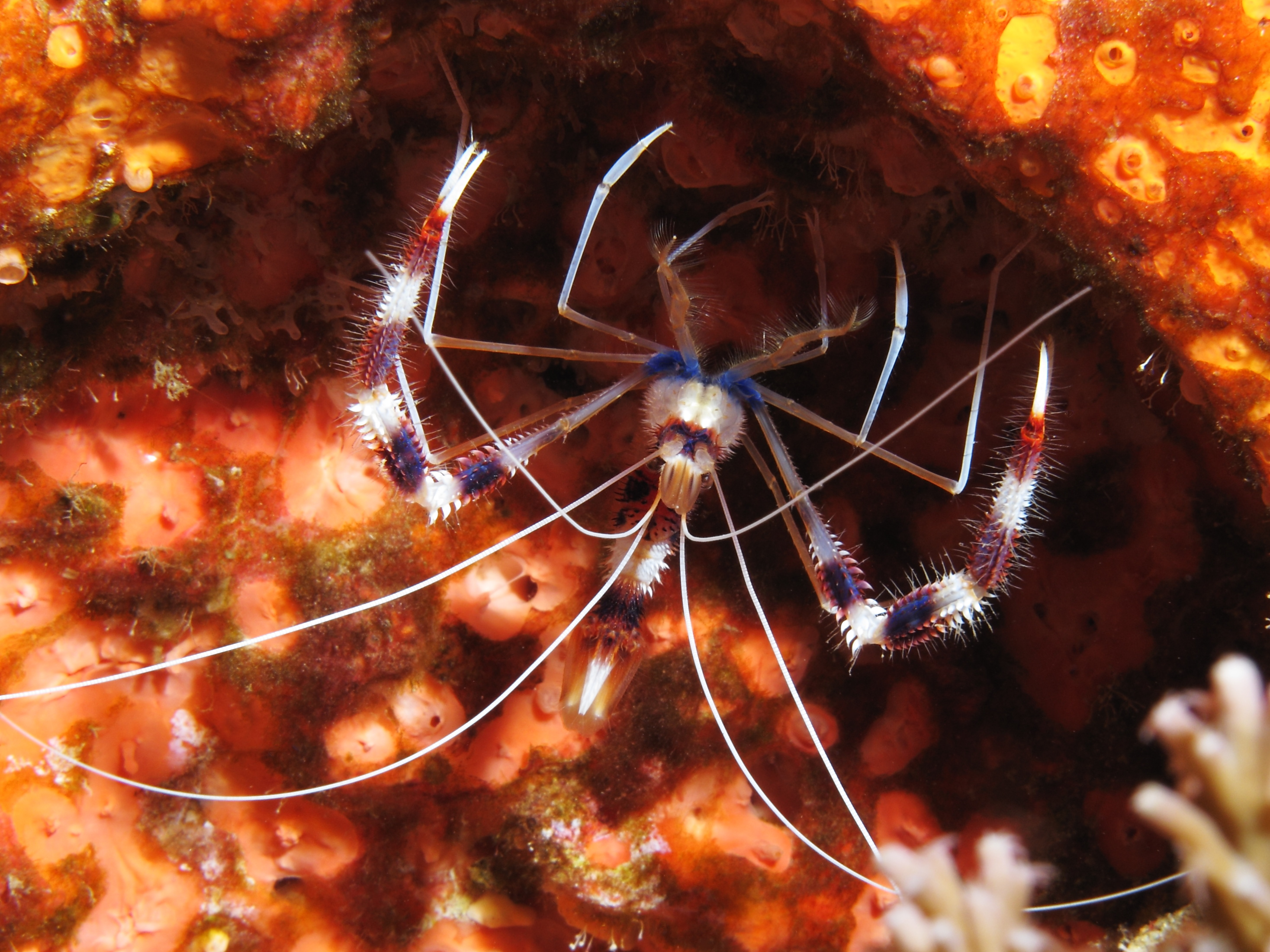
Banded coral shrimp — scientific name and group?
Stenopus hispidus; a decapod crustacean (phylum Arthropoda).


Identify this organism from the photo.
Banded coral shrimp.
Banded coral shrimp — feeding habit?
Omnivorous scavenger and cleaner; picks parasites and food debris from fish.

Banded coral shrimp — ecological relationship with fish?
Cleaning mutualism: the shrimp gets food and the fish has parasites removed.
Banded coral shrimp — life cycle?
Female carries fertilized eggs under her abdomen; planktonic larvae develop before settling as juveniles; growth requires molting.

Banded coral shrimp — main survey pressure indicated by declines?
Collection for the marine aquarium trade; interpret counts with habitat and survey conditions.

Crown-of-thorns starfish — name and phylum?
Acanthaster planci in the event list; phylum Echinodermata.
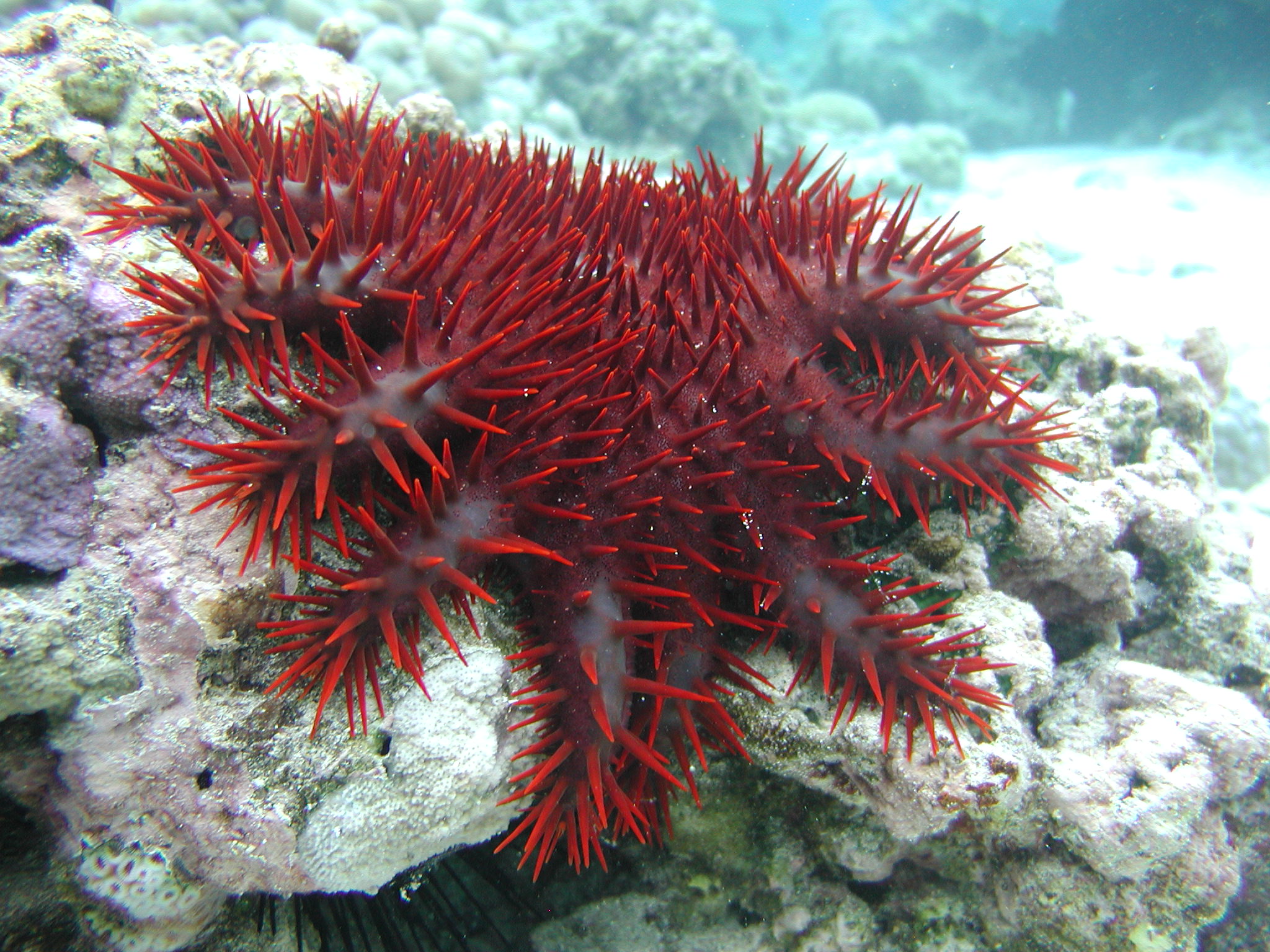

Identify this organism from the photo.
Crown-of-thorns starfish.
Crown-of-thorns starfish — what does the adult eat?
Living hard-coral tissue; it everts its stomach onto coral and digests tissue externally.

Crown-of-thorns starfish — why are outbreaks harmful?
Large populations consume coral faster than it can recover, reducing live coral cover and reef habitat.

Crown-of-thorns starfish — reproduction and early development?
Broadcast spawning with external fertilization; planktonic larvae settle and metamorphose into juveniles.

Crown-of-thorns starfish — actual geographic range versus event grouping?
Naturally Indo-Pacific; the event handout places it under Global indicators. Do not infer worldwide occurrence from that heading.

Hard/stony corals — group and skeleton?
Order Scleractinia, phylum Cnidaria; secrete a calcium-carbonate skeleton, usually aragonite.


Identify this organism from the photo.
Hard/stony corals; colony shapes include branching, massive, and plate forms.
Reef-building hard corals — how do they obtain energy?
Photosynthetic symbionts supply much of their energy; polyps also capture plankton with stinging tentacles.

Hard corals — basic life cycle?
Fertilized eggs develop into planula larvae; larvae settle as polyps; budding expands a colony. Reproduction may involve spawning or brooding.

Hard corals — ecological role?
Build the reef framework, providing shelter, feeding surfaces, and nursery habitat.

Hard corals — bleaching versus death?
Bleaching is loss of symbionts or pigments; a white coral may still be alive. Prolonged stress can cause mortality.

Lobsters — animal group?
Decapod crustaceans in phylum Arthropoda; ten walking legs and a hard external skeleton.


Identify this organism from the photo.
Spiny lobster. Clawed lobsters instead have conspicuous large front claws.
Lobsters — feeding and daily behavior?
Many reef lobsters forage at night on bottom-dwelling animals and carrion, sheltering in crevices by day.

Lobsters — life cycle?
Females carry eggs beneath the abdomen; larvae live in the plankton before settling. Juveniles and adults grow by molting.

Lobsters — main reef indicator value?
Low numbers, especially of large individuals, may indicate heavy harvest for food.

Lobsters — naming issue in the event handout?
The handout gives Nephropidae (clawed lobsters), while Reef Check commonly surveys spiny lobsters (Palinuridae). Recognize both.

Long-spined black sea urchins — genus and phylum?
Diadema spp.; Echinodermata, class Echinoidea.
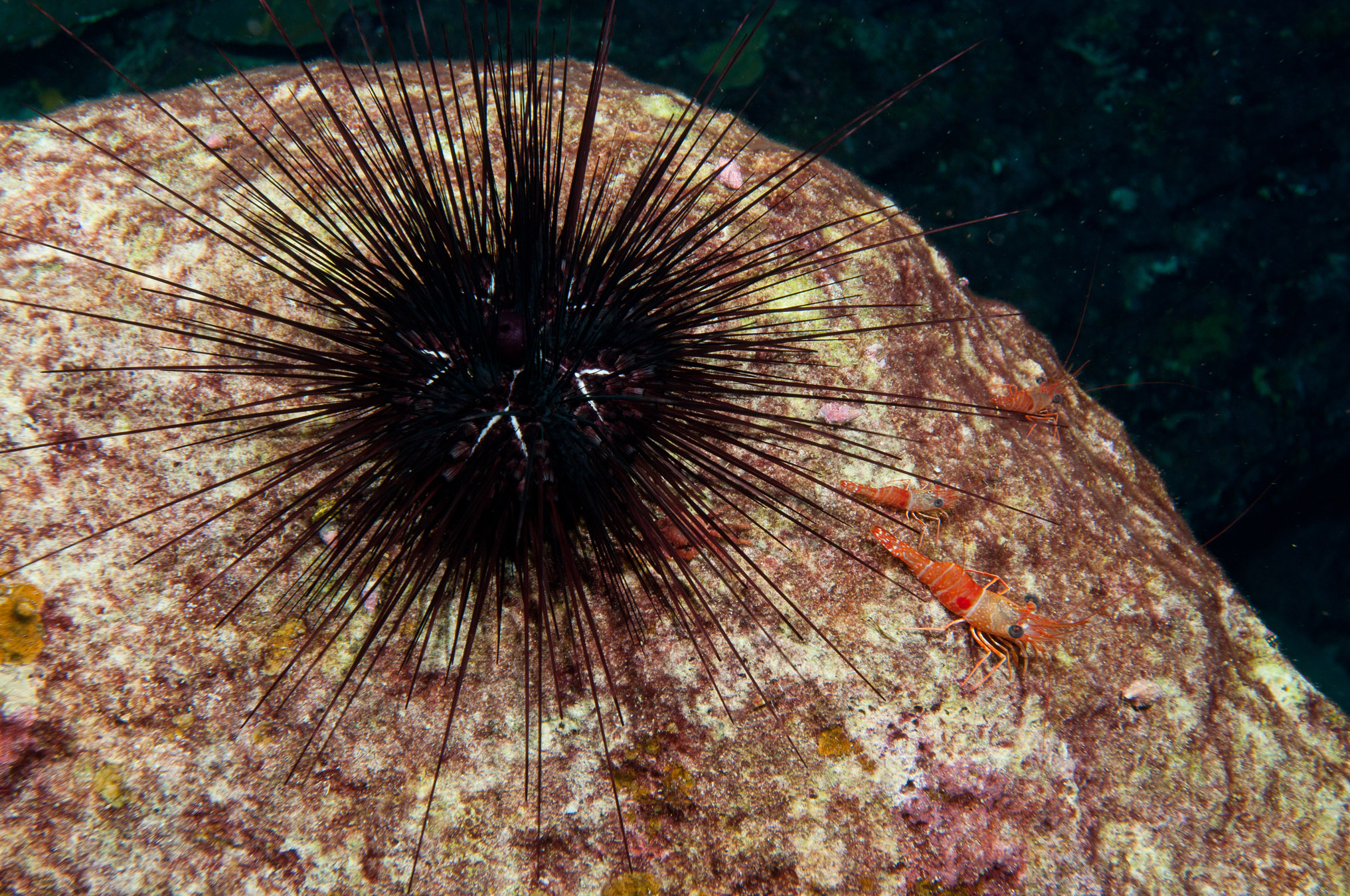

Identify this organism from the photo.
Long-spined black sea urchin (Diadema).
Diadema — feeding habit?
Primarily grazes benthic algae using its jaw apparatus, called Aristotle’s lantern.

Diadema — why can it help coral recruitment?
Grazing reduces algal competition and opens surfaces on which young corals can settle.

Diadema — basic life cycle?
Broadcast spawning and external fertilization; a planktonic echinopluteus larva metamorphoses into a juvenile urchin.

Diadema — what can a sharp population decline cause?
Reduced grazing can allow algae to spread; evaluate disease, harvest, and environmental stress as possible causes.

Pencil urchins — listed genus and phylum?
Eucidaris spp.; Echinodermata, class Echinoidea.


Identify this organism from the photo.
Pencil urchin; distinguish it from the fine needlelike spines of Diadema.
Pencil urchins — feeding habit?
Omnivorous grazers that eat attached algae and may also consume encrusting animals or other animal material.

Pencil urchins — basic life cycle?
Eggs and sperm are released into water; planktonic larvae later settle and metamorphose into juvenile urchins.

Pencil urchins — why are they monitored for human impacts?
Their attractive spines and tests are collected for curios and ornaments; some are collected for aquaria.

Pencil urchin versus long-spined black urchin — quickest distinction?
Pencil urchin: thick, blunt spines. Diadema: very long, slender spines.

Demosponges — class and phylum?
Class Demospongiae, phylum Porifera; animals rather than plants or corals.

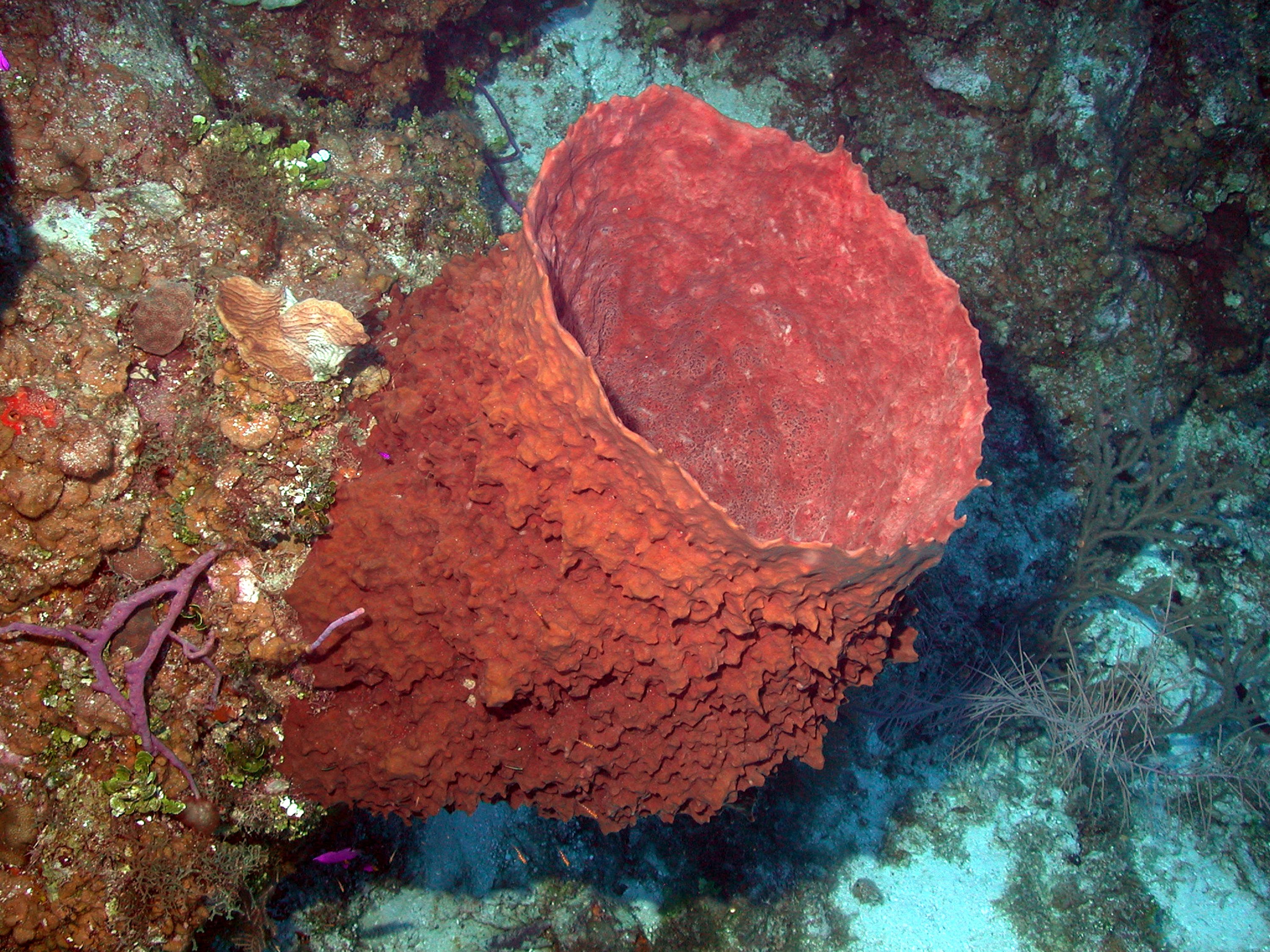
Identify this organism from the photo.
A sponge; many reef examples are demosponges. Shape alone does not identify every species.
Demosponges — how do they feed?
Pump water through pores; collar cells capture bacteria and other small food particles.

Demosponges — basic reproduction?
Can reproduce sexually with dispersing larvae and asexually by budding or fragmentation; details vary by species.

Demosponges — ecological roles?
Filter seawater, cycle nutrients, and provide habitat for small organisms.

Demosponges — are high numbers always proof of good reef health?
No. Some sponges flourish on disturbed reefs; interpret abundance with live coral, algae, species identity, and local conditions.

Tritons — genus and animal group?
Charonia spp.; marine gastropod molluscs (family Charoniidae).


Identify this organism from the photo.
Triton; identify from the full shell shape and pattern rather than size alone.

Tritons — feeding habit?
Predators of echinoderms, including sea stars; the Pacific giant triton can eat crown-of-thorns starfish.

Tritons — basic life cycle?
Lay eggs in capsules; free-swimming veliger larvae eventually settle and develop into crawling snails.
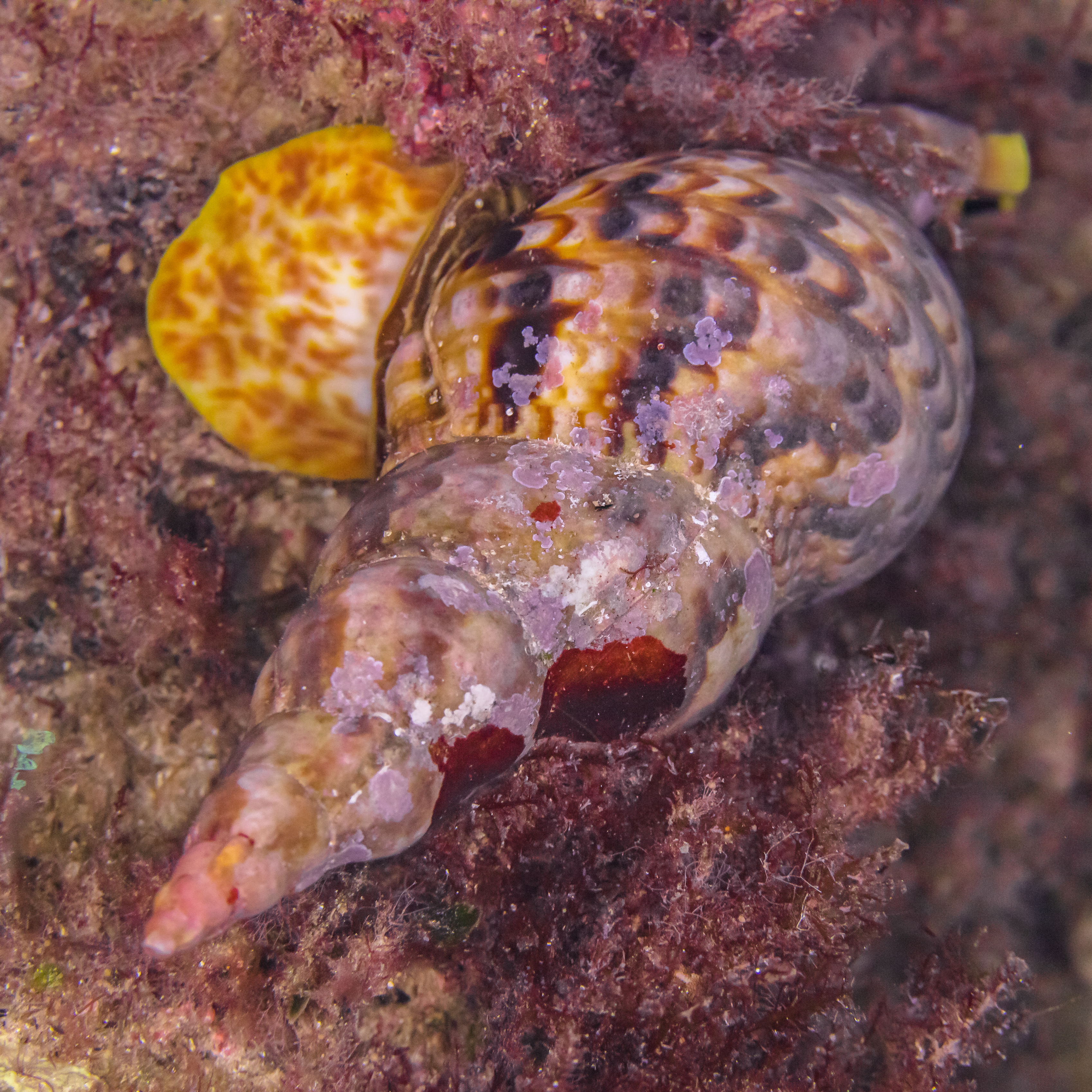
Tritons — what human pressure can reduce their numbers?
Collection of their large ornamental shells for the curio trade.

Can giant tritons alone be assumed to stop a crown-of-thorns outbreak?
No. Tritons are uncommon and consume relatively few starfish; predation alone has limited capacity to suppress an outbreak.

Giant clams — listed genus and class?
Tridacna spp.; class Bivalvia, phylum Mollusca.


Identify this organism from the photo.
Giant clam. The mantle is living tissue spread toward sunlight.
Giant clams — two important nutrition sources?
Photosynthetic symbionts in mantle tissues and filter feeding on suspended food particles.

Giant clams — basic life cycle?
Broadcast spawning with external fertilization; swimming larvae develop and settle as juveniles. Many species mature first as males and later become simultaneous hermaphrodites.

Giant clams — region in the event list?
Indo-Pacific only; typically associated with shallow, well-lit tropical reef environments.

Giant clams — principal collection pressures?
Harvest for meat, ornamental shells, and the aquarium trade; low abundance can reflect overharvesting.

Sea cucumbers — two species listed in the current handout?
Thelenota ananas and Stichopus chloronotus; phylum Echinodermata, class Holothuroidea.


Identify this organism from the photo.
Sea cucumber; mouth tentacles gather food and tube feet may help locomotion.
Listed reef sea cucumbers — feeding habit?
Deposit feeding: ingest sediment and digest associated organic material and microorganisms.

Sea cucumbers — ecological role?
Rework sediments and recycle nutrients through feeding and excretion.

Sea cucumbers — basic life cycle?
Usually broadcast spawning with external fertilization; planktonic larvae metamorphose into bottom-dwelling juveniles. Some species also reproduce by fission.

Sea cucumbers — event region and indicator pressure?
Listed under Indo-Pacific indicators; harvest for the sea-cucumber food trade can greatly reduce populations.

Gorgonians — animal group?
Colonial cnidarians; octocorals whose polyps have eight featherlike tentacles.
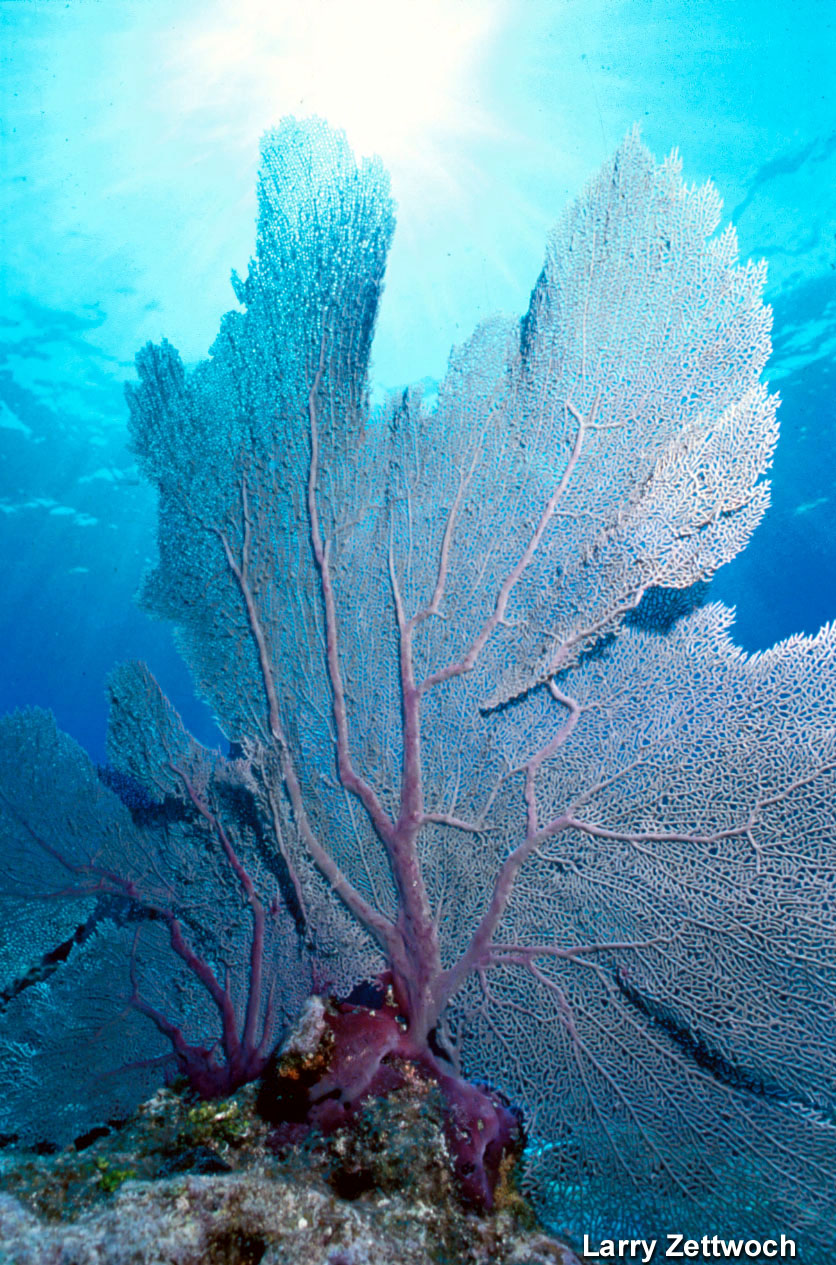

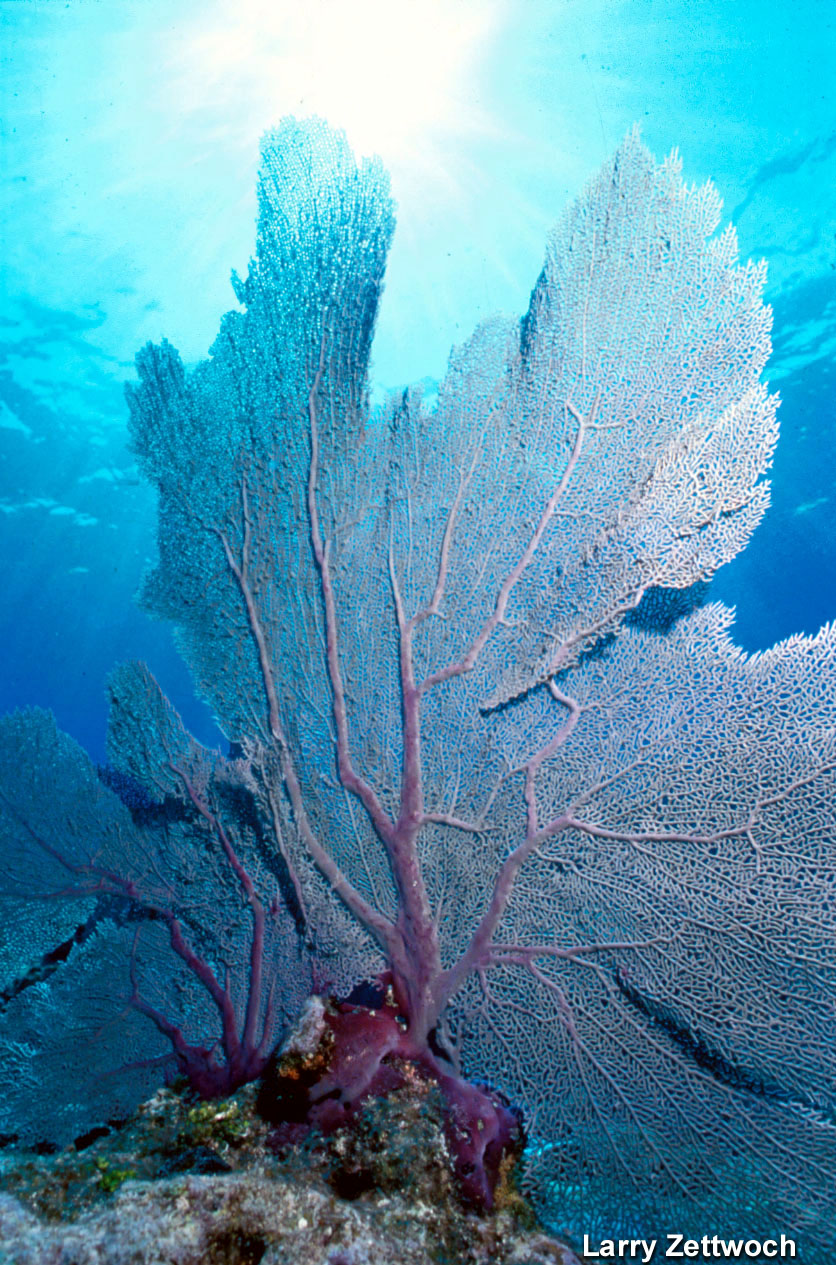
Identify this organism from the photo.
Gorgonian; a sea fan is a familiar gorgonian colony form.
Gorgonians — how do they feed?
Polyps capture suspended plankton and particles; many shallow-water species also receive energy from photosynthetic symbionts.

Gorgonians — basic life cycle?
Sexual reproduction produces planula larvae that settle; asexual budding builds colonies. Some can also propagate by fragmentation.

Gorgonians — region in the event handout?
Atlantic indicator category. Gorgonians as a broader group also occur outside the Atlantic.

Gorgonians — an important listed feeding interaction?
Flamingo tongue snails graze living gorgonian tissue; heavy local grazing can damage colonies.
Flamingo tongue snail — scientific name and class?
Cyphoma gibbosum; Gastropoda, phylum Mollusca.


Identify this organism from the photo.
Flamingo tongue snail; the colorful pattern belongs to the living mantle covering the shell.
Flamingo tongue snail — diet?
Feeds on living tissue of gorgonians such as sea fans and sea whips.

Flamingo tongue snail — basic life cycle?
Egg capsules are laid on host gorgonians; swimming veliger larvae disperse before settling and becoming juveniles.

Flamingo tongue snail — event region?
Atlantic; especially tropical western Atlantic and Caribbean reefs.

Flamingo tongue snail — why is the mantle detail useful?
The mantle can retract, revealing a much plainer shell; the spotted pattern is not permanently part of the shell.
