AP Psychology : Unit 0
 Call Kai
 Learn
Learn Practice Test
 Spaced Repetition
 Match
Match Flashcards
 Knowt Play
1/83

There's no tags or description
Looks like no tags are added yet.
Name | Mastery | Learn | Test | Matching | Spaced | Call with Kai | Chat |
|---|
No analytics yet
Send a link to your students to track their progress
84 Terms
psychology
the scientific study of the mind and behavior
confirmation bias
the tendency to favor information that confirms existing beliefs
hindsight bias
the tendency to believe, after learning an outcome, that one would have foreseen it
overconfidence
the tendency to be more confident than correct — to overestimate the accuracy of one’s beliefs and judgments
empirical evidence
information acquired by observation or experimentation
scientific method
a systematic approach to research where a problem is identified, relevant data is gathered, a hypothesis is formulated from these data, and the hypothesis is empirically tested
hypothesis
a testable prediction, often implied by a theory
falsifiable
capable of being disproved by experimental results
peer review
a process by which something proposed (as for research or publication) is evaluated by a group of experts in the appropriate field
replication
the action of repeating a study, using the same methods to see if the original results can be consistently reproduced
survey technique
a research technique that involved the collection of information from a sample of individuals through their responses to question
reliability
the consistency of a research study or measuring test
wording effect
the effect that question phrasing and order have on survey data
validity
the extent to which a test measures or predicts what it is supposed to do
social desirability bias
a tendency to give socially approved answers to questions about oneself
american psychological association (APA)
a professional organization representing psychologists in the united states
naturalistic observation
observing subjects in their natural environment without manipulation or control by the researcher
quantitative data
information about quantities; that is, information that can be measured and written down with numbers
case study
an in-depth study of a single person, group, event, or community
qualitative adta
descriptive information, which often comes from interviews, focus groups, or artistic depictions such as photographs
correlational research
a type of non-experimental research method, which studies the relationship between two variables with the help of statistical analysis
likert scales
a psychometric scale commonly used in questionnaires and is the most widely used scale in survey research
third variable problem
a form of confounding in which a third variable leads to a mistaken causal relationship between two others
structured interviews
a quantitative research method where the interviewer asks a set of secqueced questions
scatterplot
a graphical representation of the values of two variables for a set of data
true
correlation is not causation. correlations predict
correlation coefficient
(-1 and 1 are strong, 0 is weak.)
a statistical index of the relationship between the two things (-1 to +1)

positive correlation (bottom left, top right)
a relationship between two variables in which both variables move in the same direction.
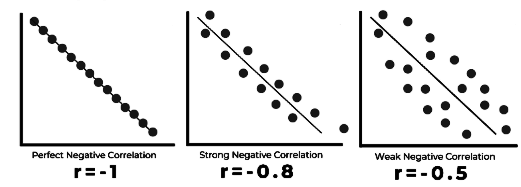
negative correlation (top left, bottom right)
a relationship between two variables that move in opposite directions
experimental method
a method of research where the researcher manipulates one variable, and controls or randomized the rest of the variables
independent variable
the variable that is manipulated or controlled by the researcher
dependent variable
the variable that is tested and measured in an experiment
confounding variable
a variable that influences both the dependent variable and independent variable, causing a spurious association.
single-blind study
a study in which the participants do not know whether they are in the control group or the experimental group but the researchers do
double-blind study
a study in which neither the participants nor the experimenters know who is receiving a particular treatment
placebo condition
a condition in which treatment is not administered but the subject believes that it is administered
sample
a subset of individuals from a larger population, used to conduct research
operational definitions
specifically defining a variable in terms of how it is measured or manipulated in a study
representative sample
a sample that accurately reflects the characteristics of the population as a whole
experimental group
the group in an experiment that receives the variable being tested
control group
the group in an experiment that does not receive the test variable
random sample
a sample that fairly represents a population because each member has an equal change of inclusion
random assignment
assigning participants to experimental and control groups by chance, thus minimizing preexisting differences between those assigned to the different groups
experimenter bias
a process where the scientists performing the research influence the results, in order to portray a certain outcome
sample bias
a bias that occurs when a sample is collected in such a way that some members of the intended population are less likely to be included than others
generalizability
the extent to which the results of a study can be generalized or extended to others
mean
calculated by adding all the numbers together and dividing by the amount of numbers
median
arrange numbers in order and find the middle number
mode
identify the number that appears the most frequently
range
highest number — smallest number
regression to the mean
the phenomenon that if a variable is extreme on its first measurement, it will tend to be closer to the average on its second measurement
positive skew (peak on left, low on right)
this happens when more numbers in a list are on the lower side, but a few really higher numbers stretch the average higher
negative skew (peak on right, low on left)
this is when more numbers in a list are on the higher side, but a few really low numbers pull the average down
standard deviation
a measure of the amount of variation or dispersion in a set of values
percentile rank
the percentage of scores in its frequency distribution that are equal to or lower than it

1 SD = 68%
2 SD = 95%
3 SD = 99.7%
1 SD = ?
2 SD = ?
3 SD = ?

bimodal distribution
a distribution that shows two different peaks or modes in the frequency of the occurrences
statistical significance
( p < 0.05 for statistical significance)
this tells us if the result of an experiment is probably true or just happened by chance. it checks if what we found in our experiment would happen often, or is rare when we think nothing special is going on
effect sizes
this measures how big the impact of something is in an experiment
meta analysis
a statistical analysis that combines the results of multiple scientific studies
institutional review boards (irb)
a committee that reviews and approves research involving human subjects, ensuring that ethical standards are met
informed consent
permission granted with the knowledge of the possible consequences, typically that which is given by a patient to a doctor for treatment with full knowledge of the possible risks and benefits
informed assent
agreement by a minor or other parties not able to give legal consent to participate in the activity
confidentiality
the requirement that private or sensitive information is not disclosed without the consent of the person who provided it
deception
the act of misleading or wrongly informing someone about the true nature of the situation
confederates
individuals who appear to be participants in a study but are actually part of the research team.
debriefing
providing participants in a study with a full explanation of the study after its completion, including the purpose and any deceptions used.