Respiratory System
 Call Kai
 Learn
 Practice Test
 Spaced Repetition
 Match
 Flashcards
 Knowt Play
1/10

There's no tags or description
Looks like no tags are added yet.
11 Terms
Thoracic wall structure
the thoracic wall has two apertures:
superior thoracic aperture
Inferior thoracic aperture → covered completely by the diaphragm
Pleural cavity: contains lungs
mediastinum: contains heart and pericardium
Functions of the respiratory system
gas exchange, air conditioning, sound production, olfaction, defense
Upper respiratory system
air conduction
air and food passes through
includes:
nose
nasal cavity
paranasal sinuses
pharynx

Lower respiratory system
air conduction and gas exchange
air ONLY
includes:
larynx
trachea
bronchi
lungs

Epithelial linings of respiratory tract - shared passages
shared passages: stratified squamous epithelium
function: protection
locations: nasal vestibule, oropharynx, laryngopharynx

Epithelial linings of respiratory tract - air only passages
passages with air only: mucus membrane
three layers: respiratory epithelium → thick membrane basement → lamina propria containing seromucus glands
locations: nasal cavity, nasopharynx, lower respiratory tract

Lamina propria
connective tissue only found beneath epithelium of mucus membranes
External nares
nasal vestibule: has vibrassae and mucus
stratified squamous epithelium
Nasal cavity
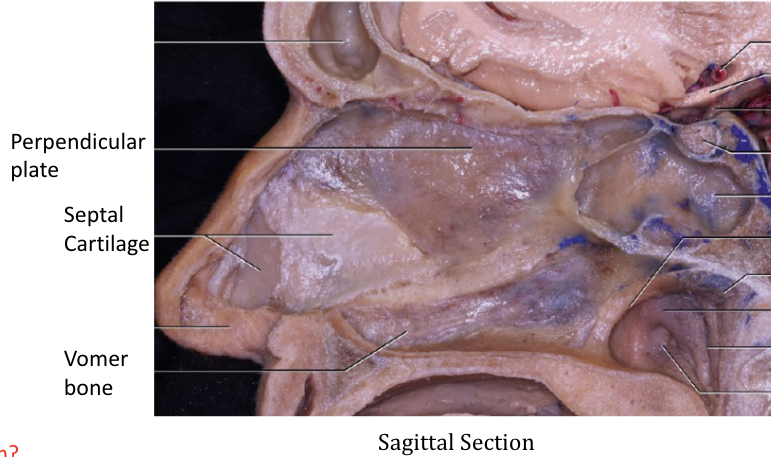
protected by craniofacial bones and divided by the nasal septum
nasal septum = Perpendicular plate of ethmoid bone, Vomer bone and septal cartilage
respiratory epithelium
Nasal conchae
superior, middle, inferior
superior and middle → part of ethmoid bone
inferior conchae is a separate bone
name them starting from the inferior and go up

Nasal meatuses
spaces under nasal conchae
superior, middle,