Dysphagia Remediation
 Call Kai
 Learn
 Practice Test
 Spaced Repetition
 Match
 Flashcards
 Knowt Play
1/64

There's no tags or description
Looks like no tags are added yet.
65 Terms
Impairment of the food transport outside of the alimentary canal is called.
eating disorder
swallowing disorder
feeding disorder
all of the above
feeding disorder
Dysphagia screening aims to
confirm the etiology of the disease
identify those at risk of dysphagia
identify the treatment prognosis
determine if a problem exists
identify those at risk of dysphagia
what is the role of an occupational therapist in a dysphagia management team
a. monitoring the amount of intake and recording it in the medical record
b. taking history and physical examination that is specific to oropharyngeal dysphagia
c. retraining the patient to self feed
d. assessing the patients nutritional and dehydration needs
retraining the patient to self feed
All of the following muscles are involved in elevating (closing) the mandible during mastication EXCEPT
temporalis
masseter
medial pterygoid
lateral pterygoid
lateral pterygoid
Laryngeal vestibule closure occurs during the ___________ stage of swallowing
pharyngeal
esophageal
oral prep
oral transition
pharyngeal
The cranial nerve examination of a stroke patient with oropharyngeal dysphagia shows that his tongue deviates toward the right side during tongue protrusion. Which cranial nerve has been damaged?
X
XII
V
VII
XII
Which statement is correct about the cricopharyngeal muscle?
a. it is innervated by both trigeminal and hypoglossal nerves
b. it relaxes during passage of the bolus from the pharynx to the esophagus
c. it forms the lower esophageal sphincter
d. it is a smooth muscles
b. it relaxes during passage of the bolus from the pharynx to the esophagus
All of the following muscles function as hyoid elevator during swallowing except
a. hyoglossus
b. geniohyoid
c. digastric
d. omohyoid
a. hyoglossus
What is the name of the highlighted muscle
masseter
medial pterygoid
buccinator
temporalis
buccinator

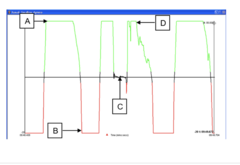
The following graph shows the normal nasal airflow during swallowing. Which letter indicates the apnea during swallowing?
c
b
a
d
c
All of the following statements are correct about the esophagus except
a. under resting conditions, the esophageal lumen is distended
b. it is a distensible tube, approximately 10 inches long
c. at its proximal end, the muscle is striated, whereas the distal end is comprised of smooth muscles
d. after passing the diaphragmatic hiatus, it connects to the body of the stomach at the level of the LES
a. under resting conditions, the esophageal lumen is distended
all of the following mechanisms are responsible for the pharyngoesophageal segment opening EXCEPT
a. velopharyngeal sphincter
b. brainstem disinhibition
c. bolus driving force
d. the mechanical traction resulting from posterior tongue retraction and hyolaryngeal excursion
a. velopharyngeal sphincter
Which event happens during the oral (transition) phase of swallowing?
a. lip sealing around the spoon
b. anterior-posterior movement of the bolus
c. putting food into the mouth
d. chewing
e. pharyngeal constriction
b. anterior-posterior movement of the bolus
Most of the times when a patent complains about food sticking in the throat, the issue relates to the ___________ stage
oral prep
oral transit
pharyngeal
esophageal
esophageal
Bolus characteristics may change either degree of movement or timing of the swallow. This principle is known as _________
a. Medullary control of swallowing
b. dynamic action
c. bolus accommodation
d. plasticity
c. bolus accommodation
Aging can __________
a. increase the airway compromise
b. increase the odds of esophageal malfunction
c. reduce PES
d. all of the above
d. all of the above
Which CNS are responsible for the refinement of swallowing movements?
a. subcortical and cerebellum
b. brainstem and cerebellum
c. cortical and brainstem
d. cortical and subcortical
a. subcortical and cerebellum
Imitation of feeding behavior from the meal partner is usually seen in patterns with _____________
a. dementia
b. brainstem stroke
c. hemispheric stroke
d. Parkinson disease
a. dementia
A 69-year-old man had a brainstem stroke 9 months before seeking rehabilitation for dysphagia.
What is this patient's stroke phase?
Improving
Acute
Chronic
c. chronic
In terms of medical history, what is the positive indication for the respiratory system in this patient?
No history of chest infection
PEG-dependent
Reduced laryngeal closure
Mild aspiration with thin liquid
a. no history of chest infections
What pattern of swallowing is revealed in fluoroscopic examination of swallowing in this patient?
Repetitive swallow
Swallowing with cue
Incomplete swallow
Effortful swallow
c. incomplete swallow
Paresis of the left vocal fold indicates that the ___________ nerve is impacted
vagus
facial
hypoglossal
trigeminal
vagus
A 72-year-old woman presented to the clinic with a diagnosis of primary progressive aphasia. The primary complaint was weight loss and unfinished meals. The patient lived independently and attended an adult care facility during the day, where she reportedly was observed to cough during lunch. Her brother had a history of esophageal disease and a concern was expressed by the family.
This specific case contains features commonly associated with __________________.
TBI
Parkinson s disease
Brainstem stroke
Dementia
Hemispheric Stroke
Dementia
Which stage(s) of swallowing was (were) mainly impacted
All the above
Esophageal
Pharyngeal
Oral preparation and transit
oral prep and oral transit
The immediate therapy for this individual should focus on ___________________.
Direct swallow therapy
Instructing family to prepare meals that could be eaten with a single utensil
Enhancing taste and flavor
Replacing the regular diet with puree
b. instructing family to prepare meals that could be eaten with a single utensil
An 86-year-old man recently had heart surgery. After surgery, he had a stroke affecting the premotor cortex of the left hemisphere. The man has a history of depression that is treated with an antidepressant.
Which cranial nerves are possibly damaged in this patient?
VII, X, XII
VII, IX, X
V, VII, XI
IX, X, XII
VII, X, XII
An 86-year-old man recently had heart surgery. After surgery, he had a stroke affecting the premotor cortex of the left hemisphere. The man has a history of depression that is treated with an antidepressant.
What are the potential reasons of xerostomia in this patient?
Medication side-effects
Age related changes
Tongue weakness
a and b
d. a and b
What are the potential reasons for aspiration of thin liquids in this patient?
Incomplete closure of vocal cords
All of the above
Limited laryngeal elevation
Tongue weakness
all of the above
A patient with oral cancer has undergone partial glossectomy. What do you expect to see during your first clinical examination of swallowing after the surgery?
a. issues with reduced negative pressure
b. difficulty clearing materials from the pharynx
c. difficulty holding and preparing a bolus for swallowing
d. difficulty moving materials from the mouth to the pharynx
c. difficulty holding and preparing a bolus for swallowing
What is the functional cut-off score for trismus in patients with head and neck cancer?
a. a mouth opening 35 mm or less
b. a mouth opening 15 mm or less
c. a mouth opening 25 mm or less
d. a mouth opening 45 mm or less
a. a mouth opening 35 mm or less
You are visiting a patient one year after radiation therapy in the oral area. Which side effects are more likely to see during this visit?
a. tongue atrophy
b. nausea / vomiting
c. fatigue
d. dry cough
a. tongue atrophy
The most common radiation therapy complication that affects swallowing is
a. pain
b. altered taste
c. xerostomia
d. bolus control deficit
c. xerostomia
You have a head and neck cancer patient with mucositis resulting from radiation therapy. What intervention may help to alleviate this side effect?
a. stretching
b. Analgesics
c. exercises
d. muscle relaxants
b. Analgesics
You want to specifically evaluate the effect of head and neck cancer on your patient's quality of life associated with swallowing. Which tool do you use?
a. Mann Assessment of Swallowing Ability-Cancer (MASA-C)
b. Functional Oral Intake Scale (FOIS)
c. EAT-10
d. MD Anderson Dysphagia Inventory (MDADI
d. MD Anderson Dysphagia Inventory (MDADI
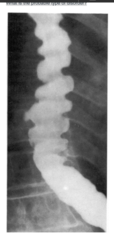
The picture shows a lateral radiographic view of a patient with esophageal dysphagia during swallowing. Please specify the type of abnormality.
a. Cricopharyngeal Bar
b. Schatzki's ring
c. Achalasia
d. Zenker's Diverticulum
a. Cricopharyngeal Bar

All of the following are among the characteristics of benign esophageal stricture except
a. narrowed esophageal segment 1 cm or longer
b. start with liquid food complaints
c. dilation is effective in relieving the symptoms
d. It usually happens due to GERD but may be asymptomatic for reflux
b. start with liquid food complaints
The picture below shows the radiographic appearance of an esophagus during swallowing from a patient with dysphagia. Please use this picture to answer the next two questions.
What is the probable type of disorder?
Esophageal Diverticulum
Malignant Stricture
Diffuse Esophageal Spasm
Achalasia
Diffuse Esophageal Spasm

What is the best treatment for this type of dysphagia?
Medication and food modification
Surgery
Exercise
Dilation
Medication and food modification
Pulsion diverticula form as a result of high extraluminal pressures against the esophageal wall.
true
false
false
Treatment of GERD is directed at ________________.
Enhancing the strength of the antireflux barrier
Decreasing the noxiousness of gastric contents
Improving esophageal clearance and gastric emptying
All of the above
All of the above
A patient complains that swallowing solid foods has become more difficult over the last couple of months. However, he has no problem with liquids. Furthermore, he does not complain about heartburn or chest pain.
What is the most suspected disease?
Peptic stricture
Progressive systemic sclerosis
Achalasia
Carcinoma
Rings or webs
Carcinoma
What is the optimal instrumental procedure for confirming the presence of GERD?
Clinical evaluation
Videofluoroscopy
Sydney Swallow Questionnaire
24 Hours esophageal pH probe
24 Hours esophageal pH probe
All statements are correct regarding Zenker's Diverticulum EXCEPT
a. It often is associated with increased bolus flow through the PES.
b. It develops on the posterior pharyngeal wall in the region of the PES.
c. It can be treated with surgery.
d. It represents a protrusion of the hypopharyngeal mucosa at the boundary of the cricopharyngeal muscle and the inferior constrictor muscle.
a. It often is associated with increased bolus flow through the PES.
Based on the referral note that you have received from your SLP colleague, your patient has a rating of "2" on the WHO Scale for Grading Mucositis. This means that he ______________________.
a. has no symptoms
b. is unable to eat or drink
c. has sore mouth, no ulcers
d. is on liquid diet only
e. has sore mouth with ulcers, but able to eat normally
e. has sore mouth with ulcers, but able to eat normally
One of your patient complains about coughing while not eating. What is the possible associated sign?
Aspiration of saliva
Bolus entering the nasopharynx
Residue in the esophagus
Infrequent swallows
Aspiration of saliva
Please read the following case scenario and answer the next three questions.
A 48-year-old woman told her dentist that she was choking on her saliva at night but not during the day. However, she did admit to choking on carbonated liquids. The dentist referred her to the speech pathologist for an evaluation of her swallowing. The physical evaluation was normal except for tongue fasciculation and some atrophy on the left lateral border of her tongue.
The patient's tongue atrophy indicates damage to the _________.
Upper motor neuron
Lower motor neuron
Subcortical nuclei
Cerebellum
Lower motor neuron
A 48-year-old woman told her dentist that she was choking on her saliva at night but not during the day. However, she did admit to choking on carbonated liquids. The dentist referred her to the speech pathologist for an evaluation of her swallowing. The physical evaluation was normal except for tongue fasciculation and some atrophy on the left lateral border of her tongue.
Which cranial nerve is potentially damaged?
Hypoglossal (XII)
Facial (VII)
Vague (X)
Trigeminal (V)
Hypoglossal (XII)
A 48-year-old woman told her dentist that she was choking on her saliva at night but not during the day. However, she did admit to choking on carbonated liquids. The dentist referred her to the speech pathologist for an evaluation of her swallowing. The physical evaluation was normal except for tongue fasciculation and some atrophy on the left lateral border of her tongue.
Which referral should the speech pathologist make after this appointment?
Dentist
Neurologist
ENT
Gastroenterologist
Neurologist
Based on the following Modified Barium Swallow study, what is the cause of dysphagia in this patient?
Zenker's Diverticulum
Cricopharyngeal bar
Peptic stricture
Carcinoma
Peptic stricture

Based on the TNM system, T4N2M1 indicates that _______________.
a. Tumor is large, has invaded neighboring lymph nodes, but has not spread to other body organ systems.
b. Tumor is small, has invaded neighboring lymph nodes, but has not spread to other body organ systems.
c. Tumor is large, has invaded neighboring lymph nodes, and has metastasized to other body organ systems.
d. Tumor is small, has not invaded neighboring lymph nodes, and has not spread to other body organ systems.
c. Tumor is large, has invaded neighboring lymph nodes, and has metastasized to other body organ systems.
The following picture indicates _______________________.
Oral candidiasis
Tongue atrophy
Oral mucositis
Xerostomia
Oral mucositis

The following picture indicates _______________________.
Oral mucositis
Tongue atrophy
Xerostomia
Oral candidiasis
Xerostomia

Which characteristic is not associated with improving phase in stroke patients?
Feeding routes established for most
Malnutrition may still be a factor
Patient more stable with better endurance
Most comorbid conditions
Most comorbid conditions
All statements are correct regarding the feeding behaviors in patients with Alzheimer's and frontotemporal dementia EXCEPT
a. Food preferences are increased in patients with frontotemporal dementia
b. Swallowing problems is highly frequent in both groups
c. Appetite increases in patients with frontotemporal dementia
d. Eating habits is less deviated in patients with Alzheimer
b. Swallowing problems is highly frequent in both groups
A patient with ALS demonstrates early swallowing problems. Which intervention would be most appropriate?
Insert PEG
Use chin-tuck position
Decrease liquid intake to reduce risk of aspiration
Change to soft diet
Use chin-tuck position
All statements are correct regarding the esophageal malignant strictures EXCEPT
a. The primary treatment is esophagectomy.
b. Most of esophageal tumors are not malignant.
c. These strictures have variable length, shelflike proximal margins and irregular channel, which may diverge substantially from the anticipated course of the esophageal lumen.
d. Dysphagia starts for both solids and liquids.
b. Most of esophageal tumors are not malignant.
Please read the following case scenario to answer the next two questions.
Sarah was admitted to the psychiatry unit with symptoms of acute schizophrenia. When eating, it was noted she would take excessive time to finish, with intermittent choking episodes. During clinical swallowing evaluation, the SLP found that the oropharyngeal swallowing musculature was intact. As she watched the patient eat, she noted a rapid feeding rate with inappropriate bite sizes. She also noted excessive talking while eating and the choking episodes occurred during these talking periods.
The patient was classified as dysphagic as a result of ____________________.
Neurological disorder
Physical disability
Emotional and behavioral abnormalities.
Idiopathic disorder
Neurological disorder
Sarah was admitted to the psychiatry unit with symptoms of acute schizophrenia. When eating, it was noted she would take excessive time to finish, with intermittent choking episodes. During clinical swallowing evaluation, the SLP found that the oropharyngeal swallowing musculature was intact. As she watched the patient eat, she noted a rapid feeding rate with inappropriate bite sizes. She also noted excessive talking while eating and the choking episodes occurred during these talking periods.
The patient choke while eating and talking because _____________________.
a. The patient's oropharyngeal muscles are not strong enough to handle both actions simultaneously.
b. Schizophrenia compromises the coordination between swallowing and respiration
c. The airway is open during speech while it must be closed during swallowing.
d. All of the above
c. The airway is open during speech while it must be closed during swallowing.
Which statement is correct regarding the endotracheal tubes?
a. Longer periods of intubation may cause permanent laryngeal and lung injury because of local irritation to the mucosa.
b. It is inserted via an incision between the second and third tracheal rings.
c. Patients are still able to speak and swallow
d. Placement of an endotracheal tube is considered a long-term approach for airway support.
a. Longer periods of intubation may cause permanent laryngeal and lung injury because of local irritation to the mucosa.
What is the benefit of fenestrated tracheostomy tube?
Facilitating suctioning of the lungs
Preventing the aspiration of secretions or food
Increasing airflow to the upper airway for speaking
Facilitating swallowing
Increasing airflow to the upper airway for speaking
Occlusion of the stoma at the tracheotomy site theoretically
a. further decreases subglottic air pressure and worsens swallow performance
b. has no impact on subglottic air pressure and swallow performance
c. restores subglottic air pressure and improves swallow performance
d. restores subglottic air pressure but has no impact on swallow performance
c. restores subglottic air pressure and improves swallow performance
All statements are correct regarding osteophytes EXCEPT
a. Osteophytes provide a mechanical obstruction to swallow
b. Osteophytes are more common in older adults
c. Osteophytes at the C3 and C6 levels are most commonly symptomatic
d. Osteophytes larger than 5 mm often associated with aspiration
d. Osteophytes larger than 5 mm often associated with aspiration
Which of these surgical methods improves glottal closure?
Injection of biomaterials
Medialization thyroplasty
Dilation
A and C
A and C
An 81-year-old patient with a history of Parkinson's disease was admitted to the hospital with aspiration pneumonia that was believed to be attributable to increased oropharyngeal dysphagia. A progression of Parkinson's disease was suspected, and a nasogastric tube was inserted. A thorough medical history review revealed that the patient had recently seen his primary care physician because of increased pain in his right arm that had become progressively rigid. At that time he was given dantrolene sodium (Dantrium) to relax his arm and ideally relieve the pain. Based on the patient's history, what is the primary reason for the patient's new problem with swallowing?
a. Addition of the muscle relaxant has further weakened the swallowing muscles
b. Addition of the muscle relaxant has increased the salivary flow
c. Addition of the muscle relaxant has decrease the cognitive function.
d. Progression of Parkinson's disease
a. Addition of the muscle relaxant has further weakened the swallowing muscles
Which statement is correct regarding patients with chronic obstructive pulmonary disease (COPD)?
a. Patients with COPD are at increased risk for dysphagia
b. Patients with COPD are at risk for aspiration from oropharyngeal sources as well as esophageal sources
c. Presence of reflux-related symptoms may play a role in acute exacerbations in patients with COPD
d. all of the above
d. all of the above