HARC Lecture 2: Urogenital anatomy
 Call Kai
 Learn
 Practice Test
 Spaced Repetition
 Match
 Flashcards
 Knowt Play
1/53

There's no tags or description
Looks like no tags are added yet.
54 Terms
List 6 pelvic organs/structures
ovaries
uterine tubes
round ligament of the uterus
bladder
vagina rectum
Name the 2 pelvic pouches
vesicouterine pouch
rectouterine pouch
Where is the vesicouterine pouch located?
between the bladder and the uterus
Where is the rectouterine pouch located?
between the bladder and the uterus
What are the two attachments to the ovaries?
ovarian ligament (remnant of the gubernaculum)
suspensory ligament of the ovary (fold of peritoneum)
Where are the ovarian and suspensory ligament of the ovary found in relation to the uterine tubes?
posterior to the uterine tubes
How long are the uterine tubes are what structure are they suspended in?
around 8-10cm long
suspended in the upper part of the broad ligament (mesosalpinx)
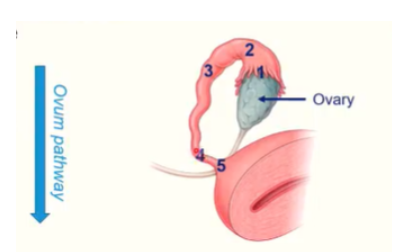
Name the 5 parts of the Uterine tubes in descending order:
fimbriae
infundibulum
ampulla
isthmus
intramural
how long on average is the uterus?
7-8cm long
What are the 2 openings of the cervix?
internal Os
external Os
What is the difference between the internal and external Os?
internal Os is the internal cervical opening which communicates with the uterine cavity
external Os is the external cervical opening which communicates with the vaginal canal

Describe the shape of the external Os and what happens to it post-partum?
changes shape postpartum - circular to ‘slit like’
4 fornices surround the cervix (2 lateral, 1 posterior, 1 anterior)

How long is the vaginal canal?
8-9cm
Where is the vaginal canal located between?
the vagina extends between the cervix and the vulva
Which structure does the vagina pass through?
the pelvic floor
upper half of vagina lies above pelvic diaphragm
lower half of vagina lies below pelvic diaphragm
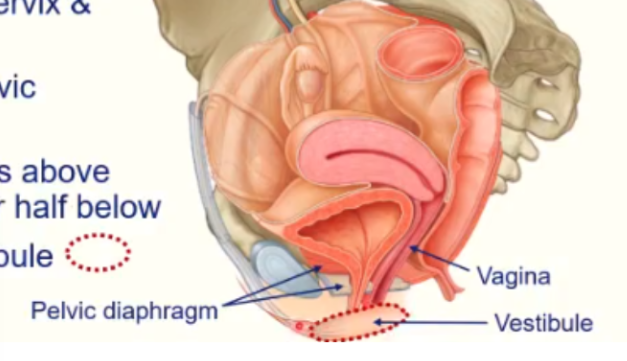
When can the recto-uterine pouch fill with fluid and how is it drained?
fluid accumulates due to ectopic pregnancy or peritonitis etc
fluid can be drained via posterior fornix by culdocentesis

What is the typical uterine and vaginal orientation?
anteverted
anteflexed

What 2 variations in uterine and vaginal orientation can occur?
retroversion can occur e.g. cervix is tilted posteriorly
retroflexion can occur e.g. uterus is tilted posteriorly
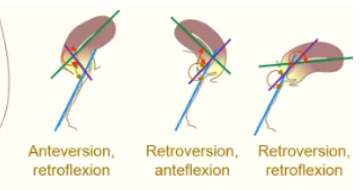
When retroversion occurs, what is the angle between the vagina and cervix?
the angle is more than 180 degrees
When retroflexion occurs, what is the angle between the cervix and the body of the uterus?
more than 180 degrees
Are there any symptoms when the uterus and cervix have a variation in orientation?
normally asymptomatic
can have some pain during menstruation or intercourse due to compression on nearby structures
List 2 Peritoneal Reflections
Parietal Peritoneum
Broad Ligament
What is the parietal peritoneum?
it lines the walls of the abdominopelvic cavity
it covers over pelvic structures such as the bladder
What is the broad ligament?
peritoneum drapes over and encases the uterus, uterine tubes and ovaries
it forms a double layer of peritoneum
List the 3 parts of the Broad Ligament:
Mesoalpinx
Mesovarium
Mesometrium
What 4 arteries supply the female pelvic organs/structures?
internal iliac artery
uterine artery
vaginal artery
ovarian artery (gonadal artery)
What is the ovarian artery a branch of?
the abdominal aorta
Which plexuses supplies the pelvic organs/structures?
uterine plexus
ovarian plexus (from renal plexus)
From which nerve roots do sympathetic fibres travel to in the uterine plexus?
T10-L1
superior and inferior hypogastric plexus
From which nerve roots do pelvic splanchnic nerves travel from in the uterine plexus?
S2-S4
List 8 organs/structures in the male pelvis
testis
epididymis
vas deferens/ductus deferens
ejaculatory duct
urethra
seminal vesicle
bulbourethral gland
prostate gland
List the 8 structures in the sperm pathway
seminiferous tubules
straight tubules
rete testis
efferent ductules
epididymis - head
epididymis - body
epididymis - tail
ductus deferens

What structure suspends the testes?
the spermatic cord
How many degrees lower are the testes?
3 degrees lower than body for optimal spermatogenesis
Which testicle is lower than the other?
the left is usually lower as it descends first
What structure divides the scrotum into left and right?
the septum
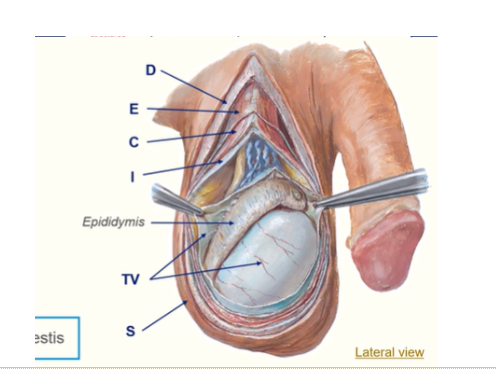
List the layers of the testes from skin inwards: Some Damn Englishmen Called It The Testis
skin
dartos fascia and muscle
external spermatic fascia
cremasteric fascia and muscle
internal spermatic fascia
tunica vaginalis
tunica albuginea
What does the ductus deferens pass through?
passes through the inguinal canal
What is the function of the ductus deferens?
it is a muscular tube carrying spermatozoa from the testis to the seminal vesicle where the ejaculatory duct is formed.
Which 3 accessory glands contribute to seminal fluid?
seminal vesicles (pair)
prostate gland
bulbourethral glands pair)
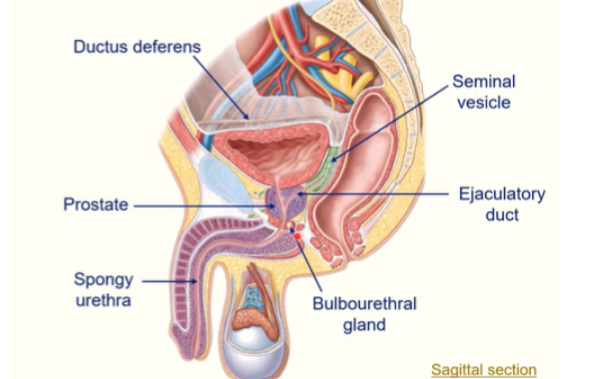
What are the 5 anatomical lobes to the prostate gland?
anterior
median
lateral x2
posterior
Which lobe of the prostate is most common for prostatic cancer?
posterior lobe
How much seminal fluid is produced by the prostate?
around 25%
What pH is seminal fluid?
alkaline in order to neutralise vaginal fluid
How much seminal fluid is produced by the seminal vesicles?
~70%
alkaline
What does the bulbourethral gland contribute to seminal fluid?
mucus rich fluid for lubrication and protection
describe the vasculature of the male pelvic organs/structures (8)
internal iliac artery
superior and inferior vesical arteries
internal pudendal artery
prostatic arteries
dorsal and deep arteries of the penis
testicular/gonadal artery

Which plexuses supply the male pelvic organs/structures?
prostatic plexus
testicular plexus (from renal plexus)
Describe the innervation of the male pelvic organs/structures via the prostatic plexus:
prostatic plexus (autonomic); sympathetic fibres (T11-L2) from infrior hypogastric plexus
parasympathetic fibres (S2-S4) from pelvic splanchnic nerves → erection
Describe the innervation of the male pelvic organs/structures via the testicular plexus:
sympathetic fibres (T10-T12)
parasympathetic fibres
sensory - conveyed to CNS via sympathetic fibres
Which nerve innervates the perineum, external genitalia and anal region?
pudendal nerve (S2-S4)
sensory, motor and sympathetic fibres
Which nerve innervates the external and internal urethra?
the pudendal nerve
What is the inguinal canal?
an oblique passage through the layers of the abdominal wall
Which structure is the inguinal canal superior and parallel to?
the inguinal ligament