Proteins/Enzymes/Protein Synthesis
 Call Kai
 Learn
Learn Practice Test
 Spaced Repetition
 Match
Match Flashcards
 Knowt Play
1/49

There's no tags or description
Looks like no tags are added yet.
Name | Mastery | Learn | Test | Matching | Spaced | Call with Kai | Chat |
|---|
No analytics yet
Send a link to your students to track their progress
50 Terms
protein folding (structure)
allows a protein to have a specific function
what happens if a protein is unfolded?
the ability to do its specific function is lost
functions of a protein
- forms channels for transporting molecules
- catalyzes reactions as enzymes
- protects against diseases as antibodies
- provides structure
what are the monomers of a protein?
amino acids
peptide bonds
bonds that hold amino acids together in a long chain
what part of an amino acids contains NH2
amino group
what part of an amino acids contains COOH
carboxyl group
what part of an amino acids is the side chain
R group
what is special about the R group of an amino acid
it differentiates each amino acid from one another (the unique part of an amino acid)
where are hydrophobic R groups found?
the inner parts of a folded protein
denature/denaturing
unfolding (disruption) of the 3d shape of a protein
when is a protein denatured?
when exposed to extreme temperatures or pH
what does a protein require?
- specific pH
- specific temperature
- chaperonin to help them fold correctly
primary structure of a protein
sequence of amino acids
secondary structure of a protein
alpha helix or beta pleated sheet

tertiary structure of a protein
- folding of the helix or pleated sheet
- overall 3d shape often determined by the R group
quaternary structure of a protein
stacking of multiple polypeptides

catalyst
substance that alters the rate of a chemical reaction without itself being changed or used up
enzymes
proteins that are catalysts in cells
functions of enzymes
- speed up a reaction by lowering activation energy
- allows reactions to take place at lower temperatures
- regulates metabolism

what is being compared in an activation energy graph
a chemical reaction with an enzyme and a chemical reaction without an enzyme
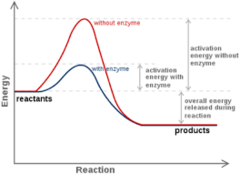
what happens to the activation energy with an enzyme?
the activation energy is lowered

what happens to the reaction with an enzyme?
it is done faster
substrate
the substance affected by an enzyme

active site
region on an enzyme that can bind with a specific substrate
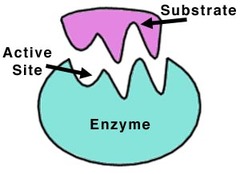
lock-and-key
active site on enzyme fits substrate exactly
induced fit
enzyme and substrate connect and then bend into one another to tighten their connection
true or false: an enzyme can be reused after a reaction is over
true
true or false: an enzyme can help in both a dehydration synthesis reaction and a hydrolysis reaction
true
ways in which an enzyme catalyzes chemical reactions
- holding 2 substances in positions in which they can react with each other
- twisting a substrate molecule slightly so that a chemical bond is weakened and broken
where is DNA (deoxyribonucleic acid) found?
the nucleus (in eukaryotes)
what is the sugar in DNA?
deoxyribose
what is the sugar in RNA (ribonucleic acid)?
ribose
bases in DNA
adenine, thymine, cytosine, guanine - ATCG
bases in RNA
adenine, uracil, cytosine, guanine - AUCG
what is the shape of DNA?
double-helix, it is double stranded
what is the shape of RNA?
single stranded
what comes first? transcription or translation
transcription (c comes before l)
where does transcription take place?
the nucleus
RNA polymerase
connects complementary RNA bases to the DNA template strand, making mRNA
mRNA
messenger RNA, travels to the ribosome, directs tRNA
tRNA
transfer RNA, reads the bases of mRNA in sets of 3, holds complementary anti-codon
what are the sets of 3 bases on mRNA that tRNA reads known as
codons - codes for specific amino acids and/or stop/start signals
mRNA AUG
methionine, typically the start codon of an amino acid
true or false: more than 1 codon can code for the same amino acid
true
where does protein synthesis take place?
ribosomes
what is the result of translation?
proteins (made of 1 or more polypeptide chains)
stop codons
signals protein building is finished
- UAA
- UAG
- UGA
start codons
signals the beginning of protein building
what directs protein synthesis?
DNA