Chemistry 1 Test 2
 Call Kai
 Learn
Learn Practice Test
 Spaced Repetition
 Match
Match Flashcards
 Knowt Play
1/135

Earn XP
Description and Tags
Includes information on Periodic Table & Trends, Chemical Bond & Nomenclature, Lewis Structures, and VSEPR Theory & Molecular Polarity
Name | Mastery | Learn | Test | Matching | Spaced | Call with Kai | Chat |
|---|
No analytics yet
Send a link to your students to track their progress
136 Terms
Dmitri Mendeleev (1834-1907)
Developed the modern periodic table
Periodic Law
When the elements are arranged in order of increasing atomic mass, certain sets of properties recurve periodically
Vertical columns represents what on a periodic table?
Groups of elements
Horizontal columns represents what on a periodic table?
Periods
What elements are in group 1?
Alkali Metals
What elements are in group 2?
Earth Alkali Metals
What elements are in groups 3-12?
Transition Metals
What elements are in group 15?
Pnictogens
What elements are in group 16?
Chalogens
What elements are in group 17?
Halogens
What elements are in group 18?
Noble Gases

Where are metals located on the periodic table?
On the left

Where are nonmetals located on the periodic table?
On the right

Where are metalloids located on the periodic table?
Along a zigzag line that separate metals and nonmetals
How many valence electrons are in group 1?
1
How many valence electrons are in group 2?
2
How many valence electrons are in group 13?
3
How many valence electrons are in group 14?
4
How many valence electrons are in group 15?
5
How many valence electrons are in group 16?
6
How many valence electrons are in group 17?
7
How many valence electrons are in group 18?
8

What type of block does group 1 & 2 have?
The s block

What type of block does group 3-12 have?
The d Block

What type of block does groups 13-17 have?
The p Block

What type of block is the Lanthanides and Actinides?
The f block
Effective Nuclear Charger(Zeff)
Net positive charge experienced by an electron after the shielding effect of inner-shell electrons

What equation do you use to find the Zeff?
Zeff = Z - Shielding
What is the range of the shielding ability of subshells?
s>p>d>f

When does Atomic radius decrease?
As you go across a period

When does atomic radius increase?
As you go down a group

Why does radius size increase as you go down a group?
Because of a decrease in Zeff and being farther away from the nucleus
Why does atomic radius decrease as you go across a period?
Because of the increase in Zeff and staying in the same energy level
Why are ctionic radii smaller than their atomic radii?
Due to the lost of electrons causing the electron/proton attraction to go up
Why are an ionic radii larger then their atomic radii?
Because it gained electrons, causing the electron/proton attraction to decrease
What is the relationship between electtron/proton attraction and size?
Inversely Proportional
Ionization Energy (IE)
Minimum energy required to remove a electron from the ground state of a gaseous atom

When does ionization energy (IE) increase?
As you go across the period and up a group
Why does IE increase as you go up a group and across a period?
Because Zeff increases
Do metals or nonmetals have higher IE?
Nonmetals do
Electron Affinity (EA)
Energy change for the process of adding a electron to a gaseous atom to form a anion
Does nonmetals or metals have higher EA?
Nonmetals
For a group, when does ionization energy increase?
As you go up
For a group, when does electron affinity increase?
As you go up (left to right)
1st Type of Chemical Compounds
Ionic Compounds
2nd Type of Chemical Compounds
Covalent (or molecular) compounds
Ionic Compounds
Made up of a metal cation (+) and a nonmetal anion (-)
What are ionic compounds held together by?
Electrostatic attraction
Covalent (or molecular) Compounds
Made up of 2 or more nonmetals atoms
What are Covalent Compounds held together by?
Sharing electrons

For ionic compounds transition metals, what do you do if the cation can have more than 1 possible charge?
You write the name of the cation and write the charge as a Roman numeral in parentheses
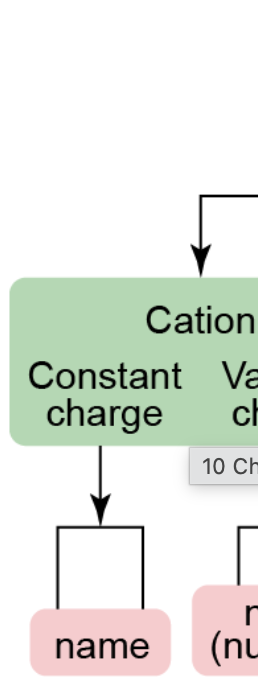
For ionic compound transition metals, what do you do if the cation DOESNT have more than 1 possible charge?
Just write the name
1st Type of Common Polyatomic Ions
Ammonium
What is the formula for Ammonium?
NH4+
2nd Type of Common Polyatomic Ions
Hydronium
3rd Type of Common Polyatomic Ions
Peroxide
4th Type of Common Polyatomic Ions
Hydroxide
5th Type of Common Polyatomic Ions
Acetate
6th Type of Common Polyatomic Ions
cyanide
7th Type of Common Polyatomic Ions
Azide
8th Type of Common Polyatomic Ions
Carbonate
9th Type of Common Polyatomic Ions
Bicarbonate
10th Type of Common Polyatomic Ions
Nitrate
11th Type of Common Polyatomic Ions
Nitrite
12th Type of Common Polyatomic Ions
Sulfate
13th Type of Common Polyatomic Ions
Hydrogen sulfate
14th Type of Common Polyatomic Ions
Sulfite
15th Type of Common Polyatomic Ions
Hydrogen sulfite
16th Type of Common Polyatomic Ions
phosphate
17th Type of Common Polyatomic Ions
hydrogen phosphate
18th Type of Common Polyatomic Ions
dihydrogen phosphate
19th Type of Common Polyatomic Ions
Perchlorate
19th Type of Common Polyatomic Ions
Hypochlorite
20th Type of Common Polyatomic Ions
Chlorate
21th Type of Common Polyatomic Ions
chlorite
22nd Type of Common Polyatomic Ions
Hypochlorite
23rd Type of Common Polyatomic Ions
Chromate
24th Type of Common Polyatomic Ions
dichromate
25th Type of Common Polyatomic Ions
Permanganate

For ionic compounds transition metals, what do you do for the monoatomic anion?
Change it’s ending to -ide

For ionic compounds transition metals, what do you do for polyatomic anions?
Just write the name of the ion
Hydrates
ionic compounds containing a specific number of waters for
each formula unit.
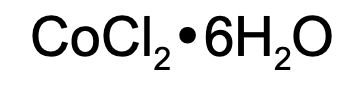
In formula for hydrates, where is the water attached?
After the rest of the formula

In the compound name, how are attached water indicated?
prefix + hydrate after name of ionic compound
What does the prefix hemi- mean?
1/2
What does the prefix mono- mean?
1
What does the prefix di- mean?
2
What does the prefix tri- mean?
3
What does the prefix tetra- mean?
4
What does the prefix penta- mean?
5
What does the prefix hexa- mean?
6
What does the prefix hepta- mean?
7
What does the prefix octa- mean?
8
What does the prefix nona- mean?
9
What does the prefix deca- mean?
10

How do you name nonmetals in molecular compounds?
Prefix + name of 1st Element prefix+ base name of 2nd element + -ide
In aqueous solutions, what do acids contain?
H+ Cation

Binary Acids
use prefix hydro-, -ide become -ic and add acid
For binary acids, what does -ide become?
-ic
Oxyacids
omit hydrogen, -ate change to -ic (-ite change to -ous) and add acid
