proteins
 Call Kai
 Learn
Learn Practice Test
 Spaced Repetition
 Match
Match Flashcards
 Knowt Play
1/24

Earn XP
Description and Tags
paper 1,2,3
Name | Mastery | Learn | Test | Matching | Spaced | Call with Kai | Chat |
|---|
No analytics yet
Send a link to your students to track their progress
25 Terms
importance of proteins?
growth + repair in cells/tissues
whats the importance of the shape of a protein?
specific to task
how many essential amino acids are there?
20
whats an important example of proteins?
enzymes
what do proteins contain?
carbon, hydrogen, oxygen, nitrogen, occasionally sulphur (dependent on amino acids contained)
what’s the monomer of a protein?
amino acids
polypeptides contain ___ amino acids
up to 50
proteins contain ___ amino acids
over 50
what does an amino acid glycine look like? what makes up the amino group and the acid group?
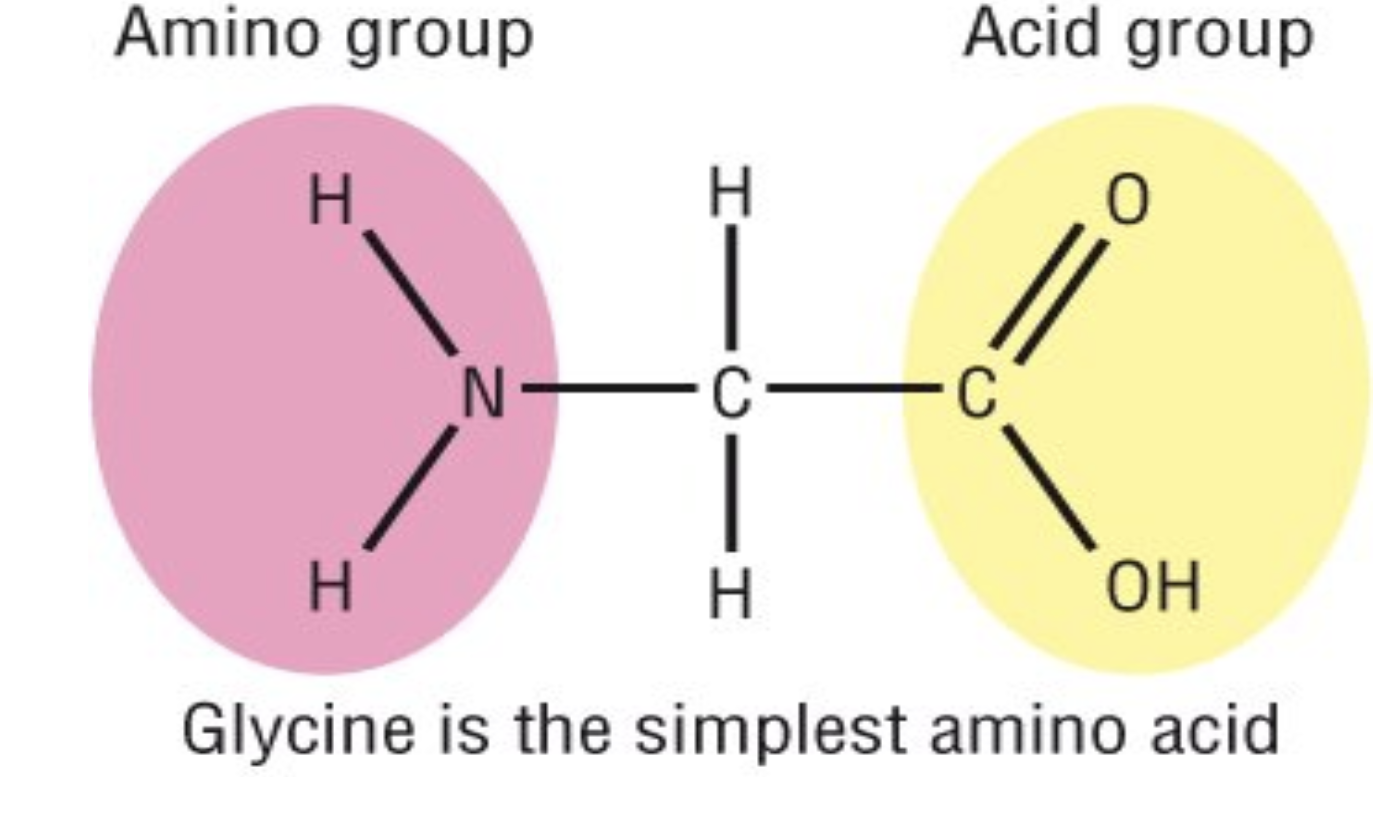
what’s a glycine?
simplest amino group
how many diff. r-groups are there?
20
what type of group differs between amino acids?
r-groups
show the formula for peptide bonds

what’s the function of proteins in relation to liver?

how many possibilities are there for a protein of x amino acids?
20x amino acids
why are there so many different proteins?
as every amino acid position can be occupied by 1 of 20 amino acids
what is a primary structure?
the sequence of amino acids that form a protein
connected by peptide bonds
whats a secondary structure?
2D/single structures
the α-helices + β-pleated sheets formed from H bonding between amino acids
whats a tertiary structure?
connected by ionic/disulphide/H bonds which work together to form a 3D structure
whats a quaternary structure?
protein complex made up of more than one polypeptide subunit
e.g. insulin, haemoglobin
how to denature a protein
heating
adding heat to protein = high KE
proteins move + unravel
break H bonds + hydrophobic interactions giving second/tertiary structures
caused by:
heavy metal ions (charges interacting with ionic bonds)
pH extremes (H+ + OH- interactions)
whats a globular protein
“spherical”
metabolic
hydrophobic core + hydrophilic surface
water soluble
e.g haemoglobin
whats a fibrous protein
long coiled polypeptide chains
insoluble
structural
repeated amino acids
e.g. collagen
describe the structure of haemoglobin using the stages of protein folding
primary
chain of amino acids formed by peptide
secondary
alpha helix + small region beta pleated sheets joined by H bonds
tertiary
polypeptide chains undergo further folding
3 bonds from disulphide/ionic/H bonds
hydrophobic r groups on inside of molecule, hydrophilic r groups on outside
quaternary
4 polypeptides - 2 alpha + 2 beta
1 haem group per polypeptide
prosthetic group haem contains Fe2+
sickle cell
the diff. between normal haemoglobin + sickle cell = 1 amino acid
at position 6, glutamic acid changed for valine on beta strands
glutamic acid = hydrophilic amino acid
valine = hydrophobic amino acid