Greek Quiz 1 Slide IDs
 Call Kai
 Learn
Learn Practice Test
 Spaced Repetition
 Match
Match Flashcards
 Knowt Play
1/41

There's no tags or description
Looks like no tags are added yet.
Name | Mastery | Learn | Test | Matching | Spaced | Call with Kai | Chat |
|---|
No analytics yet
Send a link to your students to track their progress
42 Terms
Paintings of Asphendou Cave
15,000 - 13,000 BP
Vallon-Pont-d’Arc, France
images of animals that were likely around the area at the time

‘Venus’ figurine of Franchthi Cave
Neolithic
carved figurine of a woman
linked to fertility and the afterlife

Sesklo
village in Greece
had advanced agriculture and a very early use of pottery

Dimini
5000 - 3000
village near Volos
well known for abstracted painted vessels

Harpist from Keros
unknown location
Bronze Age
marble statuette of man seated on throne holding instrument
one of the earliest known representations of a musician

Cycladic “frying pan”
2700 BC
earthenware that is a flat circular disk with a handle
purpose is unknown, but are prestige goods

Palace at Knossos
has central court, magazines, grand staircase
best known center for Minoan civilization
plan was remembered as the Labyrinth
associated with the Greek myth of Minos and Minotaur

Throne Room at Knossos
chamber built for ceremonial purposes
alabaster seat with griffins on either side
there to represent the power of whoever sat in the seat

Bull-Leaping Fresco
Knossos
Late Bronze Age
Plaster
True Fresco
depicts the handling of bulls, significant to Minoan culture
men may be trying to get time

Snake Goddess(es)
Knossos
Late Bronze Age
Faience
women with breast emphasized, clothes shown as high status, holding two snakes that may represent she is powerful

Harvester Vase
located: Agia Triada
late bronze age
stone, carved in relief
it is a ryton
shows men going to harvest, singing as they go
interpreted as a harvest celebration, a religious procession, or a military scene

Vapheio Cups
Vapheio
late bronze age
hammered gold
athletic men, bulls, curvilinear, narrow waists, minoan
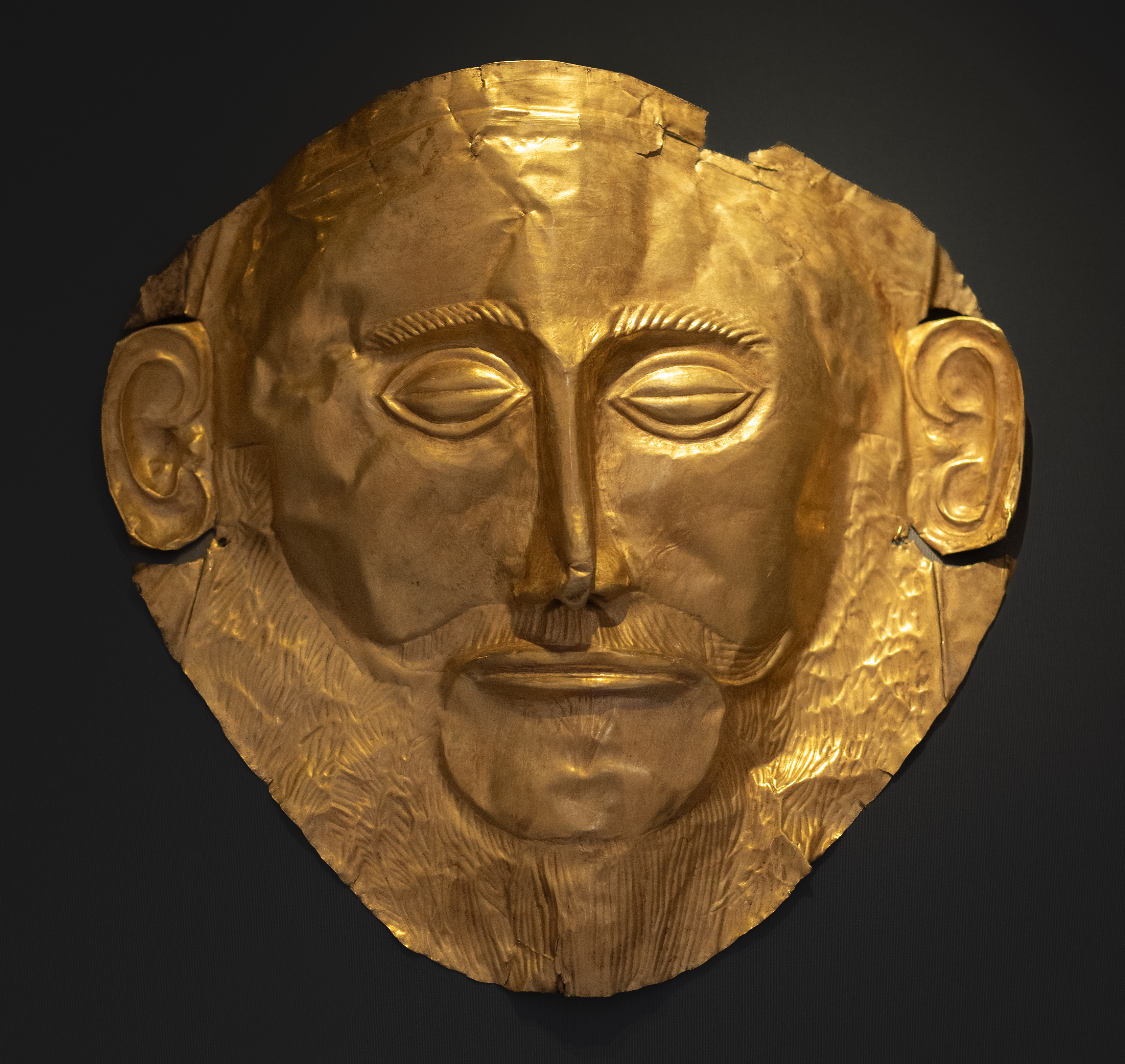
“Mask of Agamemnon”
Mycenae
Late bronze age
leaf-hammered gold
indicate honor, wealth and status
Gold mask found in one of the graves by Heinrich Schliemann, said to be of Agamemnon but later believed not to be

Treasury of Atreus
Mycenae
late bronze age
stone, cyclopean masonry, corbelling
dead buried in side chamber, goods in main room, sacrifices?

Warrior Vase
Mycenae
Late Helladic
huge noses, abstracted, shift towards concern of war instead of family

Procession Scene Knossos
figures offering rituals
lady may be queen or goddess
shows Minoan life and spirituality

Prince of the Lillies
Knossos
1550 BCE

La Parisienne
Knossos
1400 BC
woman is someone of importance
sacral knot worn at the back of the neck

Citadel of Mycenae
city’s defensive center and the hub of its economic, religious, and administrative life

Lions’ Gate
Mycenae
1250 BC
built for main entrance of Mycenae entrance
used as a placeholder in the relieving triangle
very minoan, may have been made by an enslaved minoan

Citadel at Pylos
where nestor is from, different from minoan no courtyard, has megaron
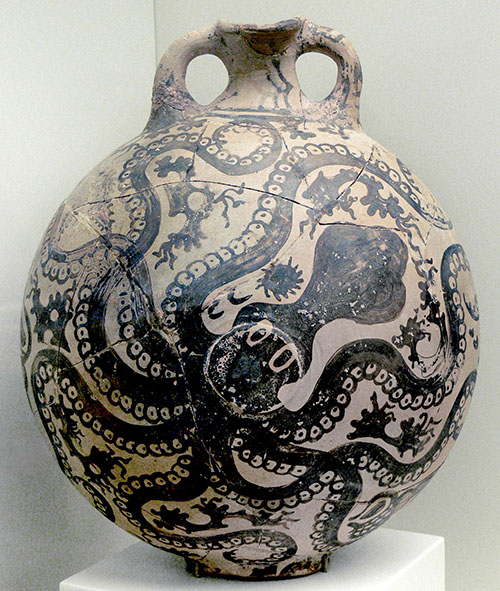
Marine Style Octopus Flask
Minoan
Vase
stone
made to celebrate the sea, covered in sea life

Dipylon Amphora
clay and slip
760 BC
covered in geometric patterns and human figures
funerary vessel

Dipylon Krater
funerary vases found at the Dipylon cemetary
black figure decoration of mourning and funeral scenes
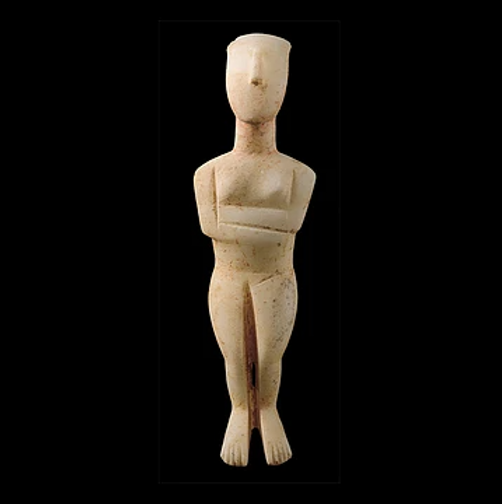
Folded-arm Cycladic figurine
Syros, Cycladic Islands
Early Bronze Age (ca. 2500 BCE)
Carved marble female figures with tilted heads, defined legs, and painted polychromy primarily deposited in grave contexts

Centaur from Lefkandi
Toumba at Lefkandi, Euboia
Iron Age (10th c. BCE)
Terracotta hybrid figure combining wheel-made and hand-sculpted techniques, showing the endurance of oral mythological storytelling

Geometric oinochoe with narrative
scene, Athenian Agora
730 BC
combat scene showing warriors, chariots, and horses
example of “storytelling” on a functional vessel

Late Geometric krater with ship scene, Thebes (the “Paris” Krater)
730 BC
Orange‑buff clay with brown/white grits, brown paint
Scene may be Paris abducting Helen
geometric

Hero and centaur, Olympia
750-730 BCE
bronze
human figure locked in combat with a centaur
geometric shapes
Herakles kills the centaur Nessos

Geometric Horse
750-700 BC
bronze
symbolizing wealth, power, and religious devotion
geometric shapes, elongated legs, narrow body, cylindrical nose
appear in funerary contexts

Architectural sculpture from Prinias
625-600 BC
limestone
lintel spans the main entrance of Temple A and bears two identical enthroned goddesses
lower beam has 6 panthers in relief
shift toward using temple surfaces for narrative and symbolic expression
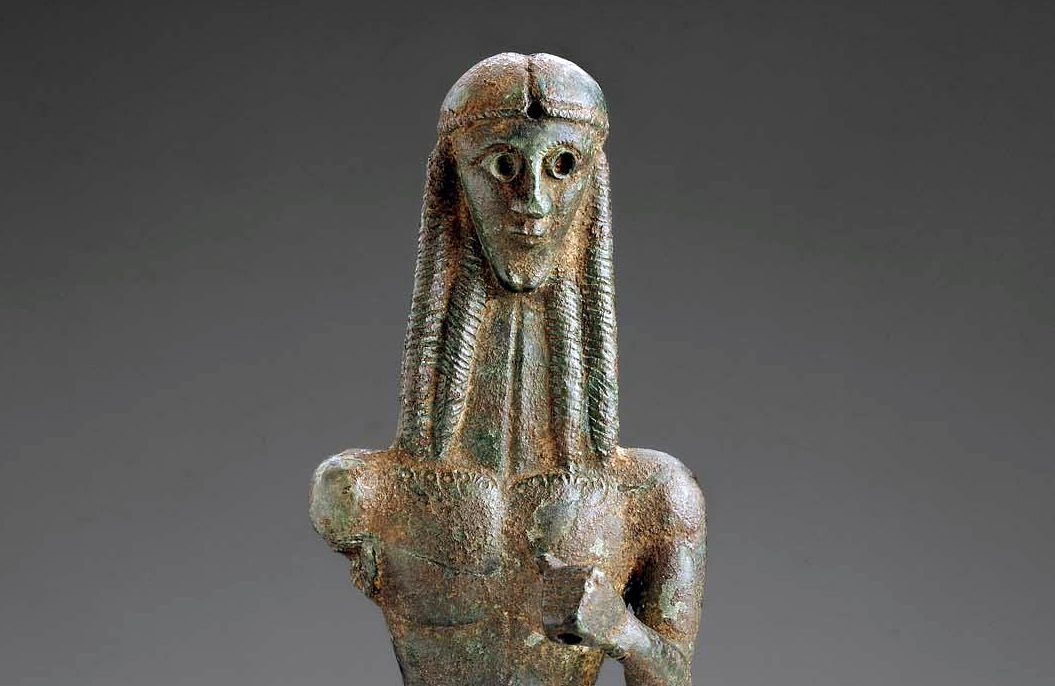
Mantiklos Bronze
from Thebes
700-675 BC
bronze
offered in a sanctuary to Apollo
Daedalic style

Lady of Auxerre
640 BC
limestone
Daedalic style and archaic smile
a votive goddess, a deceased individual in prayer, or a symbolic “maiden”
transition from the Greek Dark Ages to the Archaic period

Eleusis amphora
650 BC
moving from the rigid Geometric style to more expressive narrative storytelling
funerary urn
neck shows Odysseus blinding cyclops
body shows Perseus fleeing after killing medusa

Chigi Vase
Protocorinthian, 640BC
emphasis on story being told, not the beautiful art
-black figure pottery
upper register- 1st example of hoplite warfare, consists of men fighting, gives us the point at which warfare began, was how Greeks defeated Persians, individual field decorations, elite class
-middle register- lioness being killed by 4 men, lion eating men, men are nude, direct influence from Assyrian art (lion), showing wealthiest members of society
-lower register- hunt scene with boys, don't have long hair, long trend = long hair, hierarchy with boys on bottom and men on top

Mykonos relief amphora
650 BC
terracotta storage jar, found with human bones
shows sack or Troy and Trojan Horse

Bronze statuettes from Dreros
700 BC
center figure may be Apollo
woman wearing clothes showing they may be goddesses, nudity for men is a uniform of eliteness

Temple at Dreros
Temple of Apollo
750 BCE
one of the earliest free-standing Greek temples

Funerary Structure at Lefkandi
Heroon
950 BCE
a cremated man with weapons and an inhumed woman richly jewelled, alongside the cremated remains of four horses

Pediment from the Temple of Artemis
at Corfu
590 BCE
stone pediment
depicting the Gorgon Medusa flanked by panthers, with Pegasus and Chrysaor emerging from her neck

Egyptian standing male statue and Greek kouros comparison
Egyptian Male: commemorative of the pharaoh’s divine authority, often placed in tombs to ensure his presence in the afterlife, Hard stone (greywacke), fine carving
Kouros: Votive offerings, grave markers, or commemorative statues of heroes/athletes, more anatomical accuracy and dynamic balance, Marble
Both are standing, frontal, with left foot slightly forward

Anavysos Kouros
530 BCE, Late Archaic Period
grave marker for a young warrior named Kroisos
archaic smile, idealized porportions