Neisseria spp. & Moraxella catarrhalis
 Call Kai
 Learn
 Practice Test
 Spaced Repetition
 Match
 Flashcards
 Knowt Play
1/82

There's no tags or description
Looks like no tags are added yet.
83 Terms
Neisseriaceae family
mostly gram negative diplococci, coffee-bean/ kidney bean cocci in pairs
few gram negative bacilli
Can range from normal microbiota to significant life-threatening pathogens
Moraxellaceae family
Gram negative diplococci and gram negative coccobacilli
range from normal microbiota to significant life threatening pathogens
Neisseria spp.
mucous membrane surfaces of warm-blooded hosts
Tests: oxidase positive, catalase positive, nonmotile, capnophilic (5-7% CO2), aerobic but will grow anaerobically, oxidative degradation of carbohydrates, growth requires moist environment (35-37*C)
Most isolates are normal respiratory flora
Neisseria gonorrhoeae
causes gonorrhoeae (GC), male risk of urethral infection (20% from single exposure), female risk of cervical infection (70% from single exposure), significant risk of rectal transmission from single exposure, 2nd most common risk of STI in united states
Neisseria gonorrhoeae signs and symptoms in males
dysuria (95% will experience urethral discharge), 1-14 day incubation
5% asymptomatic
will spontaneously resolve if untreated
10% of patients ascends to epididymitis, prostatitis, periurethral abscess
can cause DGI
Neisseria gonorrhoeae in females
endocervix with 90% concomitant urethral infection (dysuria)
8-10 day incubation, vaginal discharge present
50% coinfection with Chlamydia
High rate of asymptomatic infection, only 10-20% present with obvious mucopurulent endocervical discharge.
Bartholin/Skene glands infected in 30% of patients
Can cause spontaneous abortion, chorioamnionitis, premature rupture of membranes and delivery (PROM)
can cause PID or DGI
Neisseria gonorrhoeae in neonates
“Ophthalmia neonatorum” or oropharyngeal infection
Neisseria gonorrhoeae caused Pelvic Inflammatory Disease (PID)
inflammation of fallopian tubes, endometritis, ovarian abscess can cause ectopic pregnancies, infertility, or chronic pelvic pain
can cause anorectal and pharyngeal infection
Neisseria gonorrhoeae caused Disseminated Gonococcal Infection (DGI)
~3% spread of organism to blood stream
low-grade fever, hemorrhagic lesions, septic arthritis
Increased risk for menstruating females and 2-3 trimester pregancies
Synovial fluid/skin lesions cultures are frequently negative.
30-40% Destructive arthritis in one joint (Knee, elbow, fingers, ankle joints)
NAAT- best methodology for ID
1-2% with DGI develop endocarditis, 50% have aortic valve involvement
rare meningitis
Neisseria gonorrhoeae positive biochemical tests and gram stain
GNDC, large coffee-bean shape
CAP: tiny gray colonies within 24 hours
no growth on MAC
plates must be at room temperature, cannot be excessively moist, hold plates for 72 hours before stating growth or no growth
cultures for children
females- vaginal swab
males- urethral discharge
all require throat and rectal culture collection
gram stains unacceptable
Modified Thayer Martin antibiotics
vancomycin- inhibit normal flora
colistin- inhibits gram negative organisms
nystatin- inhibits yeast
trimethoprim- inhibits gram negative organisms
GC-LECT (JEMBEC) antibiotics
Vancomycin- inhibits normal flora
Lincomycin- inhibits gram positive organisms
Colistin- inhibits gram negative
Amphotericin B- inhibits yeast and fungi
Trimethoprim- inhibits gram negative organisms
specialized medium to isolate Neisseria gonorrhoeae
Modified Thayer Martin (MTM)
Martin-Lewis (ML)
New York City (NYC)
GC-LECT (JEMBEC)
Neisseria meningitidis
causes meningitis, sepsis, disseminated intravascular coagulation (DIC), lethal infection, meningococcal disease
13 serogroups- A,B,C,D,H,I,K,L,X,Y,Z,W135,29E
common outbreaks- serogroup A (sub-Saharan Africa), serogroup B (Europe & U.S.)
Capsular switching
normal upper respiratory microbiota
only natural host- humans
spread by crowded living conditions/ close quarters
Capsular switching
bacteria can switch from one serogroup to another, expressing different capsular antigens
virulence factor
Vaccines for Neisseria meningitidis
Menatcra, Menveo- A,C,Y,W135
Bexsero, Trumbena- B
__% of children carry N. meningitidis
<3
____% of people 15-24 years old carry N. meningitidis
24-38%
Carriage of N. meningitidis
can vary- may be intermittent, transient, or persistent
can result in antibody production
no seasonal relationships
strains may be groupable (capsule producers) or non-groupable
Smoking/viral infections increase colonization risk
Meningococcal disease caused by N. meningitidis
transmission: respiratory droplets
Enters blood stream at mucosa (organism adhesions bind to cell membranes)
2nd leading cause of community acquired meningitis in the U.S.
myocarditis, myocardial dysfunction (50% of patients), congestive heart failure, pulmonary edema, purulent pericardial fluid.
different types of N. meningitidis infection
Meningitis only (organism in CNS only)
meningococcemia only (organism in the blood only)
combination of both infection types
signs and symptoms of N. meningitidis (meningitis, meningitis with meningococcemia)
6-8hr incubation, initial symptoms non-specific
sudden onset- fever, chills, myalgias, arthralgias, nausea, vomiting, with only 50% demonstrating confusion, headache, nuchal rigidity.
Rash development- meningitis and meningococcemia (50-60% patients)
Petechial rash- begin in mucous membranes and spreads to trunk/lower extremities. Lesions develop (coagulation abnormalities), 10% progress to purpura fulminans
30% mortality rate even with treatment, 24% of survivors develop significant neurologic damage/ deafness.
N. meningitidis caused meningococcemia signs and symptoms
5-20% of patients
Fever, headache, malaise, hypotension, peripheral leukocytosis, respiratory illness, no symptoms of CNS infection.
May present with peripheral lesions
positive blood cultures
occurs in people with complement deficiencies, Lupus patients, HIV patients
Other infections caused by Neisseria meningitidis
Rare- male urethral and female cervix infection, neonatal conjunctivitis, pneumonia
Can result in hematogenous spread- septic arthritis, osteomyelitis, cellulitis, bacterial peritonitis
N. meningitidis biochemical tests
GNDC, large coffee bean shape
BAP/CAP: Small gray colonies at 24 hrs
no growth on MAC
plates must be kept at room temperature and read at 72hrs, with no moisture, in a capnophilic environment.
N. lactamica
grows on GC selective media, must confirm ID
normal oral flora of children, and can be normal flora of vaginal tract
rare cause of meningitis and sepsis children and adults, otitis media
N. subflava
uncommon cause of native and prosthetic valve endocarditis
N. mucosa
rare cause of meningitis, pulmonary abscess, ocular infection, septic arthritis, dialysis-associated infection
N. sicca
rare cause of pneumonia, meningitis in immunocompromised host, endocarditis, blood cultures of HIV patients, end-stage disease
rod shaped Neisseria
N. elongate, N. weaver, N. bacilliformis
Moraxellaceae family
GNDC and GN coccobacilli (tiny)
Normal flora of mucosal respiratory tract, less often in genital tract
Oxidase positive, catalase positive, no growth on MAC
Moraxella catarrhalis biochemical test
gram negative diplococci, large coffee-bean shape
BAP/CAP: white-gray opaque, smooth colonies that can be pushed around the plate
Oxidase positive
DNase-positive
Butyrate Esterase-positive
B-lactamase- positive
Asaccharolytic
M. catarrhalis clinical considerations
normal microbiota in upper respiratory tract
infections of respiratory tract, otitis media, sinusitis, bronchitis, and pneumonia
lower respiratory tract infections in elderly adults

1
positive

2
positive

3
positive

4
positive

5
positive

6
positive

7
negative

8
negative

9
positive

10
positive
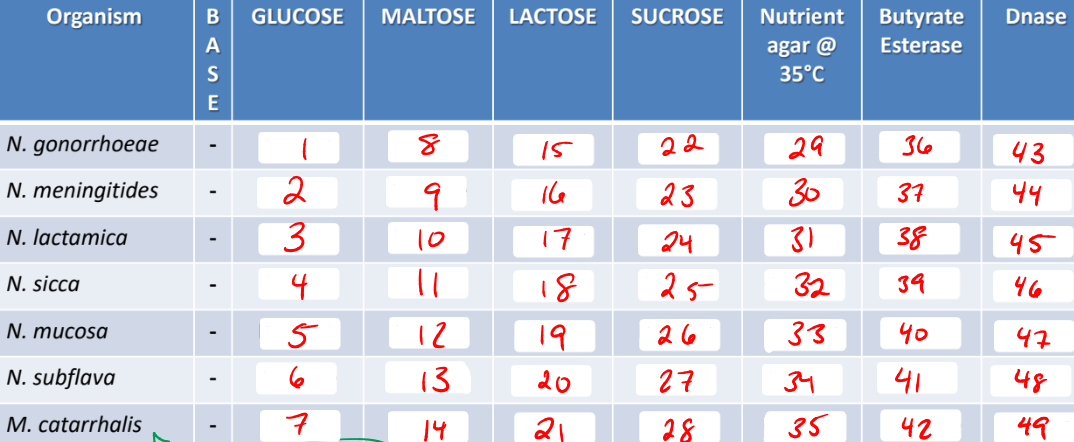
11
positive

12
positive
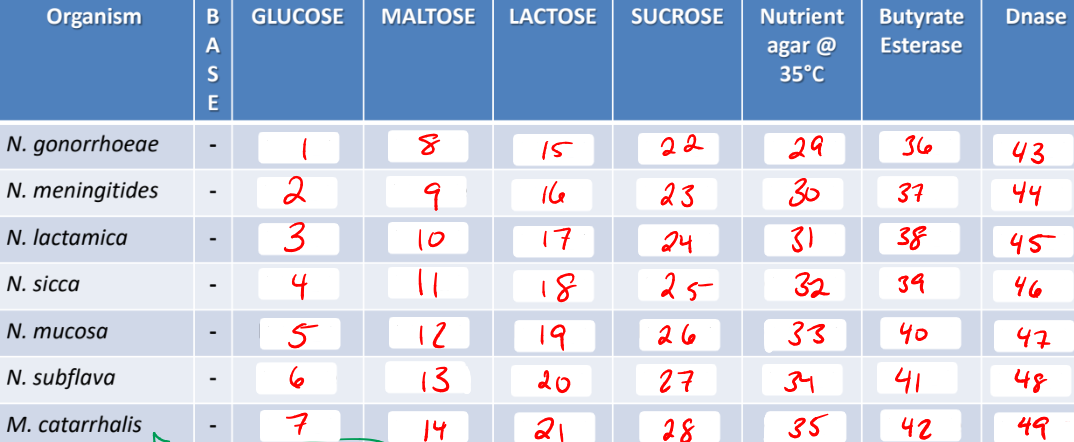
13
positive
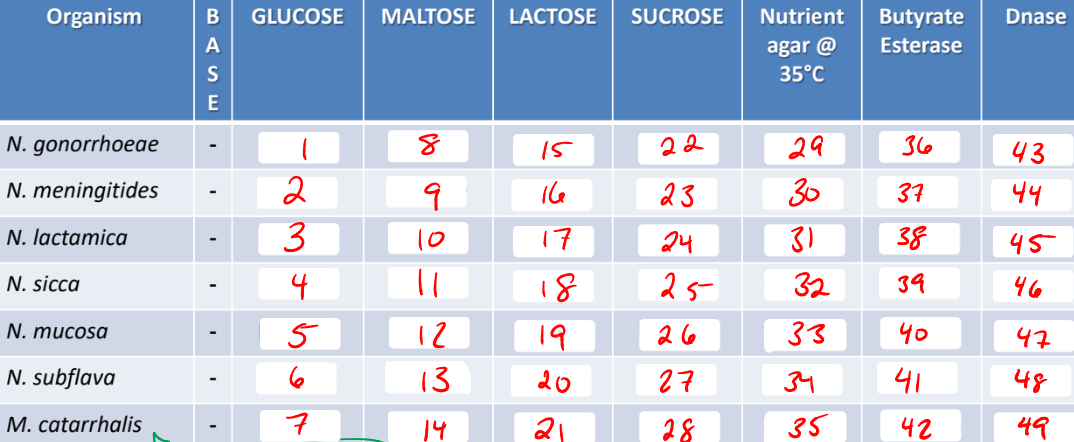
14
negative

15
negative
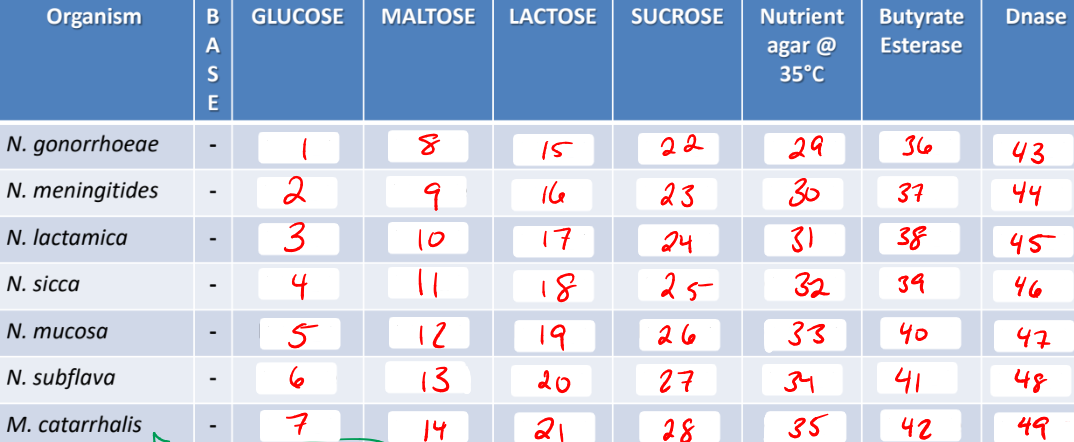
16
negative
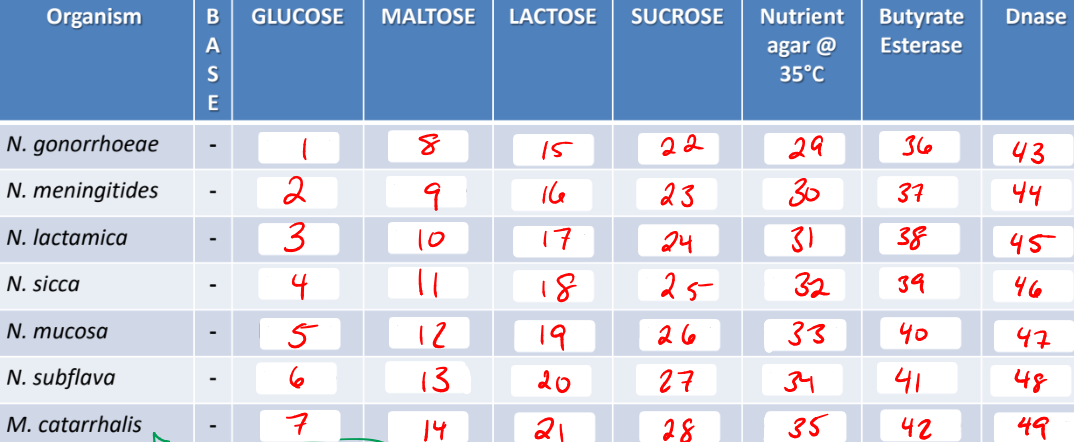
17
positive

18
negative
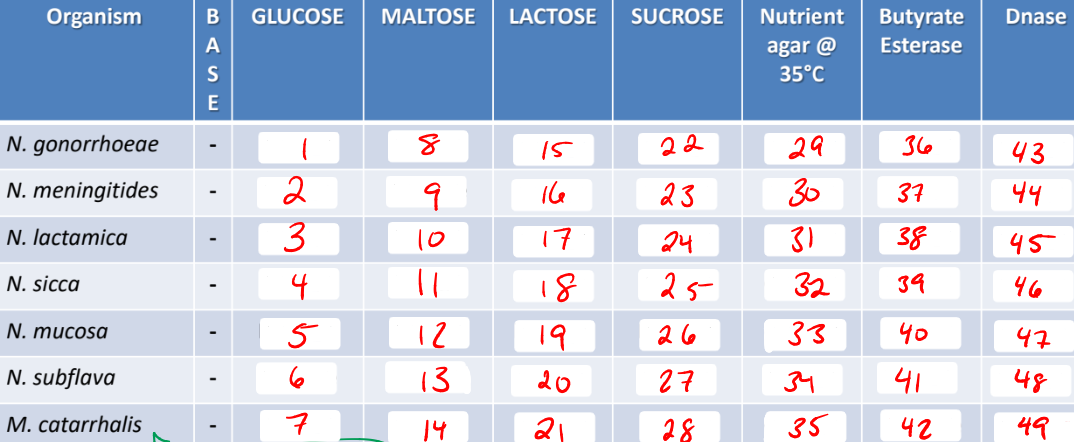
19
positive
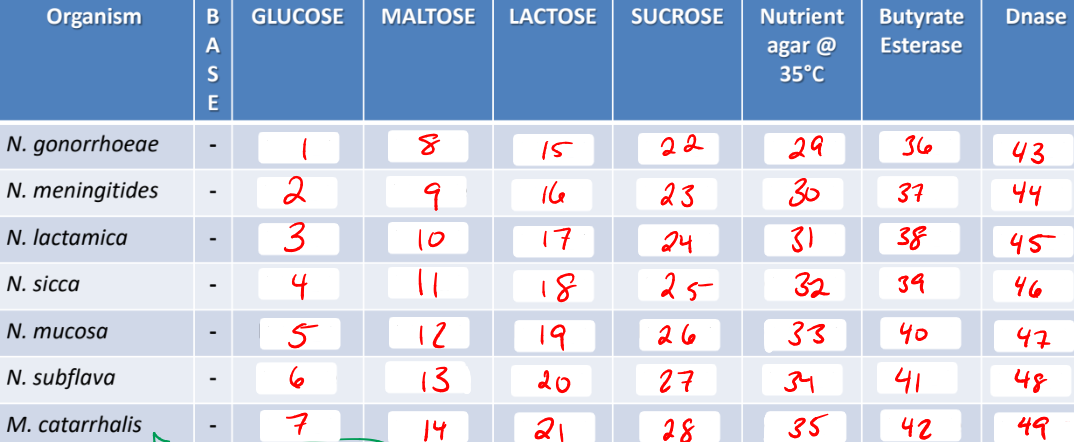
20
negative

21
negative

22
negative

23
negative

24
negative

25
positive

26
positive
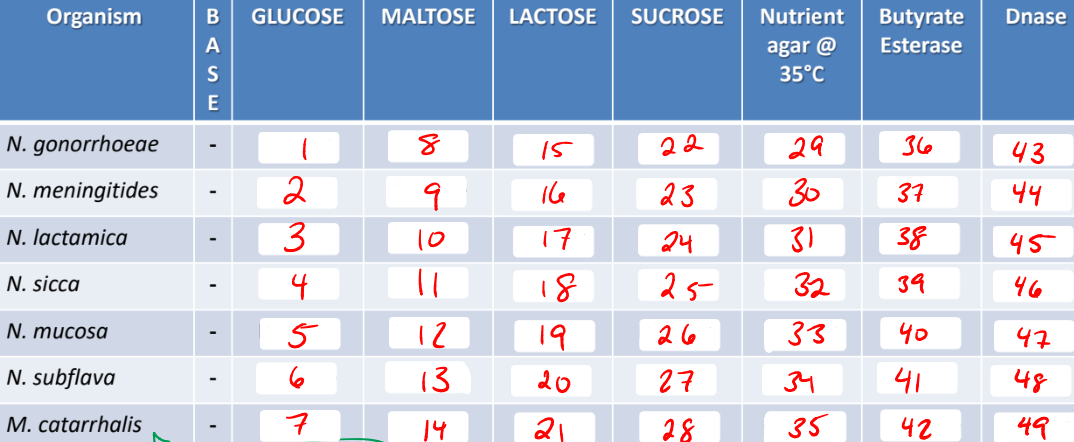
27
negative

28
negative
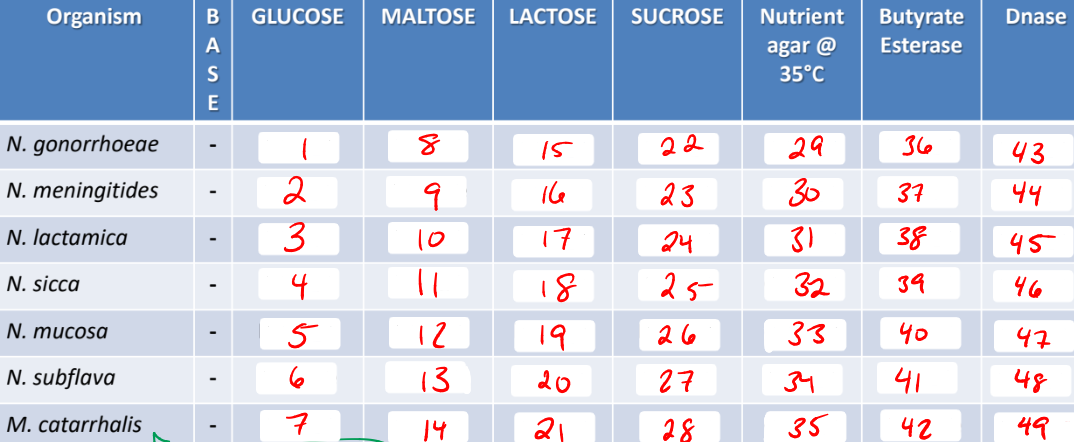
29
negative

30
negative
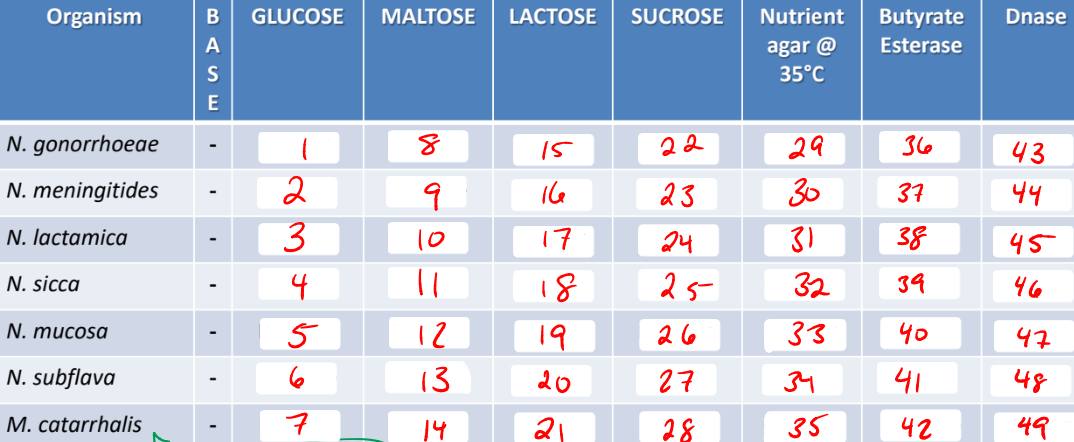
31
negative

32
growth

33
growth

34
growth

35
growth
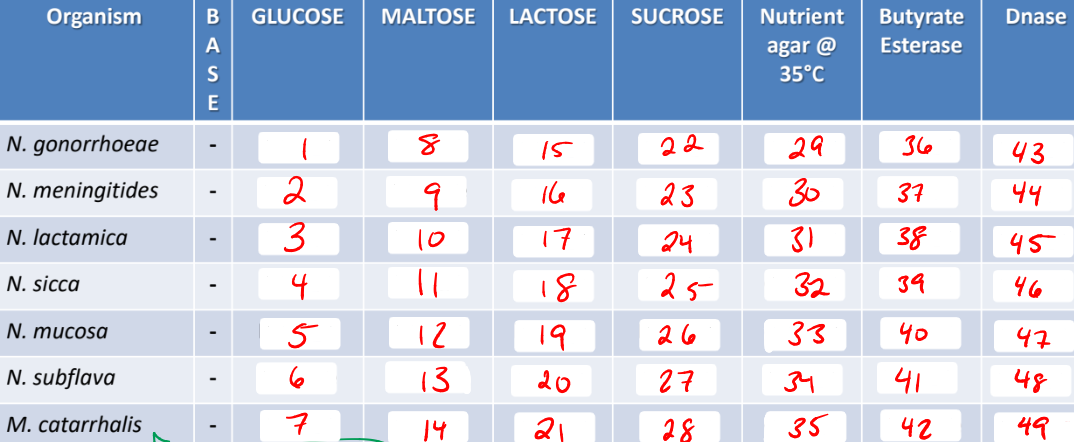
36
negative
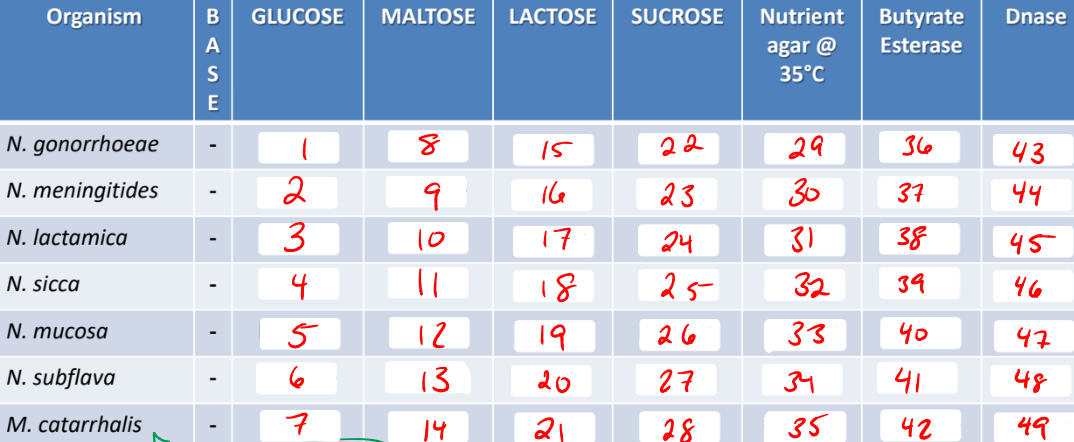
37
negative
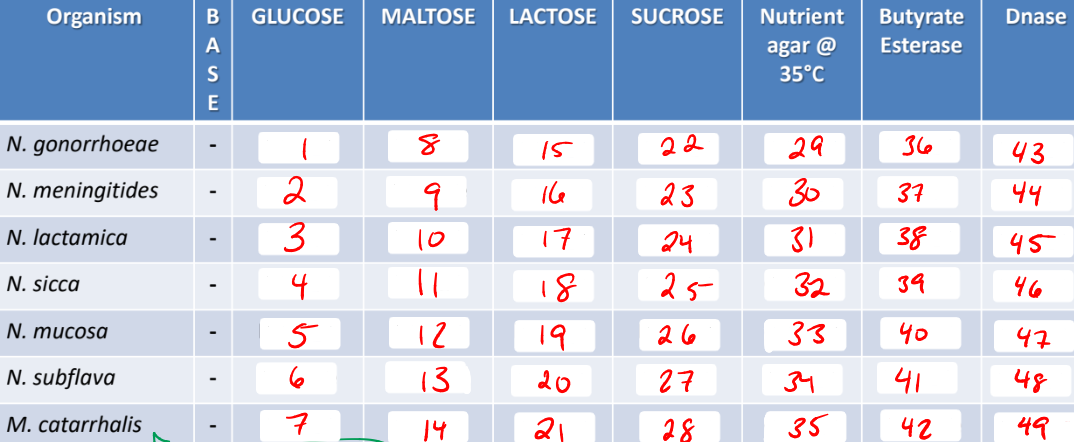
38
negative
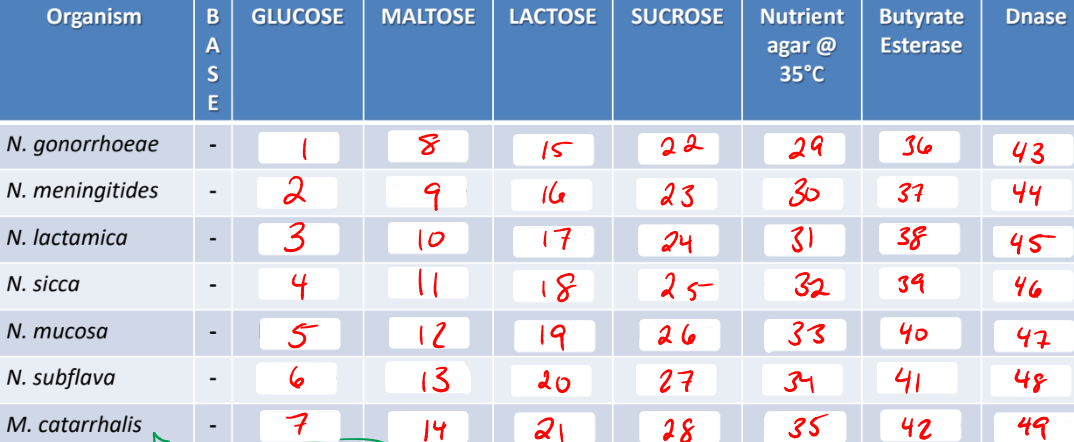
39
negative
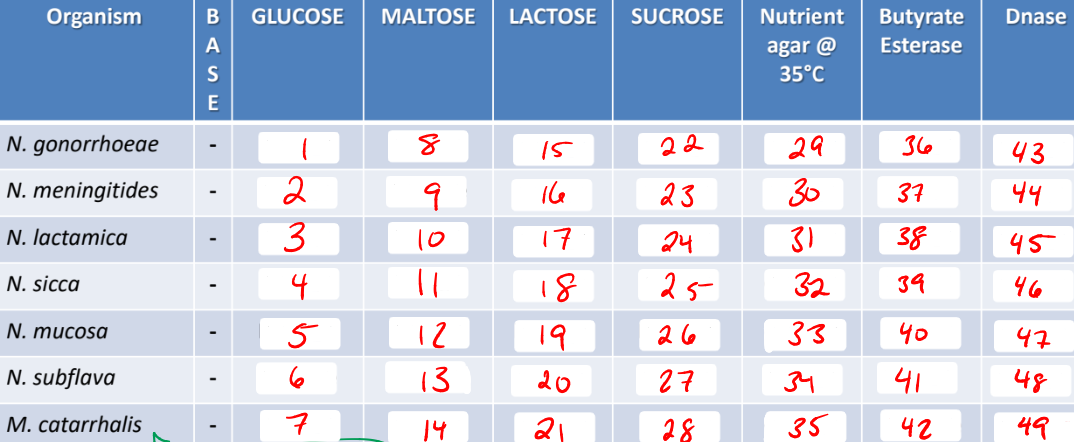
40
negative

41
negative

42
positive

43
negative

44
negative
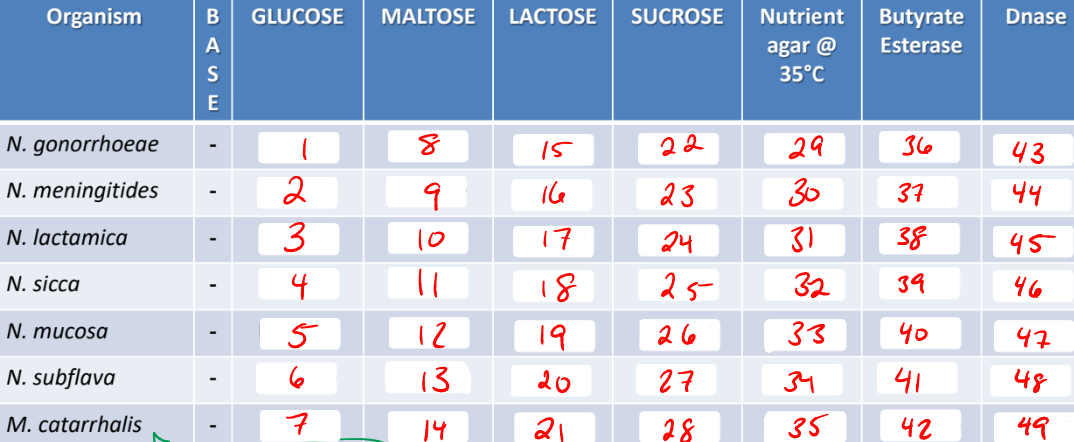
45
negative

46
negative

47
negative
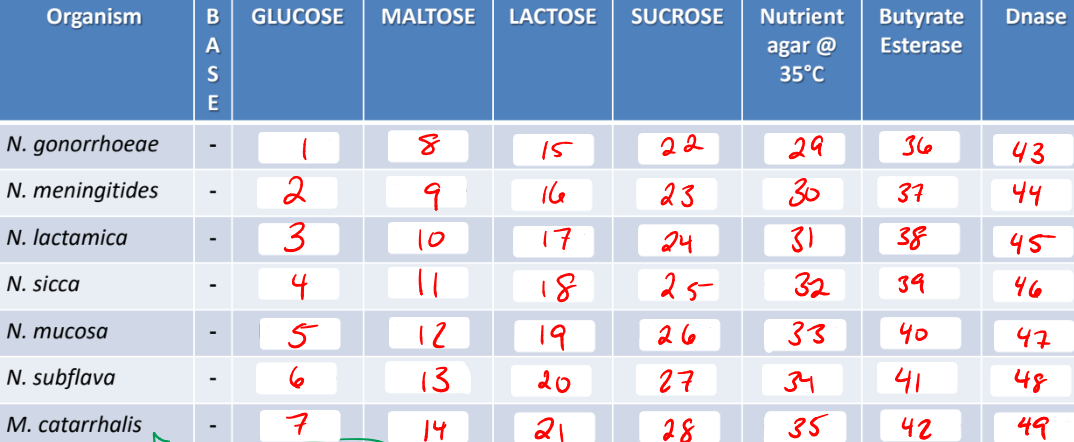
48
negative

49
positive