Biology Genetics
 Call Kai
 Learn
 Practice Test
 Spaced Repetition
 Match
 Flashcards
 Knowt Play
1/56

Earn XP
Description and Tags
year 10 genetics EXAM revition semester 2
57 Terms
Where does a cell build proteins?
In ribosomes in the cytoplasm
Where is DNA stored?
in the nucleus
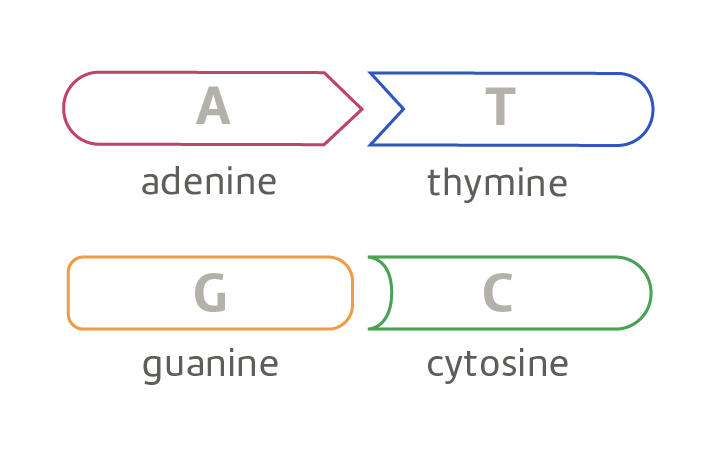
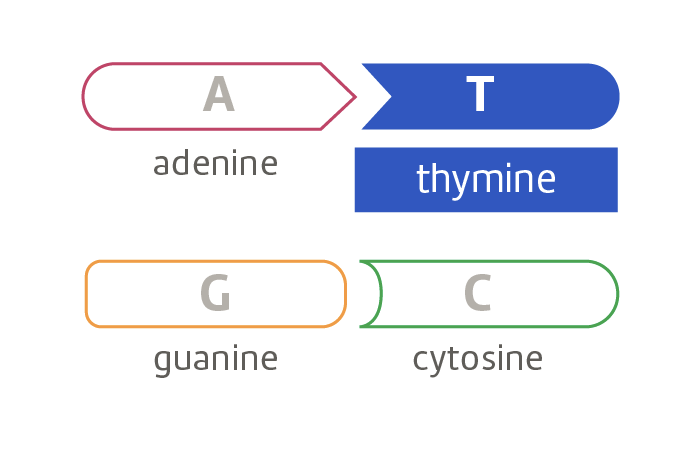
Define adenine
The base that combines with thymine to form a base pair
Adenine is one of the four letters that make up the genetic code in humans and other living things.

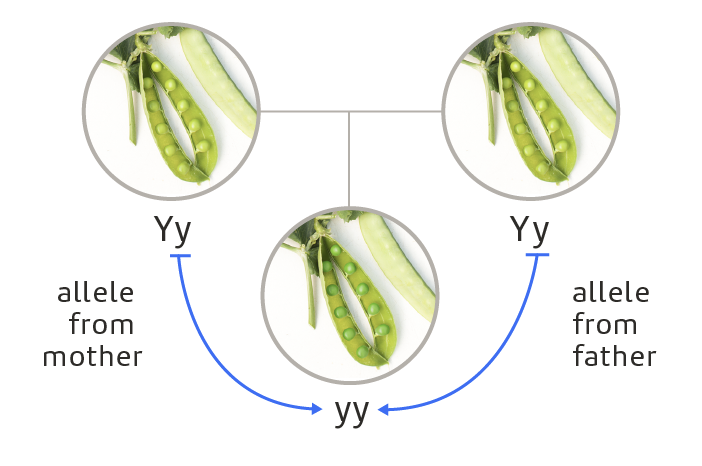
define allele
A version of a gene
An organism gets two alleles of each gene – one from its mother and one from its father.
(there the lettters)
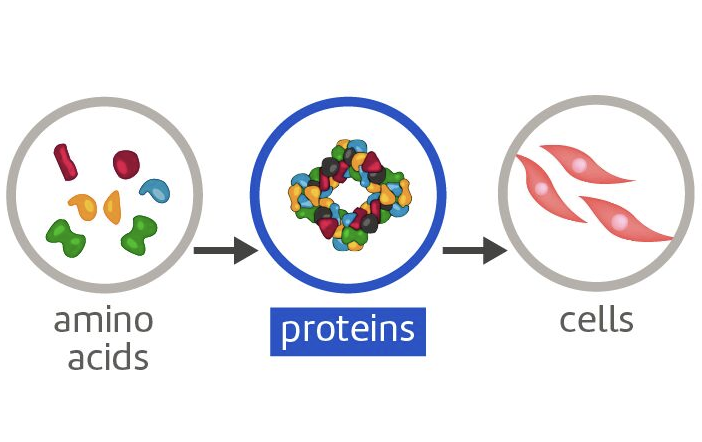
Define amino acid
A small molecule that joins with others to form proteins
Amino acids are the building blocks of proteins, which are the building blocks of cells.

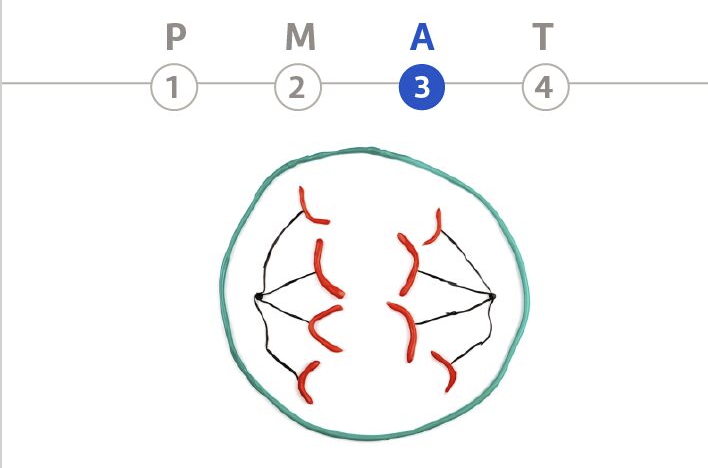
define anaphase
A stage of cell division in which the chromosomes separate
Anaphase is when the chromosomes separate and are pulled away from each other to opposite sides of the cell.
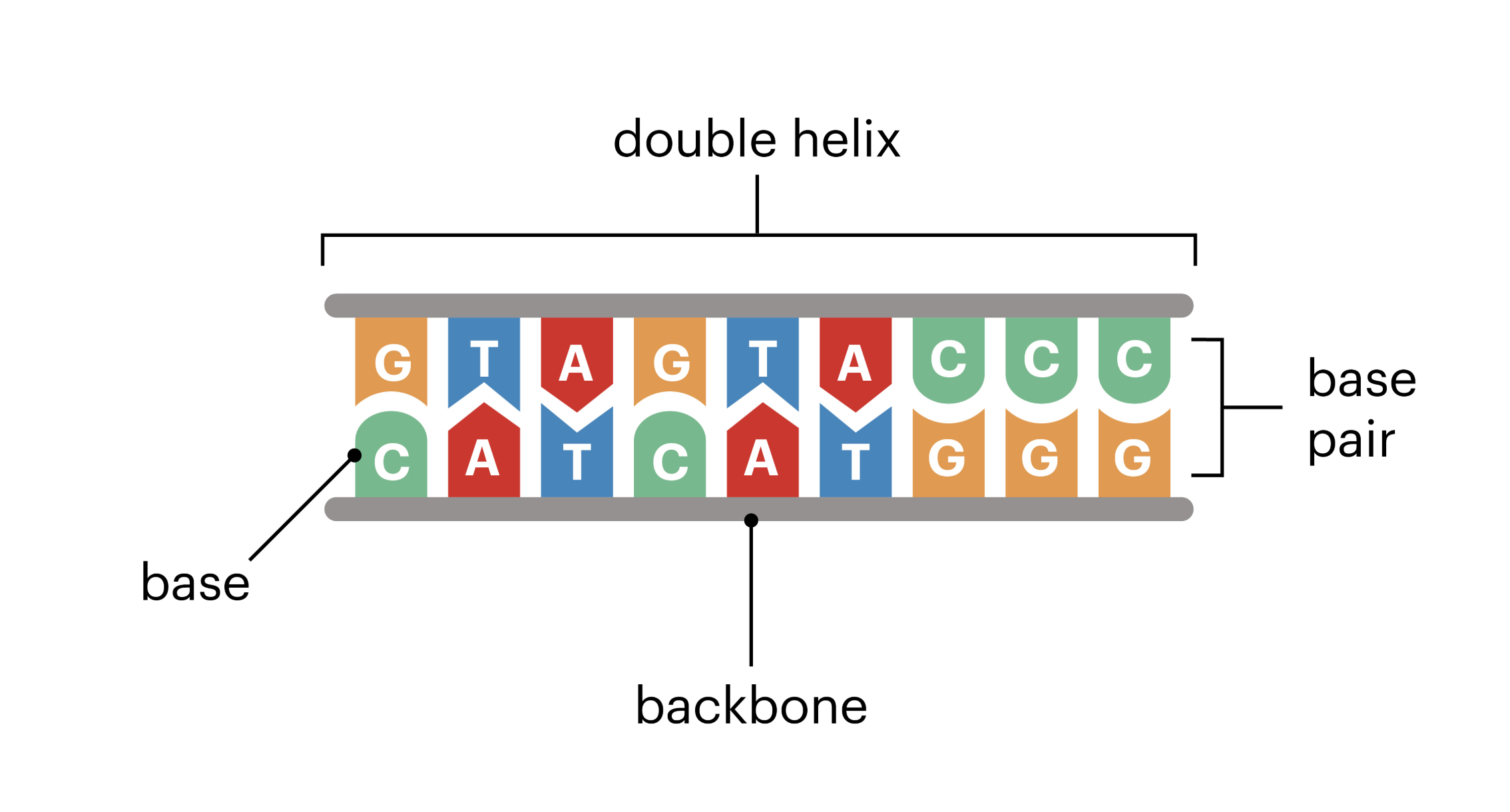
define base
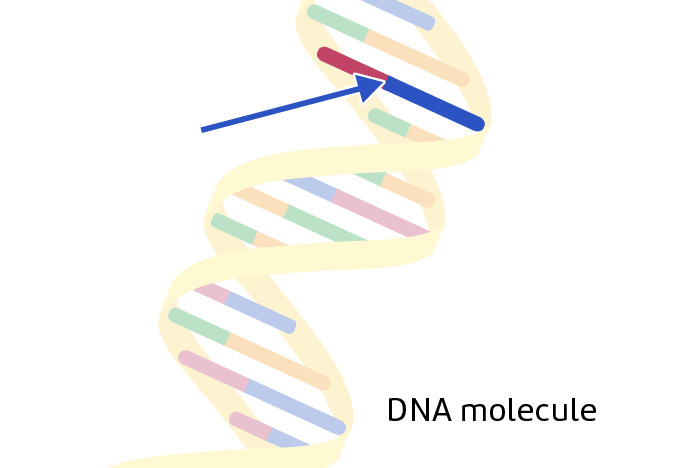
Part of a DNA molecule that comes in four types: A, C, G and T
Bases join together in pairs to form the 'rungs' of the DNA molecule.
define base pair
Two bases joined together
Base pairs form in only two combinations: A-T or G-C. These are the letters that make up the genetic code.
define cell cycle
The repeated process of cell growth and division
During most of the cell cycle, a cell grows and performs its function this is interphase. This ends when the cell divides by mitosis.

define cell division
The splitting of a cell to form new cells
Cell division allows organisms to grow, repair damage and reproduce. There are two types: mitosis and meiosis.
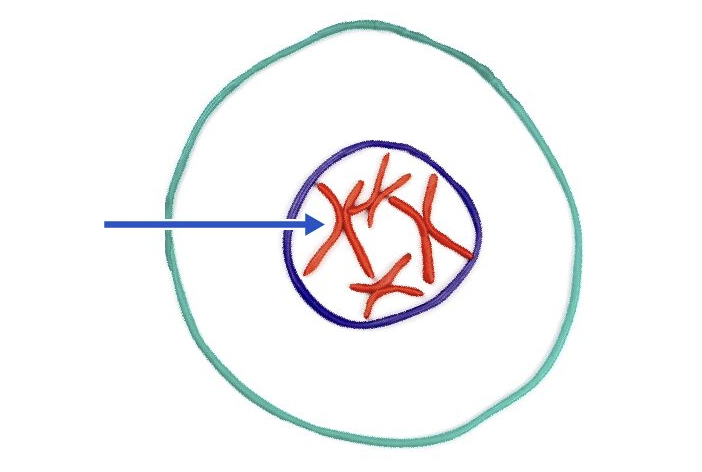
define chromosome
A DNA molecule that condenses during cell division
Most human cells contain 46 chromosomes but sex cells only contain 23 chromosomes.
define crossing over
The swapping of genes between chromosomes in a homologous pair
Crossing over only occurs in meiosis, during prophase I. It increases the genetic variety of the sex cells produced.

define cytosine
The base that combines with guanine to form a base pair
Cytosine is one of the four letters that make up the genetic code in humans and other living things.

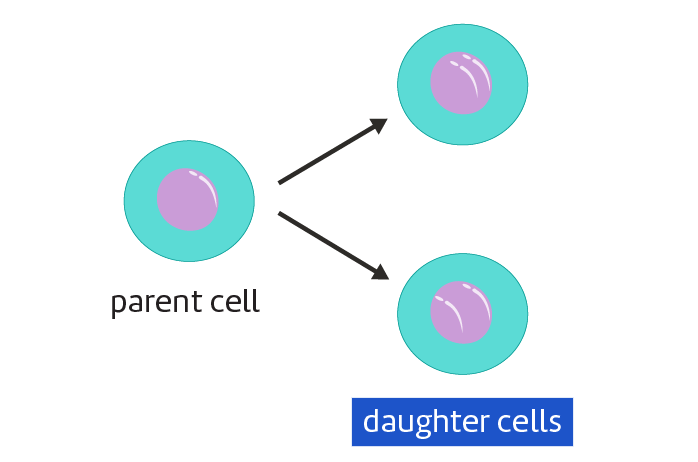
define daughter cell
Any new cell formed by cell division
Each daughter cell has its own nucleus and set of DNA.
Define DNA
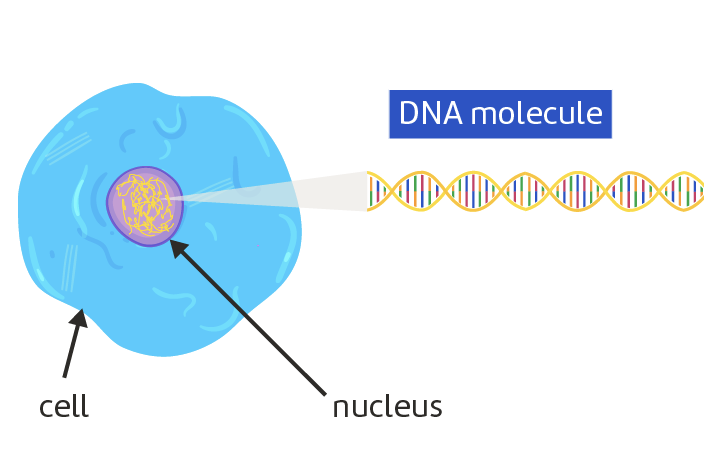
A molecule that contains genetic information
DNA, or deoxyribonucleic acid, is a very large molecule that contains instructions for building proteins.
define dominant allele
A version of a gene that is expressed even when only one copy is present
A dominant allele is represented by an uppercase letter. Yy or YY will result in the appearance of the Y trait.

define dominant trait
A feature that appears when at least one allele is present
Dominant traits include freckles, dimples and the ability to roll your tongue.
define double helix
A structure consisting of two chains twisted around each other
The DNA molecule has a double helix structure. The 'rungs' connecting the two chains are base pairs.

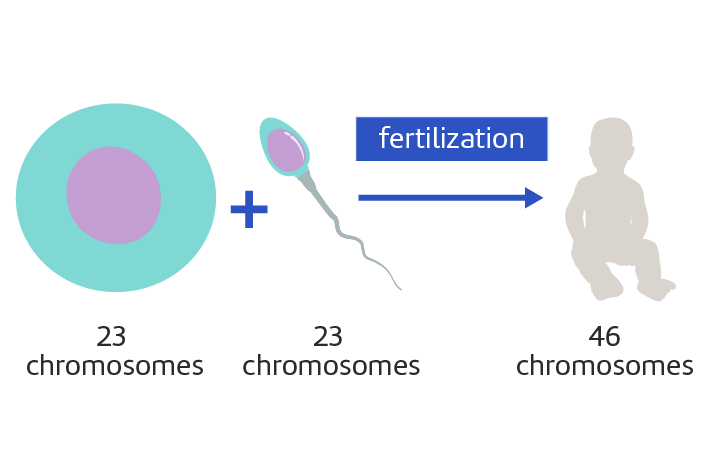
define fertilisation
The joining of an egg and a sperm to form a new organism
Fertilisation combines DNA from the mother and father so the child gets half of its chromosomes from each parent.
define gene
A unit of genetic information
A gene is a section of a DNA molecule that provides instructions for building a specific protein.

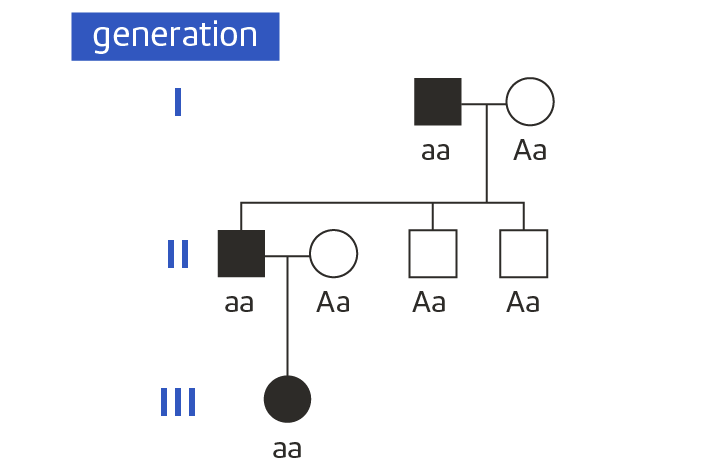
define generation
Members of a family that are born and live at about the same time
Traits are passed down from one generation to the next by the transfer of DNA from parents to children.
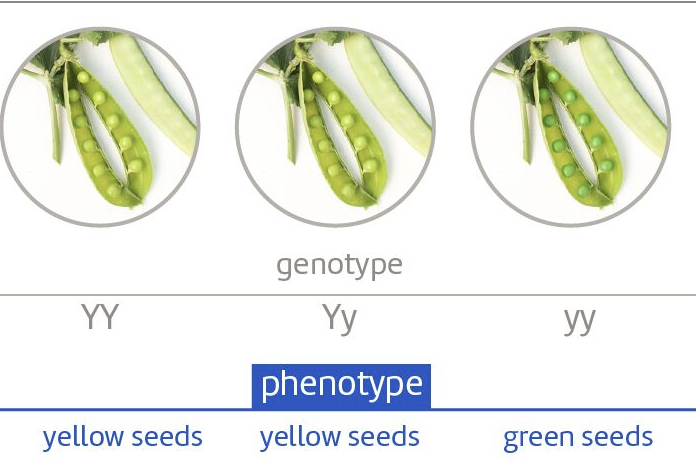
define genotype
A pair of alleles that influence the appearance of a particular trait
A genotype is represented by two letters. An organism's genotype determines which traits it acquires – its phenotype.
(The two letters)

define guanine
The base that combines with cytosine to form a base pair
Guanine is one of the four letters that make up the genetic code in humans and other living things.

define heterozygous
A genotype in which the two alleles are different
A heterozygous genotype consists of one dominant allele and one recessive allele – Yy.
(straight)

define homologous pair
Two chromosomes that contain versions of the same genes
One chromosome in a homologous pair is inherited from the mother and the other from the father.

define homozygous
A genotype in which the two alleles are the same
A homozygous genotype consists of either two dominant alleles – YY – or two recessive alleles – yy.
(gay)

define inheritance
The passing down of traits via genes from one generation to the next
The inheritance of traits via sexual reproduction explains family resemblances.
define interphase
The stage of the cell cycle in which a cell grows and copies its DNA
Interphase covers most of a cell's life span, while it is growing and performing its normal function in the body.

define meiosis
A type of cell division that produces sex cells for reproduction
Meiosis produces egg and sperm cells. One cell divides into four sex cells by two cycles of cell division.
(toes=normal ios=sexey)

define metaphase
A stage of cell division in which the chromosomes line up
Metaphase is when the chromosomes line up in the middle of the cell.

define mitosis
A type of cell division that produces cells for growth and repair
Mitosis continues from birth to death, producing new cells to allow an organism to grow and stay healthy.
(toes=normal ios=sexey)

Define mutation
A permanent change in the sequence of bases that make up a gene
Some mutations are harmless while others cause disease. Mutations can be inherited by offspring.

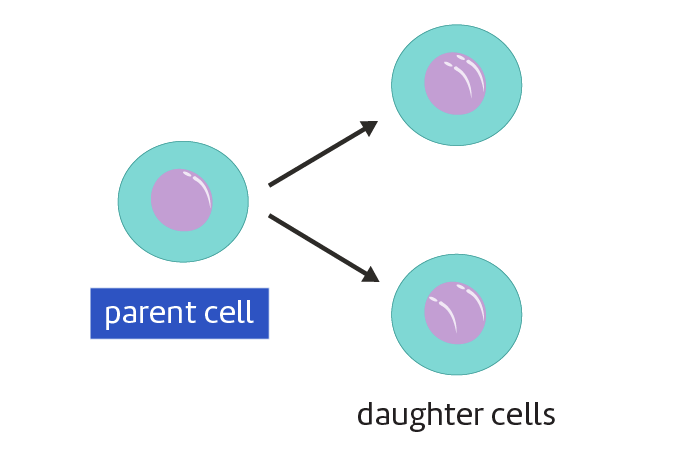
Define parent cell
Any cell that divides to form new cells
A parent cell needs to copy its DNA before dividing so that it can be passed down to its daughter cells.
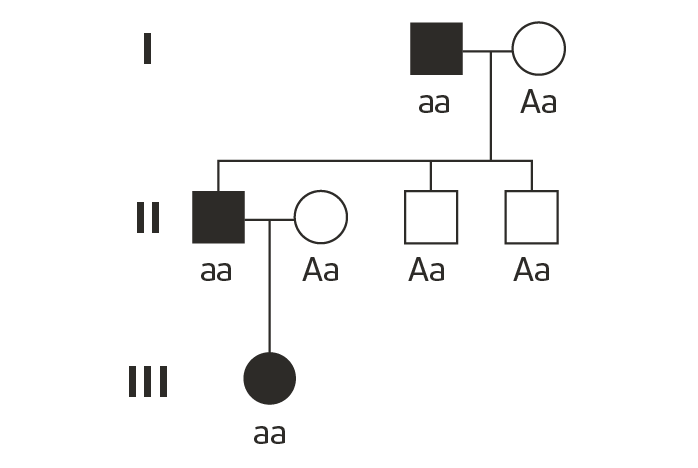
Define pedigree
A family tree that shows how a trait is passed down through generations
In a pedigree, filled symbols show the presence of a trait and open symbols show its absence.
Define phenotype
The collection of traits observable in an organism
A phenotype includes traits such as tall, purple flowers and yellow seeds. It is determined by the organism's genotype.
(pheno=physical trait geno=genetic trait)
Define prophase
A stage of cell division in which the chromosomes condense
Prophase is when the cell prepares to divide. The chromosomes condense and the nucleus starts to break down.

Define protein
A large molecule made up of amino acids
Proteins form structures and perform functions in an organism. DNA contains instructions for building proteins.
Define recessive allele
A version of a gene that is only expressed when two copies are present
A recessive allele is represented by a lowercase letter. Only yy will result in the appearance of the y trait.

Define recessive trait
A feature that only appears when two alleles are present
Recessive traits include cleft chins, attached earlobes and hitchhiker's thumbs.
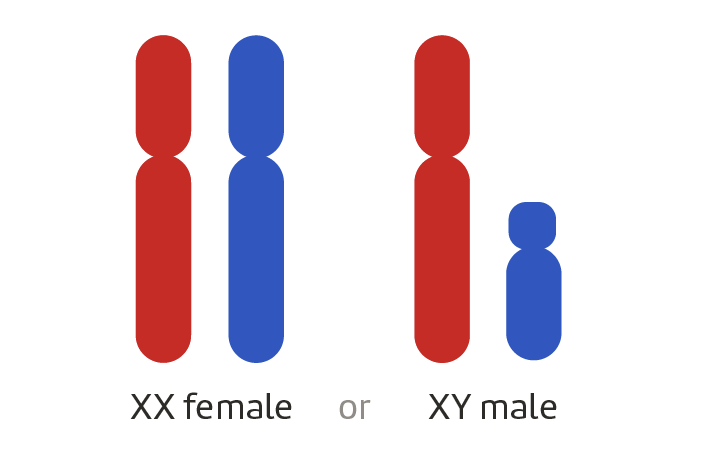
Define sex chromosome
A chromosome that helps determine an organism's sex
Sex chromosomes come in two types: X or Y. Most females have two X chromosomes while most males have an X and a Y.
Define simple inheritance
When the appearance of a trait is controlled by a single gene
Many traits are influenced by lots of genes but some, like albinism, are controlled by single genes.
Define telophase
A stage of cell division in which two nuclei form
Telophase is when two new nuclei form, each with its own set of DNA.

Define thymine
The base that combines with adenine to form a base pair
Thymine is one of the four letters that make up the genetic code in humans and other living things.
Define trait
A feature of an organism
Traits include height, hair colour, skin colour and freckles.
Explain how DNA provides the blueprints for organs.
DNA is a plan for building a particular living thing or organism. It provides a set of instructions for making proteins, which are the building blocks of cells. Cells are the building blocks of living things. Many cells make up tissues, and tissues make up organs.
Draw and label a diagram of a segment of DNA. One side of the double helix must have the sequence CATCATGGG.
Explain how a gene is different from a) an allele and b) a chromosome.
a) An allele is an alternative form of a gene. For example, the gene for eye colour has alleles including blue, brown, hazel and green.
b) Genes are found on chromosomes. A single chromosome may contain thousands of genes.
This image shows the root tip of an onion. Cells can be seen undergoing mitosis. Explain, in terms of growth, why there are more cells undergoing mitosis in the tip of the root.
Cell division produces new cells so that the plant can grow and develop. As growth occurs at the root's tip, more cells are required to undergo mitosis to support this growth. Cell division also produces new cells to replace and repair damaged cells, so cell division is also occurring in other parts of the root as well.
Explain how DNA is passed on to offspring in asexual reproduction.
In asexual reproduction, the parent cell makes an exact copy of its DNA. Each of the chromosomes is copied and the identical copies stay joined together. During cell division, the copies are separated so that each new cell gets a full set of chromosomes. This produces two daughter cells that are genetically identical to the parent. The DNA is passed on exactly, so the offspring have the same genetic information as the parent.
Explain how sex cells contribute to the chromosomes in a fertilised egg cell.
Each sex cell has half the normal number of chromosomes. During fertilisation, an egg cell and a sperm cell join together. Their chromosomes are added together to provide a full set to the fertilised egg cell.
Compare the similarities and differences between the daughter cells produced in meiosis and the parent cell.
There are four daughter cells produced from one parent cell in meiosis. The daughter cells contain half the number of chromosomes (in humans, 23) of the parent cell (in humans, 46). Each daughter cell is genetically unique from each other and the parent cell.
Having attached earlobes in humans is a recessive trait. Explain how a child can have attached earlobes when both their parents have free earlobes.
The trait of attached earlobes is recessive, meaning that it is only expressed in an individual’s phenotype if they have inherited two copies of the recessive allele (one from each parent).
In order to get a copy from each parent, both of the parents must be heterozygous. The parents will have free earlobes because it is the dominant trait.
Define the following glossary terms.
Genotype:
Phenotype:
Genotype: A pair of alleles that influence the appearance of a particular trait. A genotype is represented by two letters. An organism’s genotype determines which traits it acquires.
Phenotype: The collection of traits observable in an organism. It is determined by the organism’s genotype.
Describe what clues or patterns you may look for if you suspected a trait was X-linked recessive.
X-linked recessive traits are more commonly expressed in males than females. In a pedigree, this might be noticeable when two parents do not have a trait, all their sons do and none of their daughters.
Complete the Punnett square for a cross between these two fruit flies.
A red-eyed female (XRXr) and a white-eyed male (XrY) are crossed. Determine the probability that a new fruit fly offspring will be male with white eyes.

The probability that a new fruit fly offspring will be a male with white eyes is 25% or 1/4. In other words, half of all male offspring will have white eyes.
A girl (II-2) was born with colour vision deficiency. She had never met her father and her mother was not colour vision deficient. Below is a pedigree of the sex-linked condition where the trait displayed is colour vision deficiency. Determine the genotype and phenotype of her father (individual I 2) and mother (individual I 1) by using the pedigree below.
The girl’s father had a genotype of Xᵇ, and a phenotype of colour vision deficiency. The girl’s mother had a genotype of XᴮXᵇ and a phenotype of normal colour vision.
Explain why CRISPR is a valuable genetic technology for treating disease.
CRISPR is a valuable genetic technology because it allows scientists to edit DNA with precision. Many genetic diseases are caused by a single mistake in a person’s DNA. CRISPR can target and fix the faulty gene directly. This means treatments can go beyond managing symptoms and instead correct the root cause of a condition.