ophthalmic dosage forms
 Call Kai
 Learn
 Practice Test
 Spaced Repetition
 Match
 Flashcards
 Knowt Play
1/15

There's no tags or description
Looks like no tags are added yet.
16 Terms
ophthalmic dosage forms
dosage forms used in the treatment of eye diseases
must be sterile, particle free (some exceptions), isotonic and free from pyrogens/endotoxins
prepared using aseptic techniques
procedures used to maintain the sterility of the product
ophthalmic preparations
specialized dosage forms designed to be administered on to:
the external surface of the eye (topical)
inserted (intraocular) or
adjacent (periocular) to the eye in conjunction with an ophthalmic device
intraocular & periocular preparations restricted to therapeutic applications or surgical adjuncts
due to dangers associated with their administration, or repetitive administration
ophthalmic preparations cont
CONT
topical therapeutic ophthalmic dosage forms
solutions
suspensions and ointments
gels and ocular inserts
injections and implants developed in intraocular drug delivery
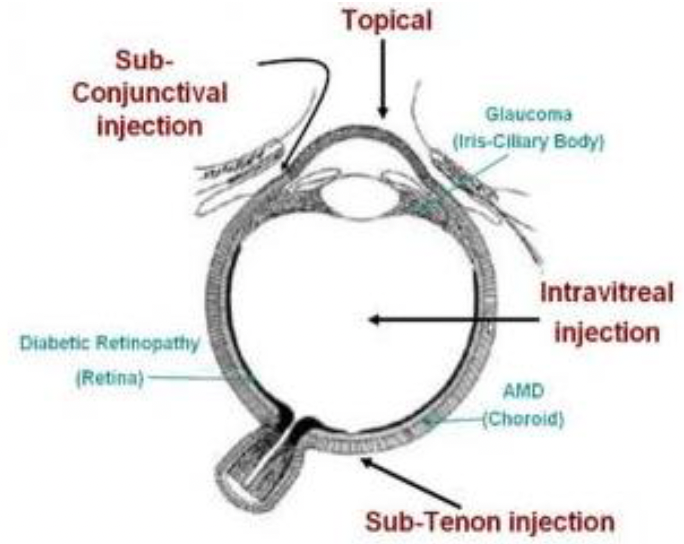
-there is good blood supply in the back of the eye (absorption can take place back there)
similarity to parenteral dosage forms
ophthalmic preparations are similar to parenteral dosage forms in their requirements for:
sterility
osmotic pressure (tonicity)
preservation
tissue compatibility
avoidance of pyrogens
pyrogens: fever causing metabolic bi-products of bacteria
if there are bacteria, the bacterial cell wall (one of the components LPS (lipopolysaccharide); fragments of the cell wall), if in parenteral products above a certain level, will cause fever
particulate matter and suitable packaging
physiological factors affecting ophthalmic bioavailability
normal fluid volume capacity of the eye is ~ 30 µL
normal commercial eyedropper dispenses 50-75 µL
about half of delivered dose is lost via overflow
in humans the normal turnover of tear fluids in the eye is every 2-3 minutes
accounts for loss of drugs delivered ophthalmically
ideally, higher contact time with the eyes favors higher bioavailability
what are the four formulation factors?
sterility
pH
viscosity
contact time
formulation factors
sterility
must be sterile to protect the eyes from infection
formulation factors
pH
pH 7.4 is ideal but the outer surface of the eye can tolerate a pH range of 6.5 - 8.5
less than 6.5 will cause burning sensation
more then 8.will cause pain
extreme pH causes irritation to the eye
formulation factors
viscosity
to increase the retention of the drug in the eye
viscosity increases the thickness of the solution
if viscosity is high, there is less flow of the fluid
loss due to spillage/loss due to lacrimal duct will decrease with increase viscosity
formulation factors
contact time
increased contact time achieved by increasing the viscosity of the formulation
what are the five types of ophthalmic dosage forms?
solutions
gel-forming solutions
suspensions
ointments
drug-impregnanted inserts
types of ophthalmic dosage forms
solutions
most commonly administered ocular dosage form
washes off easily from the eye, hence less contact with the eye
types: simple solutions, powders for reconstitution
types of ophthalmic dosage forms
gel-forming solutions (anti-thixotropy)
increased contact with the eye
types of ophthalmic dosage forms
suspensions
particle size must be less than 10 µm
particles should not aggregate into larger particles
polymorphism (due to storage temp, change in pH)
types of ophthalmic dosage forms
ointments
(thicker in comparison to regular liquids and suspensions)
do not wash off easily hence longer duration of action
relatively slower onset time and longer time for peak absorption
why?
ointments are thicker (viscous formulation) and have high solid contents
drug will need to be released from ointment and then have to partition into the fluids of the eyes which will then be absorbed into the eyes
that release from the ointment is slower onset time
they are typically oily in nature
-ointments will typically block your vision so apply it during the nighttime
types of ophthalmic dosage forms
drug-impregnated inserts
provide drug release for extended period of time
ocusert - glaucoma therapy
release of pilo carpine at a fixed rate
attach a small patch to the eye (can last for about a week)
eliminates need for frequent doses
placed in the cul-de-sac of the eye