last bio test! ace it!!
 Call Kai
 Learn
 Practice Test
 Spaced Repetition
 Match
 Flashcards
 Knowt Play
1/152

There's no tags or description
Looks like no tags are added yet.
153 Terms
ectoparasites
live outside the organism
endoparasites, and types
live inside the organism; intercellular or intracellular
exposure to natural enemies- ecto/endo
ecto- high, endo- low
exposure to external enviorments- endo/ecto
ecto- high, endo-low
difficulty of movement to and from host- endo/ecto
ecto-low, endo-high
exposure to host’s immune system- ecto/endo
ecto- low, endo- high
ease of feeding on host-ecto/endo
ecto- low, endo- high
types of ecto
arthopods, nematodes, hemiparasites
arhropods and types
attack animals- insects/ archnids
nematods
attack plants (roundworms)- live in soil and eat their roots
hemiparasites
are plants that attack other plants (ex.mistletoe)
types of endo parasites
viruses, prions, protist, bacteria, protozoa,fungi, helminths (intercelluar and intracellular)
intercelluar parasites and types
live in body cavities and between cells- viruses, prions, protists, bacteria
intracellular parasite- types
protozoa, bacteria, fungi, helminths
prions
protein that fold into wrong shape and can cause others to do the same- DONT have RNA/DNA
energing infectious disease
newly discovered disease increasing in abundance
what is the first factor that determines risk of infection by parasite
mechanism of transmission
horizontal transmisson
parasite moves between individuals (NOT parent to offspirng)
vertical transmisson
parasite moves from parent to offspring
vector
organism to disperse between hosts
reservior species
carry parasites but dont fall to their disease
susceptible infected resistant model
show disease transmission and shows immunity-SIR
SIR-S
100% of individuals are susceptible to pathogen
SIR-I
% of individuals become infected
SIR-R
% of individuals develop resistance via immunity
what does the SIR model help do
examine conditions that favor epidemic vs those that cause it to decline
factors that effect rate of pathogen spread
individuals (B) and rate of recovery (G)
individuals (B)
rate of contact with infected persons and prob of getting the infection
rate of recovery (g)
period of time where individual is infected and becomes resistant
how do plants and animals deter parasites
plants- chemicals, animals- mechanical and biochemical defenses
what parasite do
lives in host, takes its resources, harms host
pathogen
parasite that causes infectious disease
infection resistance
ability of host to prevent infection from happening
infection tolerance
ability of host to minimize harm once an infection starts
parasite load
number of parasites a host can hold
bacteria
single cell prokaryotes
mode of parasites entering
piercing tissue, reliance on a vector
ability of parasite to jump between species ensures…
being able to infect multiple diff species makes sure they dont go extinct
reservior species act as…
continous source of parasites as hosts gets rare
how do parasites counterattack host immune systems
avoid detectoin by incorporating into chromosomes or making an outer protective layer
intraspecific comp
between individuals of same species
interspecific comp
between individuals of different species
what can interspecific comp sometimes cause
1 species to die out
resource
anything consumes that increases pop growth rate as its availability increases
renewable resource
constantly rengenerates- seeds, sun
nonrenewable resource
cant regenerate-ex. space
leibigs law of the minimus
pop grows until supply of the most limiting resource prevents it from further increasing
competitve exclusion principle
2 species cant coexist indefinetely when they both are limited by same resource
character displacement
competing species evolve changes in traits to reduce overlap in resource and intensity of comp.
outcomes of comp.
coexistence, species 1 wins, or species 2 wins
asymetric comp
2 species in which each have a competitive advantage with respect to diff limiting factos in the enviorment
what can alter comeptive interactions
disturbances
tradeoffs happen between
competiting and resistance to preds
what can preds do
alter outcome of comp. control competitors and maintain higher diversity of prey- prevent competitve exclusion
exploitative comp
individuals consume and drive down abundance of a resource so the other cant have
interfernace comp
comps dont immediately use resources but defend them
apparant comp
2 species have negative effects on each other thru an enemy
allelopathy
interferance comp that organisms use chems to harm the comp
equation of species 2 added to species 1 and what does alpha stand for
comp coeffiecient for species 1-converts individuals of species 2 into = numbers of species 1
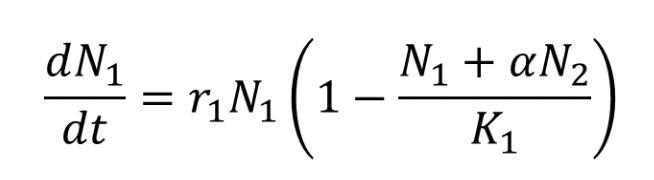
equation of species 1 added to species 2 and what does beta stand for
comp coefficient for species 2- converts individuals of species 1 into = number of species 2

equation for # of individuals using species 1 resources
N1+⍺*N2
equation for # of individuals using species 2 resources
N2+β*N1

what does this show
species 1 outcompetes 2
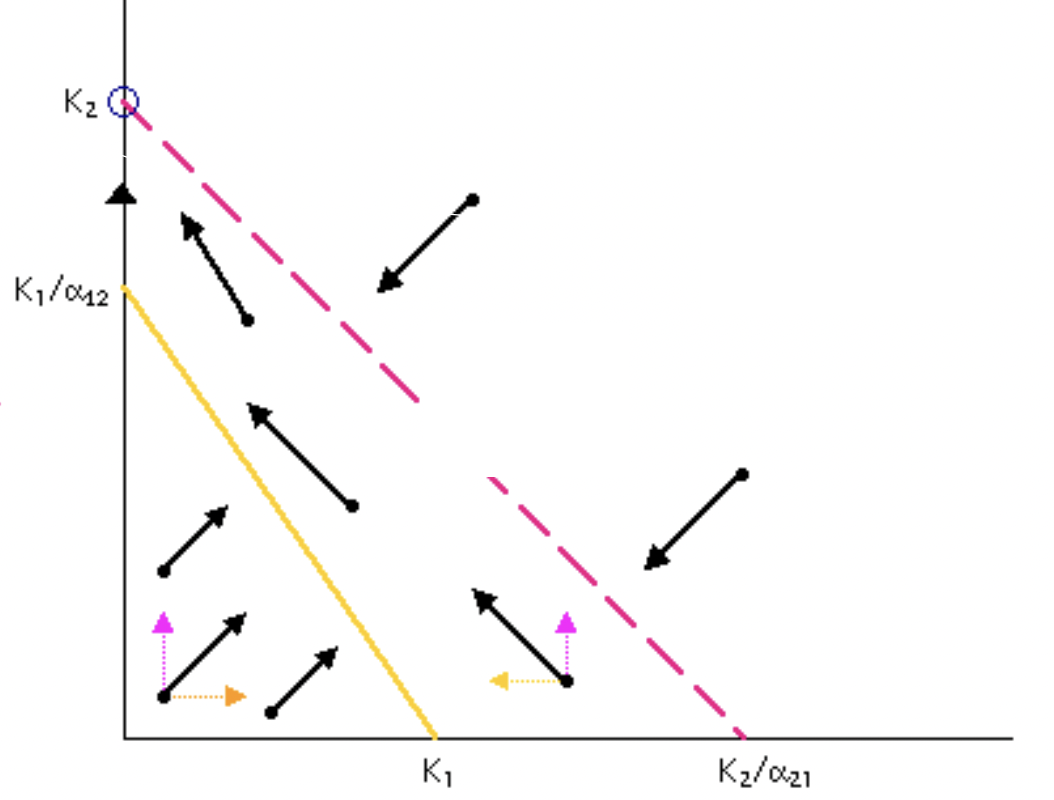
what does this show
species 2 outcompetes 1

what does this show
competitve exclusion

what does this show
coexistence
mutualism
An ecological relationship between two or more different species where every participating organism gains a net benefit
generalists
species that interacts with many other species
specialists
species that interact with 1 other or a few closely related species
obligate mutualists
2 species that provide fitness to each other and need each other to live
facultative mutualists
2 species that provide fitness but dont need each other to live
mycorrhizal fungi
surround plant roots to help them get h20 and minerals
endomycorrhizal fungi
has hyphal threads in the soil that penetrate root cells between cell wall and membrane
ectomycorrhizal fungi
has hyphar that enter between and surround root cells
abuscular mycorrhizal fungi
infects trees with branching hyphal structures in plant cells (abuscles)
what do rhizobium bacteria do
covert atomosperic nitrogen into ammonia while living in legumes
microbiome
community of microorganisms that live in regions of a plant/ animals body including bacteria, fungi, viruses, and protists
how do ants and acacia trees live
ants eat their nectar and live in the tree and defend the tree from herbivores and plants
endophytic fungi
live in plant tissue and defend from herbivores and prevents droughts
when does mutualism turn bad
when a species no longer can get the benefits - turns to predation
cheating
1 species gets benefit but doesnt give 1 back
types of mycorrhizal fungi
endomycorrhizal and ectomycorrhizal
what do arbuscular mycorrizal fungi focus on
trees
what makes up lichen and what thry give/get
fungi- gives h20,c02, and nutrients and algae- gives carbs
protozoans form mutualistic relationships with
animals
biomes
geographic regions that have communities of organisms with similiar adaptations
convergents evolution
2 species descend from unrelated ancestors and look similar bc of the forces they envolved under
why are cold regions w/ high rain rare
water doesnt evaporate at low temps
how many biomes and temp range
9, <5, 5-20, >20
climate diagrams
graphs that plot avg monthly temp and precip of a location
growing season
months where its warm enough for plant growth, temp>0
coldest biome, plants grow low to ground, permafrost, precip<600mm
tundras
evergreen needle trees, short grow season, bad winters, largest organic carbon reservior, low species diversity
boreal forests
what biome is largest carbon reservior
boreal forest
what is permasoil
frozen layer of topsoil
mild temps, lots of precip, evergreen trees, low species diveristy
temp rainforest
what makes mild temps in temp rainforests
ocean currents
mod temp and precip, decidous trees, and pines hwere dry
temp seasonal forest
hot/dry summer, cold winter, grasses, non flowering plants, praires
temp grasslands
when do tall grass praires happen and where
when precip is high in temp grassland