Bio-targets II 02
 Call Kai
 Learn
 Practice Test
 Spaced Repetition
 Match
 Flashcards
 Knowt Play
1/22

There's no tags or description
Looks like no tags are added yet.
23 Terms
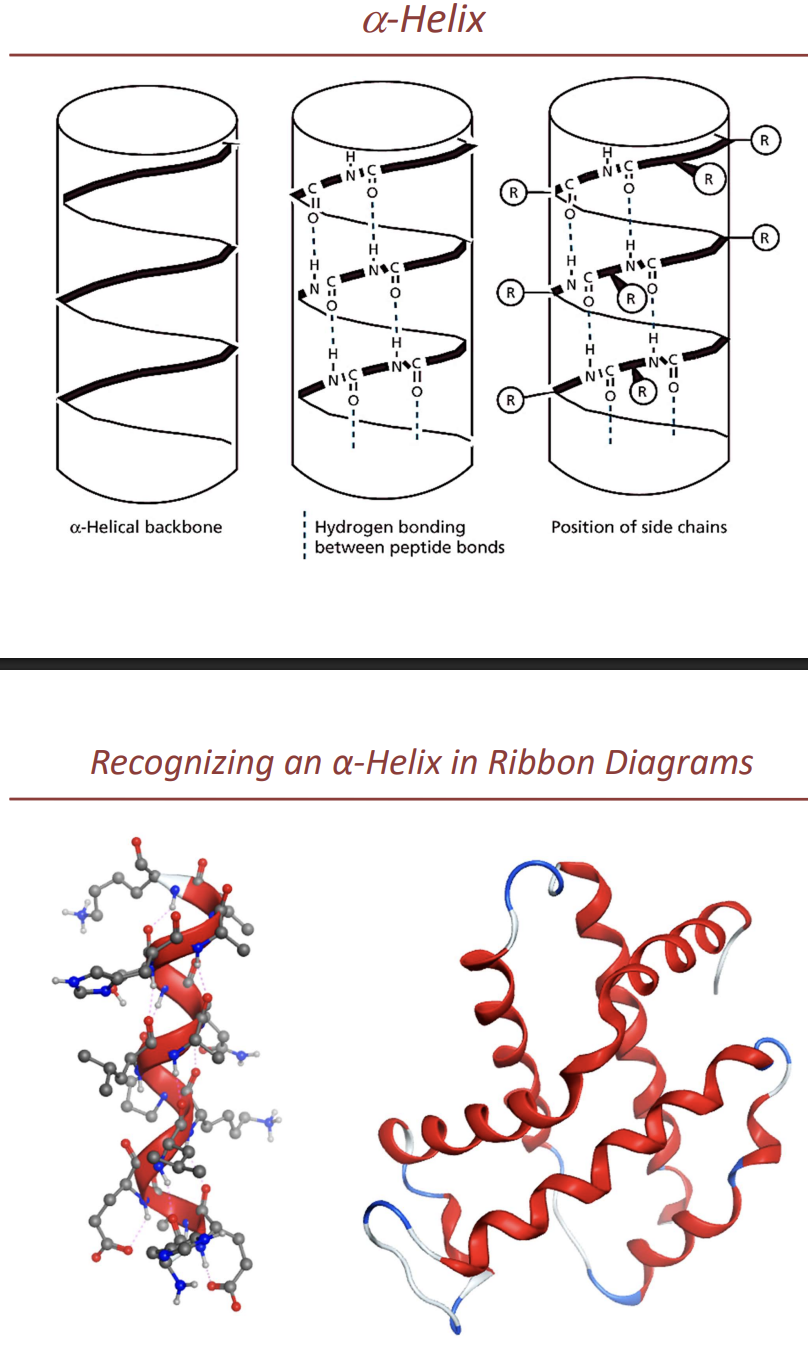
α-helix
α-helical backbone
H-bonding btwn peptide bonds
Side chains protrude perpendicular to backbone
β-strand (β-structures)
Extended segment of a polypeptide chain
Backbone atoms r coplanar/flat

β-sheets
- 2 or more β-strands, can curve to form β-barrels
- Stabilized by H-bonds btwn backbone C=O and N-H groups
- Parallel or antiparallel
Parallel vs. antiparallel β-sheets
Neighbouring β-strands run in...
- Parallel: the same N → C direction
- Antiparallel: the oppo → C direction

Loops
Connect regions of 2° structure
Lack the reg. repeating pattern of α-helices & β-sheets
Connect diff 2° structure elements
Important for protein function & binding

Turns
- Short segments that reverse/sharply change backbone and polypeptide chain direction
- Many types
- Connect other 2° structure elements
- Ex: β-turns

Tertiary structure
- Overall 3D structure of a single polypep. chain
- Results from folding & int's among diff regions of chain
- Brings distant a-acid SC's together in 3D space
- Includes α-helices, β-sheets, loops and turns

Interactions that stabilize protein structure
1. Hydrophobic effect: nonpolar SC's cluster hydrophobically
2. H-bonds
3. Electrostatic/ionic int’s
- Van der Waals int’s
- Disulfide bonds: covalent bonds btwn cysteine residues

Hydrophobic effect & protein folding
- Polar SC's on the outside of the protein
- Non-polar SC's on the inside of the protein

Dipole interactions & H-bonds stronger in hydrophobic enviro's
Local enviro affects molecular int's
- Water competes for H-bonding int’s & screens (weakens) electrostatic int's → int's behave diff. in a less polar enviro
- Local enviro of binding site affects D-T int's

Quaternary structure (some proteins)
- 2 or more identical or diff polypeptide subunits associate
- Describes their arrangement & interactions

Protein-protein int’s can involve large surfaces
- Interfaces contains many noncovalent int’s
- Int’s can be transient or stable
- Important in signaling, reg. & protein complexes
- Large interfaces can make some p-p int’s challenging drug targets
Protein structure determines function
- Protein function deps on its 3D structure
- Specific regions form active sites, ligand-binding sites & p-p interaction sites
- Rest of protein creates & maintains appropriate structure & dynamics
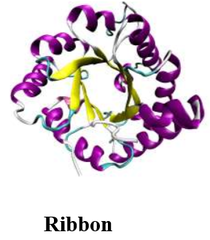
Major protein targets for drugs
1. Enzymes: D’s inhibit their activity
2. Receptors: D’s activate, block or modulate their signaling
3. Ion channels: D’s block, open or modulate their activity
4. Transporters: D’s inhibit or alter molecule movement across memb's
5. Other target proteins: structural proteins & p-p int’s
Enzymes
- Biolo catalysts that aren’t consumed by the rxn and bind substrates at an active site
- ↓er Ea of a rxn by partly stabilizing TS
- Enzyme (small hump) vs. non-enzyme (larger hump) pathway

"Designer solvent" for the transition state
Enzyme active site provides specialized chem enviro that helps stabilize TS = lowers Ea barrier

Active site (enzyme)
Small region where substrate binds & catalysis occurs
Contains a-acid residues positioned for binding & catalysis
Represents part of overall enzyme structure
Rest of enzyme functions as scaffold
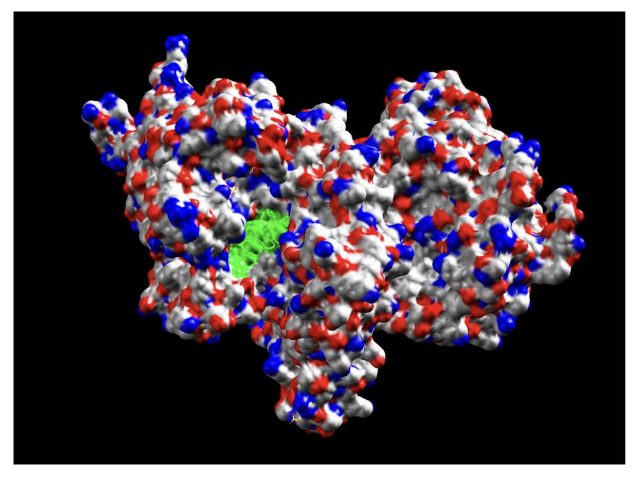
Enzyme-substrate (ES) complex
- Formed when enzyme binds to substrate
- Reversible process (equilibrium)
- Both E and S change/adjust shape to fit during binding
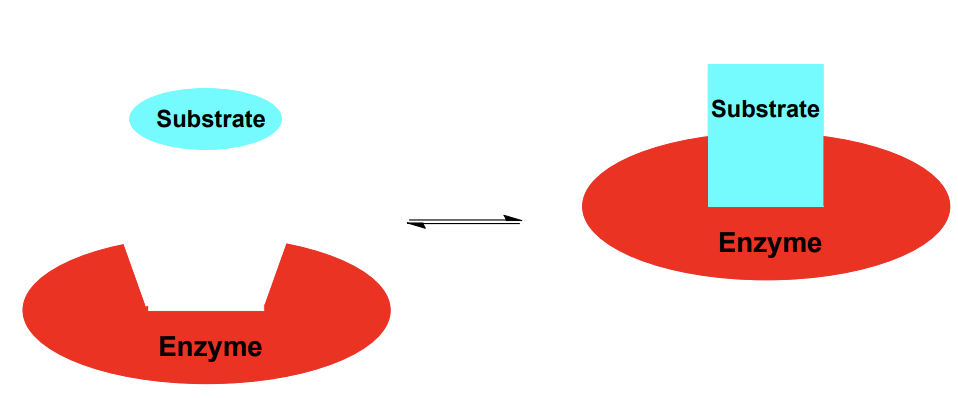
Reaction for enzyme-substrate (ES) complex
- In ES complex, substrate is positioned correctly for rxn
- Substrate is converted into prod within active site
- Enzyme may change shape during catalysis

Release of product
- After catalysis, prod is formed in active site & released from enzyme
- Enzyme returns to og form, ready to catalyze next rxn

Lock-and-key (protein flexibility)
- Useful simple model
- Emphasized comp. shape

Induced fit (protein flexibility)
- Binding can change protein & ligand confor.
- Substrate binding causes enzyme to change shape
- Confor. change can de/activate enzyme
- Substrate is also flexible & changes confor. during binding

Molecules are not static
- Enzymes & substrates r constantly moving & flexing
- Shape changes r gradual (not instant) & often asymmetrical