Chapter 5-6 Unit 2 Biology - AP CLASS
 Call Kai
 Learn
 Practice Test
 Spaced Repetition
 Match
 Flashcards
 Knowt Play
1/113

Earn XP
Description and Tags
whoever is in the reg bio class theres extra bio shit we need to know so like mayve js dont do that sorree
114 Terms
Phenotype
Physical appearance/traits of the organism. (E.g short, yellow)
Genotype
The genetic makeup symbolized by letters. (Eg. Tt or TT)
What are the types of genotypes?
Homozygous and heterozygous.
Homozygous
An organism possesses two identical alleles for a characteristic. ( Ex: YY or yy )
Heterozygous
Organism that have two different alleles for a characteristic. (Ex: Yy)
What does homo in homozygous mean?
It means the same
What does hetero in heterozygous mean?
It means different.
What is genetics?
The study of heredity
Who is gregor mendel?
He is an Austrian monk, scientist and mathematician. He is known as the father of genetics.
What are the 7 traits of peas?
Seed shape, seed colour, flower colour, pod shape, pod colour, flower position, and plant height. Each trait is dichotomous.
what are the 7 dominant traits of peas?
Round shape, yellow seed, white flower, full shape form, yellow pod colour, axial flower position, and tall.

what are the 7 recessive traits of peas?
Wrinkled shape, green seed, purple flower, constructed shape form, green pod colour, terminal flower position, and short.

Dichotomous
only two possibilities
Explain the law of segregation.
This is how Mendel explained his pea genetics discovery.
Every individual must carry 2 alleles for the same trait.
Parent organisms donate one copy of each gene in their gametes
During meiosis, alleles are separated/segregated into different gametes. (pollen and egg)
How is the F1 (First Filial) generation produced?
Produced when 2 parents are crossed
How is the F2 (Second filial) generation produced?
Produced when 2 members of the F1 generation are crossed.
Genes
A section of DNA on a chromosome that codes for a single characteristic.
What is independent assortment?
Genes located on separate chromosomes will be inherited independently of one another during the formation of gametes.
The process during gamete formation where genes on separate chromosomes divide randomly, meaning the inheritance of one trait does not affect the inheritance of another
Dominant allele
The allele that is always shown if present.
Recessive allele
The allele that is expressed if there’s no dominant allele.
Incomplete dominance
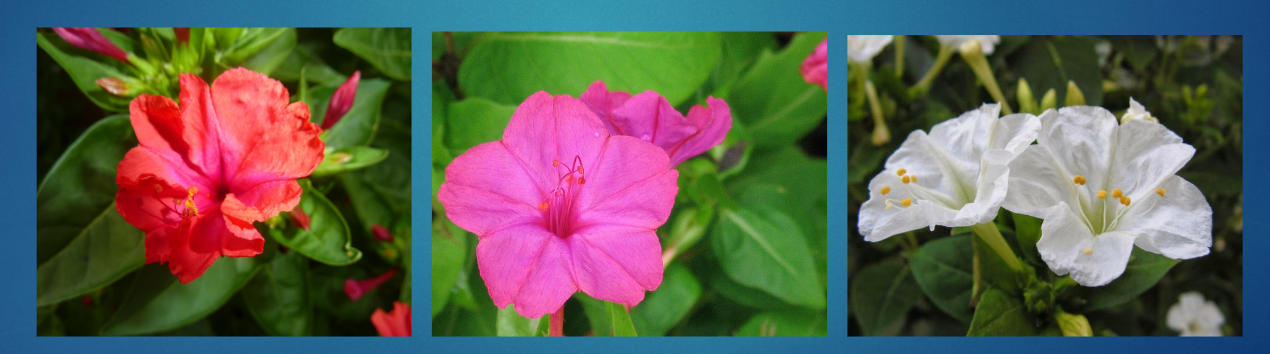
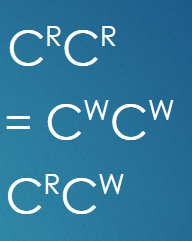
This is when no allele is dominant over the other. The characteristics are both expressed in each cell that carries them. (A new characteristic appears, which is a blend of both alleles.)
how are alleles represented in incomplete and complete dominance?
Represented by capital letters with superscripts.
polygenic traits
Traits controlled by two or more genes. (human height, skin colour, weight)
Codominance
Different versions of the same gene are both fully expressed in a heterozygous individual. (ex,. patches, stripes, variation in colour)

What is Sickle Cell Anemia?
It’s an inherited blood disorder where oxygen circulation is diminished because of defective hemoglobin (Hb)
What are the three possible genotypes for the hemoglobin alleles HbA and HbS
(A & S are SUBSCRIPTS, aka small letters that look like exponents)
HbA HbA (homozygous normal genotype)
HbA HbS (Heterozygous genotype)
HbS HbS (Homozygous mutant genotype)

What is the RBC (Red blood cells) phenotype of an individual with the (HbA HbA) genotype?
RBC never sickle because they only produce normal hemoglobin.
When do the red blood cells of a heterozygous (HbA HbS) individual sickle?
RBCs sickle only when blood pH changes (or when oxygen levels are low). This is known as the sickle cell trait.
What is the RBC phenotype of an individual with the (HbS HbS) genotype?
RBCs are always sickled, resulting in sickle cell disease.
Why does the heterozygous (HbA HbS) condition serve as an example of incomplete dominance at the cellular level?
Because it creates an intermediate phenotype (a blend of both traits). The cells aren't 100% normal, but they don't sickle all the time either. They only sickle under stress.
Multiple Allele Inheritance
One gene for the characteristic, but two or more alleles exist in the population. (ex. human blood)
Rabbit coat alleles and its names
C (Agouti/Brown coat), Cch (Chinchilla) , Ch (Himalayan), c (albino)

What is the order of the rabbit coat allele dominance?
C> Cch> Ch > c

Human blood phenotypes
A, B, AB, O
What blood types are co-dominant to each other?
A and B.
What blood type is dominant over O?
Both A and B.
Agglutinogens
antigens found on the surfaces of RBCs
Antigens
Structures on cell surfaces that can cause an immune response in the body
Antibodies
A Y-shaped protein made by the immune system to neutralize germs like bacteria and viruses
What is the basic rule for how humans develop ABO blood antibodies?
You only build antibodies against blood antigens that are NOT on your own red blood cells
What antibodies does a person with Type A blood make?
Anti-B antibodies.
What antibodies does a person with Type B blood make
Anti-A antibodies.
What antibodies does a person with Type AB blood make?
Neither anti-A nor anti-B antibodies
What antibodies does a person with Type O blood make
Both anti-A and anti-B antibodies.
What happens if a patient receives an incompatible blood transfusion?
The patient’s plasma antibodies attack the donor cells like foreign invaders, causing a massive immune and clotting reaction.
Agglutination
The clumping of blood cells that occurs when patient antibodies attack mismatched donor antigens.
What are the life-threatening risks of a failed, incompatible blood transfusion?
Shock
Kidney failure
Circulatory collapse
Death
Blood type A
Allele: IA, Blood cells have small antigens on the surface
Blood type B
Allele = IB
Cells coated with type B antigens
Blood type AB
genotype = IAIB
Blood cells contain both types of antigens
Known as the universal recipient
Blood type O
Allele = i
No antigens on the surface of the blood cells
Known as universal donor
What blood type does IAIA produce ?
Blood type A
What blood type does IAIB produce?
Blood type AB
What blood type does ii produce?
Blood type O
What blood type does IBIB produce
Blood type B
What blood type does IAi produce?
Blood type A
What blood type does IBi produce?
Blood type B
How many pairs of chromosomes do humans have?
23 pairs
Autosomes
genes not associated with biological sex
How is the biological sex determined?
By the sperm. It donates either an X or Y chromosome.
What gamete always gives an x chromosome?
The egg.
What are sex linked genes?
genes that are located on sex chromosomes
sex-linked traits
Traits determined by sex linked genes
Sex-Linked Recessive Traits
Most sex-linked traits are recessive
Both X chromosomes must have the gene for the trait to be expressed
If only one x chromosome is present (in males) and it has the sex linked gene, then the trait will be expressed
Sex-Linked Dominant Traits
Some sex-linked traits are dominant
Only one X chromosome must have the gene for that trait to be expressed
If only one X chromosome with the sex-linked gene is present in a female, the trait will be expressed
What is a Carrier?
A person that has the trait on only one chromosome and does not express the trait.
Who are the carriers of sex linked traits?
Always women.
How many recessive alleles are needed for a sex-linked trait to show in males?
Only 1 recessive allele.
Why are dominant or recessive traits on a male's X chromosome ALWAYS expressed?
Because males only have one X chromosome.
Do females follow regular rules of inheritance for sex-linked genes?
Yes, all rules of inheritance are followed.
In females, how are dominant sex-linked traits expressed?
Heterozygotes express the dominant trait. If only one X chromosome with the gene is present, the trait will be expressed.
How many recessive alleles are needed for a recessive sex-linked trait to show in females?
2 recessive alleles.
Do recessive X-linked disorders occur more frequently in males or females?
Males
What is the outcome of many recessive X-linked disorders in males?
Many of these disorders are lethal (they will kill the male).
Hemophilia
a sex-linked recessive bleeding disorder that prevents the blood from clotting properly
Do autosomal dominant traits typically skip generations?
No, they usually appear in each generation and will not skip generations. This is because the allele is expressed even in heterozygotes.
How common do autosomal dominant traits appear in a pedigree?
relatively common
Can an individual have an autosomal dominant trait if neither parent has it?
No, a dominant trait will not occur in an individual unless it also appears in at least one of the parents.
If both parents are unaffected by an autosomal dominant trait, what is the outcome for their offspring?
Unaffected parents will have only unaffected offspring.
Do autosomal recessive traits typically skip generations?
Yes, a recessive trait commonly skips one or more generations.
In what type of pedigrees are autosomal recessive traits frequently found?
They are frequently found in pedigrees that include crosses between close relatives.
If two individuals affected by an autosomal recessive trait cross, what is the outcome for their offspring ?
All of the offspring will be affected.
If both parents are heterozygous for an autosomal recessive trait, what is the chance their child will be a heterozygous carrier?
50% chance.
If both parents are heterozygous for an autosomal recessive trait, what is the chance their child will be homozygous recessive and affected?
25% chance.
Can an X-linked trait ever be passed from a father to his son?
No, an X linked trait can never be passed from a father to son.
If there is father to son transmission of a trait, what does that indicate?
that means the trait is not sex linked.
Are sex linked recessive traits more common in males or females?
Both males and females can be affected, but the trait is more common in males.
To which offspring do affected males transmit the sex linked recessive allele?
They transmit it to all of their daughters but not to any sons/
Are the daughters of affected males typically affected by the sex linked recessive trait?
No, daughters of affected males are usually heterozygous and therefore not affected
If a female expresses a sex linked recessive trait, what is the outcome for her sons?
All sons of a female who expresses the trait will also be affected.
X-ray diffraction
A way of determining the structure of a molecule by the way X-rays bounce off it
What does DNA stand for?
Deoxyribonucleic acid
What is DNA composed of?
phosphate groups
deoxyribose (sugar)
4 nitrogenous bases
What are the 4 nitrogenous bases?
Thymine (T)
Adenine (A)
Guanine (G)
Cytosine (C)
DNA Replication
the process by which DNA produces a copy of itself
When does DNA replication begin?
It begins when the hydrogen bonds between the base pairs break apart
What is the “Unzipping” process during DNA replication?
It produces two half-ladders / strands of DNA, each held together by its sugar-phosphate backbone.
Where are the free floating DNA nucleotides found?
Inside the nucleus.
What do the free floating DNA nucleotides attach themselves to during replication?
They attach themselves to the exposed complementary nitrogenous bases.
What is transcription?
Its the copying phase. Because DNA cannot leave the nucleus, a specific gene unzips and makes a messenger RNA (mRNA) copy to carry the instructions out.