OCR A level Chemistry - Electrons, Bonding & Structure
 Call Kai
 Learn
 Practice Test
 Spaced Repetition
 Match
 Flashcards
 Knowt Play
1/41

There's no tags or description
Looks like no tags are added yet.
42 Terms
State the 3 types of intermolecular forces
induced dipole-dipole
permanent dipole-dipole
hydrogen bonds
Explain why straight chain hydrocarbons have a higher boiling point than branched hydrocarbons
longer, straight hydrocarbons have more IDD forces so more energy is needed to overcome forces.
branched hydrocarbons can't pack close together so this weakens IDD forces between chains and lowers bp
Explain why H2O has a high boiling point
hydrogen bonds are very strong so lots of energy needed to overcome them.
Which element is the most electronegative?
Fluorine
Explain the trends of electronegativity across periods & down groups
electronegativity increases across periods &up groups except noble gases
Define electronegativity
an atom's ability to attract the bonding electrons in a covalent bond
What is a polar bond?
when bonded electron pair is shared unequally between atoms
- causes a permanent dipole
What are non-polar bonds?
when bonded electron pair is shared equally between bonded atoms
- same/ similar electronegativity
Explain why CO2 is non-polar
polar bonds arranged symmetrically , so two permanent dipoles from c=o bonds act in opposite directions & cancel out.
Explain why H2O is polar
permanent dipoles aren't arranged symmetrically so they don't cancel out
- overall O2 end has a partial negative charge and H2 end has a partial positive charge
What is the principle quantum number?
shell number/ energy level
What are the different types of orbitals?
s, p, d & f
Distinguish between the structure of a s orbital with a p orbital
s-orbitals have a spherical shape whereas p-orbitals have a dumb-bell shape
Explain why the 4s sub shell fills before the 3d sub shell
4s sub shell has a lower energy level than 3d sub shell so it fills & empties first
What is an atomic orbital?
A region around the nucleus that can hold up to 2 electrons with opposite spins
How many electrons can fill the first 4 shells?
32 electrons
Rank the bonded-pair & lone-pair in increasing repulsion
B-p / b-p < b-p / l-p < l-p / l-p
lone pairs repel more strongly than bonded-pair
Describe the shape of a molecule with 2 bonding pairs & 0 lone pairs
linear
bond angle = 180
-e.g CO2, CS2 , HCN, BeF2

Describe the shape of a molecule with 2 bonded-pairs & 2 lone-pairs
non-linear
bond angle = 104.5
- e.g OCl2 , H2S, OF2 , SCl2

Describe the shape of a molecule with 4 bonded-pairs & 0 lone-pairs
tetrahedral
bond angle = 109.5
- e.g SiCl4 , SO4 2-, ClO4 -, NH4+

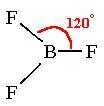
Describe the shape of a molecule with 3 bonded-pairs & 0 lone-pairs
trigonal planar
bond angle = 120
- e.g BF3 , AlCl3 , SO3 , NO3 -, CO3 2
Describe the shape of a molecule with 3 bonded-pairs & 1 lone-pair
pyramidal
bond angle = 107
- e.g NH3

Describe the shape of a molecule with 6 bonded-pairs & 0 lone-pairs
octahedral
bond angle = 90

Explain why simple molecular substances have low melting and boiling points.
weak intermolecular forces between molecules (IDD/hydrogen bond)
- don't require lots of energy to overcome
Explain why simple molecular substances are don't conduct electricity
no mobile charged particles so they can't pass the charge around the structure
Explain why non-polar simple molecular substances insoluble?
intermolecular bonding (hydrogen bonds) in water too strong to be broken so there's little interaction between molecules in lattice & water molecules
What is a hydrogen bond?
type of permanent dipole-dipole interaction between molecules w/ H atom attached to an electronegative atom (NOF)

How are permanent dipole-dipole interactions formed?
partial negative & positive charges on polar molecules cause weak electrostatic forces of attraction between molecules

Explain why ice is less dense than water
Ice forms regular lattice structure held by H bonds.
molecules are held further apart than in liquid water so it's less dense & floats
3 types of p-orbitals
Px orbital
Py orbital
Pz orbital

Simple molecular substances
molecules held together by weak IDD attractions
atoms bonded strongly together by covalent bonds
Describe what Induced dipole-dipoles are
weak interactions that exists between all molecules
electrons constantly moving randomly
at any instant, temporary dipole formed as part of molecule is more/less negative
temp dipoles induces dipole to form on neighbouring molecules
induced dipoles further induces dipoles on neighbouring molecules which attract one another
dipoles created & destroyed all the time
Distinguish between a cation and an anion
Cation=positive ion
Anion=negative ion
Define the term ionic bonding
electrostatic attraction between oppositely charged ions
Structure of NaCl
Na+ & Cl- ions attract oppositely charged ions in regular lattice structure
made up of same basic unit repeated over
ionic bond is the attraction between all ions
each sodium ion in this structure is surrounded and equally attracted by six chloride ions
Define the term covalent bond
strong electrostatic attraction between a shared pair of electrons and nuclei of bonded atoms
Explain why ionic compounds conduct electricity in liquid states
molten/ dissolved, solid lattice breaks down so ions are free to move as mobile charge carriers
solid, ions in fixed position so no mobile charge carriers
Explain how ionic compounds are soluble in water
water is polar so the water molecules will attract to charged ions
- this breaks down lattice & surrounds each ion in solution
Explain why giant ionic lattices have a mp and bp
lattice held by strong electrostatic forces that require large amounts of energy to overcome
- at room temp, insufficient energy so high temps needed to supply large quantity of energy
What are double covalent bonds?
strong electrostatic attraction between 2 shared pairs of electrons and nuclei of bonded atoms
e.g O2 & CO2
What are triple covalent bonds?
strong electrostatic attraction between 3 shared pairs of electrons and nuclei of bonded atoms
e.g N2 & HCN
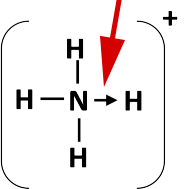
What is a dative covalent bond?
when a shared pair of electrons has been supplied by one of bonding atoms only