BIO152 Midterm Test
 Call Kai
 Learn
 Practice Test
 Spaced Repetition
 Match
 Flashcards
 Knowt Play
1/52

There's no tags or description
Looks like no tags are added yet.
53 Terms
Hydrolysis
Greek “Hydro” Meaning water and “Lysis” meaning to break up / separate
~philic
Greek derivative for friendship
~phobic
Greek derivative for fear
Isomer
Greek Isos meaning equal and Greek meros meaning part/share
Valence Electrons
Electrons located in the outermost shell of an atom
Ionic Bond
Formed between a metal and a non-metal
Covalent Bond
Formed between two non-metals
Hydrogen Bond
Formed as a result of dipole-dipole attraction that when a hydrogen atom is covalently bonded to a very small highly electronegative atom.
Non-Polar Covalent Bond
Electrons are shared equally between two atoms
Polar Covalent Bond
Unequal sharing of electrons, the shared electrons spend more time near the atom with the stronger pull
Electronegativity
An atom’s attraction for the electrons in a covalent bond
Van der Waals Interactions
Attractions between molecules that have asymmetrically distributed electrons.
Organic Chemistry
The study of carbon compounds
Hydrocarbons
Organic molecules consisting of only carbon and hydrogen
Isomers
Compounds with the same molecular formula but different structures and properties

Structural Isomers: have different covalent arrangements

Cis-trans Isomers: have the same covalent bonds but differ in spatial arrangements
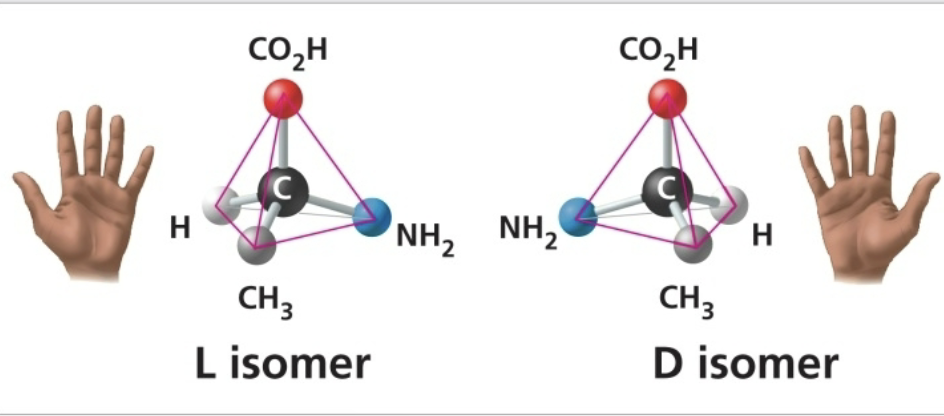
Enantiomers: mirror images of eachother
Adenosine Triphosphate (ATP)
The primary energy-transferring molecule in the cell
Living things are made up of four classes of large biological molecules:
Carbohydrates, Lipids, Proteins, Nucleic Acids
Dehydration Reaction
Two monomers bonding together through the loss of a water molecule
Hydrolysis Reaction
A polymer being broken apart with a water molecule
Disaccharide
Formed when a dehydration reaction joins two monosaccharides, also called a Glycosidic Linkage
Polysaccharide
Polymers of sugar that have storage and structural roles
Starch
A storage Polysaccharide of plants, consists entirely of Glucose monomers, stored as granules within the chloroplast.
Glycogen
A storage Polysaccharide in animals, primarily found in liver and muscle. Hydrolysis of ____ releases Glucose when the demand for energy increases.
Cellulose
A major component of plant cell walls. A polymer of glucose, but its glycosidic linkages differ from those of starch.
Chitin
A structural Polysaccharide found in arthropod exoskeletons. Provides structural support for fungal cell walls.
Lipids
Little or no affinity for water
Hydrophobic, because they consist mostly of hydrocarbons which are non-polar
Major function: energy storage
Phospholipids
Two fatty acids and a phosphate group attached to glycerol.
Steroids
Lipids with a carbon skeleton consisting of four fused rings
Protein functions
speeding up (catalyzing) chemical reactions
structural support
storage
transport
cellular communications
movement
defense against foreign substances
Amino Acid
Organic molecules with carboxyl and amino groups

Glycine (Gly or G)
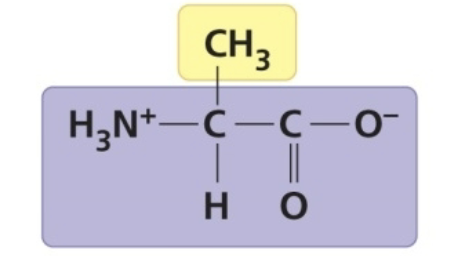
Alanine (Ala or A)

Valine (Val or V)

Leucine (Leu or L)

Isoleucine (Ile or I)
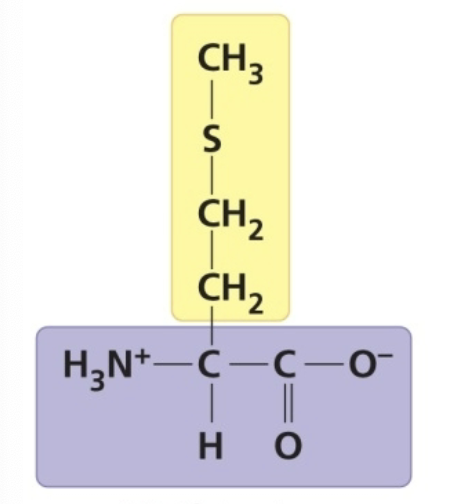
Methionine (Met or M)

Phenylalanine (Phe or F)

Tryptophan (Trp or W)

Proline (Pro or P)
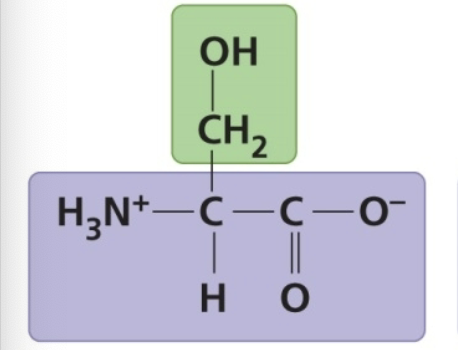
Serine (Ser or S)
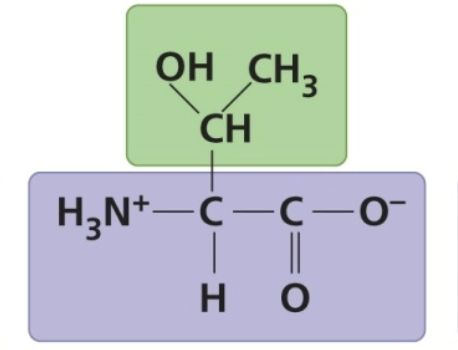
Threonine (Thr or T)

Cysteine (Cys or C)

Tyrosine (Tyr or Y)

Asparagine (Asn or N)

Glutamine (Gln or Q)

Aspartic Acid (Asp or D)
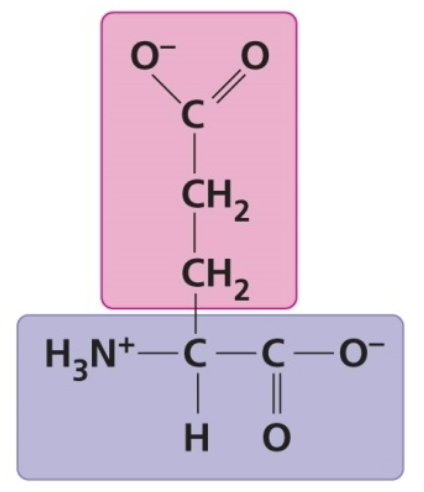
Glutamic Acid (Glu or E)
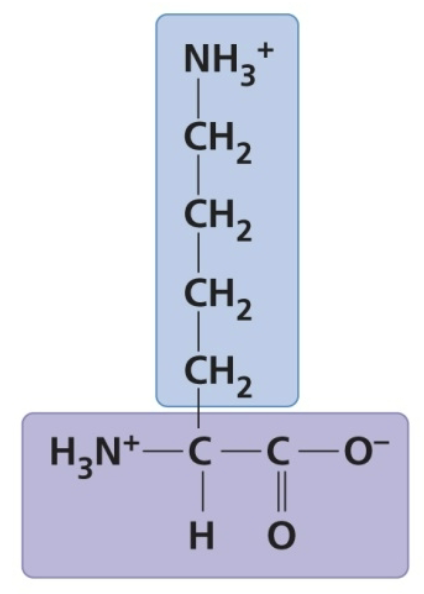
Lysine (Lys or K)

Arginine (Arg or R)

Histidine (His or H)