Lesson 13: Cloud Formation & Types
 Call Kai
 Learn
Learn Practice Test
 Spaced Repetition
 Match
Match Flashcards
 Knowt Play
1/50

There's no tags or description
Looks like no tags are added yet.
Name | Mastery | Learn | Test | Matching | Spaced | Call with Kai | Chat |
|---|
No analytics yet
Send a link to your students to track their progress
51 Terms
what is a cloud?
a volume of atmosphere containing numerous (…) and/or (…)
typical diameter of droplets/ice particles: ()-() um
a volume of atmosphere containing numerous water droplets and/or ice particles
typical diameter of droplets/ice particles: 10-20 um
what are the 3 requirements for cloud formation?
abundant (…) (high (), small ()-() spread)
condensation () particles (aerosol that initiate () - necessary)
a () mechanism (when air rises, it () as it expands, w/o losing () )
abundant water vapor (high RH, small T-DP spread)
condensation nuclei particles (aerosol that initiate condensation - necessary)
a cooling mechanism (when air rises, it cools as it expands, w/o losing heat)
what are cloud condensation nuclei?
() (or particulates) - (…), (), (…) from burning fossil fuels or vegetation
without these, cloud formation would be nearly ()
very (), so can remain () for days
aerosol (or particulates) - sea salt, dust, carbon particles from burning fossil fuels or vegetation
without these, cloud formation would be nearly impossible
very small, so can remain suspended for days
what is special about sea salt?
some have a special () for water (), so condensation can start for RH less than ()%
some have a special affinity for water (hygroscopic), so condensation can start for RH less than 100%
condensation and subsequent precipitation () particulates and () the air
condensation and subsequent precipitation scavenge particulates and clear the air
what is the average rain drop size?
what is the average cloud droplet size?
what is the average condensation nucleus size?
2 millimeters
0.02 millimeters
0.0002 millimeters
cloud droplets are surprisingly ()
most cloud drops remain liquid down to () degrees C
pure
-15 degrees C
what is a cloud drop?
() water that can exist down to () degrees C
supercooled water that can exist down to -40 degrees C
supercooled droplets may freeze when:
the temperature () (at () degrees C all freeze) (some still exist)
they encounter an () nucleus (such as a () particle)
they () with a solid object (surface, airplane, or ice particle)
leads to () conditions
the temperature decreases (at -40 degrees C all freeze) (some still exist)
they encounter an ice nucleus (such as a clay particle)
they collide with a solid object (surface, airplane, or ice particle)
leads to icing conditions
what are ice nuclei?
() particles like CCN, but much () abundant than CCN (cloud condensation nuclei)
aerosol particles like CCN, but much less abundant than CCN (cloud condensation nuclei)
how do you reduce aircraft icing risk?
avoiding () layers in the temperature range of () to () degrees C, high liquid () content and large () droplets (typically, this is deep cloud that extends through the middle () )
avoiding cloud layers in the temperature range of 0 to -20 degrees C, high liquid water content and large cloud droplets (typically, this is deep cloud that extends through the middle troposphere)
what is fog?
()-based cloud ( () drops or ())
a cloud with base less than () ft AGL & visibility is less than () mi
surface-based cloud (water drops or ice)
a cloud with base less than 50 ft AGL & visibility is less than 5/8 mi
what is mist?
() fog
(less than or equal to () mi visibility and less than () miles)
thin fog
(less than or equal to 5/8 mi visibility and less than 7 miles)
what is haze and is it formed the same way?
it is () formed the same way
(), () particles such as dust, smoke, or salt and pollution () in the air and () visibility
usually an ()/() tint
worsens during () or () weather
it is not formed the same way
dry, microscopic particles such as dust, smoke, or salt and pollution suspend in the air and reduce visibility
usually an orange/brownish tiny
worsens during dry or hot weather
is fog more common in stable/unstable air and why?
() air
stable air resists () movement and prevents () surface air from rising in thermals which traps (), () air near the ground
lack of vertical ()
stable air
stable air resists vertical movement and prevents warm surface air from rising in thermals which traps moist, cool air near the ground
lack of vertical mixing
what are the 4 types of fog?
radiation fog (ground fog)
advection fog
steam fog (mixing fog)
upslope fog
what is radiation fog (ground fog)?
forms in () air over ground at () as it cools
common in (…)
() wind (less than () kts)
forms in moist air over ground at night as it cools
common in inland valleys
light wind (less than 5 kts)
what is advection fog?
forms when (), () air rides over a () water or ground
common in () areas day or night
() wind speed (less than or equal to () kt)
forms when warm, moist air rides over a cool water or ground
common in coastal areas day or night
moderate wind speed (less than or equal to 15 kt)
what is steam fog (mixing fog)?
forms when () air becomes located over a (), () surface (unstable)
shadow tufts of ()
also known as (…) or () fog
forms when cool air becomes located over a warm, moist surface (unstable)
shadow tufts of steam
also known as sea smoke or evaporation fog
what is upslope fog?
forms when (), () air glides up a () slope
needs () in order to form
() and () on lee side
forms when warm, moist air glides up a mountain slope
needs wind in order to form
dry and warmer on lee side
below cloud base, what is the temperature a rising air parcel cools at?
3 degrees per 1000 ft
dewpoint decreases by about…
0.5 degrees C per 1000 ft
when do clouds form?
when air () to the lifting () level (LCL) where () = ()
when air rises to the lifting condensation level (LCL) where T = DP
what is the LCL formula at C?
LCL =
LCL = (T-DP)/2.5
always in 1000s of ft
what is the LCL formula at F?
LCL =
LCL = (T-DP)/4.4
always in 1000s of ft
what is LCL if T= 72 degrees F, DP = 50 degrees F?
5000 ft
for sky reporting conditions for METAR, what do the different heights AGL of ft mean?
heights AGL 100’s of ft (<() ft = () or ())
low (< () ft AGL)
middle (()-() ft AGL)
high (> () ft AGL)
heights AGL 100’s of ft (<50 ft = mist or fog)
low (< 6500 ft AGL)
middle (6500-20,000 ft AGL)
high (> 20,000 ft AGL)
what do these sky conditions in a METAR mean?
CLR (<()/8 or cloud bases above () ft)
FEW (()/8-()/8)
SCT (()/8-()/8)
BKN (()/8-()/8)
OVC (>()/8)
CLR (<1/8 or cloud bases above 12,000 ft)
FEW (1/8-2/8)
SCT (3/8-4/8)
BKN (5/8-7/8)
OVC (>7/8)
what is a ceiling?
() cloud layer having () or more coverage
lowest cloud layer having 5/8 or more coverage

determine the sky conditions, is there a ceiling?
FEW 010, SCT 020, BKN 030
ceiling at 3000 ft
each blue line is 1/8
what are the two basic types of clouds?
c…
s…
cumuliform
stratiform
what does cumuliform mean?
(), () clouds ( () air) although usually () at the base
bumpy, heaped clouds (unstable air) although usually flat at the base
what does stratiform mean?
() clouds ( () air)
layered clouds (stable air)
what are fall streaks?
lines extending () from () of cloud, indicating ()
lines extending downward from base of cloud, indicating precipitation
what is virga?
(…) that do not reach ()
(WARNING), indicates () and strong ()
fall streaks that do not reach ground
(WARNING), indicates microbursts and strong downdrafts
what are boundaries?
water clouds have () edges; ice clouds usually appear ()
water clouds have distinct edges; ice clouds usually appear wispy
what about color?
() cloud base has deep () extent
dark cloud base has deep vertical extent
what do these latin words mean?
nimbus =
cumulus =
stratus =
alto =
cirrus =
nimbus = rain
cumulus = heaped
stratus = layer
alto = middle
cirrus = high
what clouds are considered “low clouds”?
strat….
strato….
nimbo….
cum…
cumulo…
stratus (ST)
stratocumulus (SC)
nimbostratus (NS)
cumulus (CU)
cumulonimbus (CB)
what clouds are considered “middle clouds”?
altoc…
altostr…
altocumulus (AC)
altostratus (AS)
what clouds are considered “high clouds”?
cir…
cirro…
cirrocu…
cirrus (CI)
cirrostratus (CS)
cirrocumulus (CC)
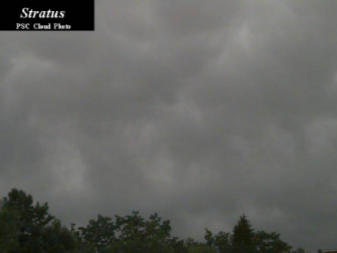
what is a stratus cloud?
() cloud
smooth, ()-hanging, white ()
low cloud
smooth, low-hanging, white blanket
what is a stratocumulus cloud?
() cloud
(b), (l), or ()-like patches connected in a continuous layer or group
low cloud
broad, lumpy, or roll-like patches connected in a continuous layer or group

what is a nimbostratus cloud?
() cloud
continuous, steady (), ()
dark-gray () that completely blocks out the sun or moon
low cloud
continuous, steady rain, snow
dark-gray blanket that completely blocks out the sun or moon

what is a cumulus cloud?
() cloud
(p), (cot)-like or (cau)-like top
low cloud
puffy, cotton-like or cauliflower-like top

what is a cumulonimbus cloud?
() cloud
usually clouds for ()
()-like tower with a dark, low-hanging () and a small top shaped like an ()
low cloud
usually clouds for thunderstorms
mountain-like tower with a dark, low-hanging base and a small top shaped like an anvil

what is a altocumulus cloud?
() cloud
look like (), fish (), or sheep ()
middle cloud
look like scales, fish bones, or sheep fleece

what is an altostratus cloud?
() cloud
(s), () gray, or () veil, sun or moon can often be seen weakly through them, appearing () or ()
middle cloud
smooth, hazy gray, or bluish veil, sun or moon can often be seen weakly through them, appearing fuzzy or watery

what is a cirrus cloud?
delicate white (s), (f), (h), or (m) tails
() cloud
delicate white strands, feathers, hooks, or mare’s tails
high cloud

what is a cirrostratus cloud?
() cloud
(), ()-like clouds composed of () crystals typically cover a large potion or all of the way
pale, whitish, translucent veil that can look () and featureless
high cloud
thin, sheet-like clouds composed of ice crystals typically cover a large potion or all of the way
pale, whitish, translucent veil that can look smooth and featureless

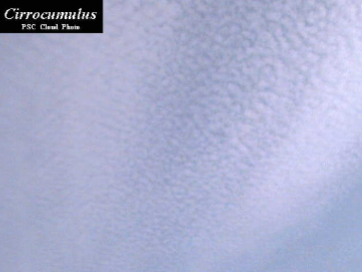
what is a cirrocumulus cloud?
() cloud
(), white patches or layers of clouds that appear as (), () puffs, grains, or ripples in regular patterns
high cloud
thin, white patches or layers of clouds that appear as small, rounded puffs, grains, or ripples in regular patterns