FAH313 WEEK 3 - Homer 1: The Iliad
 Call Kai
 Learn
 Practice Test
 Spaced Repetition
 Match
 Flashcards
 Knowt Play
1/6

There's no tags or description
Looks like no tags are added yet.
7 Terms

Title: Berlin Foundry Cup
Date: ca. 490 - 480 BCE
Medium: Attic Red figure Kylix
Location: Vulci, Italy
Description of Art:
Internal tondo:
Hephaistos —> god of the forge
holding Smith’s hammer
Thetis —> mother of Achilles
holding new shield, spear, and helmet of Achilles
new greaves have also been made —> hanging on the top
on shield = stars + eagle & serpent
Bottom of cup:
Showing a foundry scene —> craftsmen making sculptures
hammers on the wall
sketches
different “body parts” of sculptures hanging on walls
Worker stoking a fire
Another working assembling a sculpture
Significance: HOMER, THE ILIAD
Patroclus went into war wearing Achilles’ armour and got killed by Hektor
Hektor killed thinking it was Achilles
Achilles hearing this, got mad but also had no armour to go into battle
his mother, Thetis asks Hephaistos to make him new holy armor to protect him
In text: vivid and dynamic imagery is described to be on the shield he makes
Concept of Notional Ekphrasis = vivid description of an art object = only way to visualize it is in our minds (imaginary existence)
In the art:
hard to incorporate all the descriptions on the art piece
presence of stars = represents zodiac signs + Kosmos
Serpent and snake
eludes to Book 12 of iliad
eagle drops a snake during the battle = BAD OMEN for the trojans
yet the omen is disregarded by Hektor, who eventually gets defeated.


Title: Ajax and Achilles Playing a Game
Date: ca. 540-530 BCE
Medium: Black figure vase painting - Amphora
Location: Attica
Artist: Exekias
Description of Art:
Achilles on the left
Ajax on the right
Both are sitting and playing a game
Pregnant moment/moment in between
Playing a game to relax between battles of war
spears
Achilles shield is placed on the side, leaning on the edge defined by black paint
Ajax’s helmet and shield resting on the other side (same thing, against the painted edge)
Inscriptions:
of the names (Achilles, Ajax)
Achilles is yelling FOUR!
Ajax is yelling THREE
from this, we know who the winner is (ACHILLES)
Inscriptions on Amphora —> Exekias was famous for
“Exekias Made [Me]!
“Onitorides is Beautiful” —> dedication to his lover/crush
Significance: HOMER: THE ILIAD

Title: Achilles Tending to the Wounds of Patroklos Kylix
Date: ca. 500 BCE
Medium: Red-figure kylix
Location: Vulci, Italy
Description of Art:
Achilles wrapping bandages around Patroklos’ wounds
Achilles = clean shaven = meaning younger man
Patroklos = beard = meaning older man
looking away
gritting teeth/wincing in pain
was wounded by an arrow, resting against the tondo
pushing away from Achilles in pain —> foot pressing on circular wall of tondo
but legs are open and lower body facing Achilles = vulnerable position
The whole scene + composition of art takes into account the size and shape of tondo
everything occurs within the circular shape + interact with it
Significance:
Achilles = Eromenos = “The beloved”
Patroklos = Erastes = “The lover”

Title: Andromache, Astyanax, and Hector Amphora
Date: ca. 470-460 BCE
Medium: Red figure amphora
Location: Vulci, Italy
Description of Art:
Side A:
Andromache holding Astyanax
pose —> gesture of Aporia
Aporia = being at loss, looking for something that’s not with her
communicates emotional distress, helplessness, uncertainty
baby holding holding his arms out in the other direction of woman
Side B:
Hector, wearing his helmet + holding his spear and shield
ready to go into battle
snake on his shield = bad omen = foreshadows the fall of Troy and the trojans losing the war.
Significance: HOMER’S ILIAD (HEKTOR’S FAREWELL)
Separation of couple on either side of amphora
symbolizes the SEPARATION of couple
hector goes to war and dies
Andromache stays back with Astyanax
In Homer, Iliad:
Hector tells Andromache he would rather die in war than see her taken as a slave of war
his duty to his people and her to protect his city
Andromache = “man fighting” = has lots of knowledge about the war
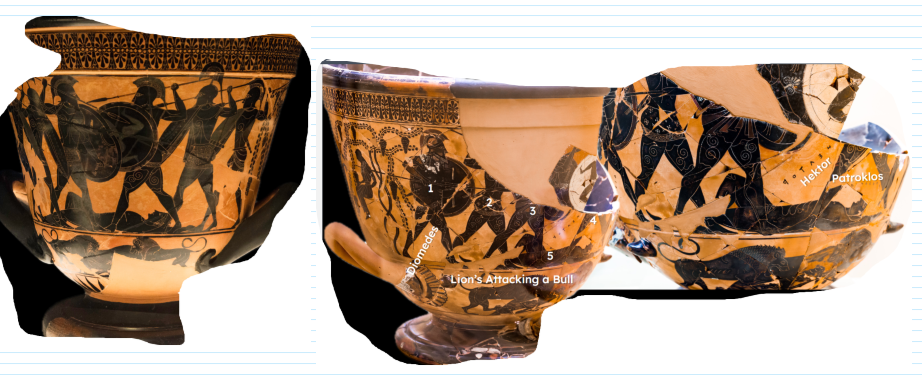
Title: Death of Patroclus Krater
Date: ca. 550-530 BCE
Medium: Black-figure Calyx-krater
Location: Attica (iffy)
Artist: Exekias
Description of Art:
Patroclus lying on the ground = dead
several warriors above him fighting
Diomedes on far right facing Hektor and his soldiers on the left
Patroclus = bull = signifies innocent hero that died in poetry
shown in bottom register
bull being attacked by lions
lions = trojans warrios
3 Greeks vs. 3 trojans
Diomedes one of the greek heros
Hektor on of the Trojan warriors
Inscriptions
names = Patroclus + Diomedes + Hektor
“Onetorides is beautiful!”

Title: Achilles fighting Hektor Volute Krater
Date: ca. 490 - 460 BCE
Medium: red-figure vase painting
Location: Found in Cerveteri
Description of Art:
Achilles fighting Hektor
Hektor is wounded = on his back foot = clearly losing
beard = meaning older = less strength and
blood pouring out of wounds
Hektor losing control over his spear and his body
Achilles in an attacking + forward stance
Large spear + shield
no beard = younger = stronger and more lively
clearly winning
agressive stance
body angled towards Hektor
spear + shield raised towards him
Athena = patron godess of Achilles
Aegis, spear, helmet
guiding Achilles and giving him her blessing
Apollo = on Hektor’s side (his patron god)
holding a bow and quiver of arrows
looks like he’s running away
body facing right while his head looks to the left = like he knows Hektor has lost
Significance:
Achilles = shows superiority over Hektor in combat
Achilles = LION
Hektor = BULL (defeated warrior)

Title: King Priam Ransoms Hector’s Body
Date: ca. 490 BCE
Medium: red figure skyphos (drinking cup)
Location: Cerveteri, italy
Description of Art:
Achilles reclining on his cline
armor + weapons are hung up
holding a knife and eating meat
Achilles facing cup bearer (young boy) on the right
Pieces of meat on the table in front of him
Under the table + cline = Hektor’s dead and naked body
Achilles = celebrating success over the trojans
on the left:
King Priam coming offering ransom for his son’s body
servants behind him carrying offerings and the ransom for Achilles
King Priam = wants to give his son a proper funeral procession
Significance: Homer’s ILIAD
This scene is BEFORE Achilles decides to give Hector’s body to his dad
Achilles disrespected Hektor’s last wishes and his heroics
Priam wants to honour is last son = give him a proper funerary ceremony
Ransom also includes Priam’s emotional appeal —> this moves Achilles (IN THE TEXT ONLY)