Bioc chap 67
 Call Kai
 Learn
Learn Practice Test
 Spaced Repetition
 Match
Match Flashcards
 Knowt Play
1/80

There's no tags or description
Looks like no tags are added yet.
Name | Mastery | Learn | Test | Matching | Spaced | Call with Kai | Chat |
|---|
No analytics yet
Send a link to your students to track their progress
81 Terms
ADH
Alcohol dehydrogenase
ADH is an example of
an oxidoreductase
NAD
is an electron carrier as well as an example of a cofactor
Cofactor tree
splits into metal ions and coenzymes
coenzymes consist of
cosubstrates and prosthetic groups
heme group
consist of a porphyrin ring which is 4 pyrrole rings and Fe
Heme relationship with myoglobin and hemoglobin
it is permanetly attached
what does delta G mean
the spontaneity of a reaction
enzymes are needed to
decrease the activation energy
Acid-base catalyst
a proton is transferred between the enzyme and the substrate
Covalent bond
two atoms share more than one electron
Covalent catalysis
covalent bond that forms between enzyme and substrate during the formation of the transition state
Methionine

Methionine 3 letter
met
Methionine 1 letter
M
Methionine category
non polar side chain
Cysteine

Cysteine 3 letter
Cys
Cysteine 1 letter
C
metal ion catalysis
just what is sounds like (what Fe is)
Aspartic acid

Aspartic Acid 1 letter code
D
Aspartic acid alter ego
aspartate
Aspartic acid 3
asp
in acid-base catalysis
we view acid and bases differently. Acids have a H+ and bases are w/o H or negatively charged
Glutamic acid

glutamic acid alter ego
glutamate
glutamic acid 3
glu
glutamic acid 1
E
Histidine
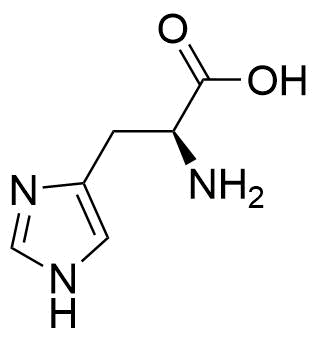
Histidine 3
His
Histidine 1
H
Lysine

Lysine 3
Lys
Lysine 1
K
Arginine

Arginine 3
arg
arginine 1
R
Tyrosine

tyrosine 3
tyr
tyrosine 1
Y
ester hydrolysis
ester plus h3o+ —> carboxylic acid and alcohol
RNase A
separates two nucleotides
RNase A mechanism
using a substate (dinucleotide) and two enzymes (amino acids) and water to break apart die nucleotide and resort enzymes back to beginning state
covalent catalysis is
transient
transient
short lived, temporary
Metalloenzyme
enzyme that requires metal for catalytic activity (heme group)
metal ion example
Fe2+, Fe3+, Zn2+
enzymes in catalysis
stabilize the transition state
Enzymes with a higher affinity in the transition state
have a greater rate of reaction
metals used in metalloenzymes
are used for orientation, mediating oxidation-reduction reactions because they are lewis acids, and stabilizing any negative charges
Carbonic anhydrase metalloenzyme
Zn2+
carbonic anhydrase do what
catalyze interconversion between Co2 and H2O to maintain balance in acid base
Chymotrypsin
is a serine protease/digestive enzyme made in its deactive form by the pancreas.
Chymotrypsin medical def
uses both acid-base and covalent catalysis to accelerate peptide bond hydrolysis
Serine protease
Chymotrypsin
serine protease mechanism uses a
catalytic triad
3 enzymes (amino acids) in peptide bond hydrolysis by chymotrypsin
Asp, His, Ser
why is RNase A called RNase A?
we are splitting RNA into two nucleotides
Does RNA has a hydroxyl group instead of a hydrogen at
the 4’ carbon
Serine

Serine 3 letter
Ser
Serine 1
S
aspartic acid is D because
it is one less carbon than glutamic acid (4 carbons total from C term)
Glutamic acid is E because
it is one more carbon than aspartic acid (5 carbons total from C term)
In a serine protease/catalytic triad/chymotrypsin mechanism
we are taking the three enzymes (amino acids) and the substrate, to cleave it near the carbonyl group and to form RNH2 and a carboxylic acid
how many steps is the serine protease/catalytic triad/chymotrypsin mechanism
5
water comes into the serine protease/catalytic triad/chymotrypsin mechanism
at step 3
an enzyme can catalyze the transition state and
the more affinity the faster the reaction
oxyanion hole
pocket in enzyme’s active sight that stabilizes the negative charge during the transition state
Serine protease are examples of Transition state stabilization bc
the tetrahedral structure during the transition state stabilizes it better than the oxyanion hole
enzyme catalysis
the specific way that enzymes catalyze a reaction
enzyme catalysis must be
in a proper spatial alignment
what does SUBSTRATE mean in substrate specificity of serine proteases
the molecules the enzyme is acting on
Chymotrypsin acts on
large polar substrates (amino acids)
Trypsin acts on
charged substrates (amino acids)
Elastase works on
small, non-polar, amino acids
Zymogen
is a precursor that is an inactive version of protease
zymogen activation
needs to be cleaved, can take multiple steps, only activated when necessary
Fibrin
blood vessel injury can be clotted by
what makes fibrin
Fibrinogen by thrombin (they are both inactive). Only made when necessary, you can’t have your blood be clotting all of the time.