growth and development: skeletal and dental
 Call Kai
 Learn
 Practice Test
 Spaced Repetition
 Match
 Flashcards
 Knowt Play
1/61

Earn XP
Description and Tags
lecture given 10/2/2026
62 Terms
what are the growth concepts?
pattern- repetition, implies predictability, things happen in order
variability- there will always be variations of normal, important to differentiate from those outside of normal
timing- same event for growth happens at different times for different people, variations in timing are most obvious during adolescence, chronological age vs biological/developmental age
craniocaudal growth
humans grow from top down
the skull also grows from top down
what is the order that growth finishes in?
transverse (breadth)
anterior-posterior (depth)
vertical (can continue into the 3rd decade of life)
intramembranous ossification
transformation of mesenchyme and deposition of bone on surfaces (no cartilage model)
endochondral ossification
ossification of a cartilage model
mixed bone formation
intramembranous AND endochrondral
cranial vault
intramembranous
starts forming at 7-8 weeks gestation
cranial vault is disproportionate to body at birth
rapid growth occurs during the first 24 months after birth
by ____ yrs old, the brain and cranial vault will achieve 80% of adult size
4
by ____ yrs old, the brain and cranial vault will achieve 95% of adult size
10
cranial base
endochrondral
first parts start forming at ~6 weeks in utero
as ossification continues, bands of cartilage remain between bones (synchondroses)
synchondroses
growth center
bipolar- like back to back growth plates
when does the intersphenoid synchrondrosis fuse?
birth
when does the spheno-ethmoidal synchrondrosis fuse?
7 yrs old
when does the spheno-occipital synchrondrosis fuse?
15 yrs old, ossifies by age 20
growth center
pre-determined genetic influence
independent growth
epiphyseal plates and synchrondroses
growth site
secondary or compensatory for growth
location of growth (no independent growth, they react to pressure/tension)
all growth ____ are also growth _____
not all growth _____ are _____
centers, sites
sites, centers
growth of the maxilla
entirely intramembranous ossification
down and forward
bone added at maxillary tuberosity (major growth SITE of maxilla)
growth at midpalatal suture until puberty
resorption occurs superior and anterior
growth of the mandible
mixed endochrondral and intramembranous ossification
apposition at condyle and posterior ramus
resorption at anterior ramus
condyle is the primary growth SITE (up and back)
scammon’s curve
graphic representation for differential growth
tells us that each tissue grows at a different rate
growth of neural tissue done by age 6 or 7
general growth (muscles, bone, viscera) slow during childhood and accelerates at puberty
the mandible follows which growth curve on scammon’s curve?
general growth
chronological age
years from birth
dental age
based on teeth present
in general, you should be treating pts based on their ______ age
dental
what factors affect development?
genetics- dental calcification / eruption sequence
nutrition- malnutrition can affect size, proportion, quality, and texture
chronic illness- major illnesses can affect tooth development, psychological/emotional stress in extreme cases can present like chronic illness
race- differences in tooth eruption and calcification
socioeconomic status- multifactorial effect on development
primary dentition
starts to develop at 1.5 mo in utero
calcification begins at 4 mo in utero
primary eruption usually begins at 6 mo, eruption dates are variable
eruption sequence is usually preserved
primary dentition is erupted by 24-30 mo
how do teeth develop?
chronologically from crown to root
how are teeth numbered ortho style?
adult dentition: centrals are 1, laterals are 2, so on and on
primary dentition: centrals are a, laterals are b, so on and on and on
what is the eruption sequence for primary teeth (ortho style)?
A B D C E
where is primate spacing?
max: btwn laterals and canines
mand: btwn canines and first molars
leeway space
the difference in mesiodistal diameter of deciduous C D E and their permanent successors 3 4 5
how much leeway space is in the maxilla?
1.5mm per side, 3mm total
how much leeway space is in the mandible?
2.5mm per side, 5mm total
why is leeway space important?
crowding- most common feature of dental arch malocclusion
bc of crowding in early mixed/mixed dentition with proper space maintenance can help prevent need for future extractions
space in mandible can also help convert flush terminal plane to class I
what are the options for distal step after growth?
minimal growth- class II
forward growth of mandible- end to end
almost always angle class II
what are the options for mesial step after growth?
minimal growth- class I
forward growth of mandible- class III
80% with mesial step <2mm become angle class I
if mesial step >2mm, become class III
what are the options for flush terminal plane after growth?
minimal growth- end to end
forward growth of mandible- class I
56% become angle class I
44% become angle class II
how does intercanine distance change?
max- increases
mand- no change
how does intermolar width change?
both progressively increase in childhood and adolescence
how does arch depth change? (aka distance from incisors to first molars)
both decrease
how does arch perimeter change?
increases during early mixed, decreases during late mixed
max- slight overall increase age 5-18
mand- overall decrease
what is the most frequent eruption sequence for max permanent teeth?
6 1 2 4 5 3 7
what is the most frequent eruption sequence for mand permanent teeth?
6 1 2 3 4 5 7
early mesial shift
eruption of permanent first molars
late mesial shift
exfoliation of primary second molars
what timing eruptions did dr. pan say we should probably know?
6 yr first molars
12 yr second molars
canine between 9 to 11 for girls, 11 to 13 for boys
__% of pts using a LLHA will prevent the need for extractions in later stage
73
generalized spacing in the primary dentition is ______
a good thing!
ugly duckling stage
from ~7-9 yrs old
spacing, flared laterals, no canines
mesial eruption force of permanent canines will consolidate anterior spacing
what teeth are important to preserve space after? (weird way to word the question)
gross caries on primary teeth requiring extraction
early loss of primary second molar before 6 yo
premature loss of ONE primary canine
extracting a primary tooth too early can…
delay the eruption of succedaneous tooth, worsen crowding issues
what are possible reasons for over-retained teeth?
locked in, ankylosed, missing permanent dentition
ectopic eruptions
#1 most frequent- max first perm molars
management depends on tooth position and location/extent of resorption
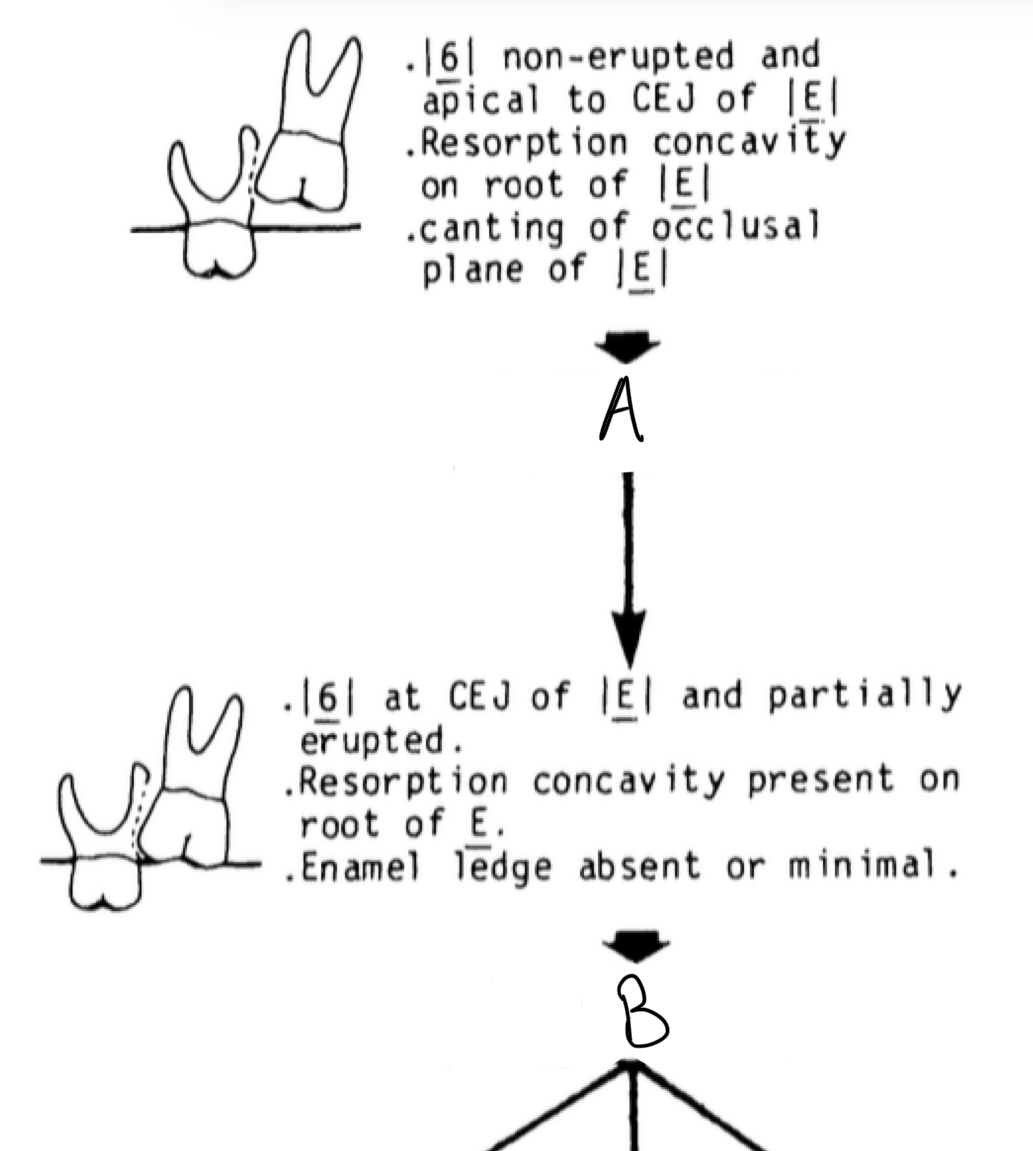
A?
observe eruption 3-6 mo

B?
observe eruption 3 to 6 mo

C?
separation
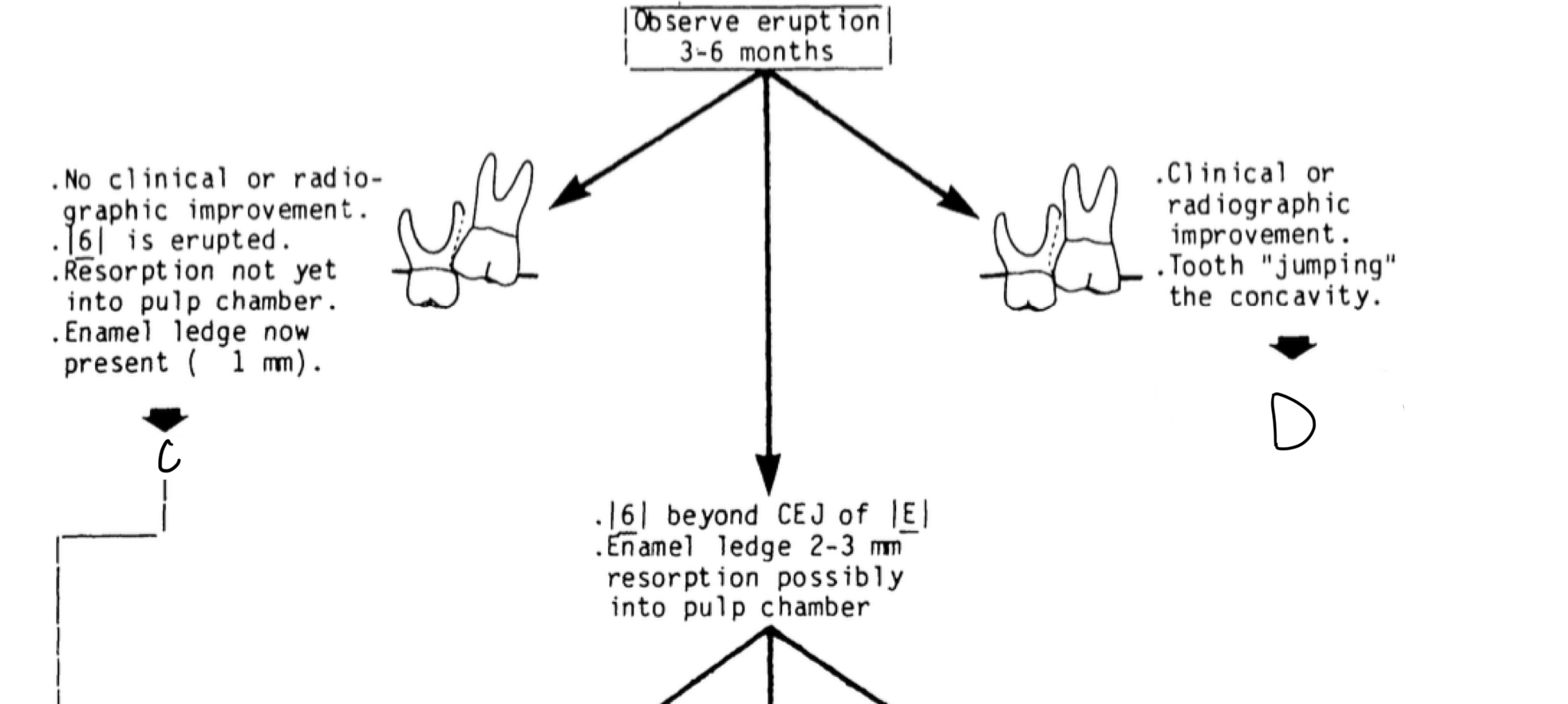
D?
observe eruption

E?
unilateral appliance
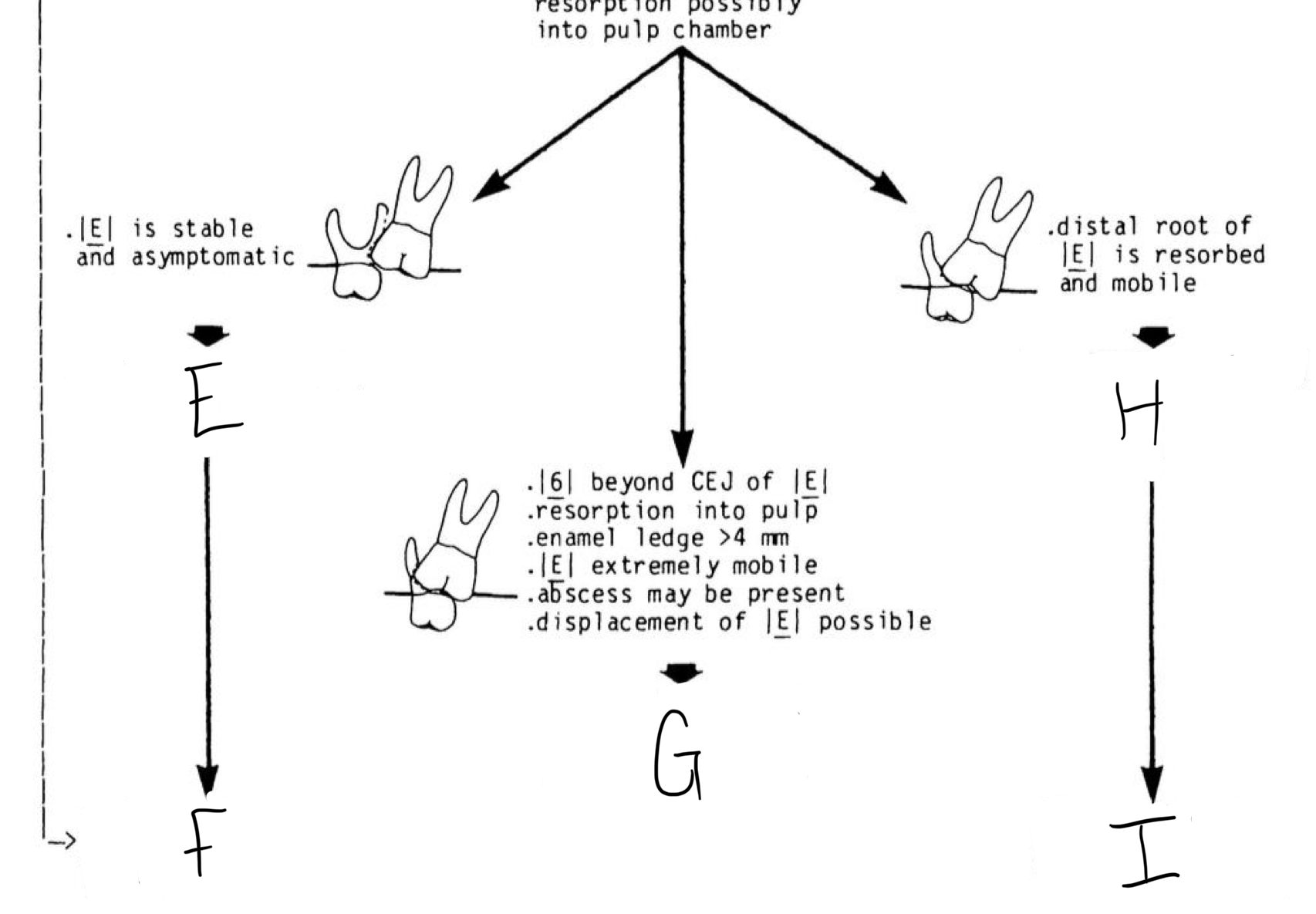
F?
monitor for early exfoliation and space maintenance
G?
extract E, regain space, then space maintenance
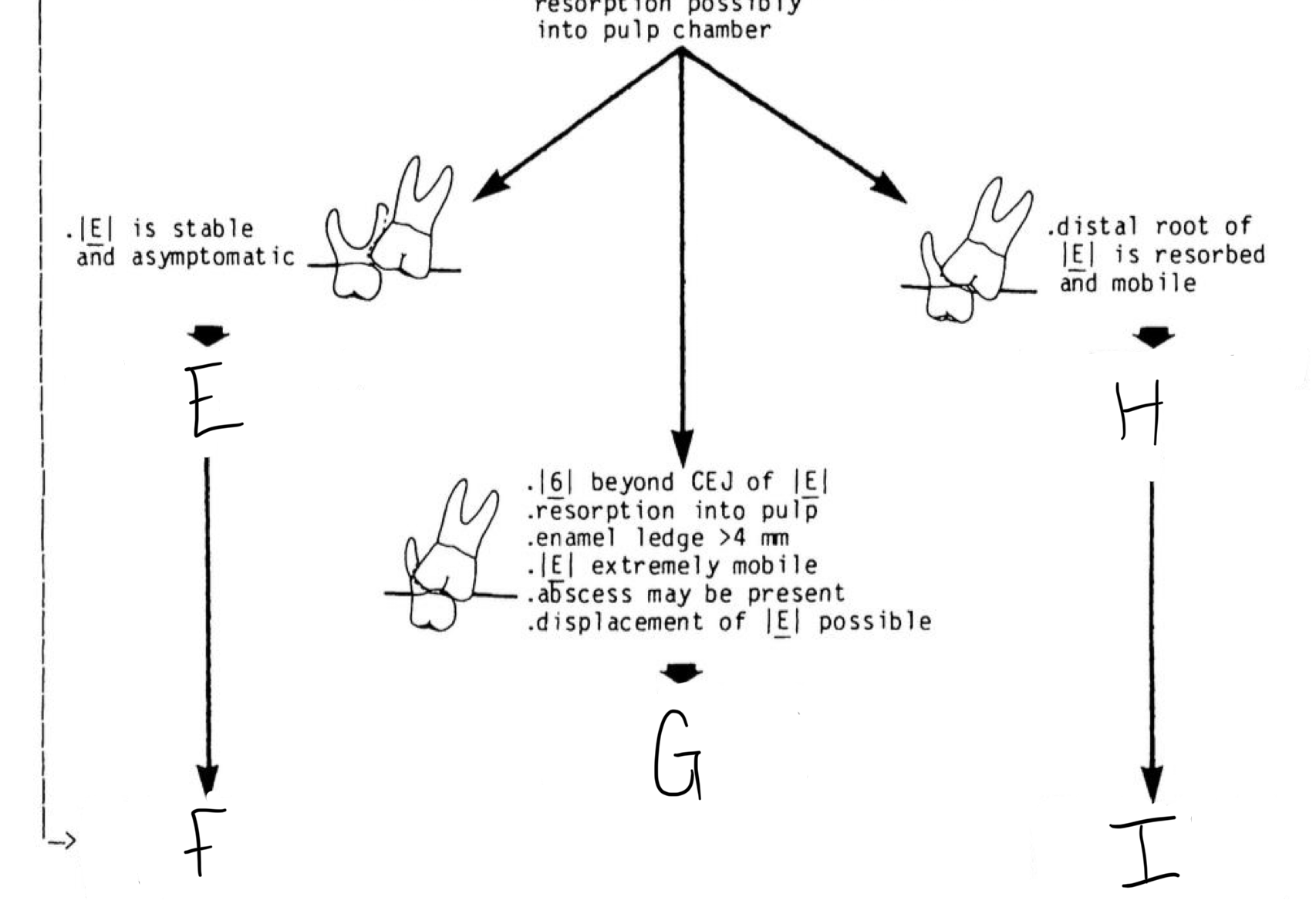
H?
bilateral appliance

I?
monitor for early exfoliation and space maintenance