AP Macroeconomics: Unit 1
 Call Kai
 Learn
Learn Practice Test
 Spaced Repetition
 Match
Match Flashcards
 Knowt Play
1/49

There's no tags or description
Looks like no tags are added yet.
Name | Mastery | Learn | Test | Matching | Spaced | Call with Kai | Chat |
|---|
No analytics yet
Send a link to your students to track their progress
50 Terms
What is economics?
is the science of scarcity; study of choices
What is scarcity?
is when we have unlimited wants but limited resources, so we must make a choice on how we will use our resources
What is Microeconomics?
is the study of small economic units such as individuals, firms, and markets
(ex: supply and demand in specific industries, production costs, and labor markets)
What is Macroeconomics?
is the study of the large economic as a whole
(ex: economic growth, government spending, inflation, unemployment)
What are positive statements?
based on facts, avoids value judgement (what is)
What are normative statements?
includes value judgement (what ought to be)
What is ceterius paribus?
all else is equal (removes the what ifs)
What are trade offs?
alll the alternatives that we give up when we make a choice
What are opportunity costs?
most desirable alternative given when you make a choice?
What is utility?
Satisfaction!
What is marginal?
Additional!
What is allocate?
distribute!
What is price?
The amount buyer (or consumer) pays
What is cost?
amount seller pays to produce a good investment
What is investment?
the money spent by businesses to improve their production
What is consumer goods?
created for direct consumption
What are capital goods?
created for indirect consumption
What are the five key economic assumptions?
1) Society has unlimited wants and limited resources (scarcity)
2) Due to scarcity, choices must be made. Every choice has a cost (trade off)
3) Everyone’s goal is to make choices that maximize their satisfaction. Everyone acts in their own “self interest”
4) Everyone makes decisions by comparing the marginal costs and the marginal benefits of every choices
5) Real-life situations can be explained and analyzed through simplified models and graphs
The Four Factors of Production: Land
All natural resources that are used to produce goods and services
The Four Factors of Production: Labor
Any effort a person denotes to a task for which that person is paid
The Four Factors of Production: Physical Capital
any human made resource that is used to create other goods and services
The Four Factors of Production: Human Capital
Any skills or knowledge gained by a worker through education and experience
The Four Factors of Production: Entrepreneurship
Ambitious leaders that combine the other factors of production to create goods and services
What is productivity?
a measure of efficiency that shows the number of outputs per unit of input

What is a production possibilities curve?
is a model that shows alternative ways that an economy can use its scarce resources
This model graphically represents scarcity, trade offs, opportunity costs, and efficiency
What are 3 shifts in the production possibilities curve?
1) change in resource quantity or quality
2) change in technology
3) change in trade (allows for more consumption)
What is absolute advantage?
describes a situation in which an individual,business, or country can produce more of a good or service that another producer with the same quantity (produces more)
What is comparative advantage?
describes a situation in which someone can produce a good or service at a lower opportunity cost with another producer (produces more efficiently)
What are output problems?
data is represents output produces from a fixed amount of input (opportunity costs (A)= B/A); provides data on how many goods or services a producer can create with a fixed amount of resources
What are input problems?
data represents input required to produce a fixed amount of output (opportunity cost (A)= A/B);data where the outputs are constant and the resources or inputs (like labor hours, land, or time) vary
What are terms of trade?
is when both countries can benefit from trade if they each have relatively lower opportunity costs; the agreed upon conditions that would benefit both countries
What is demand?
is the different quantities of good that consumers are willing and able to buy at different prices
What is the Law of Demand?
is an INVERSE relationship between price and quantity demanded
What is the substitution effect?
if the price goes up for a product, consumer buys less of that product and more of another substitute product (and vice versa)
What is the income effect?
if the price goes down for a product, the purchasing power increases for consumers, allowing them to purchase more
What is the law of diminishing marginal utility?
states that as you consume anything, the additional satisfaction that you will receive will eventually start to decrease
What does a shift in demand mean?
means that at the same price more people are willing and able to purchase that good
What are the shifters in demand?
B-# of buyers (Consumers)
R-related good (related goods)
I-Income (income)
T-Tastes (Preferences)
E- Expectation (Future expectation)
What does price do with the quantity?
The price moves the quantity; it does not shift the line
What is supply?
is the different quantities of a good that sellers are willing and able to sell at different prices
What is the law of supply?
is a DIRECT (positive) relationship between price and quantity supplied
as the price increases , the quantity producers make increases
as the price falls, the quantity they make falls
What are the 5 shifters (Determinants of Supply)?
Prices/Avaliability of resources
Number of Sellers
Technology
Government in Action: Taxes and Subsidies
Expectations of Future Profit
What are Subsidies?
is a government payment to a business or market; causes the supply of a good to increase
A change in prices does
not shift the curve; it only causes movement along the curve

when there is a surplus…
producers lower prices
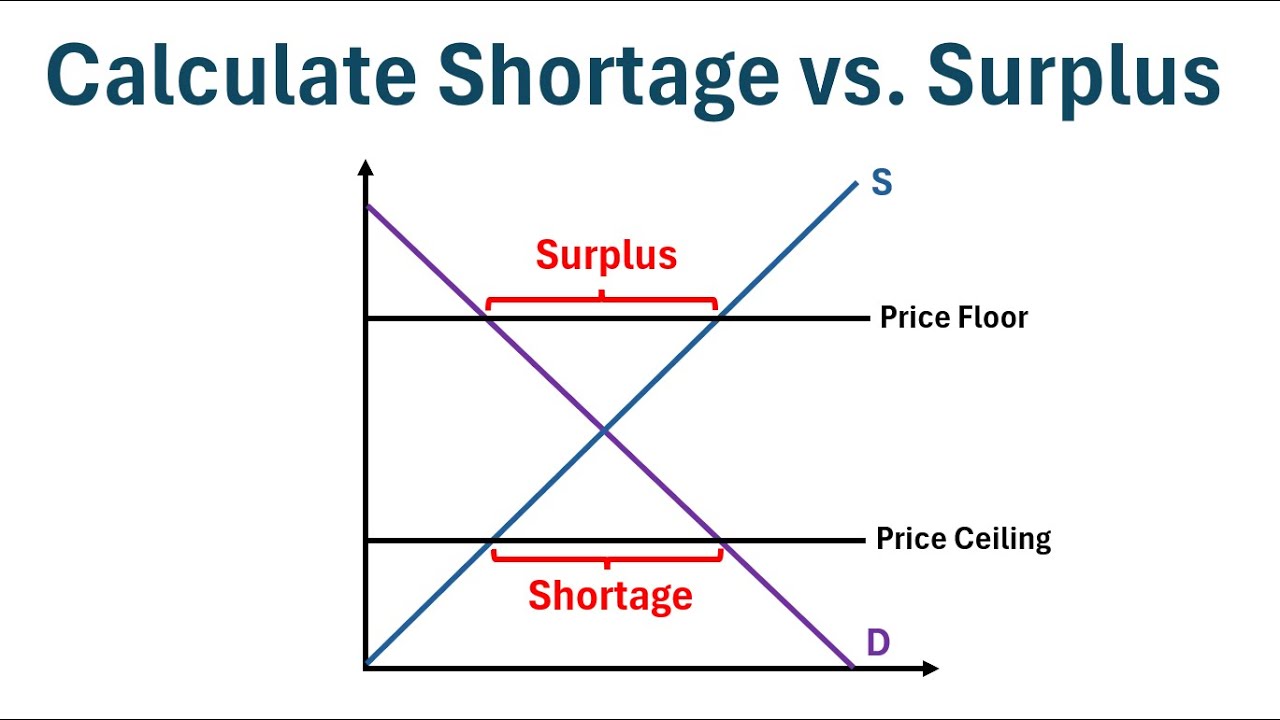
when there is a shortage…
producers raise prices
What does the Free Market system do to equilibrium?
automatically pushes the price towards equilibrium
What is the double shift rule?
if two curves shifts at the same time, EITHER price or quantity will be indeterminate (ambiguous)
What is the price ceiling?
is the maximum legal price a seller can change for a produce
Goal: make affordable by keeping price from reaching equilibrium
What is price floor?
is the minimum legal price a seller can sell a product
Goal: keep price by keeping price from falling to equilibrium