Federalist Era (Pre-APUSH Test)
 Call Kai
 Learn
 Practice Test
 Spaced Repetition
 Match
 Flashcards
 Knowt Play
1/24

There's no tags or description
Looks like no tags are added yet.
25 Terms
Election of 1789
-Washington unanimously won
-2nd highest vote (John Adams) became vice president
-Wash took oath on Apr 30, 1789
-Overwhelming win for Washington although Adams thought he was more qualified
Washington’s Presidental Cabinet
Department of State: Death with foreign affairs Thomas Jefferson
Department of War: Dealt with military matter Henry Knox
Department of Treasury: Dealt and managed the funds Alexander Hamilton
Attorney General: The chief lawyer Edmund Rudolph
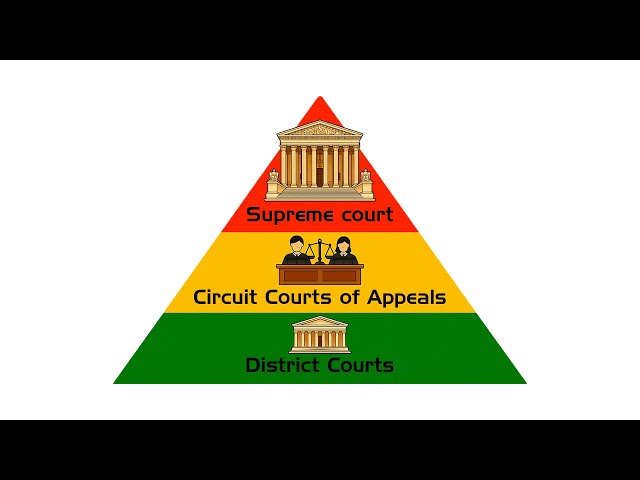
Judiciary Act of 1789
Rules and regulations for new national court system
1 Supreme court
1 Chief and 5 associate judges (rules on constitutionality of decisions from state courts)
3 Federal circuit courts of appeal
13 District courts
Political Parties
Federalists vs Democratic Republicans
Political Outlook on Humanity
Feds-no faith in opinion of men, political parties should be controlled by educated and wealthy
DRs-goodness of people, political parties controlled by the common people
Political Gov’t
Feds-strong federal gov’t and president in nations best interest, voting rights and ability to hold office limited to white land owning men, country over individual rights
DRs-weak federal govt with strong state’s rights were in nations best interest, all white men can vote and hold office, individual rights over nation’s rights
Political Views on National Bank
Feds-interpret the Constitution flexibly to change and grow the nation, in favor of national bank
DRs-interpret the Constitution strictly, hates the idea of a national bank
Political Views on Economy
Feds-trading/industrial was best for growth, tax certain things to ALL Americans
DRs-agricultural best for nation because of small farms, only tax businessmen and owners of large properties
Political Views on Nation Security+Foreign Policy
Feds-strong permanent army+navy to defend the homeland and overseas, laws exist within the country to prevent criticism and insults over presidents or other electors, be friends with Great Britain and hostile with France, but stay neutral in all Euro wars
DRs-feared strong military, rely on state+local militias, laws that interfere with freedom of speech or press are threat to our liberty, be friends with France, and hostile towards Great Britain, but stay neutral in all Euro wars
Hamilton’s Economic Plan (point 1)
-national gov’t assumes states equal and distributes debt evenly (upsets some states because their debt was paid off)
- war bonds helped the wealthy gain profits and the gov’t says they will pay all bonds back at the original price
-making the poor even poorer and the rich even richer

Hamilton’s Economic Plan (point 2)
-tariffs were taxes on imported good
-excise taxes were taxed on product or sale of certain items
-these taxes would make the gov’t more money while consumers pay more

Hamilton’s Economic Plan (point 3)
-create a national bank that would control funds, give loans, and control credit
-directors of the bank would be wealthy+private bankers (men have more influence in fiances of nation)
-bankers were mostly elitist men from the north
-this makes $$!!! all they care about
Opposition to Hamilton’s Economic Plan
-favored wealth northerners
-compromised by Hamilton promising the capital would move to the south, to give them more say, by 1800
-the plan cut the debt in half in 12 years, by 1800
Neutrality Proclamation
-Washington declares US is neutral in all foreign wars’
-only the president can decide if US goes to war
Native Americans and the British
Natives-Washington wanted the land the natives were in because of the Proc. of 1763 so he began treaty negotiations
-Creek natives were paid for their land and relocated
-Washington did this without consulting the Congress, proving a strong executive branch
British-Were occupying prior revolutionary fronts and supplying weapons to the natives
Whiskey Rebellion
-West resented the north because their interests were ignored
-Farmers rebelled Hamilton’s task on whiskey
-Farmers attacked tax collectors, burned barns, and talked of an independent nation
-Washington did not tolerate this, so he made a 15,000 man militia and ordered them to stop
-They scattered and we learn that a lesson can be taught without a drop of blood
Jay’s Treaty
-Great Britain was taking American ships and put American sailors in prison
-Means for war!
-John Jay was sent to Britain to negotiate
-Americans were then granted free trade with Britain due to the treaty, and the British abandoned their forts on prior revolutionary sites
-No war!! Negotiate instead
Pickney’s Treaty
-Spain was worried US and Britain would unite away from them
-Pickney was sent to debate and settled disputes of trade and borders
-This was means for war, but negotiation worked
Washington’s Farewell Address
-Philly newspaper
1)value of national unity
2)respect for rule of law and constitution
3)dangers of political partisanship and factions
4)foreign policy and neutrality
John Adams 1796
-top attorney in Boston
-defended British in massacre
-continental Congress member
-patriot leader (helped find the war)
-helped right Dec of Indp.
-diplomat in Europe
-key treaty of Paris negotiator
-primary officer of MA Constitution
-first US vice president
Gov’t Thought of Adams
-three branches/separation of powers
-two house legislation/bicameral congress
-rule of law over rule of men
-checks and balances against mob rule (mob from presidents)
Sectionalism
-voting for the candidate that is best for your region/section
-first seen in 1796 election
XYZ Affair
-French seized American ships, so Adams sent negotiators
-French demanded a bribe of $250,000 in order to negotiate
-Adams created the Department of Navy (5th cabinet position)
-They were on the brink of war for 2 years
-Adams never gave into the pressure, as everyone else wanted war (he knew we weren’t stable enough)
Alien and Sedition Acts
-immigrants must live in US for 14 years to become a citizen
-president alone can deport or jail any immigrant seen as “undesirable”
-larger fines for speaking or acting out against gov’t
-worst decision from Adams, violates checks and balances
-built to lessen influences from Democratic Republic (they represented the immigrant/lower class)
Virginia and Kentucky Acts
-Jefferson and Madison views of Alien and Sedition Acts were that it was a misuse of gov’t power
-Madison wrote a set of resolution in VA, Jefferson is KY
-Resolutions created a nullification (states can disregard any act of the national gov’t that was believed as unconstitutional)
-this already existed in the judicial branch
-declared the Alien and Sedition Acts a violation of the constitution, claiming VA and KY will not follow these laws
-the current vice pres was encouraging 2 states to disobey the laws of national gov’t!?