Physics (2)
 Call Kai
 Learn
 Practice Test
 Spaced Repetition
 Match
 Flashcards
 Knowt Play
1/21

Earn XP
Description and Tags
Graphing Motion
22 Terms
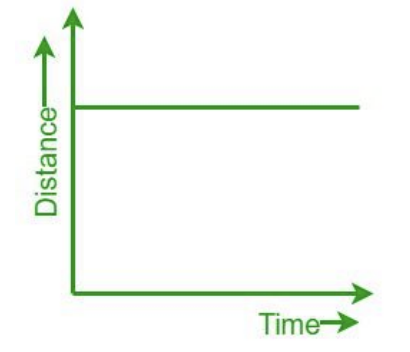
Motion graph
Stationary body

Motion graph
Uniform motion
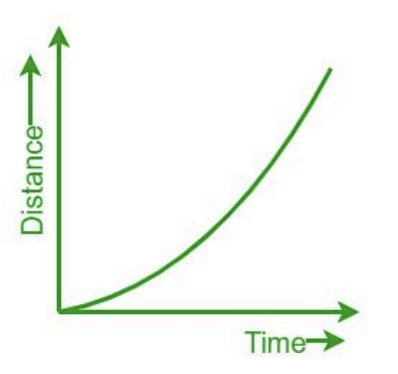
Motion graph
Non-uniform motion ( increase )

Motion graph
Non-uniform motion ( decrease )

Motion graph
Distance ( vertical ) vs Time ( horizontal )

Motion graph
Speed ( vertical ) vs Time ( horizontal )

Direction
North ( top ), South (bottom ), East ( right ), and South ( left )
Force
Vector quantity describing push / pull
Can change velocity / cause acceleration
Measured in N
Two types of force
Contact force ( Direct contact ), Non-contact force ( In-direct contact )
Newton’s first law
An object at rest / a moving object will remain that way unless acted upon by an unbalanced force
Newton’s second law
An object will accelerate in the direction of the force ( size of acceleration depends on the mass of an object and size of force )
Newton’s third law
For every action, there is an equal and opposite reaction
Weight
Force of gravity pulling down on an object
Normal force
Supporting force on an object in contact with the surface
Tension
A pulling force in flexible connections
Friction
Force between objects / surfaces that resist movement
Steps in a free body diagram
Identify contact forces, draw a dot for the object, draw a coordinate system, label contact forces, and label acceleration on the side
System of objects
An object / group to analyze, includes system of interest, weight, and direction of acceleration
When two masses are connected by a string over a pulley
a = ( m2 - m1 / m1 + m2 ) x g
Tension when hanging motionless
T = w = mg
Tension when vertically accelerating upward
T = m ( g + a )
Tension when vertically accelerating downward
T = m ( g - a )