m7 (1/infitinity never ends) - upper GI disorders
 Call Kai
 Learn
 Practice Test
 Spaced Repetition
 Match
 Flashcards
 Knowt Play
1/26

There's no tags or description
Looks like no tags are added yet.
27 Terms
GERD
gastroesophageal reflux disease
development of GERD
stomach contents come back into the esophagus due to the lower esophageal sphincter relaxing or gastroparesis
gastroparesis
slowed emptying of the stomach
clinical manifestations of GERD
heartburn, dyspepsia
dyspepsia
indigestion
frequent gastric reflux can cause _______
esophagitis
esophagitis
swelling and inflammatory irritation of the esophagus
conditions long-term esophagitis can lead to
fibrosis
precancerous lesions
factors increasing likelihood of gastroesophageal reflux
infancy
increased intra-abodminal pressure form obesity or pregnancy
certain foods
fatty foods
caffeine
alcohol
individuals with lupus have more problems with GERD because of…
connective tissue problems
peptic ulcer disease
breakdown in the mucosal lining of the lower esophagus, stomach, or duodenum
manifestations peptic ulcer disease lead to
epigastric pain
nausea
vomiting
hematemesis
complication of peptic ulcer disease where there is vomiting of blood (bright red or coffee ground)
melena
black foul-smelling stool
perforation in peptic ulcer disease
ulcer eroding a digestive organ’s wall and allowing contents to enter the peritoneum
penetration in peptic ulcer disease
ulcer erodes into another organ (ex/ liver)
gastic/duodenal outlet obstruction
components protecting the stomach from acid
bicarbonate
layer of mucous
describe the process of the body causing an ulcer
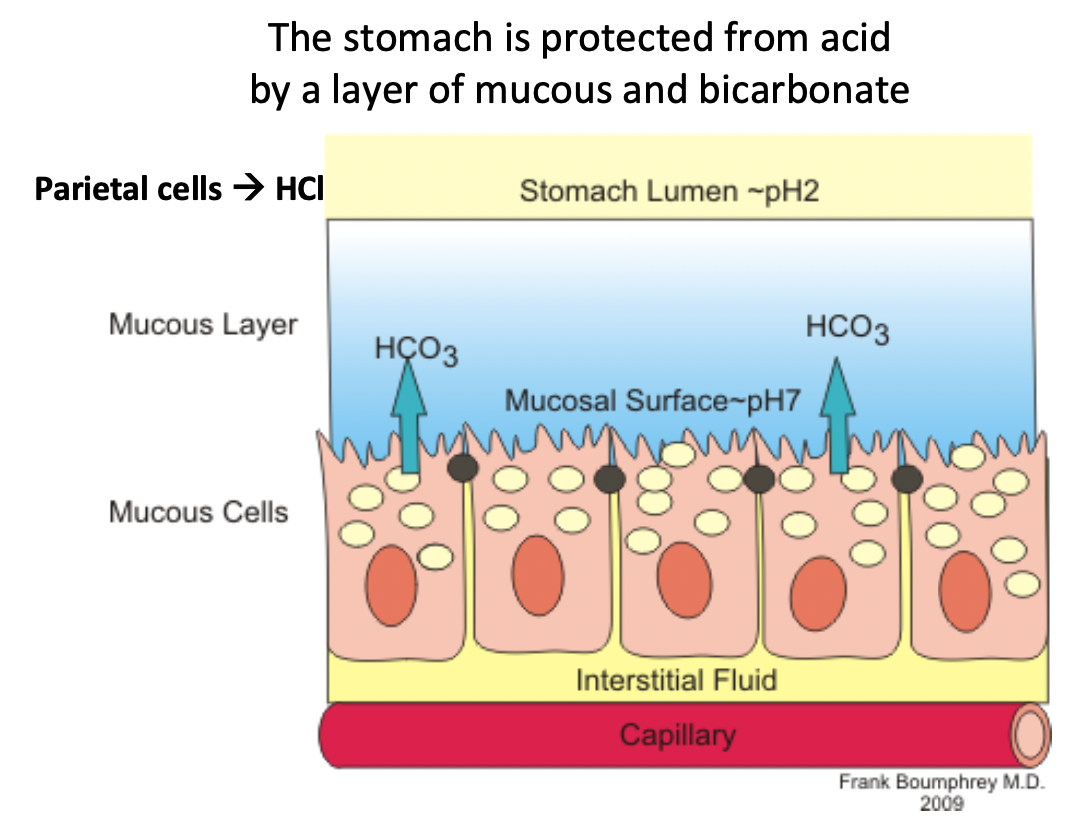
2 types of peptic ulcers
gastric
duodenal
ulcer type affecting older people (55-65)
gastric ulcer
gastric ulcers
common or uncommon
major causes
more uncommon than duodenal ulcers
causes:
h. pylori
chronic NSAID use
manifestations of gastric ulcers
frequent pain immediately after eating, and intermittent pain in the epigastric region
duodenal ulcer
common or uncommon
major causes
more common in younger people (males)
causes
H. pylori infection
chronic SNAID use
clinical manifestations of duodenal ulcers
pain after 2-3 hrs after eating
chronic intermittent pain in epigastric area
peptic ulcer treatment
eradicate H. pylori with antibiotics reducing acidity
antibiotic types that reduce acidity of peptic ulcers
antacids (calcium carbonate)
proton pump inhibitors
H2 receptor antagonists