Art 262 Cubism, Futurism, Dada, Surrealism & Abstraction Exam
 Call Kai
 Learn
 Practice Test
 Spaced Repetition
 Match
 Flashcards
 Knowt Play
1/56

There's no tags or description
Looks like no tags are added yet.
57 Terms
collage
An artwork made by attaching materials like newspaper, paper, or fabric to a surface.
cubism
An art movement that breaks objects into geometric shapes and shows multiple viewpoints.
futurism
An art movement that celebrates speed, movement, modern technology, and the future.
orphism
An art movement that emphasizes bright colors, rhythm, and abstract forms rather than realistic representation.
purism
An art movement that emphasizes simple shapes, order, and clarity.
Name the two co-founders of Cubism
Pablo Picasso and Georges Braque.
Who started Futurism?
Filippo Tommaso Marinetti
What is Primitivism and how did it impact Cubism?
Primitivism is the influence of non-Western art, especially African art. Its simplified forms and distorted figures influenced Picasso and the development of Cubism.
What is the artistic movement of Cubism truly trying to achieve?
Cubism attempts to show objects from multiple viewpoints at once rather than representing them from one realistic perspective.
What is the difference between Cubism and Orphism art movements?
Cubism breaks objects into geometric shapes and explores multiple viewpoints, while Orphism focuses more on color, rhythm, and abstraction.
What are the two types of Cubism and explain the difference between them?
Analytic Cubism: Breaks objects into small, fragmented shapes and uses muted colors.
Synthetic Cubism: Combines simpler shapes, brighter colors, and materials such as newspaper and paper through collage.
What are the three underpinning goals or philosophies to futurism?
Synesthesia and kinesthesia: Connecting the senses and expressing movement.
Modern technology: Using ideas from photography, cinema, and new technology to represent modern life.
Fascism and rejection of the past: Rejecting traditional culture and embracing modernity, including warfare.
By comparing Aleksandr Archipenko and Julio Gonzalez’s sculptures explain why the art of Gonzalez is considered more authentic to Cubism.
Gonzalez’s sculptures are considered more authentically Cubist because he used open space, metal, and abstract geometric forms to break away from solid, realistic figures. Archipenko also used Cubist ideas, but his sculptures often retained more recognizable human forms and solid volumes.
Les Demoiselles d’ Advignon 1907 Cubism Pablo Picasso

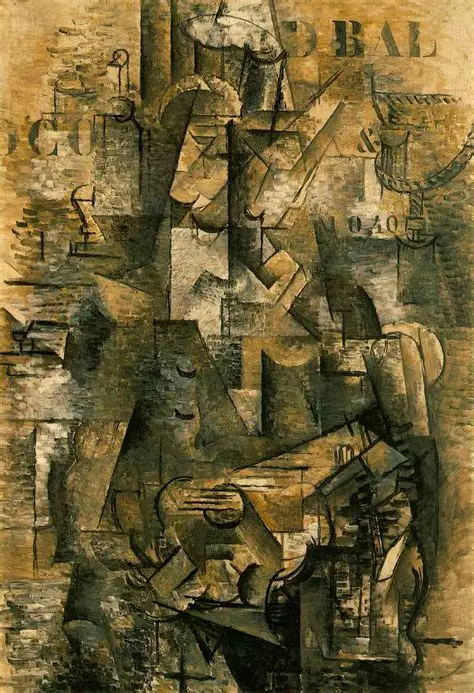
The Portuguese 1911 Cubism Georges Braque
The Red Tower 1911 Orphism Robert Delaunay

Still Life with Chair-Caning 1912 Cubism Pablo Picasso

Unique Forms of Continuity in Space 1913 Futurism Umberto Boccioni

Woman Combing Her Hair 1936 Cubism Julio Gonzalez

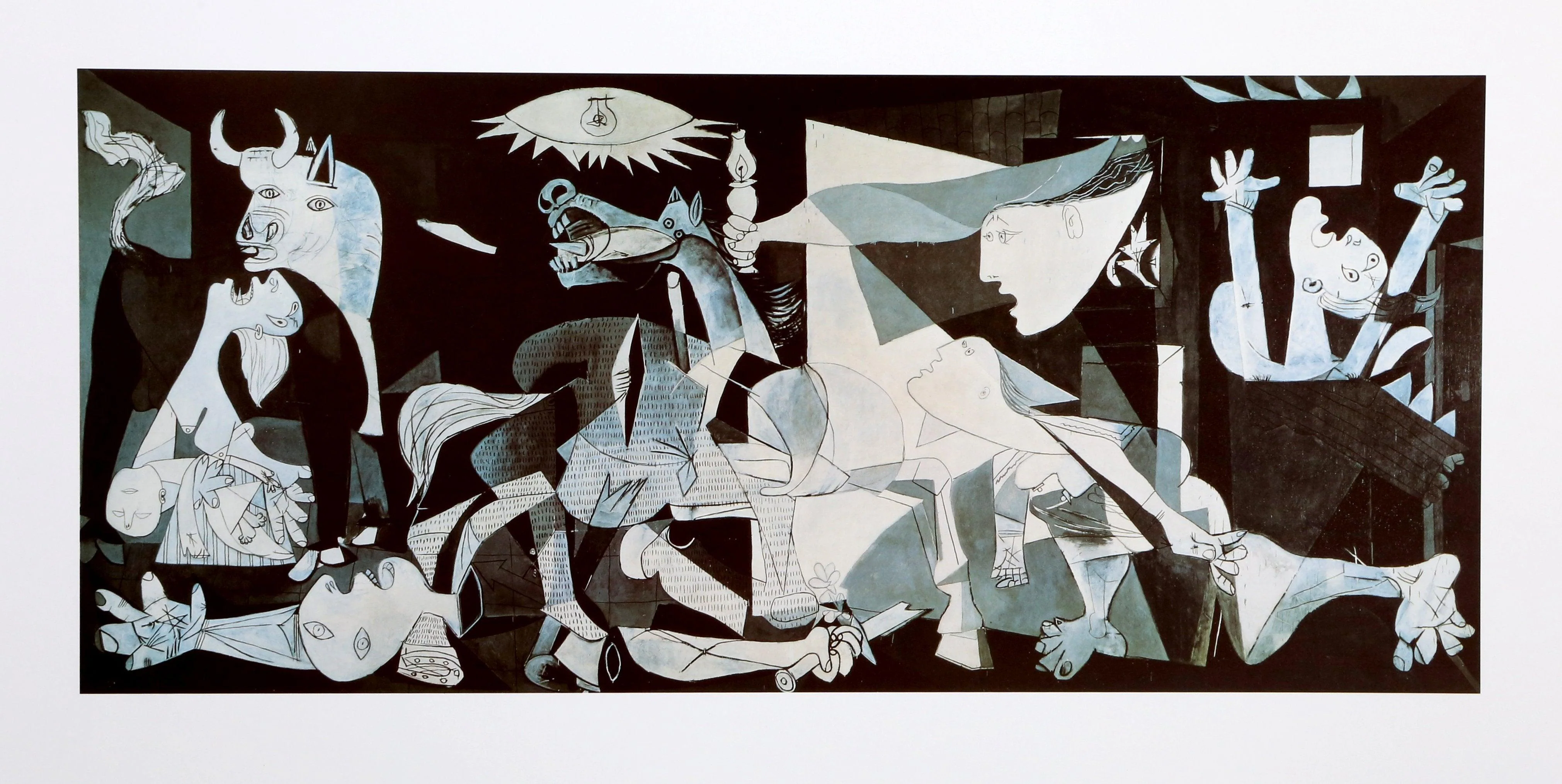
Guernica 1937 Cubism Pablo Picasso
automatism
An art technique where artists create spontaneously without conscious control, allowing thoughts from the subconscious to guide their work.
frottage
A technique developed by Max Ernst in which an artist rubs pencil or crayon over paper placed on a textured surface.
photomontage
An art technique that combines different photographs or pieces of photographs to create a new image.
Mobiles
Sculptures with balanced, moving parts that are often moved by air currents.
Constructivism
An art movement that used geometric shapes, modern materials, and construction techniques to explore space and movement.
Suprematism
An art movement founded by Kazimir Malevich that focused on basic geometric shapes and pure artistic feeling rather than recognizable objects.
How did World War I impact the Dada movement?
World War I led artists to reject traditional values and beliefs that they felt had contributed to the war. Dada artists used absurdity, nonsense, and unconventional art to protest society and challenge traditional ideas about art.
What specific theories of Sigmund Freud influenced Dada and Surrealism?
Freud's theories about the unconscious mind, dreams, and free association influenced artists to explore hidden thoughts and feelings through their artwork.
How was the term "Dada" chosen and what does it mean?
The term was randomly chosen by opening a dictionary. It is a French word for a hobbyhorse, but it was chosen because it had no specific meaning to the movement.
Who founded Surrealism?
Andre Breton.
How did Carl Jung influence Joan Miro?
Jung's ideas about the unconscious mind and symbols influenced Miró to use spontaneous, abstract forms that represented thoughts and images from the subconscious.
Name the two types of Surrealism.
Naturalistic Surrealism and Biomorphic Surrealism.
Why was the 1913 Armory Show so historically significant for art in the United States?
It introduced many Americans to modern European art and movements such as Cubism and Fauvism, changing how people viewed and understood modern art.
Who set up the Degenerate Art Show and why?
Adolf Hitler and Joseph Goebbels organized it in 1937 to condemn modern and avant-garde art that the Nazi regime considered unacceptable.
Who greatly influenced Henry Moore’s art style?
Pre-Columbian art, especially ancient Mexican sculpture, greatly influenced Moore's style.
What two artists started the magazine the Stijl?
Piet Mondrian and Theo van Doesburg.
Which artist started kinetic sculpture?
Alexander Calder, who developed the mobile.
Which artist was trying to gain respect for photography, so it would be equal to painting or sculpture?
Alfred Stieglitz.
Explain the artistic philosophy of Kazimir Malevich.
Malevich believed art should express pure feeling rather than represent recognizable objects. He used simple geometric shapes, such as squares and rectangles, to create non-objective art.
Explain the difference between Piet Mondrian’s philosophy of art and Vassily Kandinsky’s philosophy of art.
Mondrian believed art should express universal harmony through balance, geometric shapes, and primary colors. Kandinsky focused more on expressing emotions and spirituality through color, line, and abstract forms.
How was Brancusi’s art similar to Piet Mondrian and how was it different?
Both artists simplified their work to express the essential qualities of their subjects rather than realistic appearances. However, Mondrian used flat geometric shapes and lines, while Brancusi created three-dimensional sculptures with smooth, organic forms.
Henry Moore’s Reclining Female sculptures was inspired by what?
They were inspired by the human body and natural forms, especially landscapes and organic shapes.
Collage Arranged According to the Laws of Chance 1916-1917 Dada Jean Arp

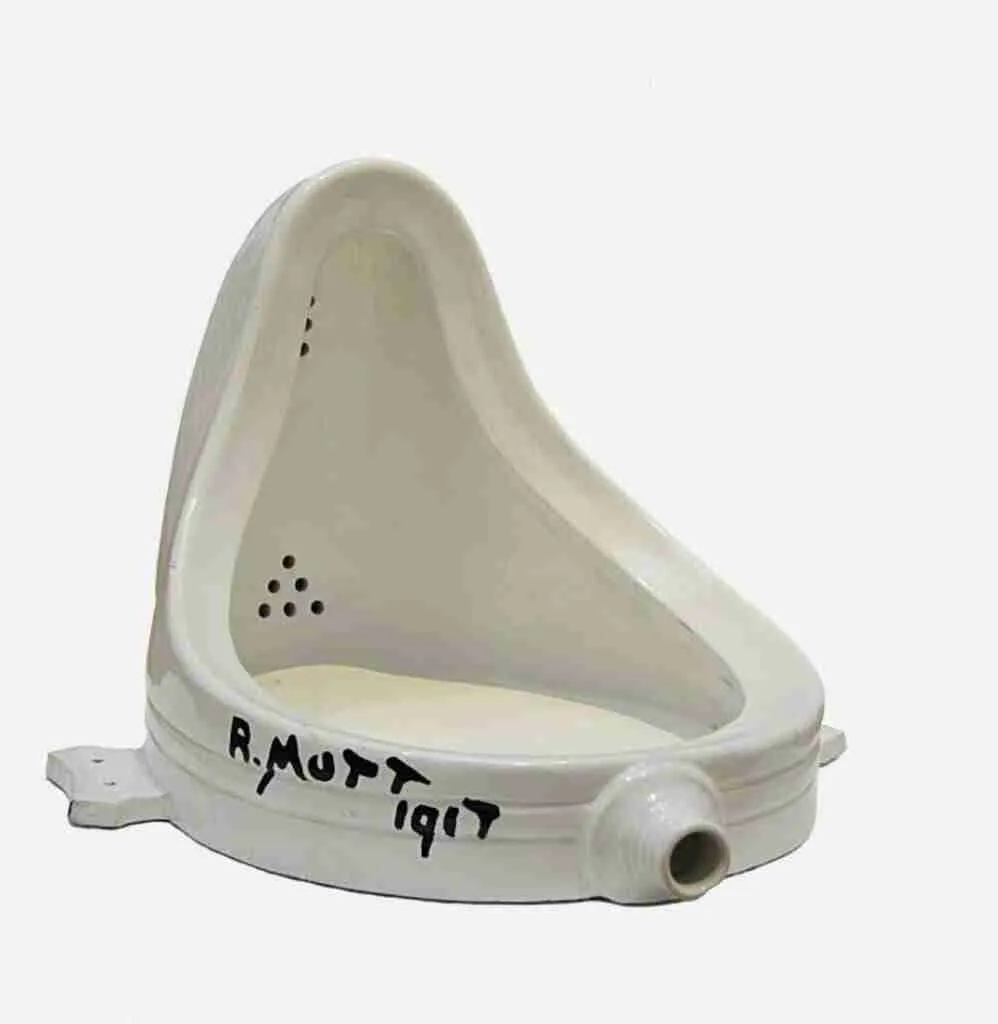
Fountain 1917 Dada Marcel Duchamp
Twittering Machine 1922 Surrealism Paul Klee

Two Children Are Threatened by a Nightingale 1924 Surrealism Max Ernst

The Treachery of Images 1928-1929 Surrealism Rene Magritte

The Persistence of Memory 1931 Surrealism Salvador Dali

Painting 1933 Surrealism Joan Miro

Cadeau 1958 Dada Man Ray

Suprematist Composition: Airplane Flying 1915 Suprematism Kazimir Malevich

Column 1923 Constructivism Naum Gabo

Nude 1925 Abstraction Edward Weston

Bird in Space 1928 Abstraction Constantin Brancusi

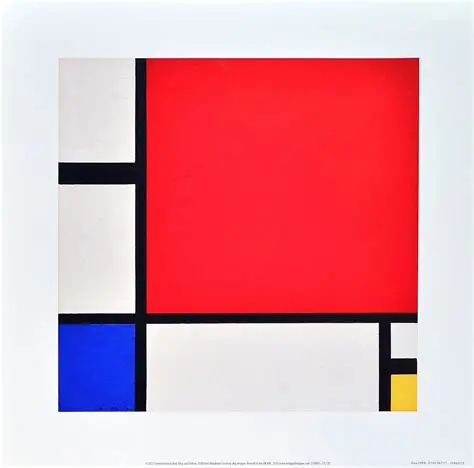
Composition with Red, Blue, and Yellow 1930 Abstraction Piet Mondrian
Reclining Figure 1939 Abstraction Henry Moore

Oval Sculpture (No.2) 1943 Abstraction Barbara Hepworth
