Oxidation and reduction reactions in metabolism
0.0(0)
Studied by 0 people Call Kai
 Learn
 Practice Test
 Spaced Repetition
 Match
 Flashcards
 Knowt Play
Card Sorting
1/6

There's no tags or description
Looks like no tags are added yet.
7 Terms
1
New cards
Oxidation of glucose
O2 is the terminal electron acceptor
O2 is in the oxidized form and becomes reduced
O2 is strong oxidizer H2O is the reduced form of O2

2
New cards
NADH and NADPH structure
dinucleotides with a nicotinamide ring
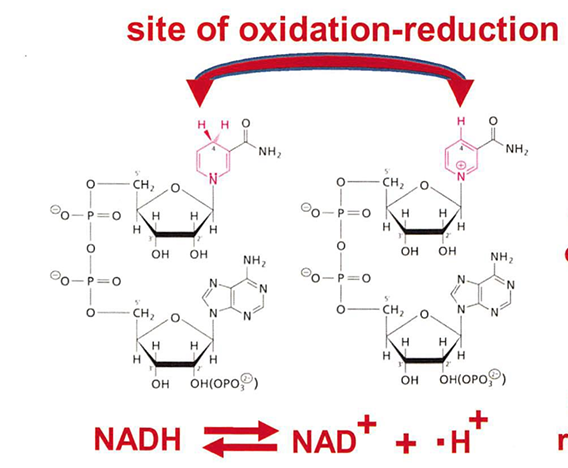
3
New cards
NADH
2e- transfers
Typically catabolic
oxidation reactions
4
New cards
NADPH
2e- transfers
typically anabolic
reduction reactions
5
New cards
reduced molecules and free energy
more reduced sub stances, when they are oxidized, produce a larger free energy change
6
New cards
When K<1
More reactants than products
7
New cards
Adenylate Energy Charge
If all of the adenylate is ATP, energy charge = 1
If all of the adenylate is AMP, energy charge = 0
Energy charge is typically ~0.93
