Pre-Engineered Materials, Structures, Wall and Skylight Construction
 Call Kai
 Learn
 Practice Test
 Spaced Repetition
 Match
 Flashcards
 Knowt Play
1/74

Earn XP
Description and Tags
"And we know that in all things God works for the good of those who love him, who have been called according to his purpose." - Romans 8:28
75 Terms
Engineered Wood
Wood boards manufactured from hardwoods and softwoods mixed with additives like adhesives, often utilizing sawmill waste treated through chemical or heat processes to meet size requirements rare in nature.
1. LAMINATED VENEER LUMBER
2. LAMINATED STRAND LUMBER
3. ORIENTED STRAND BOARD
4. PLYWOOD
5. MEDIUM DENSITY FIBERBOARD (MDF)
6. CROSS LAMINATED TIMBER
Popular Types of Engineered Wood
Laminated Veneer Lumber (LVL)
A high-density engineered wood product used in framing, made of wood veneers compressed together with resins and glues, with grain stacked in the same direction, providing a single strength axis.

Laminated Strand Lumber (LSL)
A high-density engineered wood product composed of about 95% wood fiber and 5% resin, made from small wood strands placed in a dense, angled pattern to resist weight and torsion.

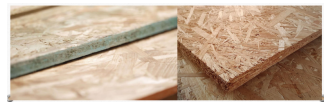
Oriented Strand Board (OSB)
A sheet wood product formed by combining wood strands or flakes with adhesives and compressing them into wide mats, used in load-bearing applications like flooring and roof decking.
Plywood
A sheet wood manufactured from thin veneer layers glued together with adjacent grain at right angles, providing cross-graining dimensional stability and consistent strength in all directions.
A
This is the highest quality plywood with a smooth surface free of knots and repairs.
B
This grade is largely free of knots, though some tight ones (under 1 inch) are acceptable
C
• may include knots up to 1.5 inches and knotholes under 1 inch.
D
The lowest grade can have knots and knotholes up to 2.5 inches. In general, any defects have not been repaired with D grade plywood.
X
An X is used to indicate exterior plywoods. A grade of CDX would mean a plywood is C grade on one veneer, D on the other, and designed for outdoor use.
Rotary Cutting
A process where a log is mounted in a lathe and rotated against a stationary knife to peel off wood veneer in a continuous sheet.
CDX Plywood
An exterior-grade plywood panel having a C-grade face veneer, a D-grade back veneer, and an "X" designation indicating suitability for outdoor exposure.
Medium Density Fiberboard (MDF)
A panel product made by breaking down hardwood and softwood into fibers, blending them with wax and resin binders, and pressing them under high temperature and pressure.

Cross Laminated Timber (CLT)
A wood panel product made by gluing solid sawn lumber layers together, with each consecutive layer placed perpendicular to the last on their wide faces to provide structural flexibility and thermal insulation.
Wood Composite
An engineered mixture combining wood particles, fibers, and binders with materials such as plastics or straw, frequently finished with a decorative surface veneer. It is also known as engineered wood.
Wood Plastic Composite (WPC)
A panel or lumber material manufactured by compounding recycled plastics with fine wood particles or fibers.
Composite Decking
also referred to as wood-plastic composite (WPC) decking, is gaining popularity as it conserves natural wood and is environmentally friendly.
Solid Composite Decking
Heavy, durable composite boards commonly used for permanent flooring applications including residential pathways, offices, hotels, and swimming pool decks.
Hollow Composite Decking
or blank composite boards are lightweight decking materials often used for installing cables, cladding, siding, etc. They are less resistant to impacts. They require caps or fascia boards on their edges.
Capped Composite Decking
consists of a core and a cap. The core is made from organic wood filler and recycled plastic material, while the cap is made from a synthetic material to increase the resistance to stain, scratch, and discoloration.
Capped composite boards are used for garden areas, swimming pool decks, outdoor pathways, etc., for areas exposed to extreme wear and tear or weather conditions.
Building Boards
are a group of building materials often faced with paper or vinyl, suitable for use as a finished surface on walls, ceiling, etc. Building boards are flat, relatively thin in section, and have been made to standard sizes – usually 4 x 8 feet.
1. Plywood
2. Hardwood
3. Insulating fiberboard
4. Chipboard
5. Particle board
6. Gypsum board
7. Strawboard
8. Asbestos-cement board
9. Corkboard
10. Paperboard
11. Mineral fiberboard
12. Plastic foamboards
Kinds of Building Boards
Hardboard
is made from processed wood chips. They are uniform, hard, grainless sheets, smooth and with overlaps. They are used in interior panels and durable sidings.
Unlike solid wood, hardboard is very homogenous with no grain. A wood veneer can be glued onto it to give the appearance of solid wood. Other overlays include Formica, laminated papers, ceramics, and vinyls.

Formica Laminate
is a laminated composite material invented at the Westinghouse Electric Corporation in the United States in 1912. Originally used to replace mica in electrical applications, it has since been manufactured for multiple applications. It has been produced by Formica Group manufacturing sites across the globe since. Formica Group is best known for the company's classic product: a heat-resistant, wipe-clean laminate of paper with melamine resin.
Standard
(Grades of Hardboard)
– light, flexible to be quite easily bent, light brown in color and not suitable for exterior work

Tempered Hardboard
brittle and stiff but resistant to water penetration, dark brown in color, ideal for exterior use.
Low density
not as strong and durable as standard and tempered, for decorative boards and often used as blackboards.
Insulating Fiberboard
A low-density board composed of wood, sugar cane, or asbestos fibers bonded together, produced in insulating grades and asphalt-coated sheathing grades.
Insulating grade
made up for insulating, decorative panels and ceiling tiles, V-notch plaster base, and roof insulation
Sheathing Grade
surfaces and edges are coated with asphalt and/or with fibers impregnated with asphalt during manufacture.
Wood fibers
produced by pressing logs against a grindstone which breaks down the wood into fibers.
Mineral fiberboard
made from asbestos mixed with cementing agent ideal for fireproofing and acoustical purposes.
Cane fiberboard
shredded cane and processed into fibers
Chipboard
A panel product made from compressed wood particles bound with phenolic resin or urea formaldehyde glue, available in plain or patterned grooved surfaces.
Plain
● may be unsanded, sanded on one side only, or sanded on two sides
Patterned
have one grooved surface either evenly or random
Particle Board
A particle board is a hardboard made from relatively small particles, graduated from coarse at the center of the board, to fine at the surface to produce a product with a smooth dense surface.
The particle board is also called a chipboard.

Gypsum Board
is a panel made from gypsum plaster pressed between two thick sheets of paper. It is used to make interior walls and ceilings.
Variations:
● Special paper face where a variety of wood patterns can be printed and can be nailed with colored nails.
● Glue laminated to an interior surface to produce a wood-grain effect.
● Vinyl sheet faced made to imitate a textile surface held by glue, aluminum, or plastic moldings.
Strawboard
is hardboard made of compressed wheat straw, processed at 350°F - 400°F with tough Kraft paper.
is a kind of Envirowall panel made of 100% waste straw.
Structural bond
Grades of Strawboard:
– used for non-bearing partitions, plaster base, insulating purposes, exterior sheathing, roof decking, and inner form face for concrete basement wall.
Insulation grade
Grades of Strawboard:
– intended primarily for roof deck insulation.
Asbestos Cement Board
is a dense, rigid board containing a high proportion of asbestos fibers bonded with Portland cement. Resistant to fire, flame and weathering, and has low resistance to heat flow. It is used as building material in sheet form and corrugated sheeting. All types must be drilled for insertion of screws, bolts, and other fasteners.
Corkboard
is made from the outer bark of the cork oak tree, cork granules are mixed with synthetic resin, compressed and formed into sheet from 1-6 inches thick, and baked under pressure into rigid boards. Used exclusively as thermal insulating material and for vibration control.
Paperboard
is paper pulp pressed into boards 3/16” or 1⁄4” thick wide, and 4’ wide, and 6’-8’ long. Usually one surface is primed for easier finishing.
It can also be a layer of stiff paper folded on corrugated form and faced on both sides with thick paper backing, cemented to the core.

Mineral Fiberboard
is a thick mat of mineral fibers (glass with rock wool) covered with a backing of stiff paper on one or both sides to form rigid boards, ranging in thickness from 1⁄2 to 2 inches.
The usual boardsizeis24”x48”andareusedforroof deck insulation andarecementedtothedeckwith asphalt adhesive.
Plastic Foam Boards
are usually polystyrene and polyurethane plastics formed by a patented process to about 40 times their original volume.
This foamed material is molded into boards from 1⁄2 - 3” thick, 12” or 24” wide and from 4ft to 12 ft long.
are used for perimeter insulation for concrete slabs, for wall and roof-deck insulation, and for roof decks when properly supported.
These plastic boards have high insulation value and relatively high compressive strength, and are flexible enough to fit over curved surfaces.

Pre-Engineered Building (PEB)
is a metal building enclosure system that often involves a structural framework and also involves roofing and wall cladding and is built and
assembled in the factory premises
wall panel
● A ________________ is usually installed on exterior non-load-bearing walls and is usually flat and rectangular in shape.
● They are the visible and exposed covering for a wall that either hangs (by support frames) or rests on the structure.
Wall Panel
Eave Strut
Thermal Block
Girt
Blanket insulation
PARTS OF A WALL PANEL SYSTEM
Eave Strut
A secondary steel structural member located at the eave junction between the roof system and the wall panels to provide structural support.
Thermal Block
A high-density rigid polyurethane foam insulating spacer installed within wall assemblies to interrupt conductive thermal paths.
Girt
A horizontal secondary steel framing member attached to columns that provides lateral support to exterior wall panels against wind loads.
Blanket Insulation
widely used type of insulation; A flexible insulation product made of interwoven glass mineral fibers used to provide thermal and sound insulation within wall panel assemblies.
1. Decoration
2. Insulation
3. Soundproofing
4. Uniform appearance
5. Durability
6. Ease of replaceability
FUNCTIONS OF A WALL PANEL SYSTEM
1. FLAT TYPE WALL PANEL SYSTEM
2. RIBBED WALL PANEL SYSTEM
3. METAL CLADDING / METAL WALL PANEL SYSTEM
WALL PANEL SYSTEMS
Flat Type Wall Panel System
An exterior wall cladding system that provides a smooth, fluted, seamless appearance using concealed fasteners without visible exterior hardware.
SHIPLAP WALL
GROOVE WALL
TWO KINDS OF FLAT TYPE WALL PANEL SYSTEM
Shiplap Wall Panel
• gives clean visual lines
• able to run both vertically & horizontally
• Have variety of “reveals” (gaps)
V-Groove Wall Panel
• appears like wood or vinyl plank siding
• gives texture and depth at space
• available in wide range of width
Ribbed Wall Panel System
● has ribs with sloping sides.
● It forms trapezoidal-shaped voids at the side lap.
● The way the panel’s profile is raised provides much of its bending strength.
● The ribs on these panels create strong bold lines that are aesthetically pleasing and offer a unique approach to traditional metal panels.
1. SINGLE SKIN
2. METAL COMPOSITE MATERIAL PANELS (MCM)
3. INSULATED METAL PANELS (IMP)
METAL CLADDING / METAL WALL PANEL SYSTEM
Single Skin Metal Panel
An uninsulated, roll-formed exterior metal cladding sheet that is 100% recyclable, lightweight, and accommodates thermal expansion and contraction more readily than composite panels.
Metal Composite Material (MCM) Panels
Exterior cladding panels formed by bonding two thin sheets of metal (such as aluminum, steel, zinc, or copper) to a solid polyethylene core.


Insulated Metal Panels (IMP)
Factory-assembled wall cladding panels featuring a rigid insulating foam core permanently bonded between two protective metal skins.
Curtain Wall
A self-supporting, non-load-bearing glazed wall system suspended from floor slabs using structural anchors, installed outside the slab edge to span multiple stories.

Unit System (Curtain Wall)
A curtain wall system composed entirely of preassembled, framed wall panels that can be preglazed in a factory or glazed after installation.

Stick System (Curtain Wall)
A curtain wall system where individual tubular metal mullions and rails are assembled piece-by-piece on-site to frame vision glass and spandrel glass.
Spandrel Glass
An opaque glass unit used to conceal floor edges, columns, and mechanical services in curtain wall construction, made by fusing ceramic frit to tempered or heat-strengthened glass.

Column-Cover-and-Spandrel System
A curtain wall configuration where vision glass assemblies and spandrel units are supported by horizontal spandrel beams positioned between exterior columns covered by clad sections.

Unit-and-Mullion System
A curtain wall system in which one- or two-story vertical mullions are installed first before preassembled framed wall units are lowered into place behind them.
Window Wall
A non-load-bearing glazing system installed between floor slabs, anchored at the sill and head within the slab edge, typically spanning up to 12 feet floor-to-floor.
Slab Bypass Cover
An exterior trim element placed over exposed floor slab edges between adjacent window walls to provide the appearance of a continuous curtain wall facade.
Unitized Curtain System
A high-performance curtain wall system comprised of large factory-glazed framing units that are transported to the site and hoisted directly onto building anchors.

Rainscreen Wall System
An exterior wall assembly comprising an outer cladding placed away from a water-resistant barrier to form a ventilated and drained air cavity open at the top and bottom.