Money Market
 Call Kai
 Learn
 Practice Test
 Spaced Repetition
 Match
 Flashcards
 Knowt Play
1/30

There's no tags or description
Looks like no tags are added yet.
31 Terms
Northern Rock’s Liabilities
• About 25% deposits, 75% wholesale funding, >300% loan to deposit ratio
• Fifth-largest UK mortgage lender. Mortgage book grew from ~£15bn to >£100bn in nine years.
• It did not wait for deposits. It originated mortgages, packaged them, and rolled short-term wholesale funding to bridge the gap.
• Solvent. Good collateral. Profitable the week before it failed
14 September 2007
Northern Rock is solvent and holds good collateral. Why will nobody lend to it overnight?
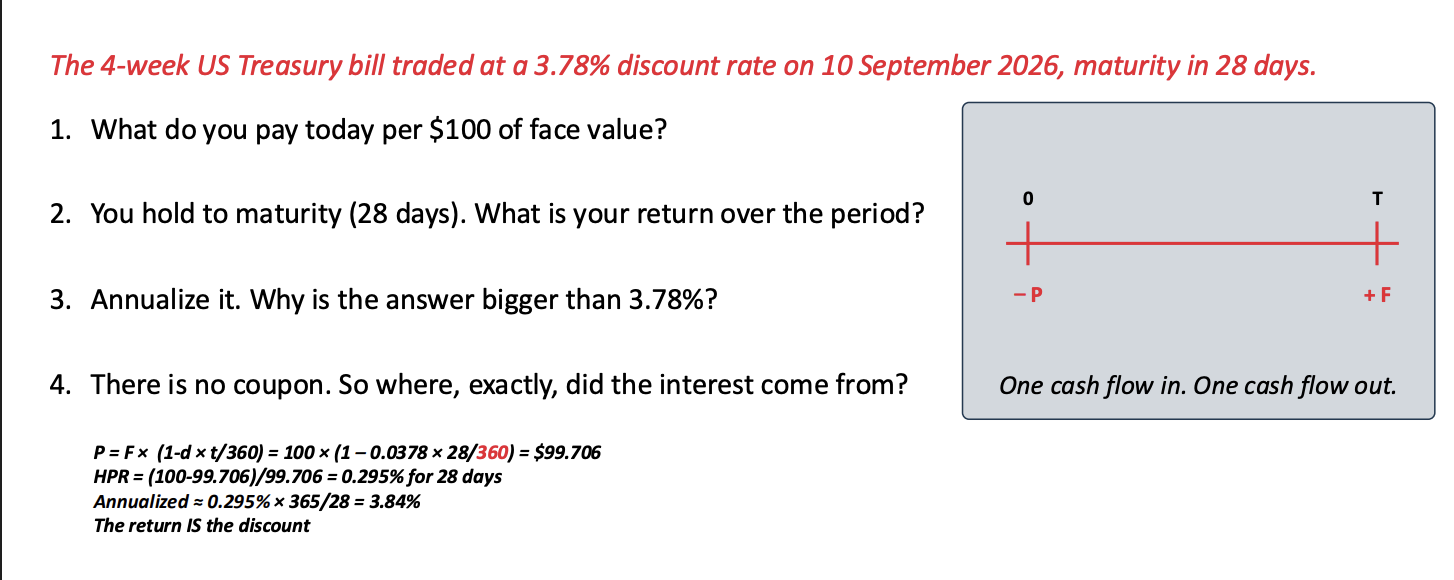
Price a Bill
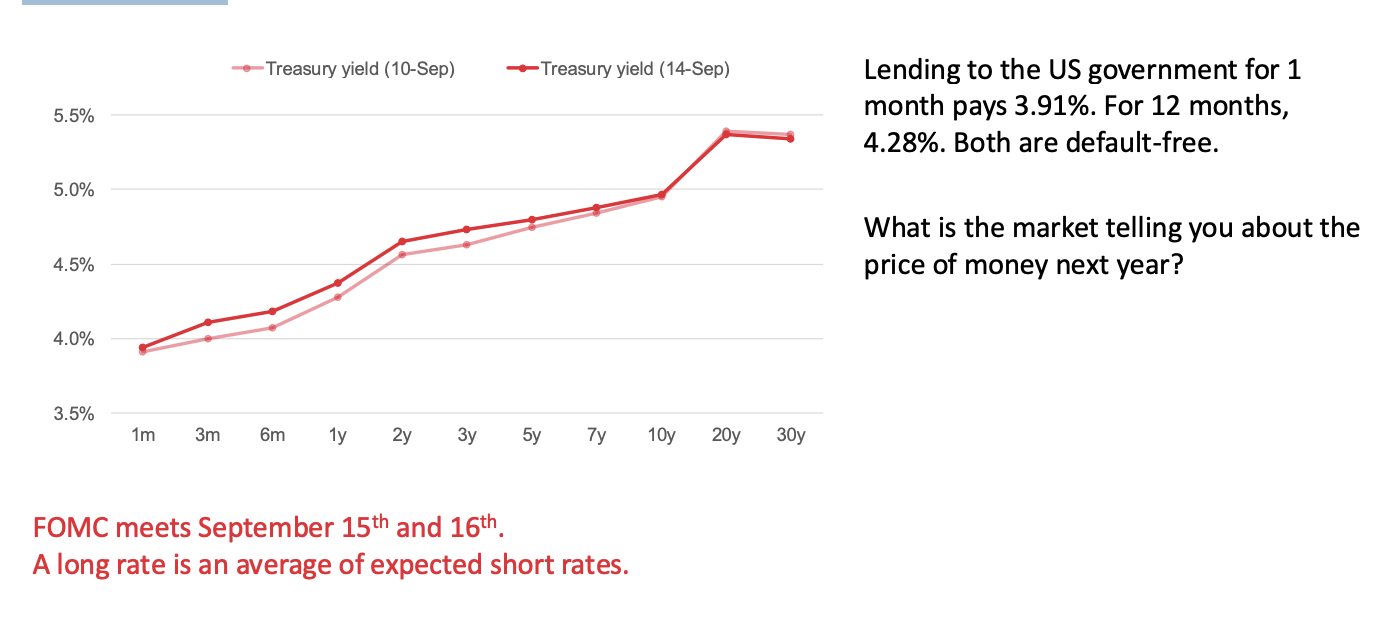
The curve
The money market
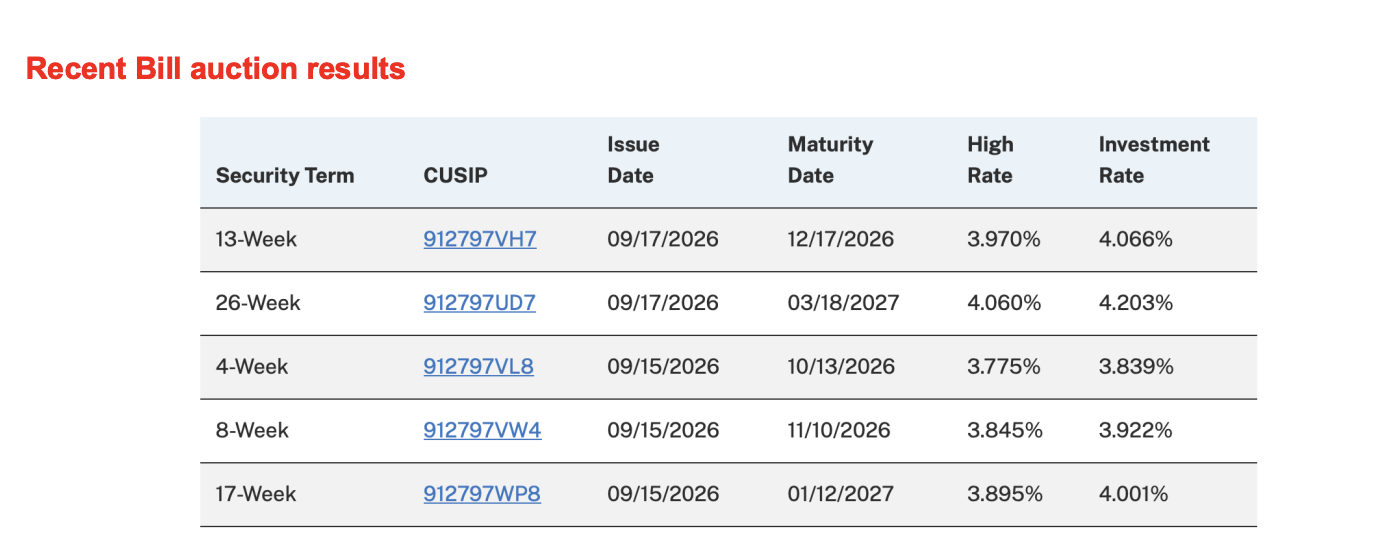
What is a money market instrument?
Features
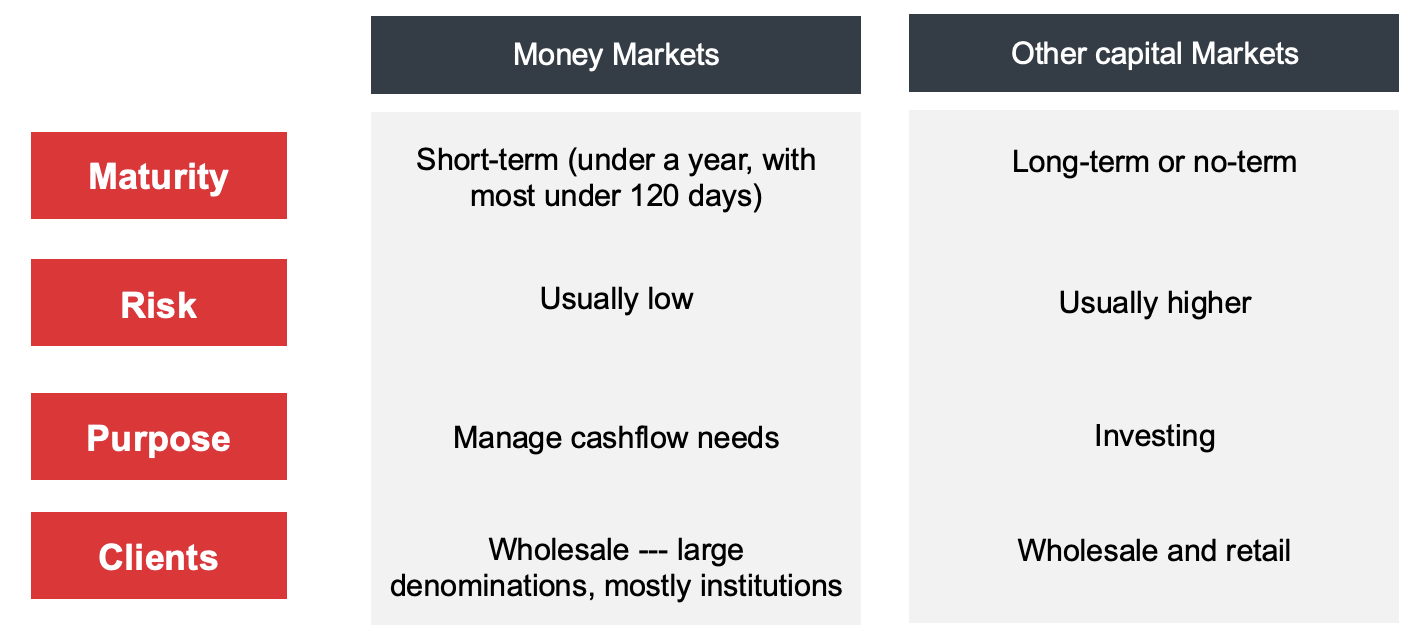
• Original maturity under one year — most under 120 days
• Low default risk
• Sold in large denominations: this is a wholesale market
• Deep secondary markets — you can exit in seconds
Purpose
• Bridge the gap between cash inflows and outflows
• Park cash at a better rate than a deposit, without locking it up
They are highly liquid

What’s the difference with other capital markets?
October 1979
You have $100,000 in a savings account
• Your bank is legally forbidden from paying you more than about 5.25%. That is Regulation Q, and every bank faces it.
• 3-month Treasury bills are yielding above 11%.
• The minimum purchase at a Treasury auction is $10,000.
• You are one of roughly 80 million American households.
Questions
• What do you do with the $100,000?
• Your neighbour has $3,000, not $100,000. What can she do?
• You have spotted a problem that 80 million households share. What business do you start on Monday morning?
Someone started it. In 1971 Bruce Bent and Henry Brown launched the first money market fund: it buys bills wholesale and sells you a share priced at $1.00.
When a regulation binds, the function migrates
1971 — first money market fund. It looks like a deposit, pays like a bill, and is not a bank.
1970s — bill yields run far above the ceiling. Money pours out of banks. This is disintermediation, and it nearly ends the savings-and-loan industry.
1980–1986 — Congress gives up and phases Regulation Q out. The ceiling is gone.
The funds do not go away. They keep growing for another forty years.
The regulated activity did not stop. It moved to where the regulation was not and it stayed there

Why is Microsoft lending money (FY2024)?
• Why is it lending $4.7bn to other corporations at up to 270 days?
• Why not simply leave money in a bank account?
• Who issued that commercial paper, and what did they need the cash for this month?
• What happens to all of them on the day nobody wants to buy commercial paper?
Every participant in this market is here for the same reason: timing.
Cash arrives and leaves on different dates, and a deposit is a bad place to wait.
Firms can be on both sides of the market
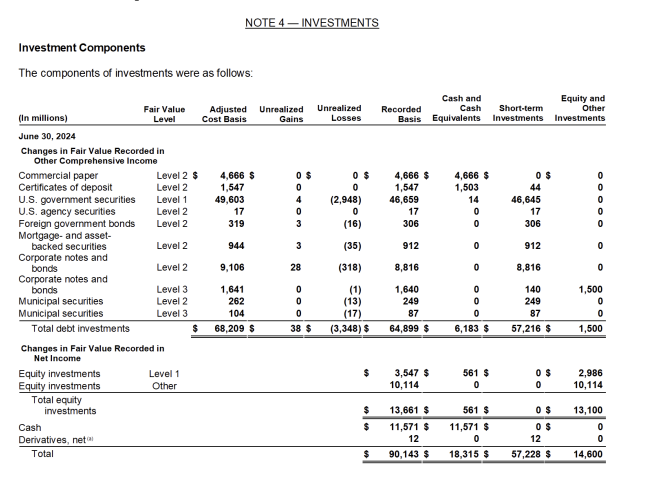
The borrower's side: why bypass the bank at all?
• A large corporation that can issue commercial paper borrows at c. 3.00%.
• The same corporation borrowing from its bank pays prime, 6.75%.
• That is a spread of roughly 295 basis points — on borrowing that may run to billions. Who is likely left borrowing at the prime rate?
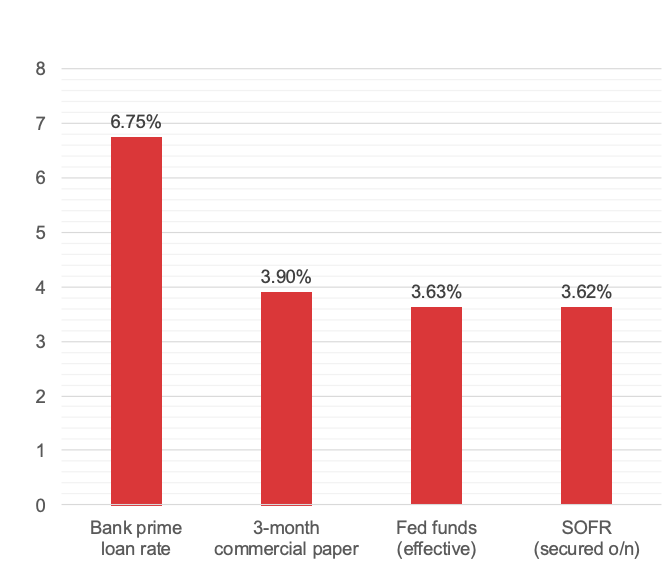
The money market - Lender’s perspective
Money market in the US
Lender’s perspective
• More attractive rates than deposits at the time
• Until 1986: US banks faced interest rate ceiling…

The money market - Borrower’s perspective
• Cheaper than bank loan
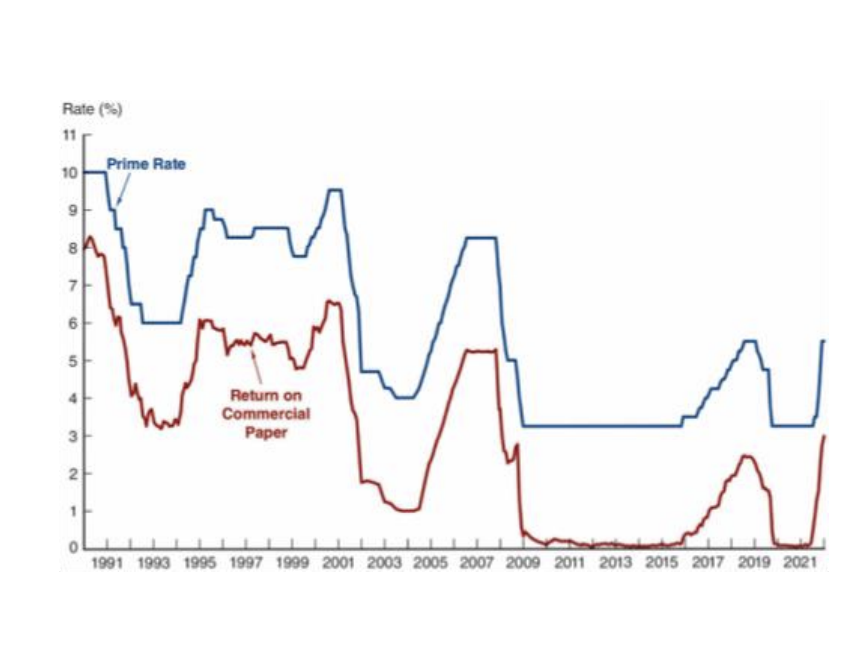
The money market - the spread decline
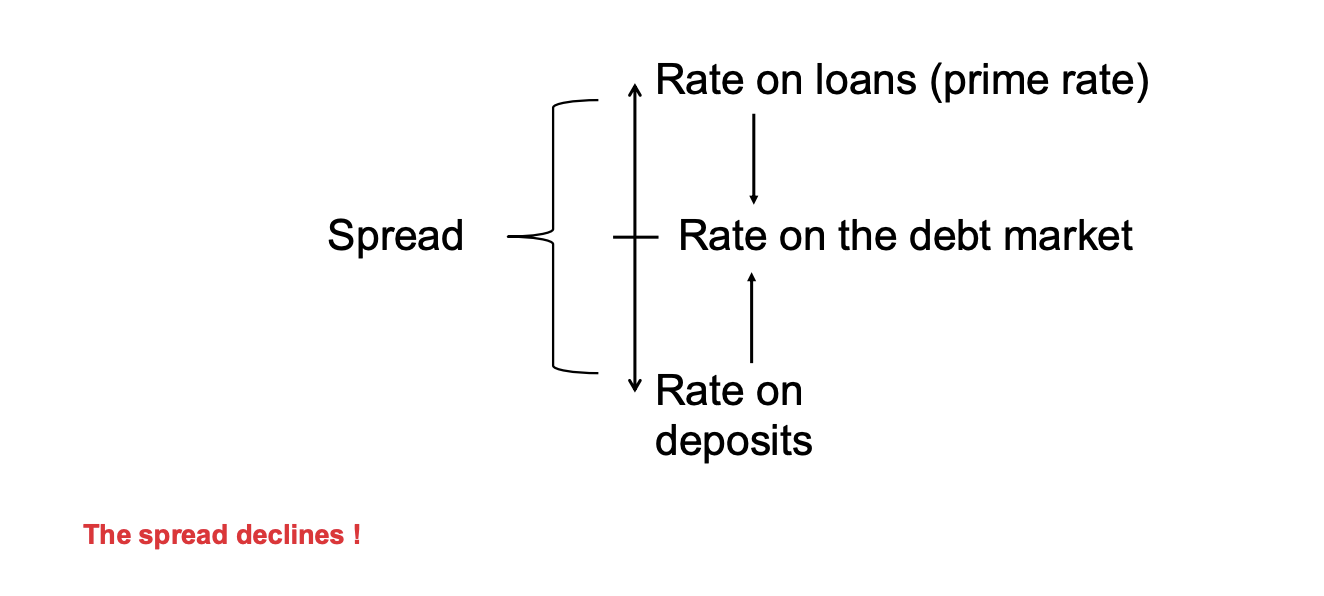
Instruments and market size
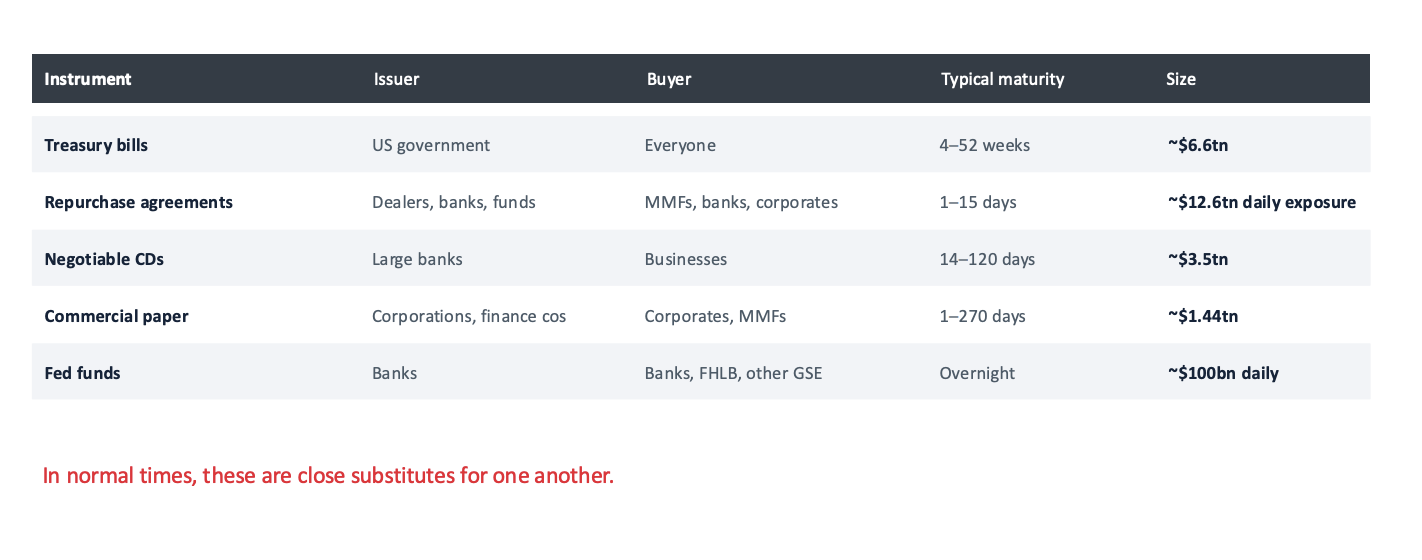
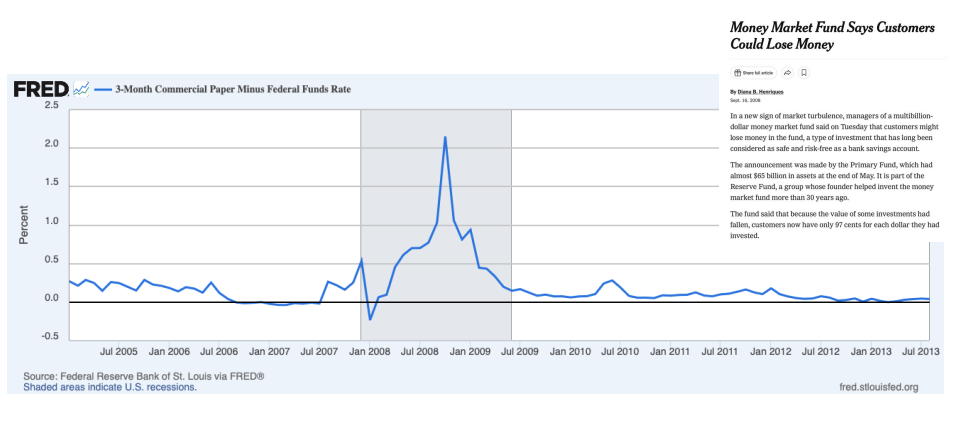
3-month commercial paper minus FFR, 2007–2009
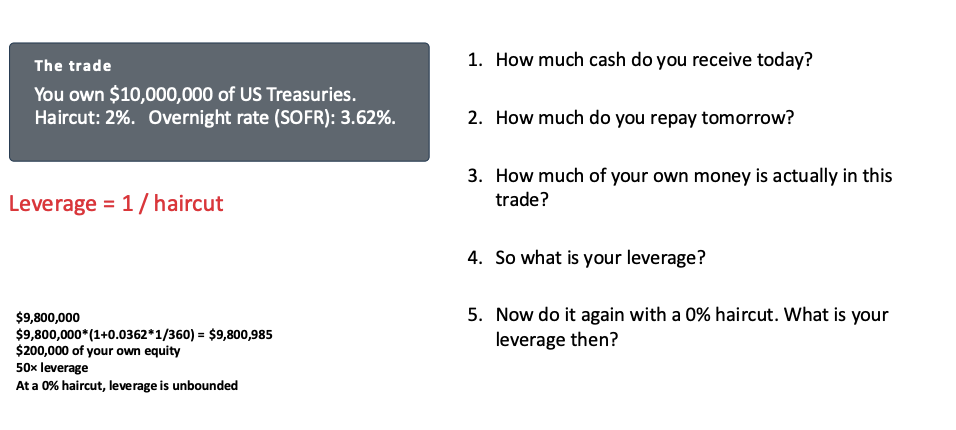
Repos

Repo maths
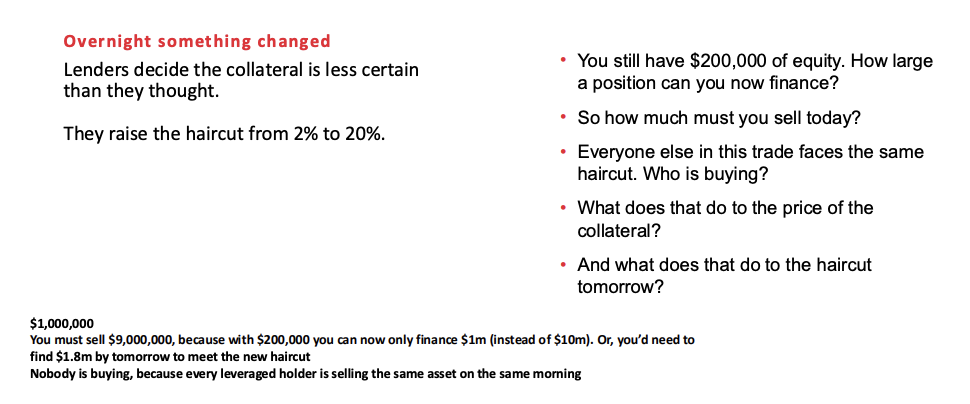
Now run it backwards
A legal fiction

The market today
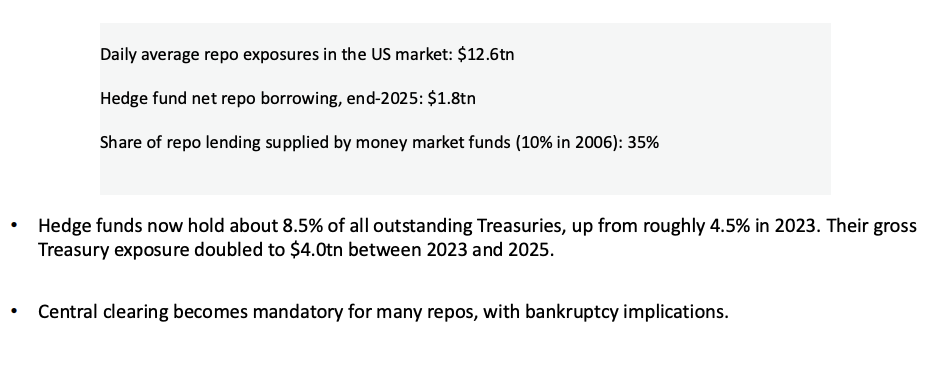
SOFR spike - graphs

SOFR spike

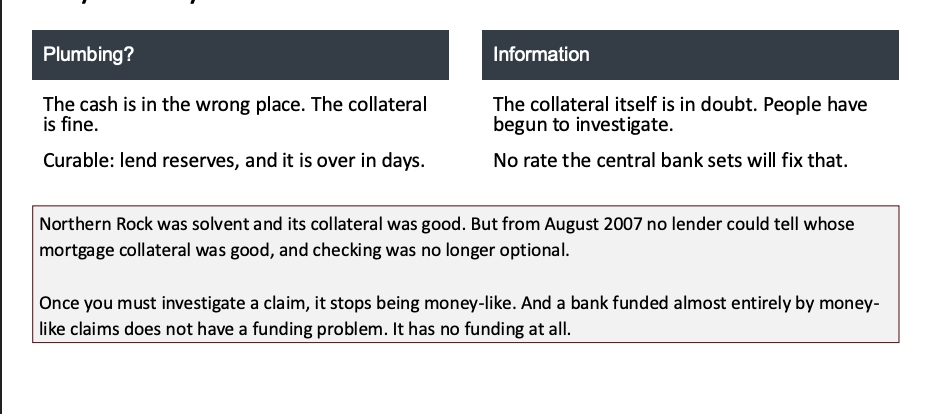
Why nobody lends to Northern Rock?
The bond market
What changes?
• Maturity runs to 30 years, occasionally 50. Periodic coupons, then face value at maturity.
• Purpose flips: money market instruments bridge timing gaps; bonds finance long-lived investment.
• Risk 1 — INFLATION. Over 30 years, what the money buys matters more than whether it arrives.
• Risk 2 — DEFAULT. Over 30 years, the issuer may simply not be there.
Longer horizon

US government debt (2025)

The issuer may not be there to repay
• The boundary between BBB– and BB+ divides investment grade from high yield.
• It is a one-notch move in an opinion published by a private company.
• It moves billions of dollars of bonds, because mandates — pension funds, insurers, index funds — are written in terms of it
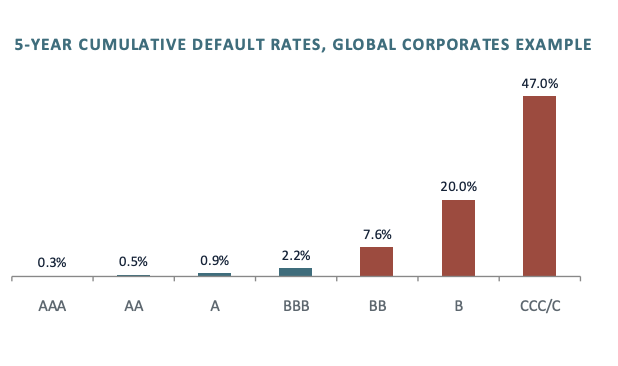
Default rates for corporate bonds
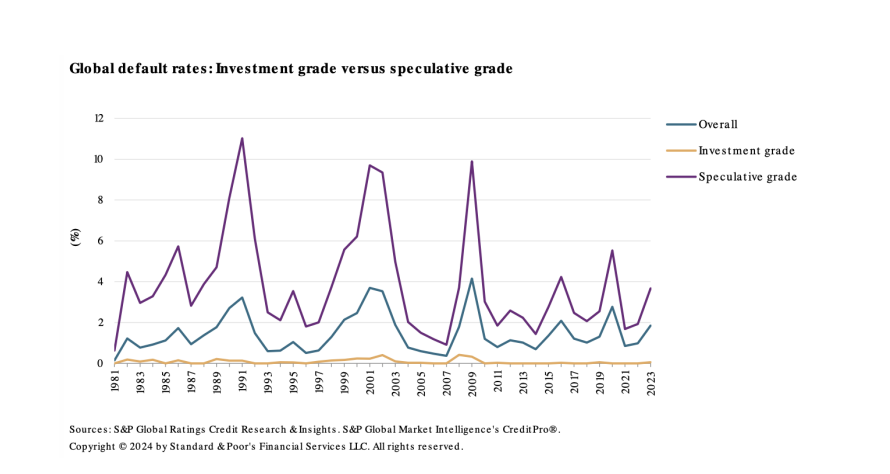
Default rates for corporate bonds

Callable bonds
