Cells 2- HL
 Call Kai
 Learn
 Practice Test
 Spaced Repetition
 Match
 Flashcards
 Knowt Play
1/74

Earn XP
Description and Tags
A2.1 + A2.2 + A2.3
75 Terms
when did earth form?
4.6 billion years ago
when did liquid water form?
4.4 billion years ago
When was the Hadean eon?
4.6-4.0 billion years ago
What was the hadeon eon? (5)
surface of superheated molten lava + intense volcanic activity releasing gases
frequent aseroids + lightnining
high concentration of methane + co2= greenhouse gases trap heat = high temperatures
atmospheres not having oxygen= no ozone level = high UV levels
pre-biotic earth- no life
prebiotic earth
earth before life existed
gases found during prebiotic earth
NOT FREE OXYGEN= O2 gas
hydrogen
nitrogen
water vapour
methane
ammonia
hydrogen
sulfide
Inorganic
doesn’t contain carbon and hydrogen in the same molecule= small and simple
eg: oxygen gas, hydrogen gas, co2, water
Organic/ carbon compounds
Contains both hydrogen and carbon in the molecule
large, complex, associated with living things
eg: nucleic acids
Simple inorganic molecules + energy =
synthesis = organic complex molecules
on early earth, where did energy come from? (2)
intense ultra-violet radiation + lightning
Primordial soup/primeval soup
a mixture of water and organic molecules in early oceans
Prebiotic earth ability to support life: (4)
no free oxygen so no ozone layer allowing high UV
high UV radiation = energy source for chemical reactions
high methane and carbon dioxide to trap heat
high surface temperature = high reaction rates
Miller-Urey Experiment aim
test whether organic molecules (complex carbon compounds) can be formed by inorganic molecules in conditions replicating pre-biotic earth
ORIGIN OF CARBON COMPOUNDS
chemical evolution
the formation of more complex molecules from simpler ones
another name for organic molecules
carbon compounds
result of miller-urey experiment
after a week, rain found to contain amino acids and complex oily hydrocarbons.
Under conditions of pre-biotic earth, organic molecules could be formed from inorganic molecules.
How the miller-urey experiment worked?
water boiled to form vapour and mixed with methane, ammonia and hydrogen
mixture of gases exposed to electrical discharge (sparks) to stimulate lightning
left to cool and condense = rain (collecyed in the trap and tested)
after a week, complex oily hydrocarbons and amino acids found
what did the silicates in the glass of the apparatus act as? (miller-urey experiment)
catalyst. mimics role of early rock and clay surfaces
energy source for miller-urey experiment
the lightning/ sparks that were created
weakness of the experiment
assumed the conditions and chemicals present during pre-biotic earth (now inaccurate)
what did miller-urey experiment produce and not produce?
produce: complex hydrocarbons + amino acids
not produce: nitrogenous bases or sugars found in nucleic acid
what modifications were made to the miller-urey experiment later on and the result?
added in gases like nitrogen and hydrogen sulfide
created greater variety of orgaic molecules including nitrogenous bases
Fatty acids/lipids can form?
concetrated enough to form vesicular membranes
amino acids can link to form? and they are linked by what bond
peptide chains+ peptide bond
RNA nucleotides can link together to form?
short chains of RNA when exposed to a catalyst found in clay soils
Where did early polymers occur in?
deep-sea hydrothermal vents
what are deep-sea hydrothermal vents?
fissues in ocean floor where geothermally heated water released
what enviroment did deep-sea hydrothermal vents produce?
alkaline and iron rich enviroments + heat
how do deep-sea hydrothermal vents work for chemical reactions?
the conditions help small building block molecules (ribonucleotides) link together to form organic polymers (RNA) with enzymes
ribonucleotide
nucleotide but with ribose sugar instead of deoxyribose sugar
enzymes
catalyst for chemical reaction
RNA World Hypothesis
RNA is the 1st genetic material
(before DNA, proteins, enzymes)
protein + dna dependent?
DNA is the genetic material but is not aple to self-replicate as it needs protein enzymes to replicate
instructions for synthesis of proteins is coded in DNA
RNA’s unique ability? (2)
can be an enzyme and hold genetic information which allows it to self-replicate
Ribozymes
RNA with ability to act like enzymes
function of ribozymes in modern cells
found in ribosomes
catalyse the formation of the peptide bonds joining amino acids during protein synthesis
2 reasons why RNA is the first genetic material:
`1. RNA can self-replicate and catalyse reactions
sugar ribose formed easily from methanal (product found from miller-urey experiment)
why did DNA take over from RNA as the genetic material? (2)
more chemically stable (evolution and natural selection meant being more stable allowed longer nucleic acid chains to be maintained without damage)
DNA uses thymine rather than uracil (Thymine less susceptible to mutation and easier to repair when mutations occur)
what does a fatty acid consist of?
long hydrocarbon chain ith a carboxyl group (-COOH) attached to one end
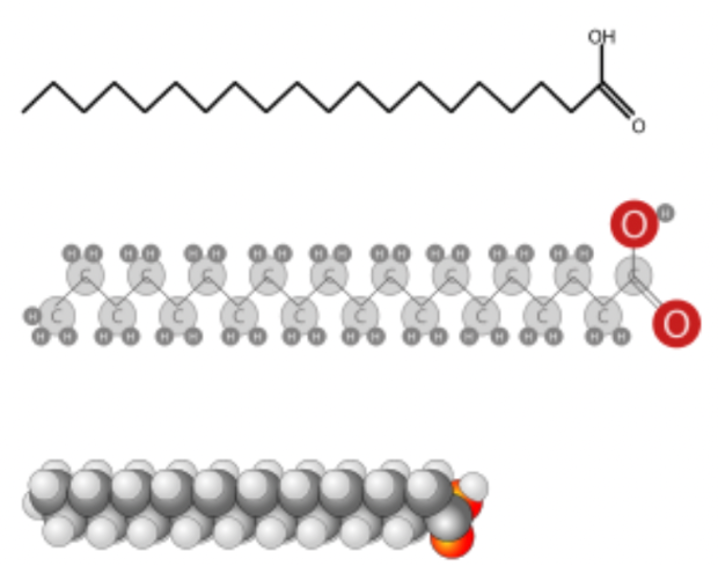
what parts of fatty acids are hydrophobic and hydrophillic?
The hydrocarbon tail is hydrophobic but the carboxyl group is hydrophillic.
what vesicles are double membraned (envelope) and what vesicles are not?
double enveloped: vesicles that break off from the nucleus
not: any other vesicle (eg: secretory vessicles/ transport vessicles)
what do fatty acids form in aqueos enviroments and why?
bilayers- ensures that hydrocarbon tail which is hydrophobic is not in contact with the water while the hydrophillic hydroxl is in contact with the water
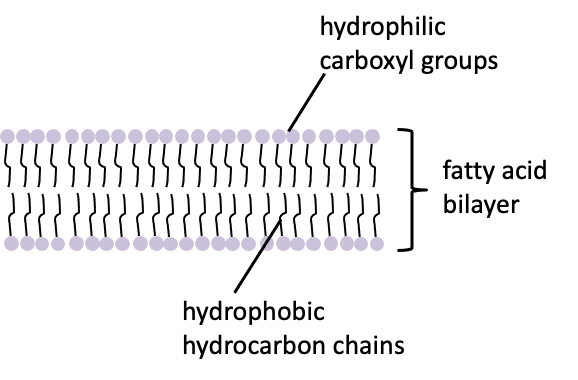
what do bilayers form?
hollow spherical vesicle (aqueous solution inside and outside)
why are vessicles spherical?
to create isolated internal enviroment so there can be different conditions from those outside the vesicle
cells origin - 5 steps
pre-biotic synthesis of simple organic molecules (lipids, amino acids, fatty acids)
self assembly of organic molecules into longer polymers (eg, RNA, peptides)
self assembly of membrane bilayers from fatty acids leading to compartmentalisation (substances inside vesicles compartmentalised from the outside enviroment)
formation of self-replicating RNA (rna developed ability to self-replicate)
certain molecules like RNA and proteins developed catalytic ability (learn’t to speed up chemical reactions
To be living what must an organism do; (3)
use dna as genetic materials
be made up of one or more cells (cell theory)
carry out 8 processes of life
H: Homeostasis - control internal eniroment such as pH and temperature
M: Metabolism- carry out complex chemical reactions
M: Movement- cell inside organism or organism can move
R S: Response to stimuli- organism can detect and react to stimuli (changes in enviroment)
G: Growth- organism or cells inside organism can grow
R: Reproduction- organism can reproduce sexually or asexually
E: Excretion- living organisms can excrete metabolic waste
N: Nutrition- living things can obtain food either by synthesis or absorption of organic matter
Why are virus not living (3)
some use DNA some use RNA
Rely on host cells to carry out reproduction and other processes
Not made up of cells
LUCA stand for and meaning
Last Universal Common Ancestor
Most recent population of single, unicellular organisms of which all life on earth formed
Describe how the species of LUCA was likely to be;
unicellular microorganism
DNA- based genome
lipid layer membrane
anaerobic metabolism (no free oxygen)
autotrophic
Energy source: H2 instead of light
thermophilic - lived in vicinity of deep sea hydrothermal vents
autotrophic meaning
an organism that makes its own food from simple inorganic substances
thermophilic
thriving in or relating to high temperatures
anaerobic
produces energy without oxygen
Evidence for LUCA
genetic code is universal- same triplet of bases codes for one amino acid
universal genetic code is found in all organisms - all organisms share 8- fundamental genes
Where did LUCA live and exist in?
Deep sea hydrothermal vents
What are deep sea hydrothermal vents?
Deep fissures (cracks) in ocean floor which seawater seeps into. Water heated up to 300 degrees by underlying magma chambers. The water collects various gases such as hydrogen gas, carbon dioxide, hydrogen sulfide etc and dissolves large quantities of minerals like iron. The fluid rushes out from the vents containing the minerals and chemicals.
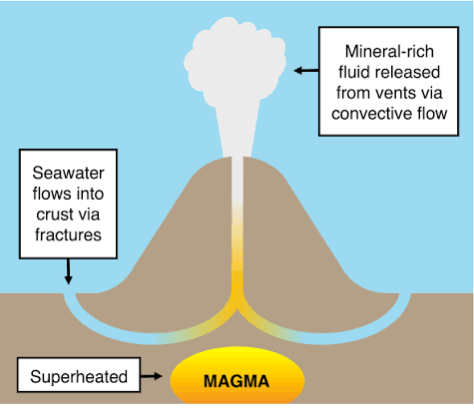
why do water in hydrothermal vents not become water vapour especially cuz its at 300 degrees?
Because there is high pressures under the ocean so this increases the boiling point for water
Evidence that LUCA evolved in hydrothermal vents (2)
fossilized evidence of life
Microfossils found in rock formations. Tiny filaments and tubes in the rock indicate presence of microbes. (cutting rock open and tunnel through rock on a microscopic level)
Scientists can tell the rocks are formed 4 billion years ago and that they are from hydrothermal vents by checking the chemicals and using age technology
Genomic analysis
Genes shared across all species (must have been inherited by LUCA) indicates that LUCA lived in a very hot, anaerobic (no oxygen) environment and sourced energy from chemical gradients. (hot water + chemicals = chemical gradients IS ENERGY SOURCE)
Why would organism have the gene if not in that kind of enviroment?
Technique to estimate dates of key events- Genomic analysis
Studying accumulation of differences in base sequence (mutations) in genomes of different organisms over a period of time.
how to calculate mutation rate
number of changes in base sequence divided by number of years
Stromatolites
Mats of cyanobacteria trap sediments in layers that gradually harden into rock
ways to date first living and cells and LUCA
genomic analysis - accumulation of mutations
fossil dating-
radiometric dating-
radiometric dating
A technique used to determine the age of fossils or rocks by measuring the decay of radioactive isotopes.
measure how much of the original radioactive remains by knowing the half life because they know
radioactive decay happens at a predictable life

radioactive decay
The process in which unstable isotopes release subatomic particles to become more stable.
half-life definition (radioactive dating)
Half-life is the time taken for half of the radioactive isotopes in a sample to decay.
development of nucleus
anaerobic prokaryote grows in size, insufficient surface area to supply larger volume with substance it requires
infolds in its plasma membrane to increase surface area
infolds pinch into internal membrane - double membrane
nucleoid region is enclosed by internal membrane becoming nucleus
endoplasmic reticulum and golgi also form from infolding of plasma mambrane
1st proto-eukaryotic cells haploid and could reproduce sexually by fusing
Development of mitochondria and chloroplasts
aerobic (meaning able to breathe with oxygen) bacteria enters proto-eukaryotic cell by endocytosis
enclosed inside vesicle inside plasma membrane
bacterium survives digestion and becomes endosymbiont
respire aerobically = outcompete the anaerobic organisms outside
as host cell grows and divides, aerobic bacteria inside also does so subsequent generations also contain aerobic bacteria
assimilated = mitochondria
chloroplasts: same but it is photosynthetic bacterium instead of aerobic bacterium and the benefit instead of respiration and energy production is provision of food source
endosymbiont
cell that lives inside another cell with mutual benefit to both
Ensymbiotic theory
existence of mitochondria and chloroplasts inside eukaryotic cells
originated as prokaryotic cells
mutually beneficial symbiosis = endosymbiote
evidence for endosymbiotic theory
own dna, naked (no histones)
own ribosomes 70s
double membrane
can only be produced by deviding like bacterial reproduction
same size
synthesis some of own proteins using genetic information in DNA
cell aggregation
process for multicellularity
individual cells cluster together and adhere to each other
advantage of multicellularity
larger body size
protection increased from predators
out-compete rivals
share nutrients
allows cells to be differentiated for more specialised rols= more efficiency and adaptability
stem cells
cells that can reproduce indefinitely and can produce unspecialised daughter cells
an early embryo is composed entirely of?
stem cells
gene expression definition and what does it lead to
switching genes on and off to produce or perform different functions = leads to cells becoming specialised for a particular function and developing a particular structure
differentiation
Differentiation is the process by which an unspecialised stem cell receives signals from its environment, causing specific genes to be activated or silenced through selective gene expression. This results in changes to the cell's structure, metabolism and function, allowing it to become specialised.