L29 - high yield
 Call Kai
 Learn
 Practice Test
 Spaced Repetition
 Match
 Flashcards
 Knowt Play
1/114

There's no tags or description
Looks like no tags are added yet.
115 Terms
Q: Are Streptococci Gram-positive or Gram-negative?
A: Gram-positive (purple)
Q: What is the morphology and arrangement of Streptococci? (ie how does it look like)
A: Spherical (cocci), arranged in pairs (diplococci) or chains.
Q: Are Streptococci catalase-positive or catalase-negative?
A: Catalase-negative.
______ = Gram-positive cocci + Catalase-negative + Pairs/chains.
Streptococci
Hemolytic _____

Is there hemolysis?
Gamma
There is no hemolysis
Hemolytic _____

Is there hemolysis?
Alpha
Partial hemolysis
Hemolytic _____
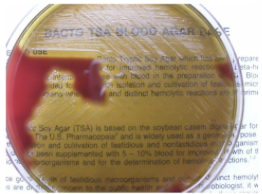
Is there hemolysis?
Beta
Complete hemolysis
Q: What is Lancefield classification based on?
A: Antigenic characteristics of C carbohydrates (Lancefield antigens).
Q: What are the five Streptococcal groups listed in the lecture?
A: Group A, Group B, Viridans Group, Group D, and S. pneumoniae.
Q: Which Streptococcus belongs to Lancefield Group A, and what is its hemolysis?
A: Streptococcus pyogenes — Beta hemolytic.
Q: Which Streptococcus belongs to Lancefield Group B, and what is its hemolysis?
A: Streptococcus agalactiae — Beta hemolytic.
Q: Which Streptococcus belongs to Lancefield Group D, and what is its hemolysis?
A: Streptococcus bovis — Alpha or gamma hemolytic.
Q: What is the hemolysis classification of Streptococcus pneumoniae?
A: Alpha hemolytic.
Q: What is the hemolysis classification of Streptococcus mutans?
A: Alpha or gamma hemolytic.
Beta-Hemolytic Streptococci (GAS) belongs to which group?
A
Q: What Lancefield group does Streptococcus pyogenes belong to?
A: Group A (GAS).
“Throw GAS on the fire” = Pyrogenic
Q: What are the two antigenic components of the Streptococcus pyogenes cell wall?
A: C Carbohydrate and M Protein.
________ in Streptococcus pyogenes = Determines its Lancefield Group A classification.
C Carbohydrate
______ = Major virulence factor that inhibits complement activation and protects the organism from phagocytosis.
A: M protein
______ = Oxygen-labile enzyme that destroys RBCs and WBCs and causes antistreptolysin O (ASO) antibodies to develop
Streptolysin O
_______ = Oxygen-stable enzyme that is a principal factor for β-hemolysis but is not antigenic.
Streptolysin S
Q: What diseases are associated with Pyrogenic Exotoxin (Erythrogenic Toxin)?
A: Scarlet fever and streptococcal toxic shock syndrome (TSS), through superantigen activity.
______ = Activates plasminogen to lyse fibrin clots.
Streptokinase
Strep throat with red, swollen tonsils and pharynx = ?
How to treat?
Streptococcal Pharyngitis?
Treatment: Penicillin.
Q: Which GAS skin infection involves the hair follicles?
Folliculitis
Q: Which GAS skin infection causes a pustule on the extremity/face that breaks down after 4–6 days to form a thick crust?
Pyoderma
Q: Which GAS skin infection involves the dermis causing redness and is rarely caused by streptococcus aureus?
Erysipelas
Q: Which GAS infection is known as "flesh-eating streptococcus," and what are its symptoms?
A: Necrotizing Fasciitis; skin becomes red/purple/blue with large blisters.
Q: What causes Scarlet Fever, and what are its characteristic symptoms?
A: Pyrogenic toxin; fever with scarlet-red rash that begins on the trunk/neck and spreads to extremities but spares the face.
Q: What causes Streptococcal Toxic Shock Syndrome (TSS), and what is its outcome?
A: Infection releases toxins into the bloodstream, leading to multi-organ failure.
Q: What causes Rheumatic Fever following GAS infection?
A: Immune response against M protein cross-reacts with heart tissue.
Delayed; Fever, myocarditis, migratory arthritis, rash, and permanent heart valve damage = ?
Rheumatic fever
Q: What treatment is listed for Rheumatic Fever?
A: Prophylactic penicillin therapy.
Delayed; Immune complexes deposit in kidneys and activate complement and PMNs following infection with nephritogenic strains of GAS.
Acute Post-Streptococcal Glomerulonephritis (APSGN)
Q: What is the primary outcome of Acute Post-Streptococcal Glomerulonephritis?
A: Kidney inflammation.
Q: How does clindamycin inhibit GAS virulence factor production?
A: Inhibits bacterial ribosomes, shutting down synthesis of pyrogenic toxin and M protein.
Q: What causes Rheumatic Fever following GAS infection?
A: Immune response against M protein cross-reacts with heart tissue.
Q: What are the symptoms of Rheumatic Fever?
A: Fever, myocarditis, migratory arthritis, rash, and permanent heart valve damage.
Q: What treatment is listed for Rheumatic Fever?
A: Prophylactic penicillin therapy.
Q: What causes Acute Post-Streptococcal Glomerulonephritis (APSGN)?
A: Immune complexes deposit in kidneys and activate complement and PMNs following infection with nephritogenic strains of GAS.
Q: What is the primary outcome of APSGN?
A: Kidney inflammation.
Q: How does clindamycin inhibit GAS virulence factor production?
A: Inhibits bacterial ribosomes, reducing synthesis of pyrogenic toxin and M protein.
Q: What organism is responsible for Group B Streptococcal infections, and what is its hemolysis classification?
A: Streptococcus agalactiae; β-hemolytic.
Q: What infections can Group B Streptococcus cause in pregnant women?
A: Bacteremia and sepsis.
Q: How can newborns acquire Group B Streptococcus?
A: During delivery.
Group B = Baby
Q: What infections can Group B Streptococcus cause in newborns?
A: Neonatal meningitis, pneumonia, and sepsis.
Q: Which three organisms are listed for antibiotic coverage in Group B - S. agalactiae
A: E. coli, Listeria monocytogenes, and Group B Streptococcus.
Q: What type of hemolysis is associated with Viridans Group Streptococci?
Color?
A: Alpha-hemolytic (green in color).
Viri = Verde
Q: Where are Viridans Group Streptococci commonly found?
A: Dental plaque, gingival crevices, tongue, and saliva (>30% of culturable bacteria).
veriDENS = dental
Q: What are the four subgroups of Viridans Group Streptococci?
A: Mitis (S. mitis), Salivarius (S. salivarius), Mutans (S. mutans), and Anginosus (S. anginosus).
Q: Which Viridans Streptococcus is especially associated with dental caries?
A: Streptococcus mutans.
Q: What type of endocarditis is associated with Viridans Streptococci, and how does it occur?
A: Subacute bacterial endocarditis (SBE); bacteria enter the bloodstream and implant on the endocardial surface of the heart (e.g., damaged heart valve).
Q: Which Viridans Streptococci are associated with abscess formation?
A: Anginosus group (S. intermedius, S. constellatus, and S. anginosus).
Q: Where are abscesses caused by the Anginosus group commonly found?
A: Brain or abdominal organs.
Q: What should be suspected if S. intermedius is found in the bloodstream?
A: A hidden abscess in an organ.
Q: What are the two subgroups of Group D Streptococci?
A: Enterococci and Non-Enterococci.
Q: Which bacteria belong to the Enterococci subgroup of Group D?
A: Enterococcus faecalis and E. faecium.
Q: Which bacteria belong to the Non-Enterococci subgroup of Group D?
A: Streptococcus bovis and S. equinus.
Q: Where are Group D Streptococci commonly found?
A: Digestive tract.
When you see Group D = Digestive tract
Q: What type of hemolysis is associated with Enterococci?
A: α-hemolytic or γ-hemolytic.
Q: What infections are commonly caused by Enterococci?
A: UTIs, biliary tract infections, bacteremia, and subacute bacterial endocarditis (SBE).
Q: What antibiotics does the slide identify Enterococci as resistant to?
A: Ampicillin, aminoglycosides, and vancomycin (VRE).
Q: What is the mechanism of vancomycin resistance in Enterococci (VRE)?
A: The acquired vanA gene encodes proteins that modify the peptidoglycan terminus from D-alanine–D-alanine to D-alanine–D-lactate, resulting in low affinity for vancomycin.
Q: What are the growth characteristics of Non-Enterococci?
A: Grow in 40% bile but not in 6.5% NaCl.
Q: Where are Non-Enterococci commonly found, and what diseases do they cause?
A: GI tract; cause similar diseases to Enterococci.
Q: What cancer is strongly associated with Streptococcus bovis infection?
A: Colon cancer.
BOVIS in the BLOOD, CANCER in the BOWEL.
Q: What are the major infections caused by Streptococcus pneumoniae?
A: Bacterial pneumonia and meningitis (adults), and otitis media (children).
Q: Does Streptococcus pneumoniae possess a Lancefield antigen?
A: No Lancefield antigen.
Q: What is the morphology and Gram stain of Streptococcus pneumoniae?
A: Lancet-shaped, Gram-positive cocci arranged in pairs (diplococci).
Q: What is the major virulence factor of Streptococcus pneumoniae?
A: Antigenic polysaccharide capsule.
Q: What is the function of the capsule in S. pneumoniae?
A: Impedes phagocytosis (has 91 distinct antigenic types)
Q: What is the function of Pneumolysin in S. pneumoniae?
A: Cytotoxin.
Q: What is the function of Hydrogen Peroxide in S. pneumoniae?
A: Hemolysin.
Q: What is the function of IgA1 Protease in S. pneumoniae?
A: Cleaves IgA1.
Q: What is the function of Neuraminidase in S. pneumoniae?
A: Cleaves terminal sialic acid, exposing glycoconjugates for adhesion.
Q: What are the adhesins of S. pneumoniae?
A: Teichoic acids and CbpA.
Q: How can S. pneumoniae be distinguished from Viridans Streptococci using optochin?
A: Both are α-hemolytic, but S. pneumoniae is optochin sensitive (growth inhibited), whereas Viridans Streptococci are optochin resistant.
Optochin Sensitivity: S. pneumoniae and S. viridans are _____-hemolytic
Growth of S. pneumoniae is _______ when placed in optochin disc, whereas S. viridans is resistant.
alpha; inhibited
Q: What happens during the Quellung Reaction?
A: A bacterial smear is mixed with antiserum and methylene blue, causing the capsule to swell (rapid identification).
Q: What is the result of the bile solubility test for S. pneumoniae?
A: Positive; S. pneumoniae is lysed by bile acids.
Q: What happens in the alveoli during Pneumococcal Pneumonia?
A: Alveoli fill with WBC pus, bacteria, and exudate.
Q: What are the characteristic symptoms of Pneumococcal Pneumonia?
A: Shaking chills, high fevers, chest pain, shortness of breath, and yellow-green phlegm.
Q: What disease does S. pneumoniae cause in children involving the middle ear?
A: Otitis Media (middle ear infection).
Q: What are the characteristic symptoms of Sinusitis caused by S. pneumoniae?
A: Nasal congestion, drainage, facial pain/pressure, and decreased sense of smell.
Q: What is the characteristic sign of Bacterial Meningitis caused by S. pneumoniae in adults?
A: Nuchal rigidity (stiff neck).
Q: What antibiotics are certain strains of S. pneumoniae developing resistance to?
A: Penicillin, erythromycin, trimethoprim/sulfamethoxazole, and chloramphenicol.
Q: What is the treatment for S. pneumoniae with intermediate penicillin resistance?
A: High-dose penicillin and cephalosporins.
Q: What antibiotic is recommended for highly penicillin-resistant strains of S. pneumoniae?
Vancomycin
What species is associated with Group A: Beta Hemolytic Strep (GAS)
S. pyogenes |
Metabolsim effect of Group A: B hemolytic strep (GAS)
Catalase -ive, Beta-hemolytic
Virulence factor associated with Group A: Beta Hemolytic Strep (GAS)
M-protein
What toxins are associated with Group A: Beta Hemolytic Strep (GAS)
Pyrogenic, TSS toxin
Diseases associated with Group A: Beta Hemolytic Strep (GAS) (S. pyogenes)
Pharyngitis
Skin infections: Folliculitis
Cellulitis
Impetigo
Necro. Fascitis
Scarlet fever
TSS (Toxic shock syn)
Rheum. Fever
Glomerulonephritis
treatment of Group A: Beta Hemolytic Strep (GAS)
Penicillin G, Pen. V, Erythromycin, 1st generation Cephalosporins, Azithromycin
What enzyme virulence factors are associated with group A?
Streptolysin O - oxygen labile; destroys RBC & WBC; infection causes anti-streptolysin (ASO)
Streptolysin S - oxygen stable; principal factor Beta-hemolysis; not antigenic
Pyrogenic Exotoxin - causes scarlet fever; superantigens that cause streptococcal TSS
Streptokinase - activates plasminogen to lyse fibrin clots
What species is associated with Group B?
S. agalactiae
Metabolism effect of group b?
Catalase -ive, Beta-hemolytic
Diseases assocated with group B (S. agalactiae)?
Neonatal meningitis
Neonatal pneumoniae
Neonatal Sepsis
Pregnant women: bacteremia & sepsis
Treatment for group B?
Penicillin G
Antibiotics against E. coli, Listeria monocytogenes, and Group B Streptococcus (common cause neonatal meningitis)