Lecture 6 - Environmental Behaviour and Communications
 Call Kai
 Learn
 Practice Test
 Spaced Repetition
 Match
 Flashcards
 Knowt Play
1/34

There's no tags or description
Looks like no tags are added yet.
35 Terms
What does Donald (2022) posit in Environmental Sustainability & Pro-Environmental Behaviour?

According to Donald (2022) in Environmental Sustainability & Pro-Environmental Behaviour, how can psychology help us with climate change?

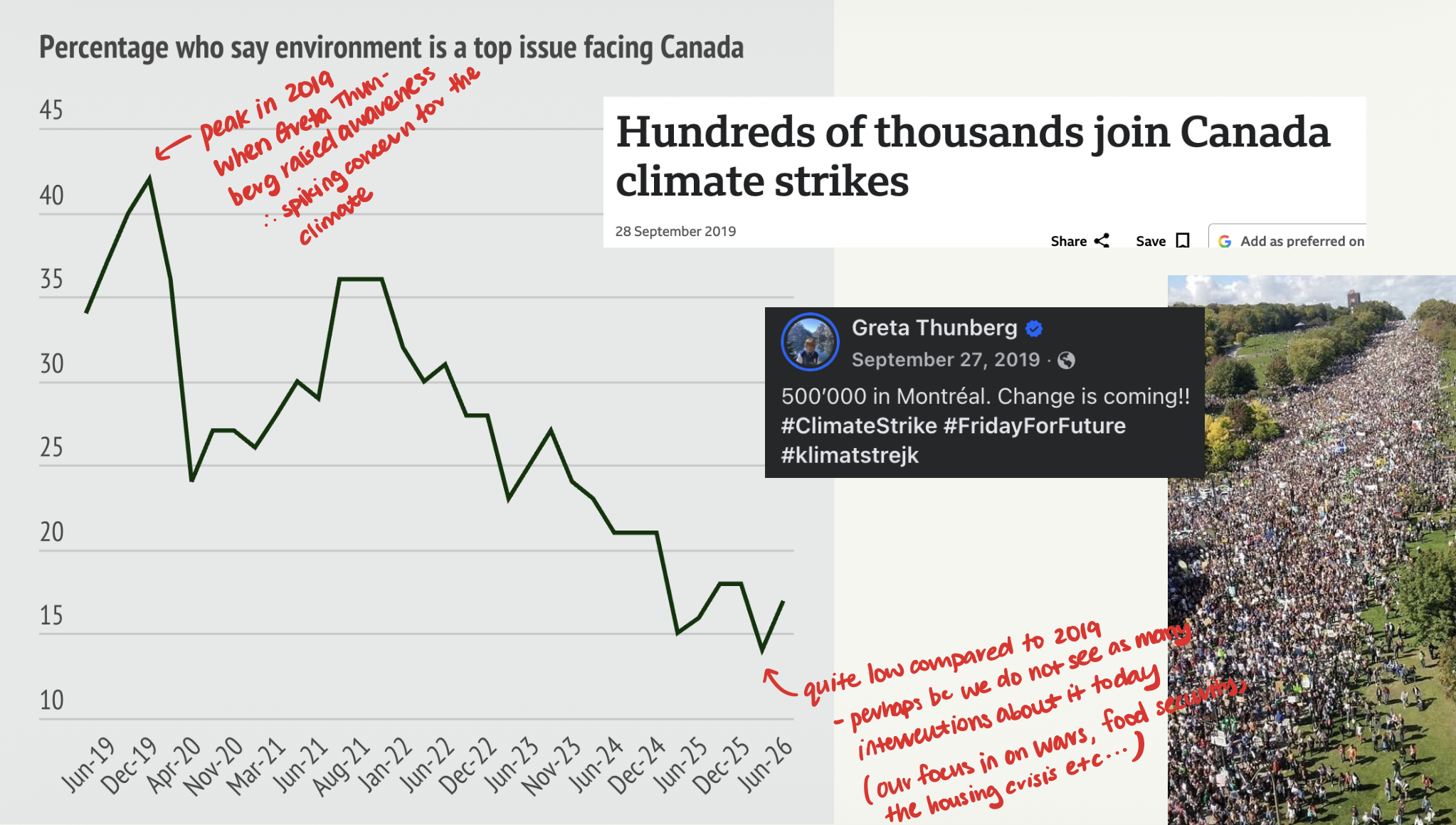
Explain why there was a peak in the % of people who saw climate change as a top issue in Canada in 2019? Also, why has the value gone down since? What does this suggest?
This suggests that we need more interventions to happen to raise awareness about the climate crisis.
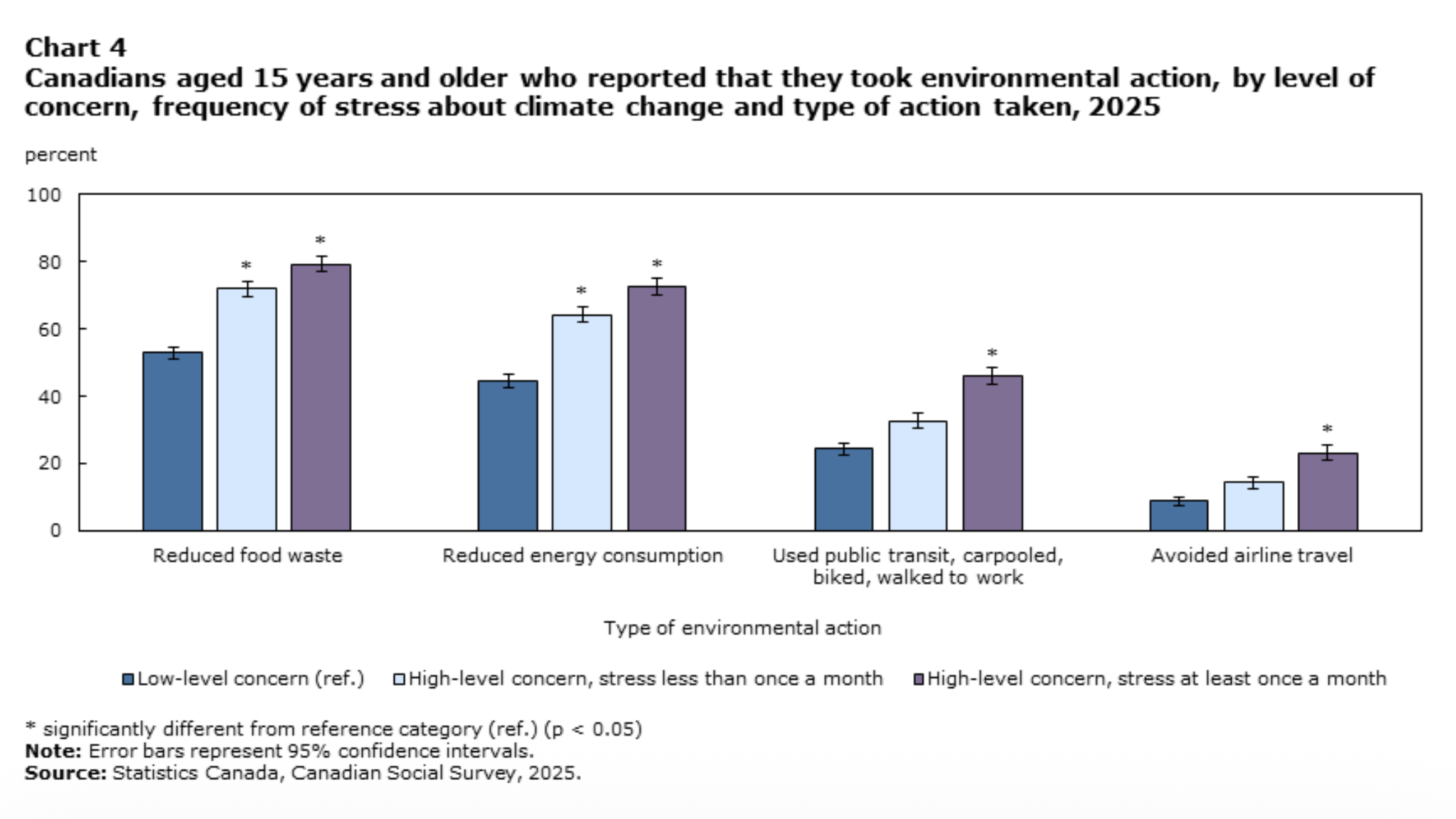
Explain the relationship between being stressed about the environment, and action taken.
Other than individual factors, what else influences our behaviour?

What are the 3 classifications of pro-environmental behaviour?

Explain the dimensions of curtailment and efficiency.

Explain the limitations of efficiency and curtailment.

List the 3 theories of pro-environmental behaviour.

What are the 10 basic values derived from a study? Also, explain how the graph works.

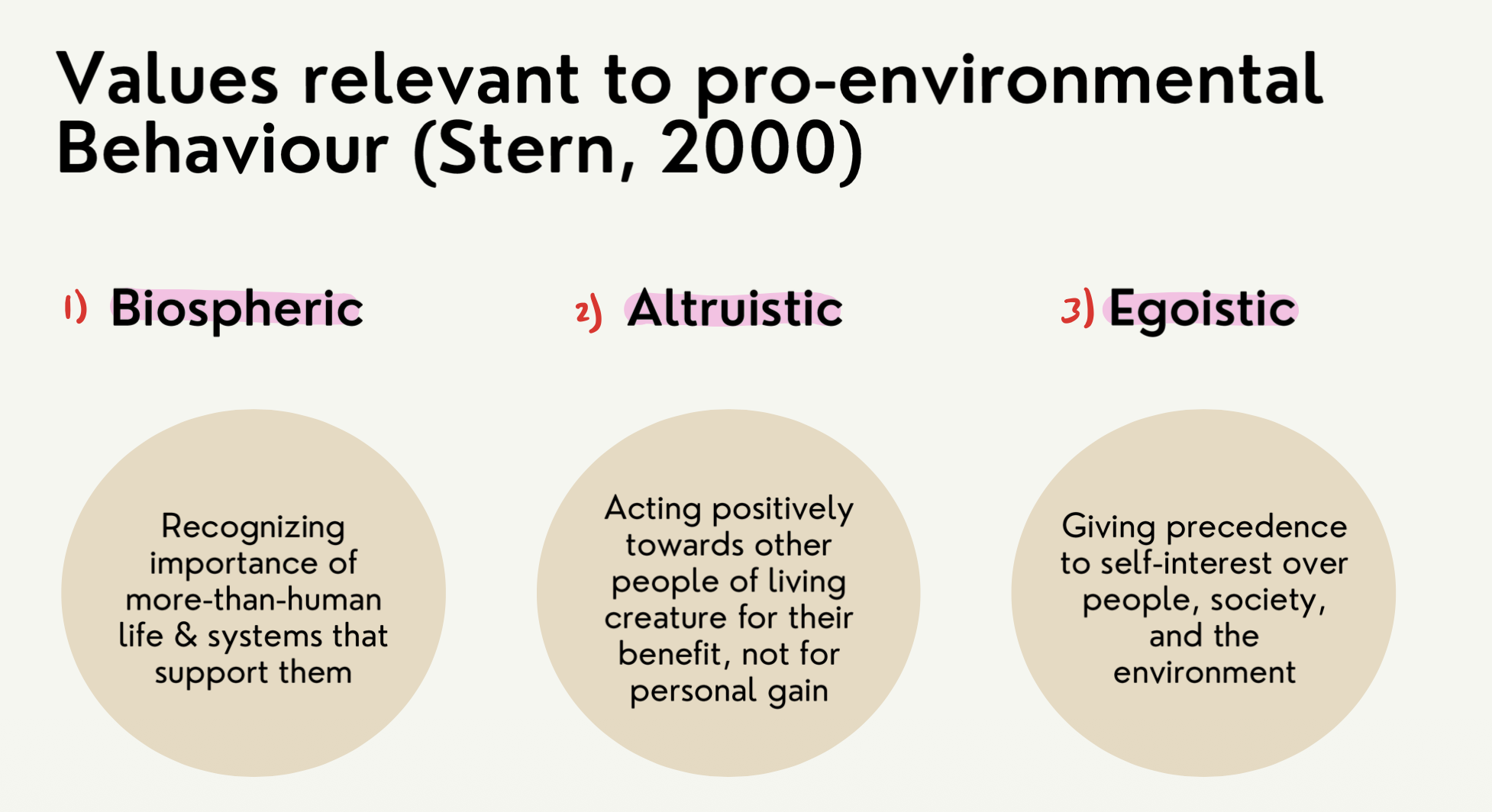
What values are relevant to pro-environmental behaviour?
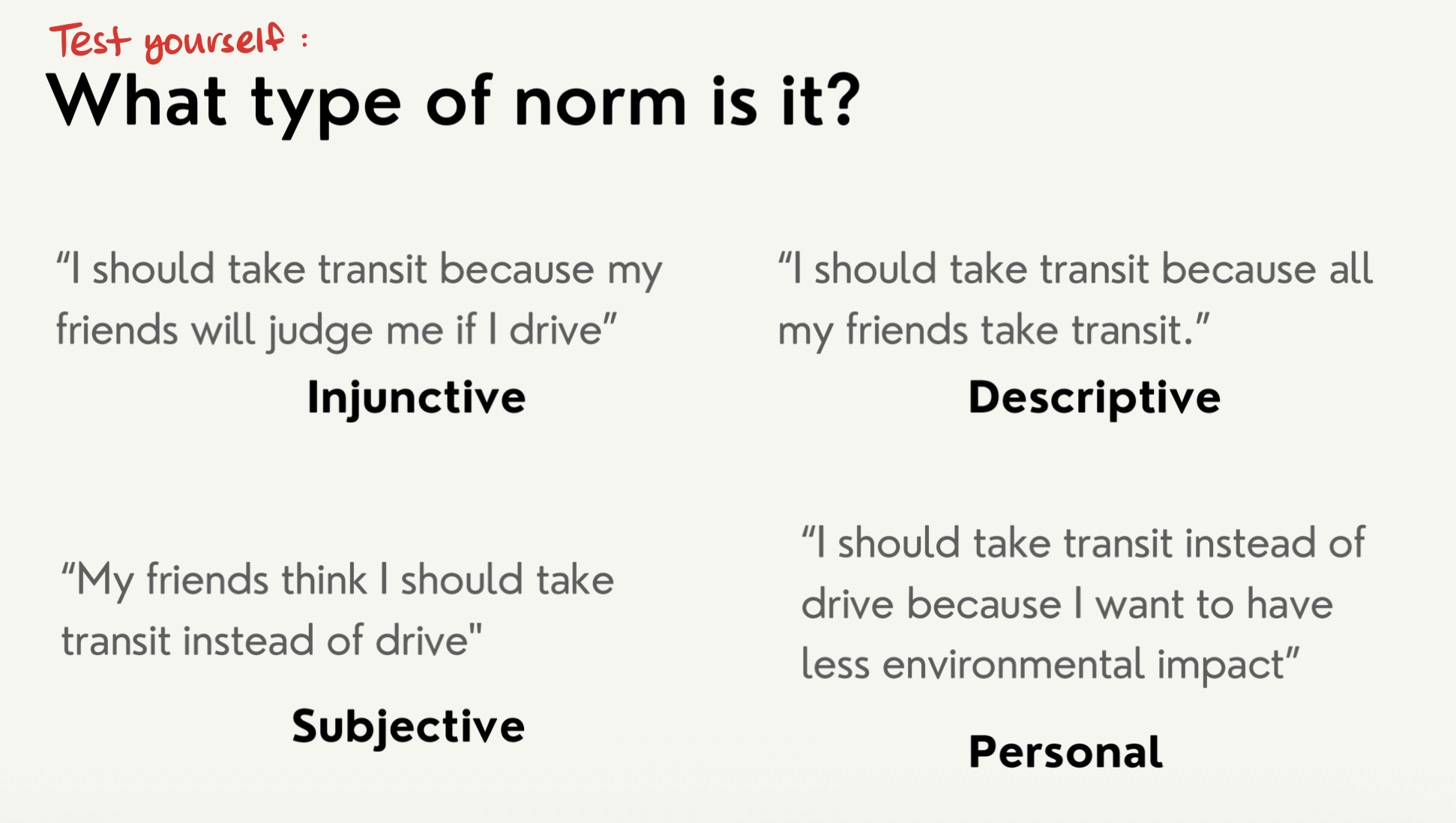
What 4 norms influence our behaviour? Why should we try and understand these norms?
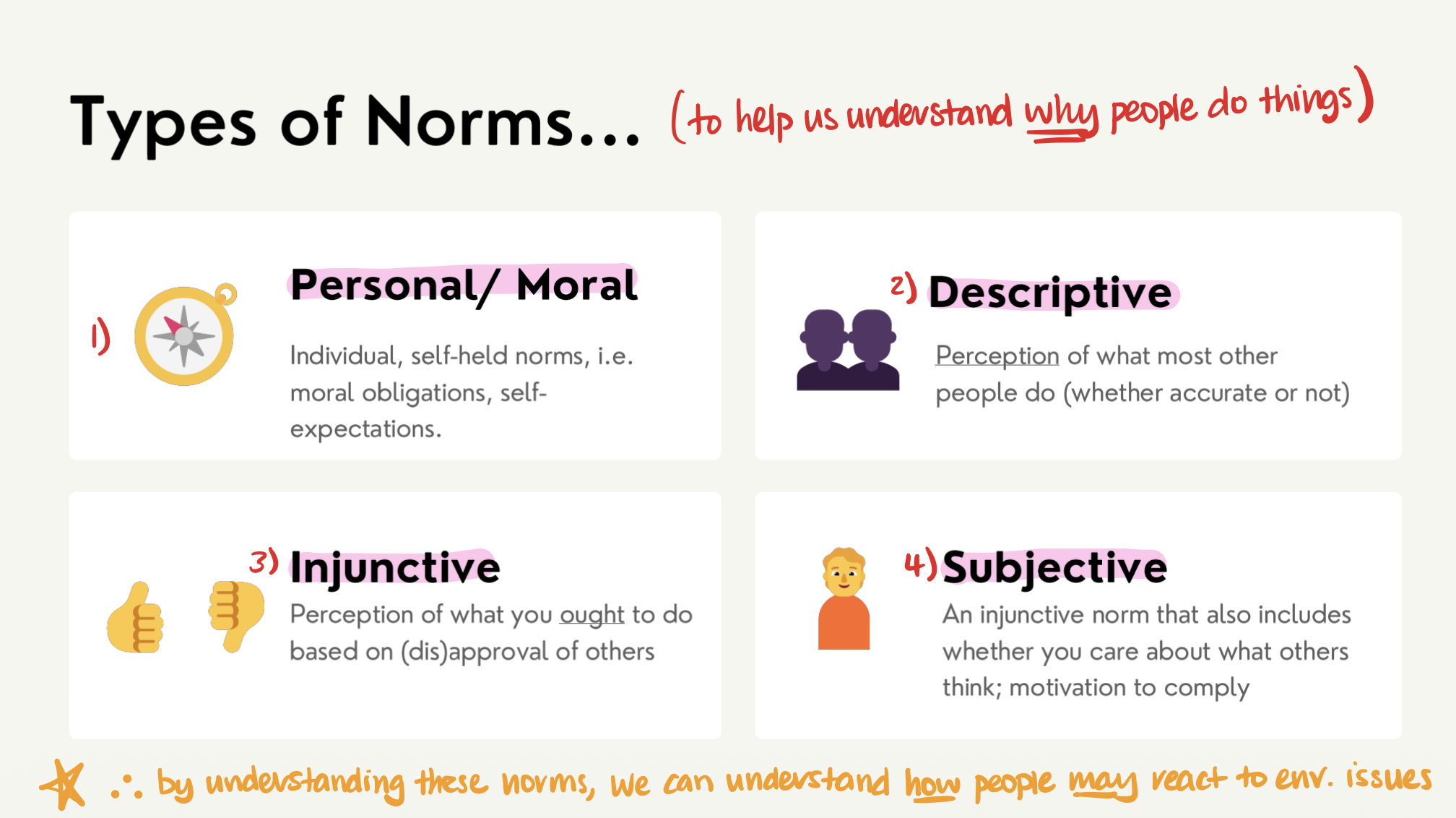
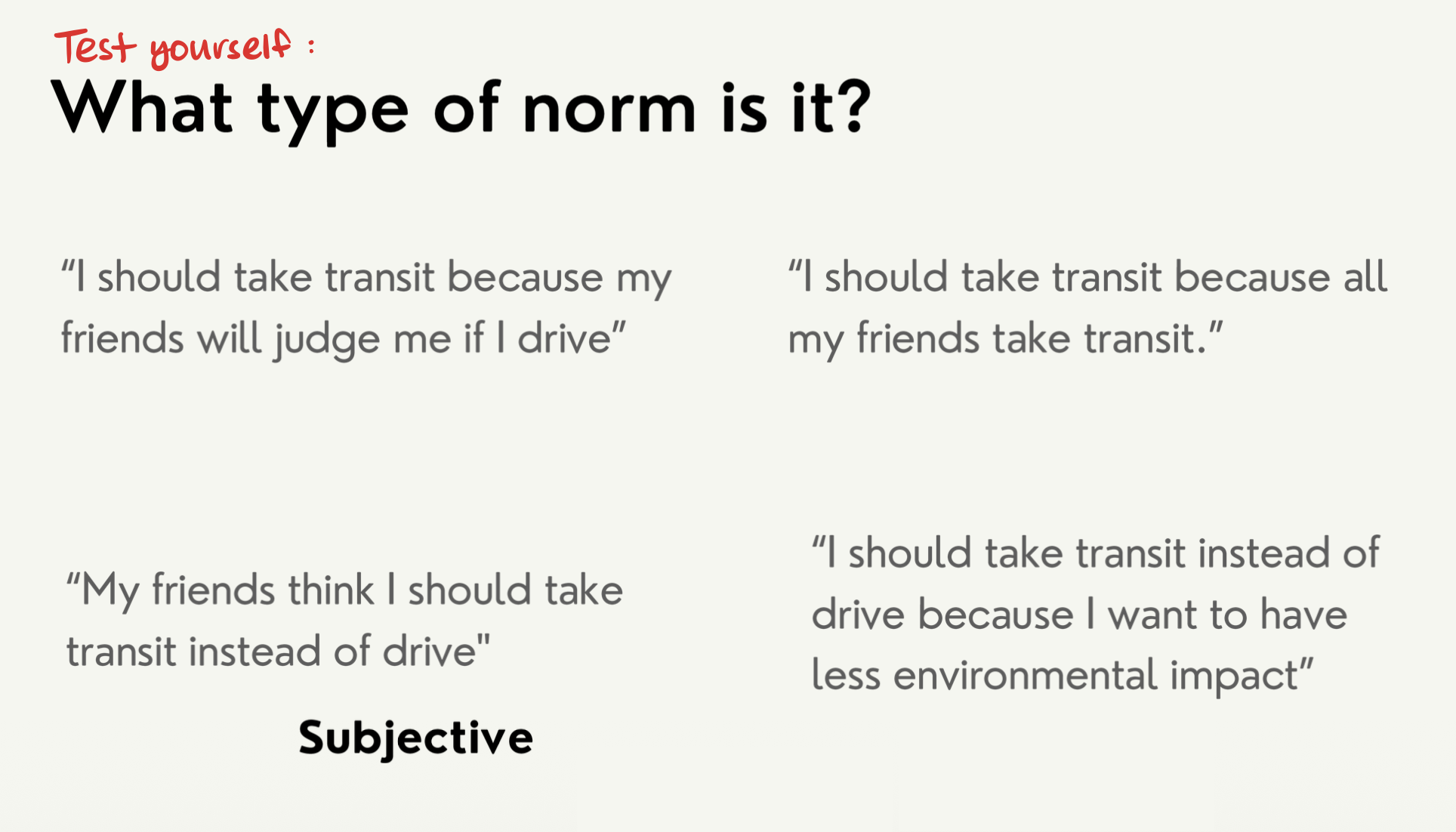
Match the norms with the situations.
Explain how Value-Belief-Norm theory works.

What are the 3 different goal frames in Goal Theory?

What is needed for normative goal frames to be dominant?
For normative goal frames to be dominant, we need to make people aware that a certain behaviour is damaging AND tell them what they should do in response.
Why?
Because, unlike what the information deficit posits, if we just told them that their behaviour was bad, it would not be enough to change the goal frame salient in their minds. Instead, other goal frames would probably remain salient (not the normative one).

Explain the effect extrinsic incentives can have on people’s intrinsic motivations, and why that occurs. Give an example.
Extrinsic incentives may crowd out intrinsic motivations because by adding those extrinsic incentives, rather than appealing to one’s normative goal frame (a mental state where a person's primary motivation is to "act appropriately”), you are appealing to their gain/hedonic goal frame (i.e., making them focus on getting something in return, as opposed to just doing it because its the right thing to do).

Why can certain extrinsic incentives actually undermine intrinsic motivations to adopt certain environmental behaviours?
Because an action that was normatively motivated can become gain/hedonistically oriented.
Explain the Theory of Planned Behaviour.

Which theory is used most widely when trying to understand what influences pro-environmental behaviour? Explain why.
Theory of Planned Behaviour.

What’s the flaw of the 3 theories of pro-environmental behaviour?

What can we do to break people’s bad habits?

What does the Climate Change Communication (CCC) paper discuss?

What has been done to improve CCC?

List the 3 challenges of CCC.

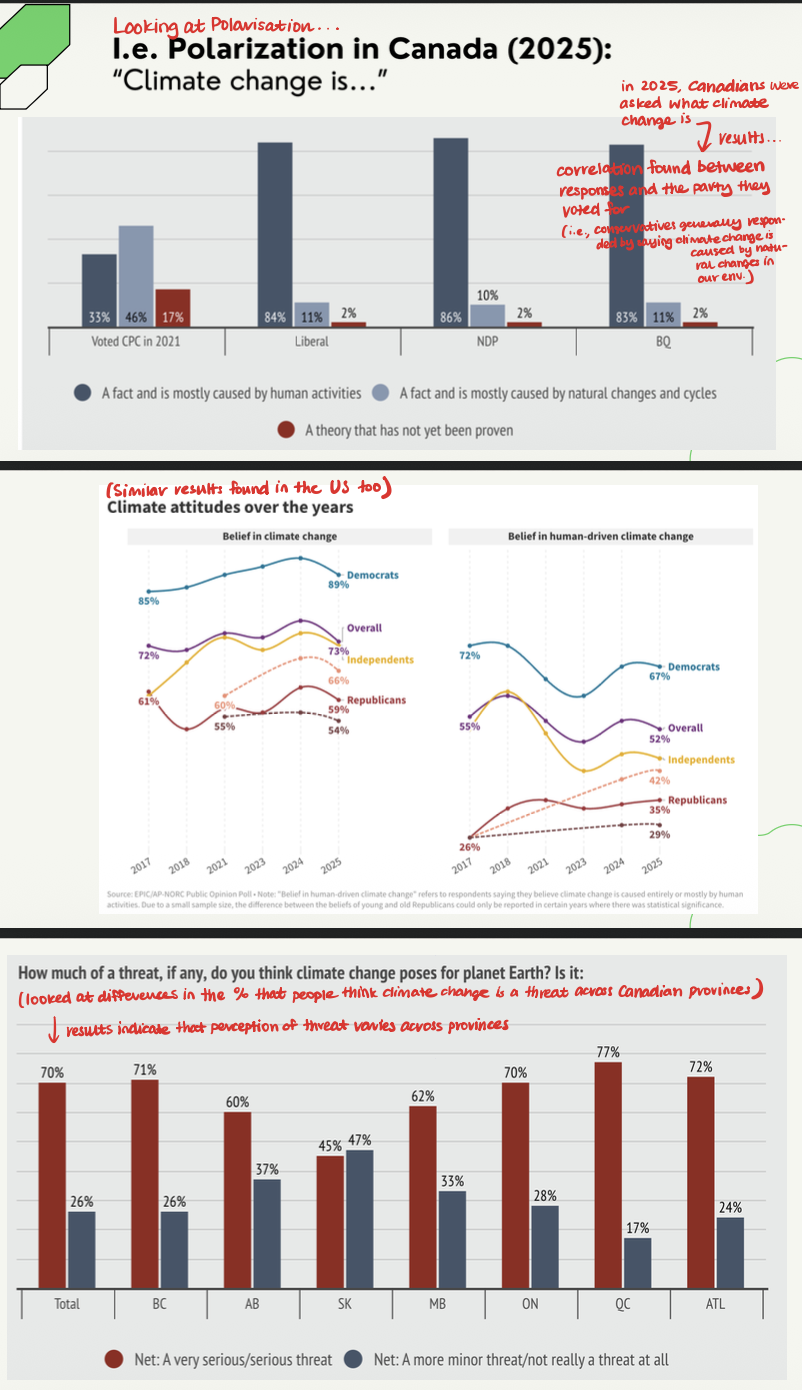
Explain some real-life examples in which polarisation impacts the effectiveness of CCC.
Polarisation of political ideologies/religion etc… can pre-dispose people to perceive things in a specific way. Therefore, impacting the effectiveness of CCC.
What are the psychological barriers towards sustainable actions that Gifford (2011) posits?
Gifford (2011) posits 7 Dragons and Inaction:

Define each dragon of inaction:
Limited cognition
Ideologies
Social comparisons
Sunk costs
Discredence
Perceived risks
Limited behaviour

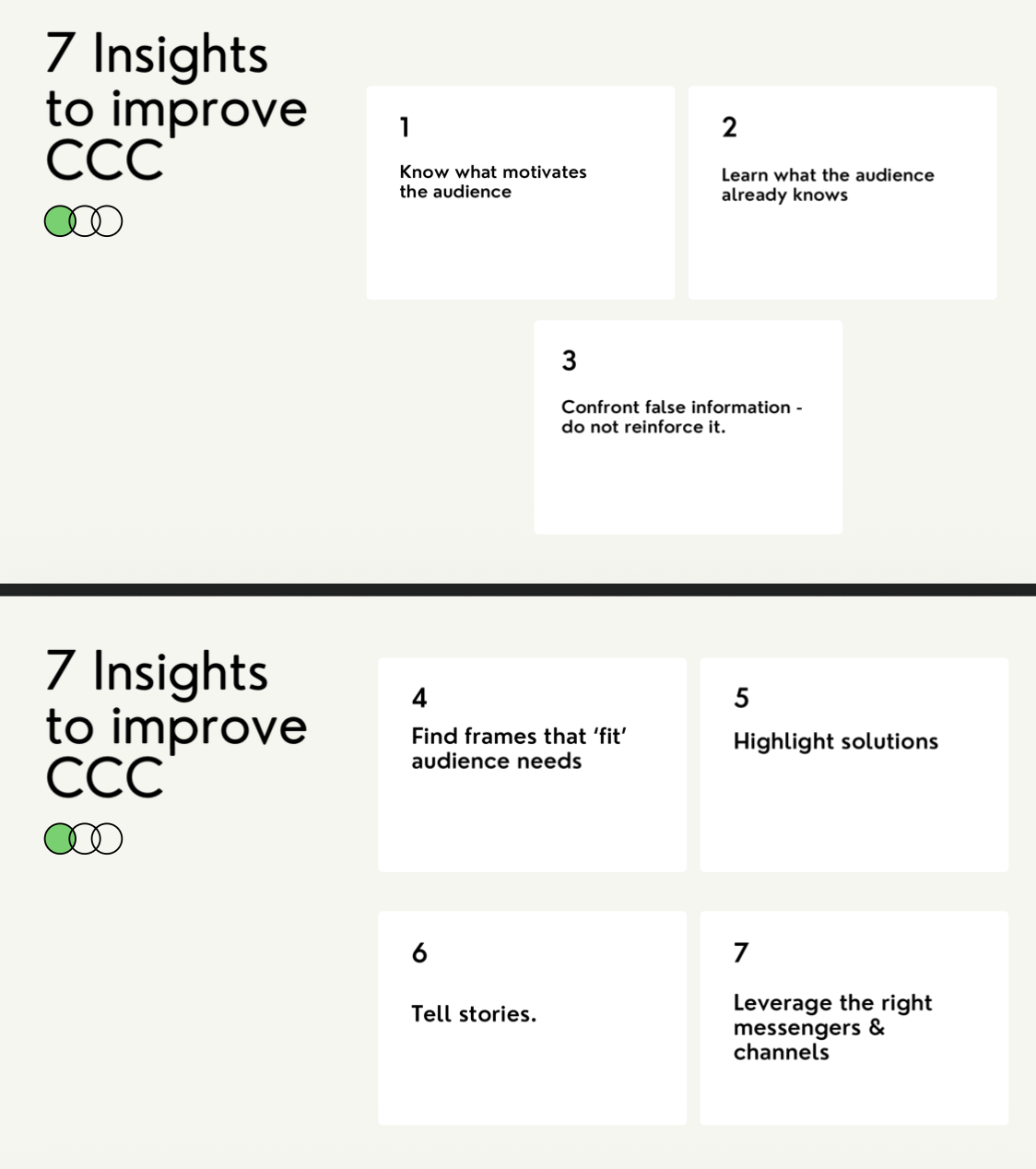
Based on Markowitz & Guckian (2018) readings about CCC, what are the 7 insights to improve CCC?
What is an example of the insight: confronting false information?

In lecture, what examples of CCC were discussed?
IPCC Infographics
Hollywood movies
Commercial art installations
What are 5 behavioural strategies to improve environmentally friendly behaviour?

What are 8 psychology strategies to improve environmentally friendly behaviour?

Explain the ABT framework.

What does information we know about storytelling do?
