L18: Male anatomy/spermatogenesis
 Call Kai
 Learn
 Practice Test
 Spaced Repetition
 Match
 Flashcards
 Knowt Play
1/35

There's no tags or description
Looks like no tags are added yet.
36 Terms
Male reproductive organs diagram
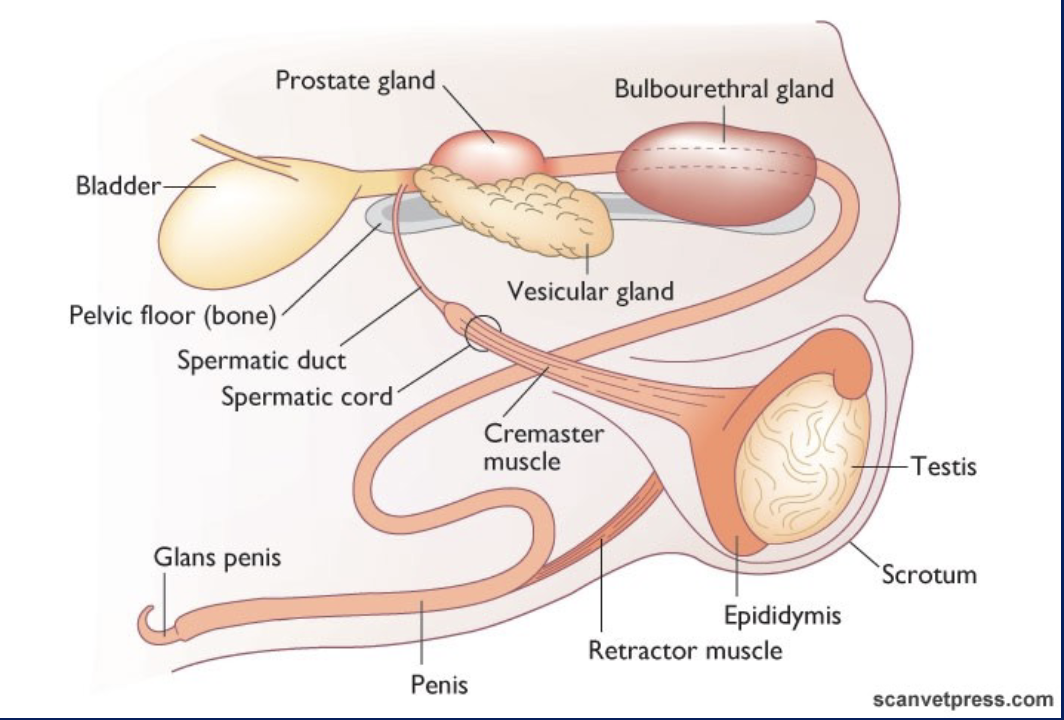
Main function of male reproductive organs
to produce and deliver spermatozoa tothe female

Temperature control in male reproductive organs
Testes need to be kept 4-6 C below temperature for spermatogenesis
During late part of gestation or early life: testicular descent via the inguinal canal is required, or else infertility or tumour can occur. Can be surgically moved down
Later in life: temperature controlled by the veins of the “pampiniform plexus” (in the spermatic cord) forming a countercurrent heat exchanger; cools down arterial blood in the testes. Heat exchange between blood in arteries and veins.

Testes location
Located in the scrotum = skin sac from the abdominal cavity with a layer of smooth muscle (tunica dartos)
When tunic dartos contracts, its moves the testis closer to the abdominal cavity if external environment is cold, or relax if hot. Another mechanism to regulate the testis
Compositions of outside the testes
On the inside of the scrotum: layers of connective tissue (scrotal fascia and parietal vaginal tunic)
Covering the testes is a layer of vascularized connective tissue (tunica albuginae + visceral vaginal tunic) that projects septa in the testis. Smooth muscle cover the septa (help moving immature sperms)
Between the parietal and visceral vaginal tunic, there is fluid (vaginal cavity), allowing testis to move up and down without friction
Tunica albuginae is where all the blood vessels coming from the periphery of the testes inter the testes itself

Composition of inside the testes
2 major parts:
Seminiferous tubules (S.T.): site of sperm production. Ducts collect sperm to rete testis in the center = tubes that bring the sperm to the epididymis. Contains sertoli cells that control spermatogenesis.
Interstitium (between S.T.): composed of connective tissue, nerve, blood vessels, and Leydig cells which produce testosterone
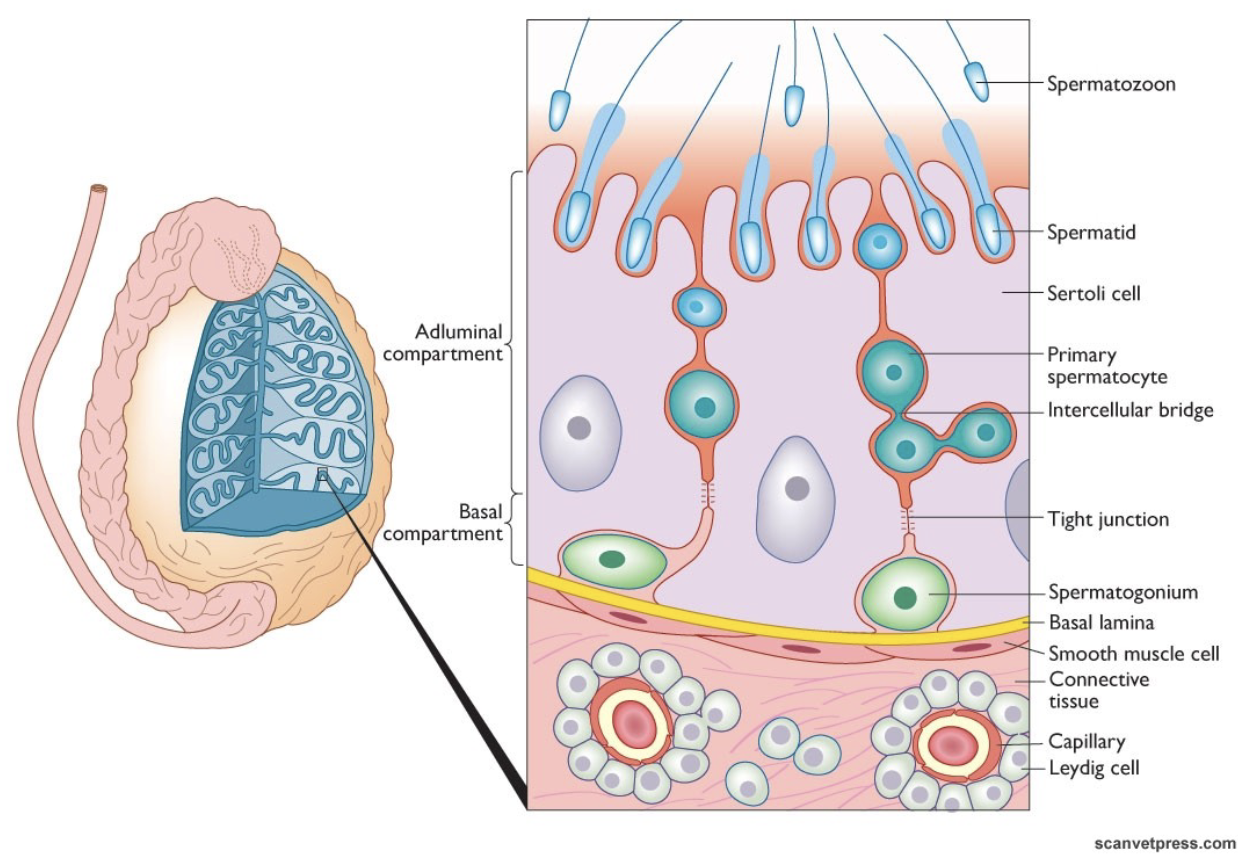
What provides strict separation between seminiferous tubles and interstitial
The basal lamina and the sertoli cells closely attached to one another
the sertoli cells which have contact with the basal lamina and all spermatogenic cells play a critical role in supporting the differentiation of the spermatogonia, providing nutrients and regulating the multiplications of the cells
Boar reproductive tract characteristics
Testis structure similar to bull – more pronounced interstitium [Leydig cells produce wider array of androgens, C16, C19 steroids (16- androstenes) plus estrogens], reason for boar taint
Testis location against the abdominal cavity reduces efficiency of heat exchange
Large seminal vesicles = large volume
Large bulbo-urethral glands = gel
Copious ejaculate/prolonged ejaculation (large volume)
Smaller sperm “reserves” v/v bull

Spermatogenesis diagram
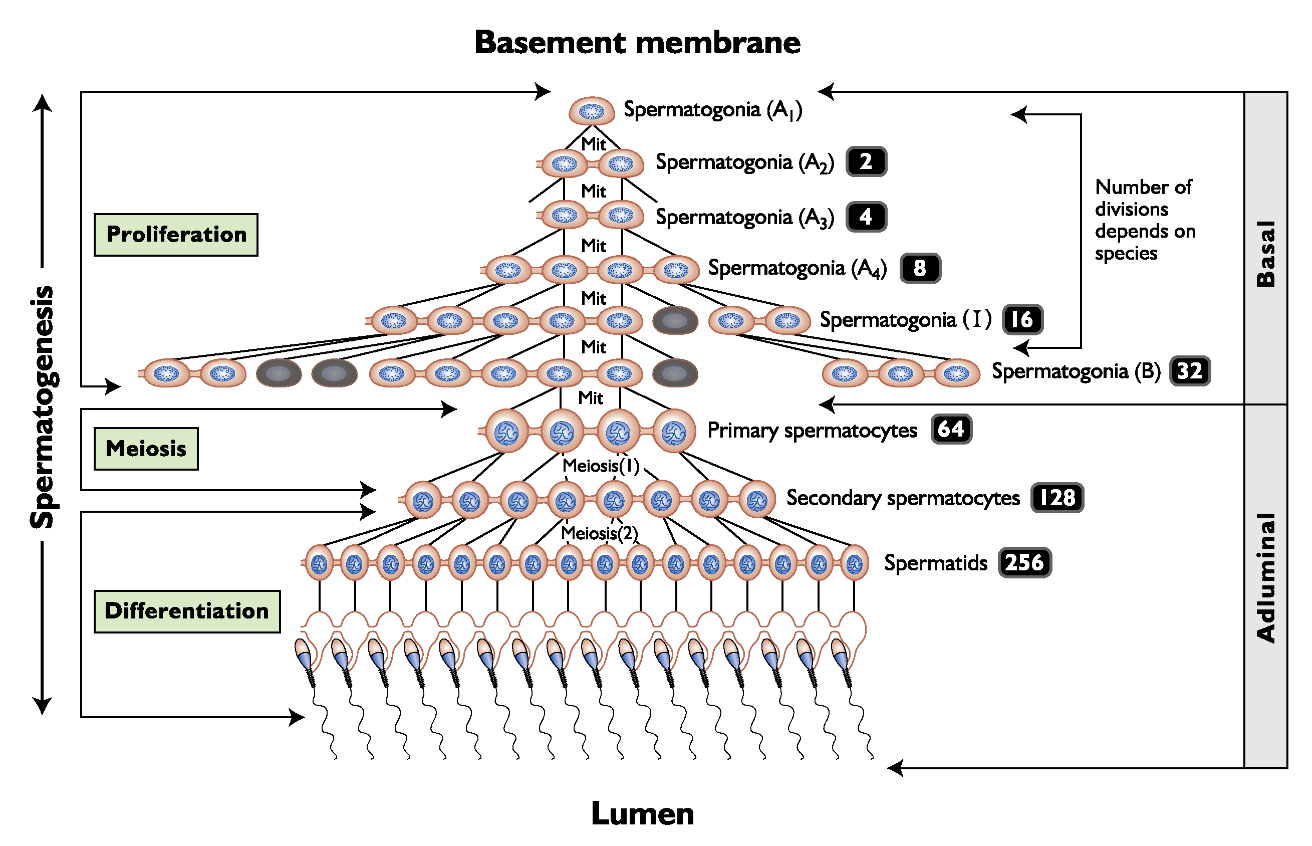
Steps of Meiosis
Interphase
Prophase I
Metaphase I
Anaphase I
Telophase I
Prophase II
Metaphase II
Anaphase II
Telophase II
Interphase
replication of DNA (4c-2n)
Prophase I
Leptotene: condensation of chromatin
Zygotene: pairing of homologues (forming a tetrade)
Pachytene: crossing-over and recombination
Diplotene: synaptonemal complexes dissociate
Diakinesis: chiasma disappear and homologues begin to repel

Metaphase I
homologue centromere binds to spindle fiber
Anaphase I
homologous pairs separate and begin to move
Telophase I
hromosomes migrate to each pole, cell division. 1 chromosome of pair in each cell = (2c – 1n)
Prophase II
spindle fibers rearrange and chromosomes recondense
Metaphase II
chromosomes align along spindle equator
Anaphase II
sister chromatids separate and move to opposite poles
Telophase II
daughter cell nucleus has one set of chromosomes (1c – 1n)
Sertoli cells function
Blood testis barrier; separates spermatogenic cells from the blood
Controls what moves in and out of the seminiferous tubules including bringing in nutrients and removing waste
Basal/luminal and adluminal compartments
Provide nutrients and several factors to control spermatogenesis
“Fluid pumping” during final maturation if sperm
Produce androgen-binding protein and inhibin (short-loop negative feedback)
Express FSH receptors (regulated by FSH)
Spermatogenesis function
In contact with Sertoli cells
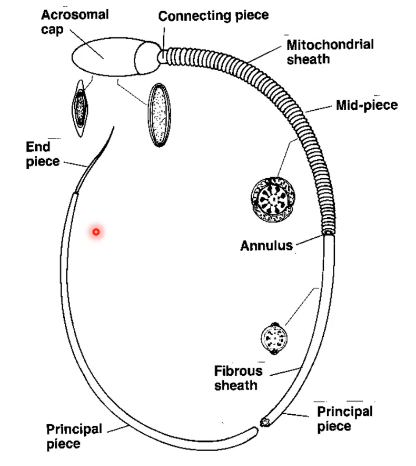
Nuclear condensation
Formation of the acrosomal cap (derived from Golgi); enzymes accumulate in the acrosome which drill a hole into the oocyte allow sperm to penetrate
Development of a tail; helps swim
The distal centriole provides a template for accretion of cytoskeletal elements comprising the contractile lattice of the tail
Mitochondria become concentrated into the sheath of the middle piece.
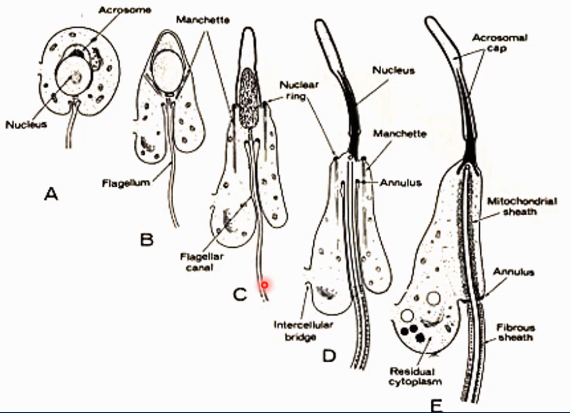
Final structure of sperm diagram
Leydig cell characteristics and composition
Interstitial cells – located in the spaces between tubules
Highly perfused (blood vessels/capillaries)
Synthesize androgens – testosterone
Express LH receptors
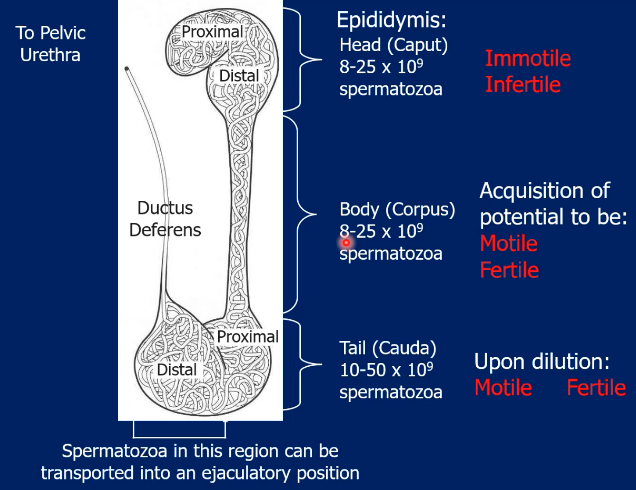
Passage through the epididymis
go from testis upward via smooth muscle toward head of epididymis
the sperm goes through the convoluted spool tubule first entering the head of the epididymis (caput) where they are still immotile and infertile
they then move into the body where they acquire motility and fertility
Tail of epididymis is where they acquire their final maturation and are stored
Accessory sex glands includes
Ampular gland (ampullae, absent in boar and dogs)
Vesicular (absent in dogs)
Prostate
Bulbourethral
Overall purpose of accessory sex glands
Provide nutrition for sperm and some protection
Ampular gland purpose
enlargement of the ductus defferent
Vesicular purpose
Secretes
Fructose: sperm energy pack
Vitamins and prostaglandins important for mobility and survival
Proteins for coagulation
Prostate purpose
alkaline substance to enhance motility
Bulbourethral purpose
lkaline substances to neutralize acidity and mucus to lubricate vagina during copulation
Epididymis diagram

Arousal diagram

Ejaculatory process diagram

Innervation of the male genital diagram

Extender for cryopreservation
Nutrient
egg yolk
whole homogenized milk
Buffer
citrate
sodium phosphate
Antimicrobials
penicillion/streptomycin (bacteria)
minosin (myocoplasma)
Cryoprotectant
6-12% glycerol (if to be frozen)
Most popular are egg yolk-citrate (clear) and whole homogenized milk (opaque)
Endocrine control in the male diagram
