CHEM EXAM 3 - C6, 7, 8 - VOCAB
 Call Kai
 Learn
 Practice Test
 Spaced Repetition
 Match
 Flashcards
 Knowt Play
1/25

There's no tags or description
Looks like no tags are added yet.
26 Terms
Electronegativity
how much an atom wants electrons. It is technically defined as the average of an atom’s ionization energy and electron affinit
Partial +
low electron density, going to be attached to an element that is more electronegative than itself
Partial -
high electron density, going to be attached w/ an atom that has less electronegativity than itself
Nonpolar covalent bond
0 - < 0.4
Polar Covalent Bond
0.4-2.0
Ionic Bond
>2.0
Stereoisomers
Molecules that differ ONLY by the arrangements of atoms in space – atoms are
attached in the same order but they differ in their spatial positionin
Dipole Moment
higher polarity, or higher electronegative but cannot be the same
Pi bonds
have double bonds
Sigma bonds
have one bond
Cis Isomers
two groups of highest mass on double bond are on same side

Trans Isomers
two groups of highest mass on double bond are on opposite sides
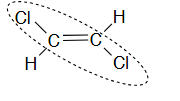
Van Der Waals attractions/London Forces
weakest attractions
all molecules will have it
Dipole-dipole attractions
only polar
Hydrogen Bonding
strongest attractions
What happens to surface areas as it increases?
Boiling point increases, so van der waals increases
What happens as the carbon branch chain increases?
the boiling point decreases because surface area
decreases and therefore van der Waals attractions decrease. The more linear the molecule,
the more surface area and the higher the boiling point
Viscosity
It is the ability of a liquid or a solution to resist flow
= most surface area

Miscible
soluble in all proportions
What happens when there are more carbon atoms in the chain regarding water solubility?
The less water soluble the molecule becomes (chain must become short in order for it to be water soluble)
Solid —→ Liquid
Melting
Solid —→ Gas
sublimation
Liquid —→ Solid
freezing
Gas —→ Solid
Deposition
Liquid —→ Gas
Evaporation
Gas —→ Liquid
condensation