Week 2: Infant Development: Growth, Milestones, and Safety
 Call Kai
 Learn
Learn Practice Test
 Spaced Repetition
 Match
Match Flashcards
 Knowt Play
1/92

There's no tags or description
Looks like no tags are added yet.
Name | Mastery | Learn | Test | Matching | Spaced | Call with Kai | Chat |
|---|
No analytics yet
Send a link to your students to track their progress
93 Terms
What is the weight growth at 5 months?
Weight doubles from birth
What is the weight growth at 1 year?
Weight triples from birth
What is the length growth at 1 year?
Length increases by 50%
What are some problems that lead to issues with weight gain?
GI issues
cystic fibrosis
latching issues
What rate of head circumference growth is expected in the first 6 months of life?
Rapid growth
When interpreting a head circumference percentile chart, why is a single measurement insufficient?
Overall trends matter more than individual data points.
Important indicator of brain development
What are gross motor skills?
Involves large muscle groups to perform whole-body movements
arms, legs, and torso
whole-body movements
Gross Motor Skills: Early
Lifting head/chest during tummy time
2-4 months
Rolling
4 months
Sitting with support
5-6 months
Gross Motor Skills: Later
Sitting independently
6-8 monthhs
Crawling
8-10 months
Pull-to-stand
9-11 months
Walking with support/independently
12 months
What are fine motor skills?
The coordination of small muscles
hands, wrists, and fingers
Fine Motor Skills
reaching and grasping
3-4 months
transfer object hand to hand
6 months
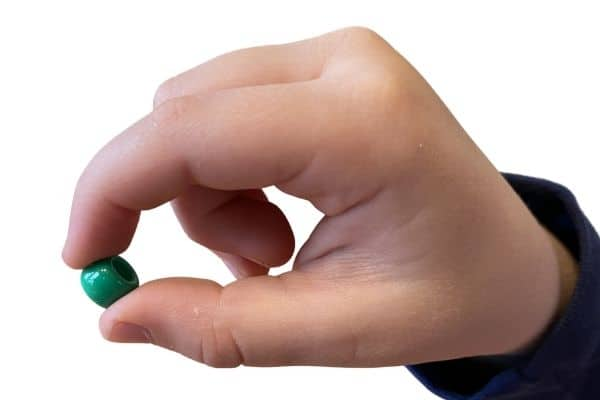
pincer grasp
9-12 months
Name
Pincer Grasp
Moro Reflex
The baby throws their head back, extends or spreads their arms and legs outward, and opens their hands/fingers
Triggers: bright light, loud noise, quick change of position
Suck Reflex
involuntary survival response in newborn babies
triggers rhythmic sucking movements when the roof of the mouth, lips, or tongue is touched
Asymmetric Tonic Neck
turning the head causes the arm and leg on that side to stretch out while the opposite limbs bend

Babinski Reflex
the big toe bends upward (dorsiflexion) and the other toes fan out
normal in years 1-2
abnormal in 2 years+

Palmar Reflex
infant automatically curls their fingers and grips tightly when something touches or strokes their palm
Rooting Reflex
The infant turns their head toward the touch, opens their mouth wide, and thrusts their tongue slightly toward their bottom lip
Triggers: touching the corner of a baby’s mouth, cheek, or lips (or smelling breast milk)
Stepping Reflex
automatic walking or dancing motion that occurs when a newborn is held upright with their feet touching a flat surface
Sensorimotor Development Definition
Piaget
Earliest phase of cognitive and motor growth
Spanning from birth to age two
Learn about the world entirely through their basic senses and physical movements
Piaget’s Cognitive Development: Sensorimotor Development Stages
Reflexes (0-1 month)
Primary Circular Reactions (1-4 months)
Secondary Circular Reactions (4-8 months)
Coordination of Secondary Schemes (8-12 months)
What is the Reflexes (Sensorimotor Development) Stage?
0-1 month
reflexive action that are involuntary and repetitive
sucking, grasping
the first means of interacting with the world
What is the Primary Circular Reactions (Sensorimotor Development) Stage?
1-4 months
repeated actions in the body that are pleasurable or interesting
sucking thumb, kicking feet, cooing
centered on own body
simple, non-consequential patterns
What is the Secondary Circular Reactions (Sensorimotor Development) Stage?
4-8 months
repeating actions with purpose to cause interesting environmental effects
shaking a rattle, banging toys together
shifting focus from body to objects
What is the Coordination of Secondary Schemes (Sensorimotor Development) Stage?
8-12 months
integrating multiple actions to achieve goals
intentional behavior
uncovering a toy
based on object permanence concept
What is object permanence?
understanding that objects exist even when out of sight
typical emergence: 8-12 months
What is cause-and-effect learning?
infants explore cause effect by interacting with toys and the environment
pressing a button to hear a sound
shaking a rattle
Psychosocial Development: Attachment & Bonding
secure attachment
emotional expressions
stranger anxiety
What is secure attachment?
caregiver is responsive to needs
infants and caregiver forms a trusting bond
infant feels safe to explore their environment
What is stanger anxiety?
Occurs at 6-9 months
Views primary caregiver as their “secure base”
Strangers are viewed as danger
What are stranger anxiety typical manifestations?
Clinging to the caregiver when a new person approaches
“Checking back” with the caregiver to gauge their reaction to the new person
Early Communication
cooing (6-8 weeks)
babbling (4-6 months)
gestures + nonverbal cues (6-12 months)
few words (12 months)
Cognitive & Social Milestones: 0-2 Months
Cognitive Milestones: observes faces and cooing begins
Social Milestones: eye contact, alert to sound
Cognitive & Social Milestones: 3-4 Months
Cognitive Milestones: reaches for toys and babb;es
Social Milestones: copies sounds and shoes happiness
Cognitive & Social Milestones: 5-6 Months
Cognitive Milestones: explores with hands/mouth, recognizes faces
Social Milestones: responds to emotions, laughing, stranger anxiety begins
Cognitive & Social Milestones: 7-8 Months
Cognitive Milestones: object permanence
Social Milestones: clings to familiar adults, purposeful sounds
Cognitive & Social Milestones: 9-10 Months
Cognitive Milestones: pincer grasp, watches objects fall
Social Milestones: waving bye, imitates actions
Cognitive & Social Milestones: 11-12 Months
Cognitive Milestones: finds hidden objects, cause/effect
Social Milestones: says simple words, strong attachment
What are the breast feeding recommendations?
exclusive breastfeeding recommended for ~6 months
formula feeding if breastfeeding is not possible or preferred by family
When are solids introduced?
Gradual introduction at ~6 months
What are the signs a baby is ready for solids?
sits with support
shows interest
opens mouth for spoon
What foods should be introduced first?
iron-rich foods
cereals, meat, beans
When does self-feeding begin?
encouraged around 8-9 months
What are the safe sleep practices?
back to sleep for every sleep
firm sleeping surface, no soft bedding
room-sharing recommended
NOT bed-sharing
avoid overheating
How long should newborns sleep?
14-17 hours/day
Typical Sleep Patterns
night waking is normal
gradual sleep consolidation (uninterrupted) by 4-6 months
What are general safety guidelines?
care seat safety
fall prevention
choking hazards
poison prevention
What is care seat safety?
rear-facing until at least 2 years old
What is fall prevention?
no high surfaces without supervision
What are some choking hazards?
small objects such as grapes and nutes
How to prevent accidental poisoning?
secure medications and household chemicals
Monitoring & Supervision Tips
never leave an infant unattended in the bath
supervise tummy time and play
educate parents on emergency preparedness
What does “Newborn at Risk” mean?
susceptibility to illness or death within the first 28 days
How many weeks are preterm babies?
Before 37 weeks
Why is preterm dangerous?
vital organs like the brain, lungs, and liver do not have time to fully develop
How many weeks are post-term babies?
beyond 42 weeks
Why is post-term dangerous?
risk of stillbirth (death of fetus)
meconium aspiration (newborn breaths their meconium)
macrosomia (large baby)
placental insufficiency
Small for Gestational Age (SGA) Percentile
weighing below the 10th percentile
for their gestational age and sex
What are the risk of Small for Gestational Age (SGA)?
wasted muscle tissue, sunken abdomen
due to placental insufficiency
fetus prioritizes blood flow to vital organs
lack of subq fat → hypothermia
polycythemia (concentration of red blood cells in the bloodstream)
causes the blood to thicken and flow more sluggish
Large for Gestational Age (LGA) Percentile
weighing above the 90th percentile
for their gestational age and sex
What are the risk of Large for Gestational Age (LGA)?
may cause delivery complications
birth trauma
newborn hypoglycemia
respiratory distress
What does “acquired” mean?
develops over time
What does “congenital” mean?
present at birth
Preterm Infant: System Challenges: Respiratory
deficiency of surfactant (protective fluid in the lungs that keeps the alveoli open)
leads to respiratory distress syndrome (RDS)
apnea
Preterm Infant: System Challenges: Renal
inability to concentrate urine
inability to excrete drugs
Preterm Infant: System Challenges: GI
small stomach
weak suck/swallow
risk for necrotizing enterocolitis
Preterm Infant: System Challenges: Immune
lacks IgG (crosses placenta in 3rd trimester)
vital for long-term immune memory
directly neutralizing toxins and targeting viruses and bacteria for destruction
Preterm Infant: System Challenges: Neurologic
fragile cerebral blood vessels
increases the risk for hemorrhage
Preterm Neonate: Oxygenation Nursing Priorities
maintain SpO2
caution with retinopathy of prematurity (ROP)
What is Retinopathy of Prematurity (ROP)
occurs when supplemental O2 is provided to premature babies
can disrupt the normal growth of retinal blood vessels
may lead to retinal detachment
vision loss
Preterm Neonate: Thermoregulation Nursing Priorities
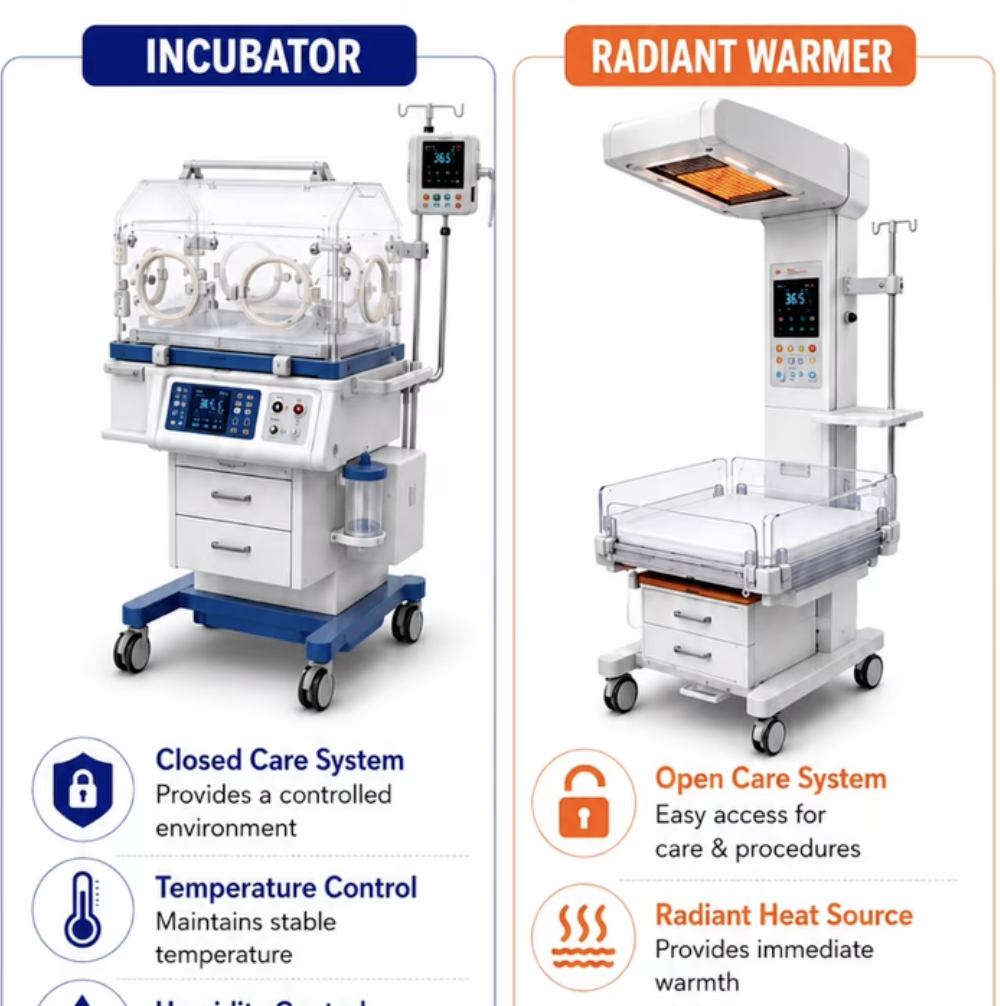
use radiant warmers or isolettes
Preterm Neonate: Nutrition Nursing Priorities
TPN or Gavage feedings
Non-nutritive sucking
self-soothing, physiological stabilization, and oral motor development
Preterm Neonate: Cluster Care Nursing Priorities
always cluster care
minimize handling to conserve energy
What is consider hypoglycemia in infants?
<40 mg/dL
Which infants are at risk of hypoglycemia?
Infant of diabetic mother (IDM)
Small for Gestational Age (SGA)
Cold-stressed infants
to warm up, babies burn vital energy and oxygen reserves → <BG
What are the S&S on infant’s <BG?
jitteriness
lethargy
high-pitched cry
apnea
Physiologic Jaundice
occurs AFTER 24 hours of birth
normal RBC breakdown
harmless, temporary condition
Pathologic Jaundice
occurs WITHIN 24 hours of birth
incompatibility/sepsis
What is the risk of severe jaundice?
kernicterus
encephalopathy
rare, severe form of brain damage in newborns
occurs when there is a high level of bilirubin in the blood
What is phototherapy?
uses specific blue-green light to break down excess bilirubin in a baby's blood
Why is phototherapy used?
Used to treat newborn jaundice by breaking down excess bilirubin so it can be easily excreted in stool and urine
Expose maximum skin surface
NO onesies
Phototherapy Cautions
shield eyes and genitals
monitor for loose stools and dehydration
check bilirubin levels and temperature fequently
What is Sepsis Neonatorum?
life-threatening bloodstream infection
What are the signs of Sepsis Neonatorum?
temperature instability (hypothermia)
lack of “acting right”
respiratory distress
What is the management for Sepsis Neonatorum?
labs
lumbar puncture
IV antibiotics
What are the signs of infection?
temperature instability
poor feeding
lethargy
respiratory distress
What are the risks of having a clef lip/palate?
nutrition risks
airway risks
What are the risks of having neural tube defects?
meningomyelocele
most serious type of spina bifida
cover with sterile moist dressing
What is congenital heart disease?
structural defects of the heart present at birth
screen with pulse oximetry
How does substance abuse exposure effect infants?
Neonatal Abstinence Syndrome (NAS)
newborn baby goes through drug withdrawal after being exposed to addictive substances while in the womb
What are the signs of Neonatal Abstinence Syndrome (NAS)?
irritability: CNS is overstimulated
tremors: nervous system is misfiring
sneezing: nervous system dysfunction
poor feeding: baby lacks the coordination to successfully suck/swallow
frantic sucking: misplaced attempt to self-soothe their physical discomfort
What is the nursing care for Neonatal Abstinence Syndrome?
low-stimulation environment
swaddling
small frequent feeds
FINAL THOUGHTS
infants don’t always look sick
it’s important to check VS
pay attention to how they eat