psych week 7: depressive disorders
 Call Kai
 Learn
Learn Practice Test
 Spaced Repetition
 Match
Match Flashcards
 Knowt Play
1/21

There's no tags or description
Looks like no tags are added yet.
Name | Mastery | Learn | Test | Matching | Spaced | Call with Kai | Chat |
|---|
No analytics yet
Send a link to your students to track their progress
22 Terms
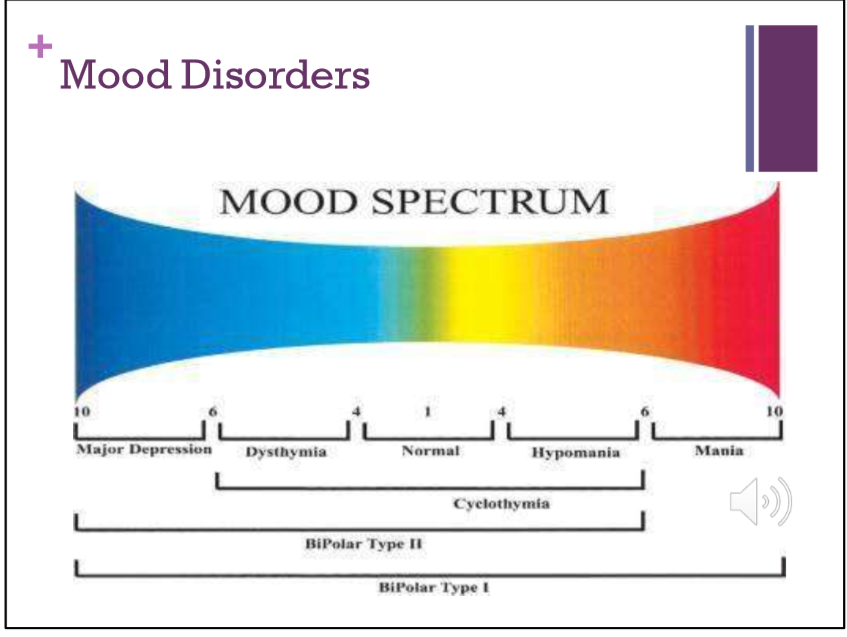
what are mood disorders
also called affective disorders
pervasive alterations in emtions that are manifested by depression, mania, or both, and interfere with the persons life
etiological theories for depressive disorders
neurobiological factors
psychobiological factors
psychoanalytical
cognitive
life events and stress theory
epidemiology of depressive disorders
oneo f the leading causes of diability in the U.S.
“common cold” of psych disorders
types of depressive disorders
major depression
with seasonal patterns (seasonal affective disorder)
major depression (peripartum onset)
persistent depressive disorder
chronic major depressive disorder
previous dysthymic disorder
premenstrual dysphoric disorder
substance induced depressive disorder
disruptive mood dysregulation - (child and adolescence)
what is majjor depressive disorders
very depressed mood consistently for atleast 2 week period
mood must represent a change from the persons normal mood and impact social and occupational functioning
no history of mania, no other medical causes
major depressive disorder with seasonal patterns
known as seasonal affective disorder
change of seasons
eacerbated during the winter months
incr. levels of melatonin
effective treatment - light therapy
premenstrual dysphoric disorders (PMDD)
markedly depressed mood with aniety, mood swings, and loss of interest in usual activities during the week prior to menstruation which improved durirng menstruation and resolves post menstruation
risk factors of major depression - peripartum onset
history of mental illness
other life event stressors
unstable relationships with partner and/or family
lack of social support
what are the types of persistent depressive disorder
chronic depressive disorder
previous dysthymic disorder
essential feature is a chronically depressed mood for:
most of the day, more days than note, for atleast 2 years
1 year for children/adolescent
assessment for persistent depressive disorder
safety, suicidal ideation, and history
mental status
symptoms and severity
family history
strengths and coping mechanisms
self esteem
future orientation, hope
different standardized assessment scales
becks depression inventory (BDI)
zungs self-rating depression scale
hamilton depression scale (Ham-D)
MADRAS
Geriatric depression scale (GDS)
depressive symptoms
depression: nursing diagnoses and epected outcomes
depression: treatment
individual psychotherpay
cognitive therapy
group therapy
family therapy
psychopharmacology
electroconvulsive therapy
light therapy
sleep depriviation therapy
psychopharmacology for depression: serotonin
selective serotonin reuptake inhibitors (SSRI)
prozac (fluoetine), paroetine (pail), zoloft, celea, leapro
selective serotonin norepinephrin reuptake inhibitors (SSNRI)
effeor, cymbalta, pristiq
psychopharmacology for depression: atypical
wellbutrin (buprpion), mirtazapine (remeron), tradone (desyrel)
concerns with these:
Desyrel - priapism
Wellbutrin - seizures
psychopharmacology for depression: tricyclic
tricyclic antidepressant (TCAs)
amitriptylaine (elavil), notriptyline (pamelor), imipramine (tofranil)
major concerns:
delay in action “kicking in” (can take up to 6 weeks to see the full effect)
cardiac side effects
Side effects: sedation, tachycardia, dry mouth, constipation, orthostatic hypotension, blurred vision, decr. seizure threshold, weight gain
psychopharm for depression MAOIs
monoamine oidase inhibitors (MAOIs)
phenelizine (Nardil), tranylcypromine (parnate), isocarboazid (marplan)
major conceerns:
risk for hypertensive crisis when consuming products containing tyramine
what is serotonin syndrome s/s
change in mental status (confusion, agitation)
tachycardia
incr. body temperature
hyperrefleia, seizures
treatment for serotonin syndrome
stop causative agent
supportive care
what is electroconvulsive therapy
used when meds are ineffective or side effects are intolerable
6-15 treatments scheduled 3 times per week
preparation of the patient for ECT is similar to prep for any outpatient minor surgical procedure
the patient may eperience some short term memory loss and confusion
other nonpharm treatments dor depression
light theapy
transcranial magnetic stimulation