conditional statements
 Call Kai
 Learn
 Practice Test
 Spaced Repetition
 Match
 Flashcards
 Knowt Play
1/14

There's no tags or description
Looks like no tags are added yet.
15 Terms
Statement
Is an instruction that the compiler or interpreter executes.
typically performs an action such as declaring a variable, performing a
calculation, or making decisions.
Declaration statement
Used to declare variables and allocate memory for them.
Defines the data type of a variable and optionally initializes it.
used when getting input from user
Expression statement
Expression that is evaluated
Performs an action such as assigning value to variable, invoking a method call (writeline, write, readline), or performing arithmetic ops (inc / dec)
Control flow statement
Allow you to dictate the flow of execution in a program based on conditions or loops
Conditional and repetition
Two types of control flow statement
Conditional statement
Allow the program to execute certain parts of code based on whether a condition is true or false
If statement
statement that executes if true
Else statement
A code executes if the statement is true, otherwise false
If else if
Checks multiple conditions in sequence
Executes code block for the first true and skipping the rest
used when gusto ng maraming conditions

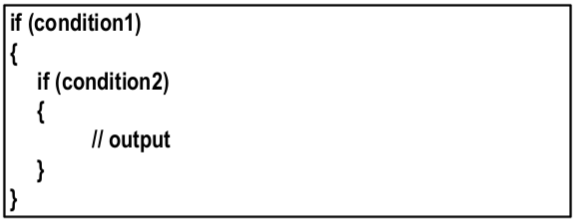
Nested conditional
Are if statements placed inside another if or else statement to create more complex decision-making logic
conditional ternary operator
short term of if-else
for simple conditions, not complex logic

switch
statement to select one of many code blocks to be executed.
marami choices
block statement
is a group of statements enclosed in curly braces { }.
It allows you to execute multiple statements together as a single unit.
often used in control flow statements (like if, for, while, etc.) to group multiple statements that should be executed when the condition is met.
declaration, expression, control flow, block
4 types of statements
if, else, if else if, switch, nested conditional, conditional ternary operator
6 types of conditional statements