bio 102 practicle
 Note
 Call Kai
 Learn
 Practice Test
 Spaced Repetition
 Match
 Flashcards
 Knowt Play
1/30

There's no tags or description
Looks like no tags are added yet.
31 Terms

Taenia pisiformis (Mature)
Phylum: Platyhelminthes, Class: Cestoda; Mature proglottid containing fully developed male and female reproductive organs.

Trichinella
Phylum: Nematoda, Class: Enoplea; Encysted larvae often coiled inside skeletal muscle tissue.
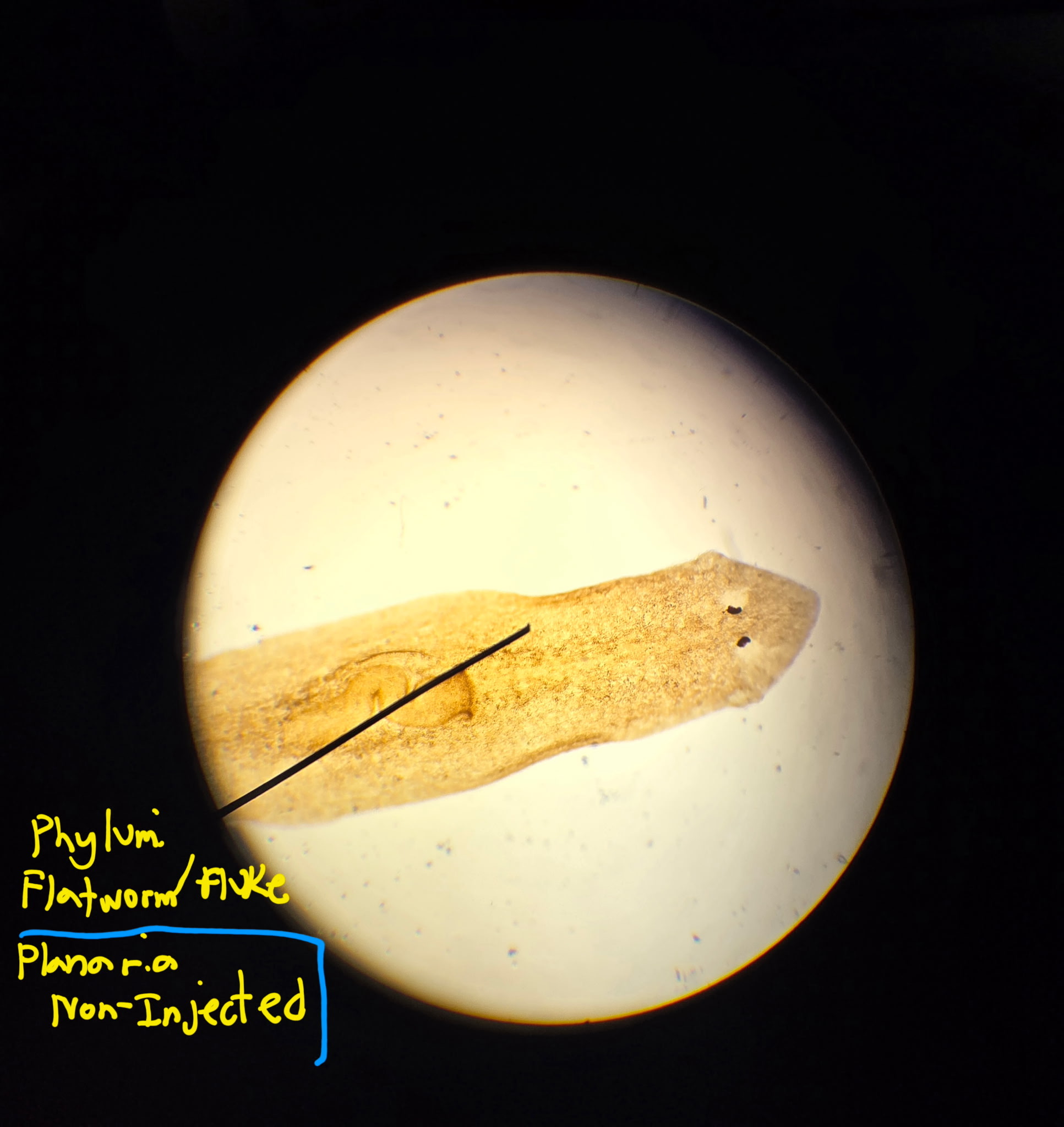
Planaria
Phylum: Platyhelminthes, Class: Turbellaria; Key structures include eyespots, pharynx, and highly branched gastrovascular cavity.

Physalia (Portuguese Man O' War) Tentacle
Phylum: Cnidaria, Class: Hydrozoa; Tentacles loaded with nematocysts used to capture prey.

Ascaris
Phylum: Nematoda, Class: Chromadorea; Features a pseudocoelom, complete digestive tract, and thick outer cuticle.

Mushroom Coral
Phylum: Cnidaria, Class: Anthozoa; A solitary polyp with a flat, disc-like calcareous skeleton.

Sea Fan
Phylum: Cnidaria, Class: Anthozoa; A flexible, branch-like skeleton made of a protein called gorgonin.

Rose Coral
Phylum: Cnidaria, Class: Anthozoa; Colonial polyps forming a calcareous skeleton with rose-like or meandering ridges.

Stony Coral
Phylum: Cnidaria, Class: Anthozoa; Has a hard, rigid calcium carbonate exoskeleton secreted by polyps.

Marine Sponge
Phylum: Porifera, Class: Demospongiae; Key structures include spongocoel, osculum, and ostia.
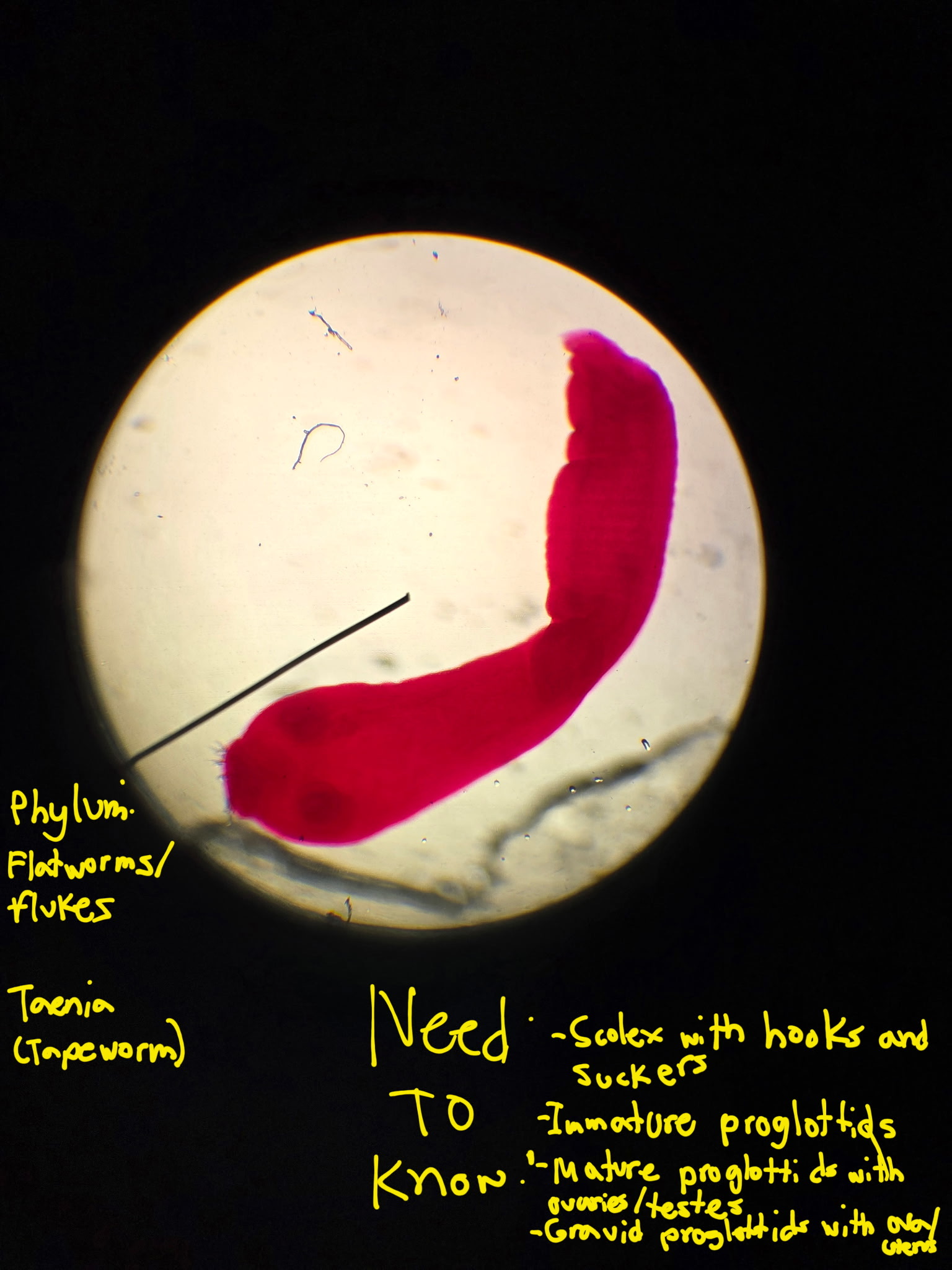
Taenia (Scolex)
Phylum: Platyhelminthes, Class: Cestoda; The scolex is the 'head' containing hooks and suckers for attachment.

Clonorchis (Liver Fluke)
Phylum: Platyhelminthes, Class: Trematoda; Contains oral and ventral suckers with branched testes.

Obelia Medusa
Phylum: Cnidaria, Class: Hydrozoa; Free-swimming, bell-shaped reproductive stage with mouth, tentacles, and gonads.

Hydra (No Buds)
Phylum: Cnidaria, Class: Hydrozoa; A solitary polyp with a basal disc, body column, mouth, and tentacles.

Hydra (With Buds)
Phylum: Cnidaria, Class: Hydrozoa; Shows asexual reproduction through budding.

Obelia (Colony)
Phylum: Cnidaria, Class: Hydrozoa; A branching colony with hydranths and gonangia.

Grantia Spicules
Phylum: Porifera, Class: Calcarea; Microscopic calcium carbonate structures providing skeletal support.

Pufferfish
Phylum: Chordata, Class: Actinopterygii; Spines for defense, beak-like teeth, capable of inflating its stomach.

Hummingbird
Phylum: Chordata, Class: Aves; Long beak for drinking nectar and specialized wings for hovering.

Skate Egg Case
Phylum: Chordata, Class: Chondrichthyes; A keratinous pouch-like casing with anchorage tendrils.

Snake
Phylum: Chordata, Class: Reptilia; Elongated, limbless body covered in scales; flexible jaw.

Alligator
Phylum: Chordata, Class: Reptilia; Broad, U-shaped snout with thick bony plates in the skin.

Bat
Phylum: Chordata, Class: Mammalia; Forelimbs modified into wings with a patagium.

Omnivore (Skull)
Phylum: Chordata, Class: Mammalia; Generalized dentition with incisors, canines, and flat molars.

Frog
Phylum: Chordata, Class: Amphibia; Smooth skin for gas exchange and powerful hind legs for jumping.

Seahorse
Phylum: Chordata, Class: Actinopterygii; Prehensile tail for anchoring and a brood pouch in males.

Turtle
Phylum: Chordata, Class: Reptilia; Bony or cartilaginous shell with dorsal carapace and ventral plastron.

Herbivore (Skull)
Phylum: Chordata, Class: Mammalia; Large, flat molars for grinding plants; prominent diastema.

Sea Squirt (Tunicate)
Phylum: Chordata, Class: Ascidiacea; Tough outer tunic with incurrent and excurrent siphons.
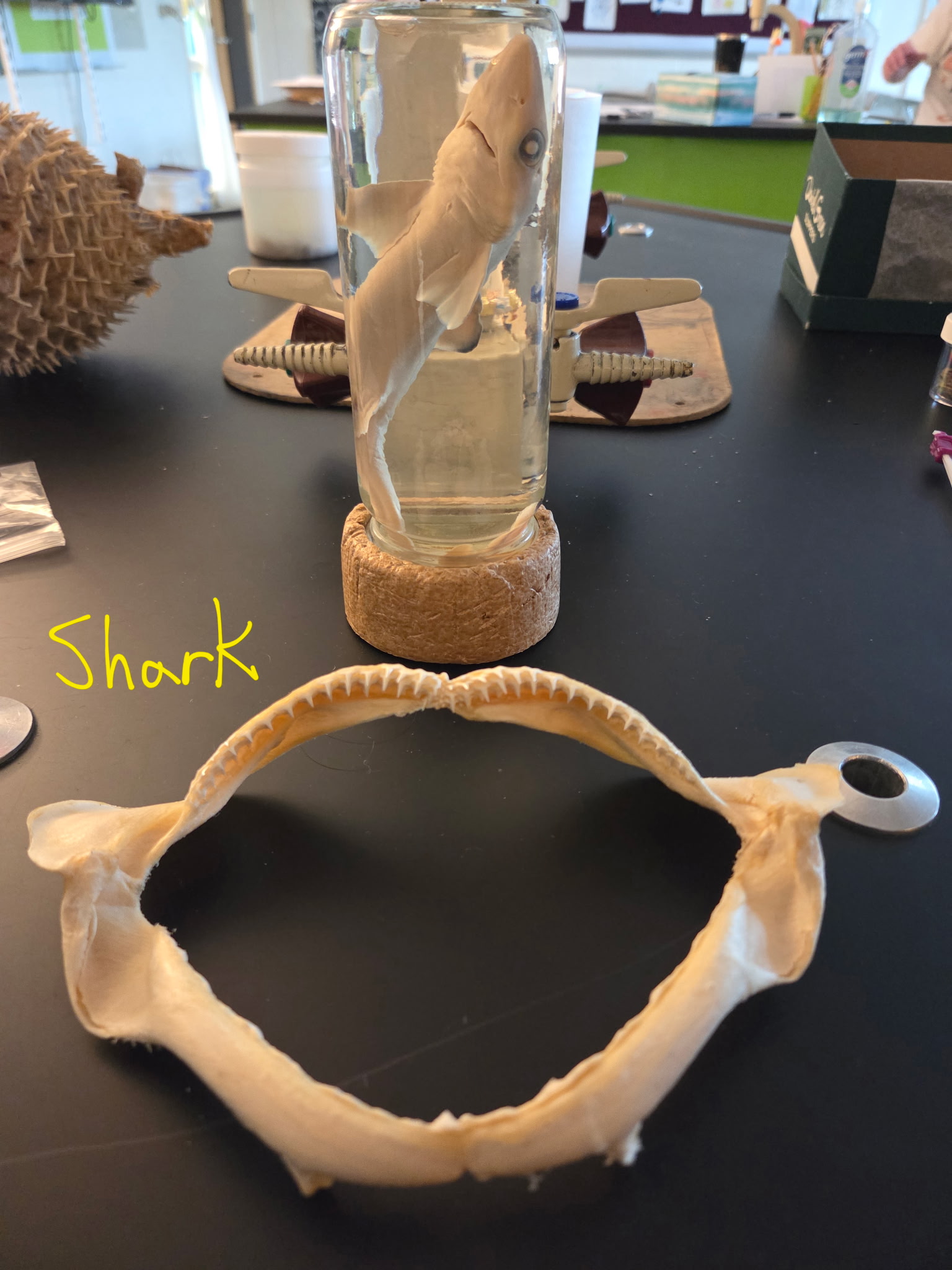
Shark
Phylum: Chordata, Class: Chondrichthyes; Cartilaginous skeleton and placoid scales.

Carnivore (Skull)
Phylum: Chordata, Class: Mammalia; Sharp canines for grasping and specialized carnassial teeth.